
Sound analysis.
Here is were Miracle and Maestro get their individual voices to show their strength and their weakness. Obviously, there is a fundamental difference of Miracle having 6xBA design and 3-way crossover partitioning drivers into 2-lows, 2-mids, and 2-highs versus Maestro with 12xBA design and 4-way crossover partitioning drivers into 4-lows, 4-mids, 2-highs, and 2-super highs. Despite of what some people might think, more drivers doesn’t mean a better sound, it just gives you more flexibility to fine tune and to perfect the targeted sound signature. Another obvious difference before you even proceed to sound analysis is Sensitivity of Miracle being 114 dB vs Maestro with 109 dB. Based on that you will have an idea that switching between two will require setting volume a little bit higher with Maestro and in theory less sensitivity makes it less prone to background hissing, though I have to admit that neither Miracle nor Maestro hissed with any of my powerful sources.
And now, on to a more detailed individual sound analysis which was done using PAW Gold as my source after each pair of IEMs received 75hrs of burn in.
Miracle (w/stock cable):
The signature is pretty much balanced, though mids do feel a little forward. Overall tonality is neutral but leaning a little more toward bright side due to energy of mids and treble. The sound is clear and detailed, not exactly on micro-detail level but with plenty of details without being harsh or grainy.
Starting with a low end you get a decent sub-bass extension with a nicely textured rumble and a punchy mid-bass with a fast attack and an average decay typical of BA drivers. Bass is tight, warm, and with a nice control and clean separation from lower mids. Lower mids have plenty of body but not necessary too warm or veiled. Upper mids are clear and detailed, but missing a bit of refinement which I was craving especially with vocals, though this is obviously a subjective opinion. Treble is really good, with a perfect balance of moderate crunch and definition, no hint of sibilance. It has a good extension to add some airiness, though not whole lot.
I found Miracle to sound dynamic, but layering and separation of the sound was just good, not necessary great. It wasn’t too congested, though in some busy song passages it can get close to, but combination of just an average soundstage and not the highest level of airiness gave me a perception of just an OK layering effect. On to staging, I found soundstage width to be average, while depth and height to be above the average. The imaging of these headphones has convincing placement of instruments and vocals, but I didn’t find it to be on a 3D level like in some other monitors. I would say it’s accurate but not super accurate in that regard.
– With upgraded cable (Whiplash TWag)
The bass gets tighter and the quantity of mid-bass gets slightly lower to make it more balanced, also tightens the mids and brings upper mids slightly more forward which makes the sound a bit more mid-centric, improves treble extension by adding a little more airiness. Also, slightly improves width of the sound.
Maestro (w/stock cable):
Maestro has a balanced sound signature with a brighter more revealing tonality, thanks to the energy of upper mids and treble brightness. The sound is clear and detailed, closer to micro-detail level but without being grainy or analytical, though in some bright tracks you can hear the effect of 6k spike. Not necessary sibilant, but during an extended listening session it could get closer to a threshold of my comfort level, though this is purely subjective.
Maestro has a great sub-bass extension with a textured rumble and a punchy mid-bass that has a decent speed and an average decay to give bass a more rounded analog feeling. Bass is tight, well controlled and precisely separated from lower mids. Lower mids have plenty of body without being too warm or veiled. Upper mids are clear and detailed, getting closer to a more analytical level which can get a bit harsh with some songs, depending on your ear sensitivity. With vocals, I found them to sound a little more on a brighter, more revealing, and less organic side. Treble is bright, crisp, with high definition, great extension and plenty of airiness.
I found Maestro to sound dynamic, and with improved airiness there was better layering and separation effect. Soundstage was expanded in all 3 directions of width, depth, and height. Imaging definitely had a more convincing placement of instruments and vocals, but wasn’t on a 3D level. It was accurate, but didn’t feel 3D accurate.
– With upgraded cable (Whiplash TWag)
The bass got tighter, mid-bass attack got a little faster, and the low end got a little more slam. Furthermore, the mids got tighter and the harshness of upper mids/treble (6k peak) I heard with a stock cable got nearly eliminated. I also heard a subtle refinement in layering, separation, and transparency. Soundstage width improved slightly as well.
Comparison between Miracle and Maestro.
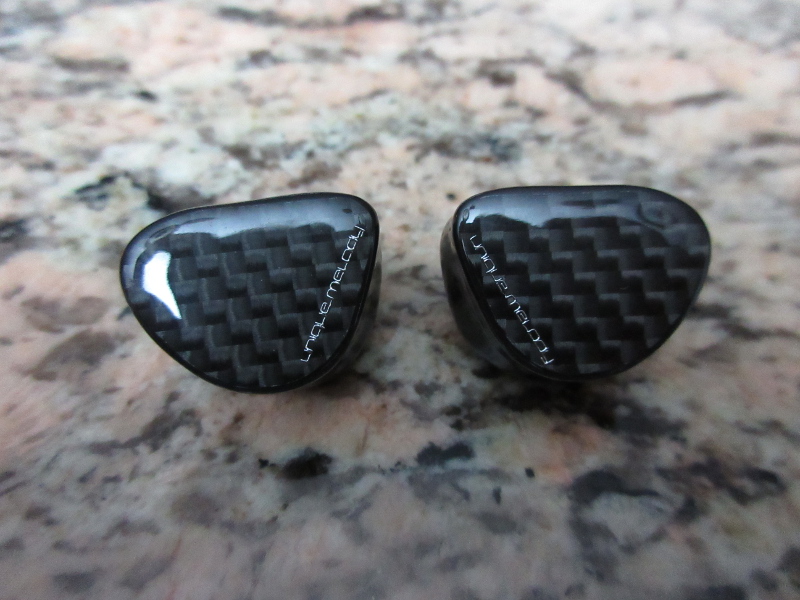
While looking nearly identical from outside, they have their own sound personality on the inside.
Miracle vs Maestro (w/stock cable) – Maestro sounds more crisp, lows are more balanced with a similar sub-bass rumble and texture but mid-bass being a little slower and having less impact. Lower mids are a touch leaner, upper mids are brighter and more detailed, treble is more crisp and more extended with more airiness. Upper Mids in Maestro are brighter and a little harsher. Maestro has slightly better layering and separation in comparison to Miracle. Overall, Maestro stands out as having a more refined sound but the biggest difference is in upper mids and treble where 6k peak can get a little hot in Maestro while smoother and more under control with Miracle. Miracle has a deeper low end impact with slightly more slam, mids sound a little more forward, and treble is smoother in comparison. Maybe it has a little less airiness but I would prefer Miracle for extended laidback listening sessions over Maestro which is better for a more critical listening. Maestro has slightly wider staging while depth/height are the same between both. But once you upgrade the cable – all the bets are off, and I would choose Maestro ANY DAY of the week!!!
Comparison to other IEMs/CIEMs.
Miracle/Maestro vs W60 – W60 has more sub-bass, slower mid-bass, low end is not as tight or has as much control being separated from lower mids, W60 lower mids are a little thicker and upper mids are a lot smoother and more organic, W60 treble has a similar extension but it’s not as crisp or not as bright. Soundstage width is a little bigger with W60 in comparison to Miracle and closer to Maestro, but otherwise W60 has a little less depth and height.
Miracle/Maestro vs UM Pro 50 – UM Pro 50 has a bigger low end quantity, from more sub-bass to a bigger mid-bass slam, lower mids are similar, while upper mids in UM Pro 50 are more organic, not as bright, and pushed back in comparison, treble is also a little less bright in comparison. Soundstage of UM Pro 50 is wider (vs Miracle, and closer to Maestro), but depth/height are the same. The biggest difference here is UM Pro having a bigger and more powerful bass impact, while UM has more detailed upper mids and better treble extension.
Miracle/Maestro vs Savant – Savant sub-bass and mid-bass are as tight though more neutral in quantity and not as fast, lower mids are a little leaner, upper mids are brighter and more detailed than Miracle and smoother than Maestro, also treble has a better extension and more airiness than Miracle, but smoother peaks than Maestro. Savant soundstage is more expanded in all 3 directions. Here, if you prefer a more transparent detailed balanced sound, Savant would suite you better, while if you want a better low end impact and smoother upper frequencies – go with Miracle and for low end impact and more analytical upper frequencies – Maestro.
Miracle/Maestro vs ES60 – ES60 sound is more balanced, the same tight low end but less impact, closer to neutral level, mids are a lot more detailed with a better layering and separation and overall sound is more transparent and dynamic, treble has a better extension and more controlled airiness. ES60 has more reference quality, while Miracle/Maestro have more fun signature.
At the moment of writing this review, I didn’t have a chance yet to compare Maestro to A12, and there is also possibility to compare to K10U. I will definitely update my write up with more comparison examples if/when they become available.
Conclusion.
To be honest, when I started this review, my opinion was flip-flopping regarding which UM I prefer the best – Miracle or Maestro. Only after I upgraded the cable (replacing stock with TWag), the choice became more clear where Maestro performance scaled up to a true TOTL level with a clear advantage of a more balanced sound signature, smoother tonality, better layering and separation, and improved staging. But the fact that I was opting between 6-driver and 12-driver config with a stock cable speaks volumes that a number of drivers is not the deciding factor of what is better, but rather how it’s being used to tune the sound. And even with an upgraded cable and comparison to other 6-/8-/10-/12-driver IEMs and CIEMs – it’s still not about which one is better or worse, but rather which one fits your sound preference and also your budget. And if you’re worrying which one going to fit your ears better – Maestro comes in either Universal or Custom fit.

 Twister6 Reviews