

Sound Analysis.
After putting Zeus-R through approximately 100hrs of burn in, to make sure all the components and the cable and the solder joints are properly conditioned, and while using Lotoo PAW Gold as my reference source along with included BTG Starlight SPC cable, here is how I hear these CIEMs.
I find Zeus-R to have a neutral revealing signature, pushing it more toward the reference quality with a hint of mid-forward performance. It has a rather revealing and natural tonality with a high level of detail retrieval, yet staying away from analytical harshness. I don’t recall coming across another pair of TOTL iems/ciems where you hear such an impressive level of clarity and details, and there is not even a single offending frequency across entire FR that stands in a way of extended listening pleasure. But the most impressive part of listening to Zeus-R is the unison coherency of 14 drivers. At this point I don’t even care how many drivers any manufacturer is using. It’s just another set of building blocks to get to the final result, and all 14 drivers in Zeus-R do sound like one fine-tuned coherent speaker.
Starting with a low end, you get a very nice sub-bass extension which goes deep, but stays close to neutral in quantity. The same with mid-bass, very fast attack, not too long decay, and in general a snappy neutral punch. The bass here is all about quality, very articulate, tight, layered, and with excellent control and zero spillage into the mids. This picture changes quickly when you switch to TWau cable, but I’m focusing in my sound description by analyzing it with a stock BTG cable. One thing to note, despite being neutral in quantity, it’s not flat and boring, and has plenty of energy.
Lower mids don’t strike me as being too thick or too thin, instead they strike a perfect balance with enough weight to add to the body of the sound without an ounce of veil or muddiness. Upper mids is where the magic happens with clarity on micro-detail level, going into the territory of what I would consider almost analytical revealing quality, and yet having absolutely zero harshness or graininess. Don’t expect lush laid back organic vocals, but they do sound very natural and detailed, with plenty of body (never sounding thin), and with an upfront presentation. Of course, also 100% sibilance free.
Treble is bright and crisp, well defined, with plenty of clarity and crunch. You can definitely hear a nice extension and plenty of airiness. This well controlled airiness plays a very important role in taking the sound to the next level of high resolution with micro details. I’m still puzzled how you can achieve this level of clarity without making sound harsh and grainy, but somehow EE sound engineers were able to get it right, to the point where I can sit for hours listening to any genre of music, analyzing every detail of the sound, and feeling zero ear fatigue.
Soundstage expansion width is also unreal, not in “unrealistic” way, but rather how wide the sound is, surrounding you from far left to far right, and feeling like it wraps all around you. Both the expanded width and the dynamic height of soundstage are stretched to the limit, while the depth takes only a few steps forward, giving you a closer to the stage presentation, maybe a few rows back but not too deep. Of course, soundstage perception will depend on many factors including the variation of nozzle length which affects the distance between eardrum and actual drivers.
The layering and separation of instruments and vocals was very good, with every instrument easy to distinguish, and separated by layers of air to prevent any congestion. The sound was very dynamic and transparent. And along with that, you also have an impressive imaging with a convincing placement of instruments and vocals, though it was more spread left to right, limited by a slightly reduced depth of the soundstage (subjective to how I hear it with short trimmed nozzles to accommodate my earcanal anatomy). But still, I never felt like the sound was congested and actually found the placement of vocals to be a little upfront which created this slight mid-forward illusion.
Comparison.
The clarity and high resolution of Z-R makes majority of my earphones sound a bit veiled and darker in comparison. It doesn’t mean other TOTL iems/ciems are actually veiled, just a relative comparison with a noticeable contrast. Basically, the level of detail retrieval, resolution, and transparency of Z-R is higher than my other TOTL iems/ciems, all of which sound relatively smoother and warmer. Also, please keep in mind that I was using LPG as my source, and there was more noticeable hissing.
Z-R vs Andromeda – Andro has a touch less hissing, Z-R staging has more width while Andro has more depth, height is nearly the same. Andro has deeper sub-bass and stronger mid-bass impact, thicker lower mids, upper mids/vocals pulled a little back in comparison to a more forward Z-R, and retrieval of detail is less in Andro (vocals are smoother and more organic). Z-R also has a little more sparkle in the treble and an edge in airiness, but Andro is not too far behind. Overall, Andro has more bass and smoother/warmer sound in comparison to more detailed/airy/expanded sound of Z-R. (using 8-conductor SPC cable w/Andro).
Z-R vs Pristine-R – PR has a little less hissing, Z-R staging is a lot wider, while PR is a lot deeper, and height is similar. PR has a little deeper sub-bass extension and a tad more mid-bass impact in comparison to Z-R being more neutral, but cable (pure copper in PR) needs to be taken into consideration too since with SPC cable PR bass sounds more neutral. Also, PR bass is a little slower and not as tight in comparison to Z-R. I found a similarity in low end performance where Z-R with TWau is on par with PR w/CX1 pure copper stock cable. PR lower mids are thicker and upper mids are not as forward and less detailed, warmer, smoother, while Z-R is a lot more detailed, transparent, and revealing in comparison. Z-R also has more sparkle in treble, and more airiness which makes overall sound more layered and higher res in comparison to a smoother and warmer PR (in a relative comparison to Z-R). (using CX1 pure copper cable w/PR).
Z-R vs ES60 – the same amount of hissing; Z-R has more width while ES60 has more depth, the height is similar. ES60 low end is deeper, warmer, has more impact, not as fast, and not as tight as Z-R which has a more typical BA driver performance. ES60 lower mids have more body, a little thicker, and upper mids are more neutral and less revealing in comparison, vocals sounds more organic and smoother in ES60. Also, Z-R has more sparkle and better airiness in comparison. This is another example of where Z-R is more revealing, more detailed, while ES60 is smoother and warmer in comparison. (using super bax cable w/ES60).
Z-R vs H8.2 – H82 dead silent in comparison to Z-R; Z-R has more width while H8.2 has more depth. H82 has deeper sub-bass and more mid-bass impact, while Z-R bass is more neutral in comparison, but also tighter, faster, and better layered. H82 lower mids are thicker with more body and upper mids are smoother, warmer, more organic, while Z-R is more revealing, micro-detailed, brighter, and more layered. Also, Z-R has more sparkle in treble and more noticeable airiness due to a better treble extension. Just like with other IEMs/CIEMs next to Z-R, everything is warmer and smoother in comparison. (using stock ofc cable with H8.2)
Z-R vs U12 – U12 is dead silent; Z-R has more width while U12 has more depth in comparison. U12 sub-bass is deeper and mid-bass has more slam, but Z-R bass is a lot more tighter, more articulate, and has better layering; in general Z-R bass has a faster BA performance while U12 bass is slower and more analog (dynamic driver like). U12 lower mids are a lot thicker in comparison and upper mids are a lot more smoother and organic, while Z-R is more detailed, more revealing, with better transparency and layering, and less congested (in relative comparison). Z-R treble also has more sparkle and more airiness. (using U12 w/B1, no impedance adapter, and Apollonian+ cable).
Z-R vs K10UA – K10UA has less hissing; Z-R has more width while K10UA has more depth in comparison. K10UA has deeper sub-bass and a similar mid-bass punch, both have a bass with similar characteristics, but K10UA has more sub-bass rumble. K10UA lower mids sound similar, maybe with K10UA being a little thicker in comparison. Uppers mids in K10UA are a little more forward and a little less resolving. Keep in mind, this is a relative comparison and K10UA has quite a detailed sound, but Z-R just has a more effortless delivery of the mids. Treble is very similar with plenty of air. I gotta say, there are a number of similarities between these pairs, but technically Z-R has a little better separation and layering of the sound, and has upper frequencies that sound less grainy and more natural at higher volume. (using stock SPC cable with K10UA).
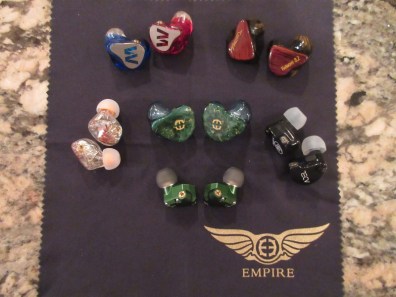
Pair up.
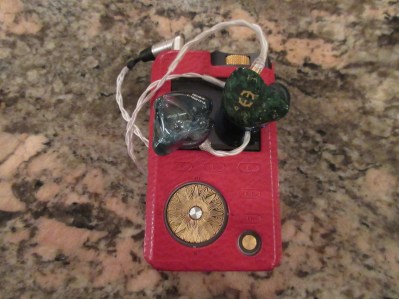
Pair up test was done with different sources, mostly to check for hissing, dynamics of the sound, and retrieval of details. Zeus-R impedance is 21 ohms – typical for an easy to drive multi-BA monitors, while sensitivity is high at 119dB. Hissing will depend on the source and its amp stage design, but also keep in mind that generic OFC stock cable which has wires with higher resistance will attenuate some of the hissing noise, and you can quiet it down further by using impedance adapters.
LPG – noticeable hissing; expanded soundstage; neutral, articulate, layered bass; very detailed transparent mids; crisp airy extended treble.
Opus#1 – noticeable hissing; expanded soundstage; a little deeper sub-bass extension and a bit more mid-bass slam, but the bass is still very articulate and layered; very detailed and a little smoother mids; crisp airy extended treble.
Micro iDSD – no hissing (in ECO mode w/high sensitivity setting, otherwise there is hissing), wide expanded soundstage; tight punchy articulate bass, but with deeper sub-bass and more rumble; more body in mids, mids are still detailed and very revealing, but a little smoother, vocals are very organic and detailed; treble is crisp and extended, though I hear a little less airiness where the treble is well defined but just a little smoother.
L5 Pro – mild hissing; expanded soundstage; deeper sub-bass with more mid-bass punch, still articulate and layered bass; a little more body in lower mids and smoother upper mids, still very detailed and transparent; crisp airy extended treble. Overall sound is a little warmer, smoother.
L3/Pro – dead silent; expanded soundstage; deeper sub-bass extension and a little more mid-bass punch, while overall bass is a little slower and more analog (performance more typical of dynamic driver rather than fast/tight BA); mids have more body and smoother, but still very detailed and transparent; treble is crisp airy, but with a little less airiness. The sound is more musical and smoother.
X7 w/AM2 – noticeable hissing; expanded soundstage; a little more mid-bass punch, but bass is still very articulate, tight, and layered; very detailed transparent mids; crisp extended treble.
X5ii – mild hissing; expanded soundstage, still above the average in width, but not as wide; a little more mid-bass punch, while bass is still articulate and layered, but a little slower and more analog (closer to dynamic driver performance rather than BA); mids have a little more body, warmer and smoother, and still detailed; treble is crisp and airy but has a little less sparkle.
DX80 – noticeable hissing; soundstage is above average, but did shrunk a bit, not as super wide; the sound is warmer, smoother, more musical and less micro-detailed, still excellent retrieval of details but not on a micro-detailed level. Vocals sound more organic, and treble is crisp and airy, but a little less extended.
Note 4 – no hissing; wide expanded soundstage; deeper sub-bass extension and stronger mid-bass punch, bass is a little looser and not as fast, but still well defined; mids have more body and warmer and smoother as well, still very detailed but not on a micro-detail level, organic delivery of vocals; treble is crisp and well defined but doesn’t have as much sparkle and definitely less airiness. Actually, surprisingly good pair up for a smartphone, but the headphone connector (BTG cable) wasn’t as friendly with my phone’s case, keep popping out.
Note 4 + HA-2 – noticeable hissing (even on low gain); soundstage expansion above average but not as wide; bass is deep and with a strong impact, mids have thicker body, warmer, smoother, not as layered or transparent, and treble lost some of the sparkle. I actually preferred a direct pair up with Note 4 over HA-2.
Conclusion.
I hate using the phrase “this is the best I ever heard” because I haven’t heard everything out there yet and also because this phrase caries a lot of subjective weight. But if I would be making a decision to pick a single IEM/CIEM out of everything I have tested and reviewed so far, regardless of the price or the driver count, Zeus-R would make the top of the list. I honestly didn’t realize how much I’m going to enjoy such level of high resolution, layering and separation, and retrieval of details all wrapped in a super wide soundstage expansion. The key in here for me is that I can’t single out even one offensive frequency which pushes the sound toward harshness or graininess. The sound is very resolving and micro-detailed, and yet has a rather natural tonality. Would I call Zeus-R a pure perfection? It depends on how you look at it since you still have to deal with hissing (source dependent), and I preferred to take it further with a cable upgrade to bring up the low end quantity. You never know how 14 drivers can turn into 16 or 18 if you add more low frequency BAs. Whatever Empire Ears decides to do moving forward, either adding more drivers or introducing another tech to existing design, I will be watching them very closely and waiting for the next TOTL release. But in a meantime, I’m putting this record on repeat because I can’t get enough of it!

 Twister6 Reviews
I wish you compared the Zeus R with any JH TOTL
LikeLike
Me too! Hopefully, in a near future I will try to get some JH iems for review 🙂
LikeLike
Nice review and thanks for the comparison with other IEMs. The ‘analog’ bass of the U12 makes it very interesting although I have ordered the U10 instead of the 12.
It would be interesting how EE will integrate ADEL on their IEM’s.
LikeLike
How do these compare to the legacy x?
LikeLike
Sorry, I had these on loan almost 2 years ago, can’t compare it by memory. But for sure the sound sig was completely different.
LikeLike
Hi Twister6, if you had to pick a single ciem/iem from what you have tested and reviwed with £3k budget, which would you choose? Thanks Tom
LikeLike
Everybody has their own favorite, based on their sound preference. I talk to so many people who share with me their favorites, some of which I can’t listen to for more than 5min LOL!!! It’s all a matter of a personal taste. For me personally, it’s a toss between 64 Audio U18t and Oriolus Mellianus.
LikeLike