
Sound analysis.
As I mentioned in the past, sound description of the DAP is not an easy task because in reality we describe what we hear from headphones and their synergy with DAP output power, impedance, DAC, and other components in a signal path. But nevertheless, I will try my best to describe what I hear while switching between a few of my IEMs I’m intimately familiar with (while volume matching by ear) and comparing to other DAPs I have access to.
In my opinion, Opus#2 is a prime example of a balanced neutral reference sound signature with a full body natural tonality. Based on the initial listening with early fw release, I noticed right away that 3.5mm output was a touch smoother while in comparison the balanced 2.5mm output had a slightly faster/sharper transient response with a cleaner on/off transition of the notes. But overall the sound is very transparent, layered, and with an expanded dynamic range. Typically, a full body sound is associated with a warmth which smoothes out some of the details and makes layering and separation of instruments and vocals to be not as distinct. Here, with 32bit DSP mode selected, you have a perfect separation of every note and a sharper transient response where the details just pop out of the background with more clarity. And yet, the sound is not too lean or analytical/bright.
I was very careful in my analysis to make sure I don’t mistake signature of headphones and earphones with the signature of the source. Since I mostly use C/IEMs, I was pleased with Opus#2 performance and synergy with multi-BA driver monitors, especially from BAL output. When I tested some of my full size cans, I found better synergy in high gain, and I also noticed that big dynamic and planar magnetic transducers had a little smoother and more musical full body tonality in comparison to a more neutral transparent sound with multi-BA C/IEMs.
After 1.00.03 fw update, to my ears both 3.5mm and 2.5mm ports started to sound nearly the same, with an exception of balanced port having higher output power and a little wider soundstage expansion. Not sure if it was due to a burn in of the caps or my brain burn in or some other placebo effect, but I clearly remember that after the update single ended output caught up with a balanced one.
External connections.
While Opus#2 is a very capable standalone summit-fi DAP, it’s still flexible enough to drive external AMP, or to be used as a digital transport to drive external DAC/AMP, or to be used as USB DAC. Sometimes I feel it’s an overkill, but then I realize that many audiophiles have capable desktop setups to enjoy their hard to drive headphones at home and can still use Opus#2 in the heart of it. And on the move, you can use Opus#2 without any external help and still enjoy high quality sound.
As I mentioned before, 3.5mm HO output is shared with Optical out, and I found its pair up with Micro iDSD to be very clean and transparent, making it a very capable digital transport. Of course, optical s/pdif signal has its bandwidth limitation so don’t expect the highest bit rate/depth, but still I found this particular pair up with Micro to work quite well.
When it comes to Line Out (LO) testing, I was a bit skeptical since there is no dedicated LO port. I thought maybe theBit guys set volume to the max, but when doing a/b comparison with LO enabled vs setting the volume to the max, I can hear a difference where LO mode is clean while the volume output set to the max (150) had a bit of distortion. I tested it using E12A portable amp which I consider to be neutral and relatively transparent, so there is no coloration added.
USB DAC testing wasn’t as successful using my Win7 laptop since I got an error message that drivers (provided by theBit) didn’t pass some signature test. I have read impressions where others didn’t have this problem, so I need to investigate it further why my laptop has an issue. I also read that MAC users don’t even need to install drivers.
When I got to test it with my aging Galaxy Note 4 smartphone, I actually had a lot more success where I was able to connect Opus#2 without any problem using USB OTG cable. Pair up was fast and Opus#2 was recognized by my phone right away. I was able to control the volume from the phone and the DAP, and used it with different apps. While waiting for streaming capability to be unlocked, this is one of the possible solutions, using Opus#2 as USB OTG DAC. But I found the sound quality in this config to be a bit underwhelming with lower resolution and less transparency when compared to listening to the same track straight from Opus#2.
Bluetooth connection is another way to enjoy your Opus#2 with wireless headphones. Even so aptX codec is not supported, lately I noticed that it makes only a difference with cheap budget IEMs, while high end headphones (my current favorite is P7 Wireless) show very little difference even driven from non-aptX sources.


Pair up.
In the following pair up test I will mention the unique design feature of the particular pair of headphones/iems under the test, as well as will indicate MG (middle gain) or HG (high gain) in addition to Volume level.
R70x (470ohm, open back) – HG, V120 – 3D holographic staging, deep extended textured sub-bass with an articulate mid-bass punch, full body organic natural mids, very transparent and detailed, extended smooth treble with a great articulation, not as much sparkle but more on a natural smoother side.
PM3 (planar magnetic) – MG, V120 – average soundstage width with more depth, deep sub-bass with a moderate quantity, a bit slower mid-bass punch with some spillage into lower mids, full body warm lower mids and warm smooth upper mids, smooth treble which is lacking some sparkle. Overall the sound has a very analog dynamic driver type of characteristics, very smooth, warm, a little congested.
EL8C (planar magnetic) – HG, V104 – above average soundstage width with plenty of depth, quality sub-bass texture with a fast punch mid-bass, lean lower mids, bright revealing upper mids reach analytical level of detail retrieval, crisp airy extended treble. No hint of metallic sheen which I usually hear in other EL8C pair ups.
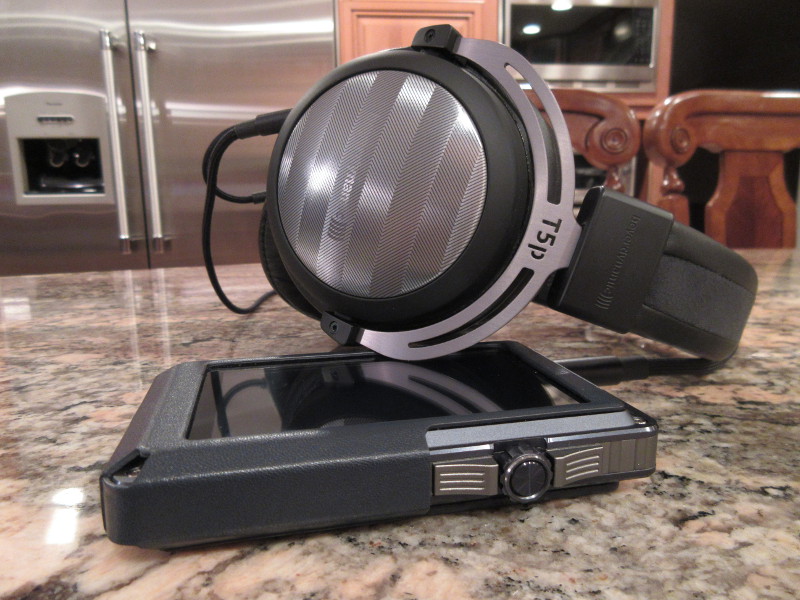
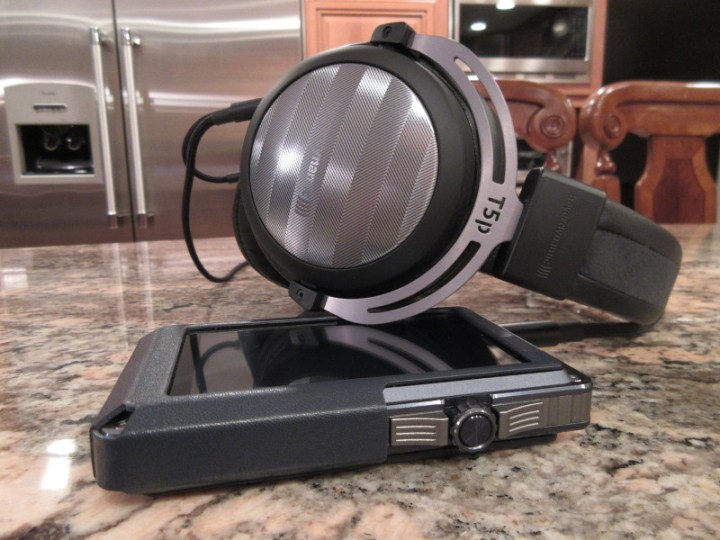
T5p2 w/alpha pads (tesla driver) – MG, V115 – wide/deep soundstage, extended sub-bass with a nice deep rumble, average speed mid-bass punch, warm full body lower mids, detailed natural upper mids, smooth well defined treble. Overall sound is very detailed but not as transparent.
Zen (320ohm, earbuds) – HG, V109, expanded soundstage with an average depth, nice sub-bass rumble, punchy mid-bass, full body lower mids, clear smooth detailed upper mids, well defined smooth treble.
S-EM9 (121dB sensitivity) – MG, V100, no hissing, holographic staging; deep extended sub-bass rumble, punchy mid-bass slam, neutral lower mids, smooth detailed revealing upper mids, crisp airy well defined treble. The sound is very spacious, layered, detailed, and still smooth and natural.
K10UA (115dB sens) – MG, V88, very faint hissing, expanded soundstage, deep extended sub-bass rumble, fast punchy mid-bass, leaner lower mids, revealing detailed upper mids, crisp airy extended treble. The sound is very crisp, detailed, revealing.
Andromeda (115dB sens) – MG, V70, some hissing, holographic soundstage; deep extended textured sub-bass rumble, fast articulate mid-bass punch, slightly leaner lower mids, crisp revealing upper mids with an excellent retrieval of details, crisp airy extended treble. Punchy revealing crisp sound.
U12 w/B1 (115dB sens) – MG, V88, no hissing, above average soundstage width/depth, warm analog bass with a deep slightly elevated sub-bass extension and slower mid-bass punch, warm full body lower mids, smooth laid back detailed upper mids, smooth well defined treble. The sound is smooth and laidback.
UERR (100dB sens) – MG, V101, no hissing, holographic soundstage, extended quality sub-bass (not as much quantity), punchy mid-bass, neutral lower mids, detailed transparent upper mids, crisp well defined treble. The sound is very transparent detailed and layered.
Zeus XRA w/G1 and PWA 1960 (119dB sens) – MG, V75, some hissing, expanded open soundstage, nice deep sub-bass rumble and punchy mid-bass (bass is above neutral with 1960, but still not too aggressive), close to neutral lower mids and very transparent detailed upper mids, and airy well defined treble with a nice sparkle.
Comparison.
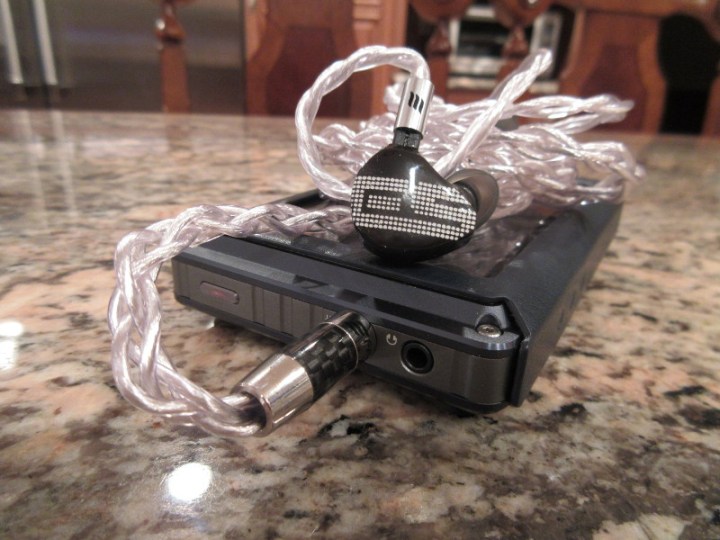
While switching between UERR, S-EM9, and ES60 c/iems, and volume matching by ear when going between two sources, here is how I hear Opus#2 (#2) in comparison to other DAPs.
#2 vs #1 – both have a very similar signature, while #2 stands out with wider and deeper soundstage, a faster transient response of notes (transition between on/off state of notes), and slightly better dynamics. #1 has a little smoother tonality while #2 sounds a little sharper, with better defined details. The difference is not exactly night’n’day, and #2 is more of a high res refinement of #1. Both have the same level of hissing with sensitive IEMs.
#2 vs LPG – the sound quality is very close, down to a similar level of transparency, detail retrieval, and soundstage expansion. In terms of tonality #2 is just a little smoother while LPG has a deeper black background which is more noticeable with less sensitive IEMs (cleaner edges around notes, sharper contrast between notes on/off). But with sensitive IEMs, LPG has higher level of hissing which ruins that dark clean background. Also, LPG has a little more impact in mid-bass.
#2 vs AK120ii – similar signature where AK tonality is a little warmer and smoother, while #2 is more revealing and more dynamic. I also find #2 to have better separation and layering while the smoothness of AK makes it a little congested in comparison. #2 soundstage is wider, while depth is the same. Also, #2 has higher level of hissing in comparison to AK with sensitive IEMs.
#2 vs PM2 – #2 sound is more revealing and transparent, while PM2 is a little smoother and slightly less resolving. #2 has better layering and separation of instruments while PM2 sounds a little congested in comparison. #2 soundstage is wider, while both have the same depth. PM2 has a little less hissing with sensitive IEMs, though you can hear it with both.
#2 vs X7 w/AM2 – very similar resolution and layering/separation of the sound, and similar retrieval of details, but the tonality of X7 is leaner and a little brighter while in comparison #2 has more body and sounds a little more neutral with a deeper sub-bass extension. Also, #2 has a wider soundstage. #2 hissing is more noticeable with sensitive IEMs while X7 is almost down to a minimum.


Conclusion.
In my opinion, Opus#2 would have received a lot more attention if that was theBit’s first DAP. Despite being in business for a long time, this company came out of nowhere and surprised everyone with Opus#1 release. And to top it off, they had a very impressive fw update and a temporary price cut which is still in effect. As a result, when Opus#2 was released, the focus shifted from its flagship summit-fi sound quality to a price difference where people trying to justify the delta. In reality, Opus#1 and Opus#2 are just like two multi-BA IEMs from the same manufacturer where you have mid-tier model priced lower and flagship TOTL at the top of the price food chain. You can get a regular Opus#1 which is currently discounted down to $399 from the original $599, or get a metal Opus#1 which is available for $899 and uses CNC all metal body and different high end opamps, or you can go for the TOTL experience with Opus#2 for $1599 which not only has a superior build, more resolving sound, and higher end dual DAC architecture, but also expected to receive a fw update with a support of wifi streaming.
I know that many people go for the best price/performance ratio, and it will be hard to beat Opus#1 in that perspective. But if you are looking for TOTL performance at a reasonable price in comparison to other popular flagship DAPs that cost more, Opus#2 deserves a serious consideration. And again, I can’t help but to be curious what else theBit is going to come up with. This company surely knows how to design a well build and a great sounding product, and I think if they can bring it closer to $1k price mark – their next DAP release will reach a lot more audio enthusiasts and audiophiles.

 Twister6 Reviews
By now you can get it under 1250 US ! I think they feel the heat of the DX 200 that is similar and cost much less .Congratulation to I- Basso to have one of the best Price value on the market .
LikeLike
Yes, $1250 is a great price for #2. Actually, Opus#2 and DX200 are two of my favorite daps at the current moment.
LikeLike
Thanks for your reply I appriciate your comment .
LikeLike
PLEASE: My Opus#2 stubbornly refuses to display album art for any music that I load onto its internal memory. It does display art, however, when I insert a memory card that was loaded through another player (in this case the Fiio X7 mkii). There do not seem to be any updates available. Please tell me how to fix this.
LikeLike
Did you try database initialize and factory reset? If that doesn’t work, Opus is picky about resolution of embedded album art. Check on head-fi if anybody else having a similar issue and how they resized the images.
LikeLike
Tidal, Spotify, Deezer works perfectly
LikeLike
1. Go to “Settings” and check if there is “Streaming” in ”Settings”.
2. And Tap “ Streaming” and whether to be installed such 3rd party applications(Tidal,Spotify etc.)
3. If he installed such 3rd party application already, please check if there is no sound out or so when he playbacks.
LikeLike