
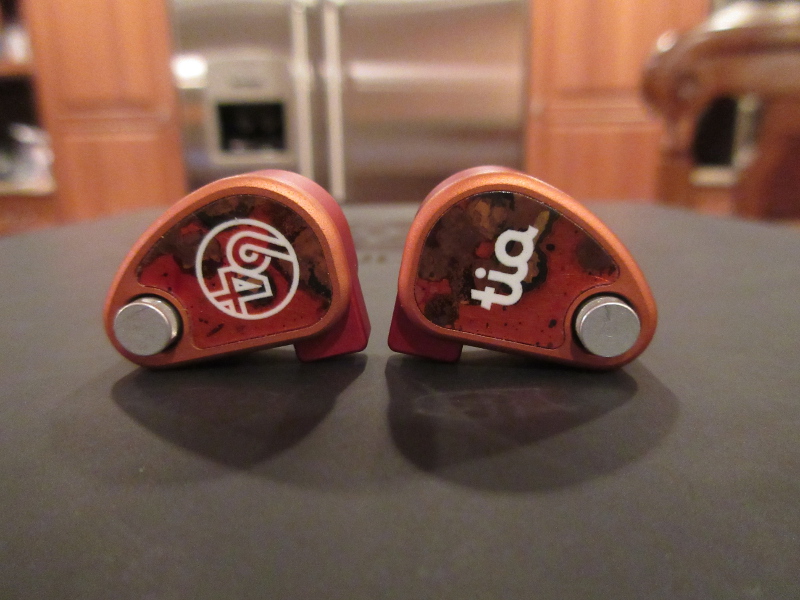
Sound Analysis.
When analyzing U18 sound, you have to look at a separate pair up with M20 and M15 modules, like a switch between two distinct sound signatures. Prior to starting my critical listening, I did put U18 through 100hrs of standalone burn in, but that was more for a benefit of the cable as well as making sure that all the solder joints, internal wiring, and crossover components have reached their prime condition. Either if you believe or don’t in a burn-in, for me it’s almost like an OCD routine I go with every piece of audio gear.
The first thing I noticed with U18, regardless of the module, is a very open and expanded sound like you would hear from a full size open back headphones. Also, while listening to U18 for extended period of time, I’ve never experienced an ear fatigue or a pressure associated with some other sealed iems, and that experience was very similar to my previous testing of U6 and U12 with various APEX and ADEL modules. Furthermore, I was very impressed with the coherency of driver tuning where all 18 BAs work together in a perfect unison.
When it comes to the actual sound with M20 module, you get a full body balanced signature with a natural transparent tonality. Regardless of the type of instruments, real or synthesized, the timbre accuracy was convincing to my ears, and the same goes for vocals, either male or female, sounding natural and realistic. The sound has excellent retrieval of details, not on an analytical level but in its own natural way with a high level of clarity surrounded by smoother edges. U18 is quite forgiving when it comes to a poorly recorded music, and also works great paired up with various high res, mid-fi, and even some low-res sources.
Starting with a low end, you get a deep textured rumble which you can actually feel since it’s not just an extension but actually has a tasteful boost in quantity. Mid-bass has a speed typical of BA drivers, with a faster attack, but the decay is a little longer, giving the bass a bit of a dynamic driver characteristic with some additional body. Overall, bass is very well controlled, articulate, layered, well rounded, and with no spillage into lower mids. Lower mids are neutral, maybe a little toward the leaner side, and yet they surprisingly add some body to the sound. Upper mids are very clear and detailed while still retaining their natural smoothness. Interestingly enough, I don’t hear as much of air between the layers of the sound when it comes to M20 module, but the perception of the sound is still layered, transparent, and very resolving. Treble is crisp, very well defined, with a nice extension, and well controlled airiness.
When you replace M20 with M15, it feels like a switch to a different signature with a more revealing crisp airy sound that has a slightly more mid-forward characteristics, edging a bit more toward analytical level. This sound is a little more critical, not as forgiving with a poorly recorded music, especially if there are some spikes around 5k-6k area in the recorded material.
With M15, bass becomes more neutral in quantity, with a less pronounced sub-bass rumble which you can still hear very well, but the quantity is reduced. The same with a mid-bass being not as intense, definitely with a little less impact. The overall bass is still very articulate, layered, well controlled. Going up to lower mids, they sound a little leaner in comparison to M20, though the sound never feels like being v-shaped. With a lower quantity of the low end, the upper mids perception becomes a little more forward, brighter, leaning more toward the analytical side and will a little more airiness between the layers of the sound. Treble is still crisp and clear, but has a little more crunch and more airiness which can push some poorly recorded tracks toward a little harsher tonality. The sound becomes more revealing, less forgiving.
Regardless of M15 or M20 module, as I already mentioned, the sound is very open and has a natural expansion of the soundstage in all 3 dimensions. I do hear a very wide staging, but it’s still realistic, not exaggerated. The depth of the sound is not too far out of your head and not too close in (not too intimate), feels like you are 3-4 rows in front of the stage. The separation and layering of the sound is excellent, regardless of the modules. As a matter of fact, even with M20 where you have more bass impact and slightly less airiness between the layers – layering and separation of instruments and vocals is still great, there is never a feeling of a sound being congested. The same with imaging having a very convincing positioning of instruments and vocals, a rather accurate positioning where you can easily pin-point every sound.
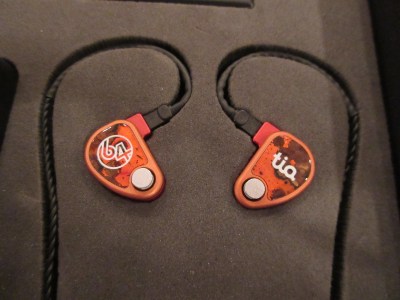
APEX modules.
Depending on your tonal preference, U18 has enough tuning flexibility between M20 and M15 modules to adjust the sound to your liking. In a summary:
M20 (aluminum finish) – more bass impact, more body in lower mids and overall sound, more organic natural presentation of upper mids and vocals, and a little smoother treble while still retaining the same level of airiness and resolution.
M15 (gunmetal finish) – more neutral bass, less sub-bass rumble, more neutral leaner lower mids, brighter, a bit colder, and more revealing upper mids, and crisper treble.
At the end of the day these modules are just another set of tools to fine tune the sound of 64audio IEMs. If I want more bass and smoother sound in U18, I switch to M20, if I want more neutral bass and more revealing upper frequencies I switch to M15. It will also depend on the pair up and the signature of the source. I’m not sure if it would be right to say that one module is better than the other, they just do a different job where everything is up to a personal preference.


Pair up.
In my pair up test with different sources, I decided to be consistent and use U18 with M20 module along with an included 3.5mm SE stock cable. While U18 has an average 115dB sensitivity, I wasn’t sure what to expect due to its 9 ohm impedance and how it will affect the hissing with different sources.
Lotoo PAW Gold – very spacious soundstage, deep textured sub-bass rumble, punchy fast mid-bass, well controlled articulate bass, neutral lower mids (a touch on a leaner side), very detailed, revealing, layered, transparent upper mids, crisp well defined airy treble. No hissing.
FiiO X5iii – spacious soundstage, textured sub-bass rumble with a little less quantity, punchy mid-bass with a little slower speed, bass is articulate but a little slower, a little more body in lower mids, clear, detailed upper mids, crisp well defined airy treble. Very slight hissing.
theBit Opus#2 – very spacious soundstage, deep textured sub-bass rumble, punchy fast mid-bass, well controlled articulate bass, neutral lower mids, detailed, revealing, layered, transparent upper mids, crisp well defined airy treble. No hissing.
theBit Opus#3 – very spacious soundstage, deep textured sub-bass rumble, punchy mid-bass with a moderate speed, well controlled articulate bass, neutral lower mids, detailed, revealing, smoother upper mids, crisp well defined airy treble. No hissing.
Cayin i5 – very spacious soundstage, deep textured sub-bass rumble, punchy fast mid-bass with a healthy doze of impact, well controlled articulate bass, neutral lower mids, detailed, revealing, smoother upper mids, crisp well defined airy treble. No hissing.
iBasso DX200 w/AMP2 – very spacious soundstage, deep textured sub-bass rumble, punchy fast mid-bass with a nice impact, well controlled articulate layered bass, neutral lower mids (a touch on a leaner side), very detailed, revealing, layered, transparent upper mids, crisp well defined airy treble. No hissing.
FiiO X7 w/AM3 – very spacious soundstage, deep textured sub-bass rumble, punchy fast mid-bass with a nice impact, well controlled articulate layered bass, neutral lower mids (a touch on a leaner side), very detailed, revealing, layered transparent upper mids, crisp well defined airy treble. No hissing.
Cowon Plenue 2 – very spacious soundstage, deep textured sub-bass rumble, punchy fast mid-bass, well controlled articulate layered bass, neutral lower mids (a touch on a leaner side), very detailed, revealing layered transparent upper mids, crisp well defined airy treble (a little extra sparkle). No hissing.
A&K AK120ii – spacious soundstage, deep textured sub-bass rumble, punchy fast mid-bass, well controlled articulate bass, neutral lower mids, very detailed, transparent upper mids (a little brighter upfront presentation), crisp airy well defined treble. No hissing.
iFi Micro iDSD – very spacious soundstage, deep textured sub-bass rumble, punchy fast mid-bass, well controlled articulate layered bass, neutral lower mids, detailed, revealing layered, transparent upper mids, crisp well defined airy treble. No hissing.
Samsung Note 4 – spacious soundstage, nicely textured sub-bass rumble, punchy mid-bass, well controlled articulate bass, neutral lower mids (a bit on a leaner side), detailed, revealing upper mids, crisp well defined treble. No hissing. Of course, the sound with my aging smartphone is not as resolving as with some of the DAPs, but it was still a great pair up.
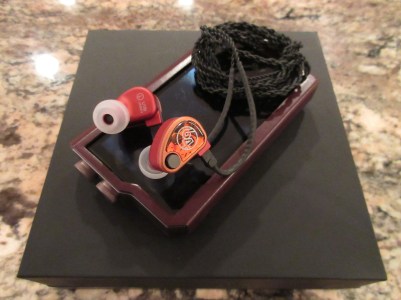
Comparison.
Using both LPG and Plenue 2 as my sources, I kept U18 with a stock SPC cable and M20 module, and volume matched every pair by ear. Also, I noted which cable was used with other C/IEMs in comparison to U18, and if necessary used EA 2.5mm-to-3.5mm adapter.
U18 vs ES80 (Ref8) – soundstage: 18 has more width while 80 has more depth; 18 has deeper sub-bass with more rumble and faster mid-bass with more impact. 80 bass is more neutral, and sub-bass extension is not as deep. 18 lower mids are a little leaner while 80 is a little more neutral with more body. 18 upper mids are more revealing, more resolving, while 80 is smoother and a little warmer. 18 treble has more sparkle and more airiness. Overall, 80 is more neutral while 18 is more balanced and also more resolving, more layered, and more transparent in comparison.
U18 vs ES60 (TWag v3) – soundstage: the depth is very similar, but 18 has more width; 18 has a deeper and more textured sub-bass with more mid-bass impact. 60 sub-bass is lower in quantity, and mid-bass is not as articulate, overall ES60 bass is not as tight. 18 lower mids are a little leaner while 60 is more neutral with more body. Both have a revealing upper mids, but 18 is more layered and with better retrieval of details, while 60 is a little smoother. Both have a sparkly airy treble, but 18 has a little more airiness and better extension.
U18 vs W80 (Ref8) – soundstage: 18 has more width and depth; both have a very good sub-bass extension, but 18 has more rumble and more texture, both also have a nice mid-bass impact, but 18 is tighter and more articulate. 80 lower mids are more neutral and with more body while 18 is leaner. 80 upper mids are smoother, warmer, more organic while 18 upper mids are more layered, more revealing, with better retrieval of details. Both have a good treble extension but 18 has more sparkle and airiness.
U18 vs Zeus XRA (Ares II) – soundstage: both have a similar depth but 18 has a touch more width; while XRA sub-bass has a good extension, its very neutral and sounds flat in comparison to a lot more rumble and texture in 18 sub-bass, both have a fast mid-bass with 18 having more impact; while both have a well controlled and articulate quality bass, the bass quantity (especially lack of sub-bass rumble/texture in XRA) is the biggest thing that sets them apart. Both have lean lower mids, though 18 has a touch more body, and both have a layered revealing upper mids while 18 has a touch smoother tonality while XRA has a little more air between the layers of the sound. Both have a good sparkly treble extension with lots of airiness, though XRA treble can get a little more piercing. Also, with Zeus XRA you hear a higher level of hissing with LPG/P2, while 18 was down to a minimum.
U18 vs W900 (1960 4w) – soundstage: a very similar soundstage width (here, W900 greatly benefits from 1960) while W900 has a little more depth, projecting slightly more out of your head; both have a great sub-bass extension, but I hear 18 going a touch deeper, having a little more rumble, and having more articulate texture. Both have a strong mid-bass impact, but 18 is a little faster. 18 lower mids are a little leaner while W900 is closer to neutral with a little more body; upper mids are revealing in both but W900 is smoother and not as layered, while 18 upper mids are little brighter, with better layering and separation. Both have a very similar treble in terms of sparkle, extension, and airiness. While with Zeus it was a quantity of bass, here it’s the quality of bass that makes the biggest difference where you hear a more typical DD performance when listening to W900 vs a faster, tighter, more articulate performance of BA drivers in 18.
U18 vs K10UA (stock SPC) – soundstage: similar depth while 18 staging is wider; both have a good sub-bass extension, while 18 goes a little deeper, has more textured rumble, a little higher quantity; when it comes to mid-bass, both have a fast articulate mid-bass punch, though 18 has a touch more quantity. Lower mids are lean in both iems, while upper mids have a similar revealing layered sound, though I hear 18 having a little more air between the layers. Both have a crisp airy treble, but K10 treble is a little more piercing.
U18 vs S-EM9 (Thor II+) – soundstage: while 18 has more width, EM9 has more depth; both have a similar textured sub-bass rumble, even the quantity coming closer, but mid-bass varies in here with 18 being tighter and more articulate while EM9 being slower and a little hollow in tonality, when compared. Lower mids are leaner in 18, while EM9 is more neutral with a little more body. Upper mids are more revealing and layered in 18 while EM9 is more forward, smoother and more organic in tonality, not as layered as 18. Both have a well defined crisp treble, though 18 treble has a better extension.
U18 vs Maestro (TWau) – soundstage: both have a similar depth while 18 has more width; both have a great sub-bass extension though 18 has higher quantity rumble, both have a fast mid-bass punch, but U18 bass feels tighter and a little more articulate in comparison. Maestro lower mids are more neutral with slightly more body in comparison to leaner 18 lower mids. Both have a revealing upper mids, Maestro is a little smoother while 18 is more layered with a better definition. Both have a nice crisp treble with a similar extension, except 18 treble has a better definition.
U18 vs VEGA (ALO Litz SPC) – soundstage: 18 has a touch more width while VEGA has more depth; VEGA has noticeable more sub-bass, but it’s not as textured as 18. Also, U18 mid-bass is faster, tighter, more controlled and with a better articulation; in comparison, VEGA mid-bass has more slam. 18 lower mids are leaner, while VEGA is a little north of neutral with more organic body. Upper mids are more layered and more revealing in 18 while VEGA is a little smoother and a touch warmer. Both have a crisp airy treble, though VEGA is a little more piercing.
U18 vs Xelento (stock SPC) – soundstage: similar depth but 18 has more width; both have a deep texture sub-bass rumble that goes pretty deep, but Xelento has more sub-bass quantity. Mids bass in Xelento is slower but has more impact than U18 mid-bass, but in comparison U18 mid-bass is faster, tighter, with more control. Lower mids are more neutral and with more body in Xelento, upper mids in 18 are more revealing, better layered, a little more resolving, while Xelento is also revealing but smoother in comparison. Treble is very similar with a crisp airy well defined performance.
U18 vs UERR (stock OFC) – soundstage: similar staging depth while 18 is wider; U18 sub-bass extends lower and has more rumble in comparison to a more neutral flat sub-bass in UERR. Mid-bass in 18 also has more impact and tighter in comparison to a more neutral and a little slower UERR mid-bass. The overeall bass in UERR is more neutral and slightly more laid back. 18 lower mids are leaner while UERR is smoother and with a little more body. Upper mids are clear, detailed, and smooth in UERR while 18 upper mids are more revealing, layered, transparent. Both have a crisp well defined treble but 18 has a better extension and more airiness in comparison.
U18 vs ERIB1C (stock OFC) – soundstage: a similar staging width while ERIB staging is deeper; while ERIB sub-bass does have a good extension and a little bit of rumble, it’s very neutral and flat, definitely not a fair comparison to a more textured U18 sub-bass with a lot more impact and more textured rumble. The same with mid-bass, while both share a similar speed of the bass, ERIB is rather neutral in comparison to more articulate impact of 18. Both have a very similar lean lower mids, and revealing layered upper mids, though 18 maybe a touch smoother. Treble is where I hear more difference with ERIB having more crunch and airiness.
U18 vs U12 w/M15 (Ref8) – soundstage: both have a similar depth but 18 is wider; U18 sub-bass goes a little deeper and has more controlled rumble and more quantity, mid-bass is faster, tighter, and more articulate in 18 while 12 is a little slower, and not as controlled, spilling a bit into lower mids. Lower mids in 18 are lean while 12 are a little north of neutral, with more body. Upper mids are more revealing, more detailed, more layered in 18 while 12 is smoother, warmer, more laid back. Treble has more sparkle, more airiness and better extension in 18.
64audio family picture (U6, U12, U18).


Conclusion.
64audio U18tzar is one of the most expensive IEMs I had a chance to review, and it’s also one of the closest to hit a sweet spot of my sound preference when paired up with M20 module. That’s why in the last few months it became my go-to IEM. Does this mean it will be everyone’s cup of tea with everybody else feeling the same about it? It’s hard to tell because we all have a different sound preference, use different sources, listen to different genres of music, and have a different ear anatomy. Look at the other flagships mentioned in a Comparison section of my review, I’m sure there are people who have these at the top of their list. Btw, some of these IEMs along with premium aftermarket cables could cost even more than a stock U18. But either way, sometimes it makes sense to invest into one TOTL flagship that hits a sweet spot, rather than buying a handful of flagships that dance around it.
At the end of the day it all comes down to a personal preference when trying to figure out your ideal IEM. I found U18 to have a very detailed, resolving, balanced sound with a soundstage of an open back headphones. When equipped with M20 module, I hear a full body natural revealing tonality with a very impressive quality/quantity bass, and when switching to M15, I hear a more neutral, brighter, and even more revealing airy sound. It felt like flipping a switch when replacing the modules, and I was able to fine-tune the sound further by cable rolling. I know many are also interested in 64audio other flagship, TIA Fourte, and maybe I will get an opportunity to review and to compare it later. But for now, I’m holding U18 in a very high regard. Also, if you get a chance to attend your local CanJam audio show (check http://www.canjamglobal.com/ for the dates) where 64audio is often one of the exhibitors – take the opportunity to hear 64audio IEMs and other manufacturers flagships to compare and to decide which one is the best for you. Reading different reviews and impressions is important to get others perspective about the product, but nothing can substitute your own personal experience when deciding to invest into TOTL flagship IEM.

 Twister6 Reviews
Hi!!
what a detailed review!!
Since i have the U4-SE, my U18 Hype are growing faster…
i have some questions for you please:
did you try the U18 with the Alo8 cable and AK120II?
if you had try this combo how is the match between them?
in your opinion what high end cable is the best match for U18?
2999USD is the same value of Shure KSE1500, between this and U18…
wich is the best option to buy in your opinion?
my sources are the AK240SS (wonderful match to U4-SE) and AK380
regards
LikeLike
Sorry for delayed reply. I never heard KSE1500, so can’t comment, but keep in mind – it comes with its own AMP pack which is required, and that makes U18 more portable. Pair up with ALO Ref8 is good, but I like it better with U12 to brighten the sound. Ref8 is stiff, has memory effect, and microphonics. I do like EA Lionheart pair up with U18, but to be honest, even the stock SPC cable pairs up great. AK120ii is good, it sounds the same as AK240SS so it will match great. These A&K DAPs in general smoother, even a little warmer. My advice, if you are planning to get U18, start with your current source and stock SPC cable. Give it some time before you upgrade anything. Get to know the sound, try to figure out what (if any) you want to change. Then, look into upgrades.
LikeLike
Ok, thanks for your response
I’ts a good advice…
Last questions:
the fit of the U18 is almost the same as that of U4SE?
The fit it’s a very important to me, and more for this level of price…
In the webpage of 64 audio says: ships in 3-4 weeks…
There are some sort of customization of color of the shell or box?
Thanks again for your help
LikeLike
no customization, and the fit is very close 🙂
LikeLike
Ok, i pull the trigger, soon i post my opinion in the 64 audio thread in head fi…
This are the best sounding iems i’ve tried so far, my only complain….there is a little peak in the highs that annoyed me, not to much, but i feel it in some songs, with comply tips it’s almost gone and the sound is the best…but i can’t use foam tips because they give me itch…
I like to use silicone tips, for now i use star tips (yeah i can fit it in this noozle)
But i want a better sound, maybe similar to the comply
are any silicone tips that do this or sound similar??
By the way, your advice in cables are the best, to me the stock Cable sound better than ALO8…in time may be i will buy something else
LikeLike
Contact 64audio, they have a new foam tips that will be stock with Trio and U12t. I really like them, similar comfortable fit as Comply, but they do NOT degrade the sound quality (Comply boost the lows, and attenuates the high). You might like it. Also, I think 64audio switched U12t/U18/Trio/Fourte to a new premium SPC cable, even better than the one I got and showed in my U18/Fourte reviews. So, you will receive it as well. But check with them to make sure they pack your U18tzar with new foam tips 😉
LikeLike
Ok, but i already have the U18t (sorry for my english, maybe you don’t understand because of this), for now i use the foam tips that came in the box, but i prefer silicone eartips and the stock ones are not good…
Which silicone tip do you prefer?
LikeLike
I see, I thought you just ordered it. You can still contact them, ask for new foam tips, maybe they can help you out. There are so many silicone tips out there, I’m just using a pair from another set of IEMs. I have wide ear canal opening, need to use the largest pair of eartips. Because I have so many iems, I have access to many different eartips 😉 Look for eartips on ebay, or maybe try Penon Audio – in there search for eartips, they have many for $3+.
LikeLike
Hi Twister, not sure if you check comments from something you wrote in 2017 but wondering if you had money to buy either the u18 or the legend x, which would you tend to reach for more?
Been reading comparisons “The A18t I admire for its sheer transparency and insane sound stage dimensions. The Tzar has a cleaner midrange with less emotions and blood, but opts for ultra-resolution and micro detailing. The 64 flagship has the upper hand when it comes to bringing out every single nuance of the spectrum, where the Empire wins on emotions with its warmth-infused lower midrange.”
Cant go wrong with either one but you must have a preference. Would like to know from someone who has listened to both
Cheers
Linh
LikeLike
For me personally it’s not even a choice because these are polar opposite tuned iems. One, U18t is revealing transparent super resolving while the other one, legend X, is L-shaped basshead slammer. Been using U18t for the last 2.5 years, daily and feature in every single review. Only use legend x in reviews for pair up and comparison. All a matter of personal sound preference.
LikeLike
Hello Twister6 I have been following your reviews for quite a few years and I finally get to purchase the U18t as there is a huge discount at my local dealer. They sound sooo good like my Hifiman Arya Stealth.
I would like to get a 4.4 balanced cable for it, do you recommend going 6N OCC silver or 6N Copper from Gucraftsman? I have several of their cables for my headphones and they are great. Just wondering if I should go for copper or silver. Thanks for your help and suggestion!
LikeLike
Choosing cable is tricky because you can’t assume that similar 8wire silver or copper cable will sound the same from different brands. I never heard of Gucraftsman, only see it being sold by hifigo and found FB page. It looks like a legitimate budget cable product, and probably higher quality since these are not $20 Aliexpress cables but in $100+ price range. Now, with all that said, usually a quality silver cable will give you warmth while copper can improve the resolution and make it brighter. I would recommend 8-braid so the cable has lower impedance which could also improve low end response of U18t. So, I would probably go with silver, but I can’t be 100% sure without actually testing it. I have tested some cheaper silver cables that made sound bright and harsh because it wasn’t pure silver but rather silver plated wires. But those “budget” cables were in sub $50 price range, thus explains silver plating instead of pure silver. These Gu cables are around $150, so I would expect a better quality and higher purity. But again, my recommendation is based on guessing since I can’t be 100% sure.
LikeLike
Wow Thanks for your quick reply! I learned something new, I actually thought silver cable increase soundstage and brighten things up, didn’t know silver actually add warmth. Their cable is available on Amazon, and according to great reviews from Headfi, I bought one to try, indeed very good quality and sound. I spoke to their customer service at their Taobao flagship store just now ( I am from Hong Kong) and they said most customers bought silver for U18t. I guess I will try silver according to your suggestion as well. I have their 6n OCC silver 8 braid on the Arya Stealth and it increased the soundstage depth and seem to make the sound more open. Have the 6n OCC copper on the HD800s and made the lows very nice and seem to add more clarity overall in the sound.
Thanks again Twister6 for your reply and suggestion =)
LikeLike
Hi Twister 6,
I know your review is quite old now, but what cable would you recommend to make the U18T even more musical, without sacrificing detail? Would you have any new recommendations to make today.
Thank you 🙂 Your reviews are amazing by the way.
LikeLike
Thanks! Yes, the review is quite old, which also shows that 64audio hasn’t released a lot of new high end stuff since the days of U18t, U12t, Trio, and Fourte. Unfortunately, except for Vitaliy, most of the Belonozhko brothers moved on to their new FirAudio company which in reality is 64Audio Pt 2. But, I digress… Regarding U18t, the cable which I found to have great pair up synergy is EA Leo 2. Most of the higher end cables help you extract more details by making the sound brighter, not musical. Leo II does the opposite, making it musical without compromising on resolution.
LikeLike
Yes it’s funny, I bought the 18t thinking it was two years old but didn’t realize it’s starting to be old… However, I didn’t find anything else in the shop that sounded as pleasing as the 18t (although I’d want to try the Odin or the EVO to compare one day, and find a companion to the u18t with DD bass).
Thanks for the recommendation! It’s exactly what I’m looking for, I didn’t want to make the 18t any brighter than it already is. My first “technical” IEM was the Campfire Audio Ara, which was really quite good but a little too bright over long listening sessions. The 18t bests it while also making listening sessions less fatiguing.
Anyways, take care and thanks for your reply!
LikeLike