
Sound analysis and Comparison.
For the following sound analysis, I decided to use U18 w/M20 module, driving it from Plenue 2 which is one of my more neutral sources, and switching between different cables while everything is being volume matched during the comparison. Prior to my analysis, the cable already had close to 200hrs of playback/burn-in mileage. The comparison started with Thor II+, Lionheart, and Horus, keeping it in EA family.
EA Thor II+ to EA Lionheart: I hear a little wider soundstage; a bit less sub-bass rumble while the bass itself is tighter, faster, more articulate, and with more control; mids are a little more forward, more revealing and better layered; treble is crisper and has a little more airiness. In this comparison, Lionheart is thinner and more pliable, making it more comfortable to wear (btw, regular Thor II is the same 26awg thickness).
EA Lionheart to EA Horus: I hear the same soundstage width with some improvement in depth, sound being positioned a few rows forward; more sub-bass rumble, similar to Thor II+ but the sub-bass feels more controlled, mid-bass is as tight and articulate, with a similar control, though with a little more decay giving the bass a more natural analog perception; mids are balanced, not as pushed forward, still revealing and layered but with a more natural detailed tonality; treble is crisp, airy, and well defined, but a little smoother and more natural. Both cables are similarly thin, pliable, and comfortable to wear.

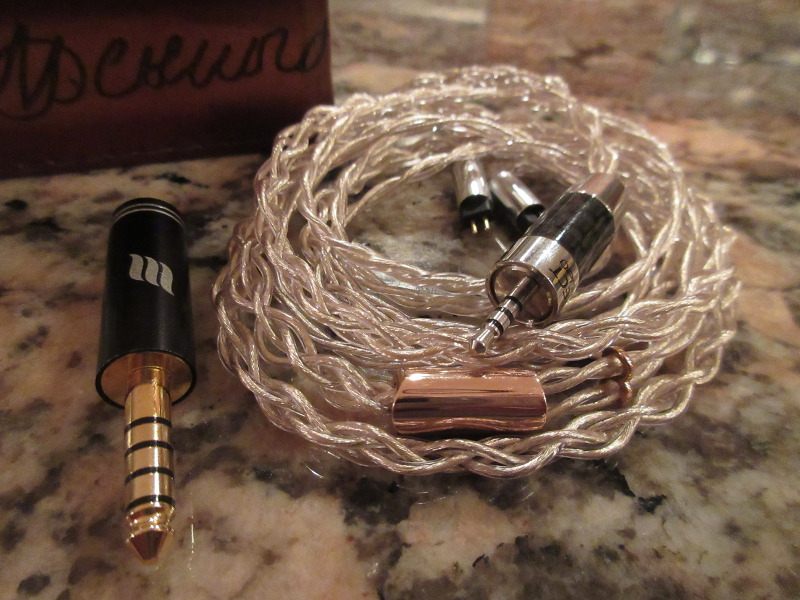
EA Cable family (Thor II+, Horus, Lionheart).
Lately, you can’t talk about flagship cables without mentioning 1960, so here is how Horus stacks up against 1960 4wire, and other comparisons to Whiplash gold plated silver TWau v2 and Han Sound Audio hybrid gold plated silver alloy & pure silver Aurora.
EA Horus to PWA 1960 4wire: very similar soundstage expansion with nearly the same width, while Horus has a little more depth in staging. Low end performance is hard to tell apart with both having a tight, articulate, well controlled layered bass; mids are a little more revealing in Horus, having a brighter tonality with a touch more micro details; lower treble is where I hear a more noticeable difference with both having a crisp well controlled sound, but Horus being a little crisper, having more airiness, and even a slightly better extension, while 1960 is smoother in comparison. Both are great flagship quality cables where the difference is more noticeable in treble, with Horus being crisper and more micro-detailed. Based on this, the choice is not really which one is a better cable, but rather which one will have a better pair up with a signature of your C/IEMs. Also, Horus has a better design ergonomics being thinner, lighter, and more pliable. Another advantage, Oyanide 2.5mm Psquare connector doesn’t have a step collar like in Furutech 2.5mm plug used by 1960, so the mating with either 4.4mm or 3.5mm adapters is more seamless using Horus.
EA Horus to HSA Aurora: very similar soundstage expansion with Horus being just a touch wider. When it comes to bass, Horus has more sub-bass rumble and a little tighter punch, and upper mids/lower treble are just a bit smoother with Horus. Again, we are talking about micro-tuning details which could be a deciding factor for some audiophiles in a pair up with specific C/IEMs. Aurora is brighter and even more revealing than Horus, and that could work with some warmer tuned IEMs, but could push it closer to sibilance with other ones that already have a brighter tuning. Also, Horus with its pliable 4-wire design is a little more ergonomic in comparison to 6-wire Aurora design.
EA Horus to Whiplash TWau v2: very similar soundstage expansion, though I do hear Horus being just a little wider. When it comes to bass, both have the same amount of sub-bass rumble, but mid-bass is a little slower with TWau, and faster tighter with Horus. Both have similar presentation of mids, including tonality and retrieval of details, though TWau is smoother and even a bit warmer while Horus is brighter and with more air between the layers. Treble is also a little smoother with TWau, while Horus is crisper and airy without being harsh or sibilant. Both cables have 4-conductor design, thin and pliable. The decision comes down to which way you want to fine-tune your current C/IEM since either of these cables offer their own unique sound characteristics.
Overall, I hear Horus having a distinct characteristic with an expanded soundstage, extended sub-bass rumble, tight mid-bass punch, open upper mids with more transparency, layering, and micro-details, and fine-tuned treble with crisper, airy, and more revealing sound. If I would to describe Horus in one word, it would be “revealing” where it really pushes the boundary of micro-details and transparency without making the sound harsh or sibilant. Also, it’s relatively thin, lightweight, flexible, and comfortable to wear.
Pair up.
Here is a rundown of how Horus pairs up with different flagship IEMs.
64 Audio U18: expanded soundstage with a balanced signature and a more revealing tonality. Excellent low-end extension down to sub-bass rumble, detailed revealing mids with a layered sound, crisp well-defined airy treble. The sound is more revealing and slightly brighter with a focus on more transparency, layering, and separation, without getting harsh or grainy.
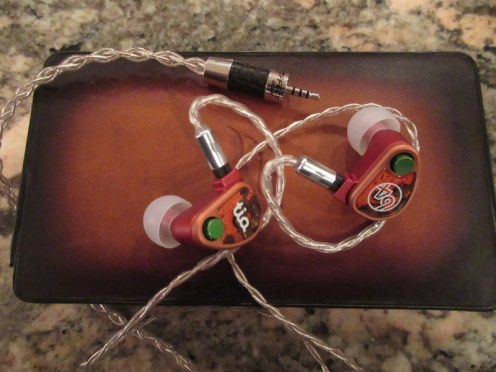
64 Audio TIA Fourte: expanded soundstage with a little more mid-centric revealing tonality. Deep analog quality dynamic well controlled bass, neutral lower mids, very revealing micro-detailed layered upper mids, and a very crisp energetic airy treble. This is a great pair up if you want to squeeze more micro-details out of your sound and craving more treble energy, but perhaps not so much if you want to go the other way, making Fourte smoother and more organic.
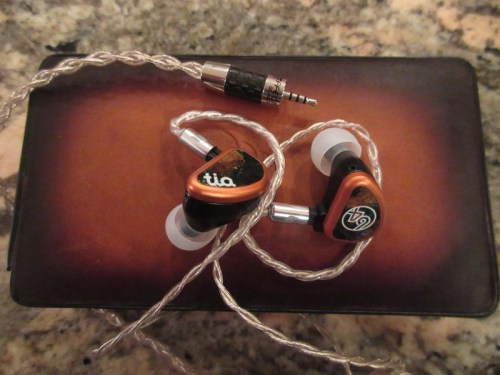
AAW W900: expanded soundstage (more depth than width) with a smooth balanced tonality. Punchy mid-bass with a nice sub-bass expansion, smooth neutral mids with an organic detailed upper mids, well defined airy treble with a moderate brightness (treble is still smooth). W900 benefits from a more revealing cable, and its stock SPC cable is a bad match, so pair up with Horus works quite well.
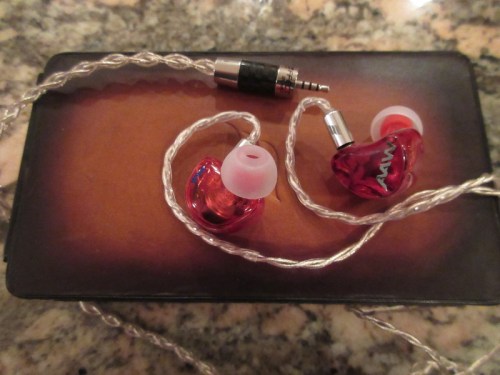
HiFiMAN RE2000: very expanded soundstage (both width and depth) with a balanced signature and a revealing tonality. Deep textured sub-bass rumble with a nice punchy articulate mid-bass. Mids are very revealing on micro-detailed level, transparent, layered, with lots of air between the layers. Treble is extended, crisp, bright, airy, revealing, and surprisingly still non-sibilant. Another example of good pair up if you want more treble energy without harshness like you would get from other cables.

Noble K10UA: expanded soundstage (the widest I heard from K10UA), with a balanced signature and a revealing tonality. The bass goes deep, though sub-bass is not as high in quantity, but you can still hear a nice quality rumble. Mid-bass is fast, tight, and punchy, with bass being articulate and well controlled. Mids, especially upper mids, are transparent, micro-detailed, layered. Treble is crisp, well defined, airy, and very expanded, no hint of sibilance or harshness.
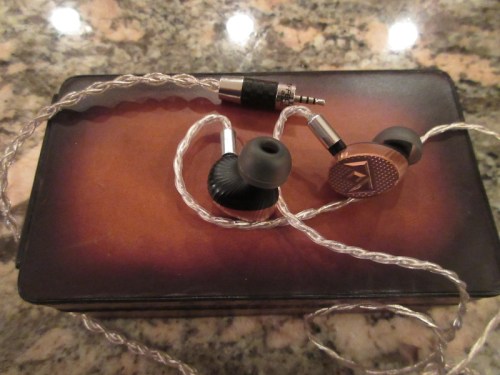
Conclusion.
Cable reviews always generate a mixed reaction with some people being convinced that a reviewer is trying to sell them a snake oil. The intent of my review is to share about the changes in sound I hear when using the cable, and I want people to be aware about the cable design and what makes it unique. Regarding the price, just based on a cost of the material, a pure copper wire will be a fraction of a price in comparison to ultra purity OCC Gold Plated Silver wire. And this applies not only to cables, but also when you go shopping for jewelry with your wife or girlfriend. It’s just a common sense. On top of that, you have to consider the research and development of wire geometry design with multi sized strands, Platinum/Palladium plug with Ferrite Guard tech, and a design “squeezed” into 26awg conductors – definitely not your ordinary “coat hanger” wire.
Of course, the perception of sound and sound changes is very subjective, but I found Horus to have a consistent characteristic of making the sound brighter, more revealing, more transparent. Effect Audio was able to achieve this fine-tuning without making the sound to be harsh or grainy, a problem with some other cable manufacturers. Just remember, cable is not a tool to change your sound like an EQ. It’s there to fine-tune the sound, to squeeze every last drop of the performance. Yes, it’s a tool, sometimes with subtle tuning effect and other times with a more noticeable effect. It’s not gonna make your C/IEM sound better if the sound signature is not your cup of tea to begin with. But it can fine-tune it to perfection if you find the right pair up with Horus.

 Twister6 Reviews
For $1,600, you better hear a difference and also do your taxes for 10 years!
LikeLike
… and maybe write it off under your taxes as a diminishing return expense 😉 It’s obviously a flagship cable intended for flagship iems that cost more than a cable itself. It’s a niche market.
LikeLike
Great Review. I see the pictures posted are with the 1Z, however the review was done with the Plenue 2?
Any impressions on the Horus with the 1Z?
Thanks
LikeLike
1Z adds more body and smoothes out treble just a bit. Since Horus focus is more on upper micro- details, I wanted to describe the sound using more neutral source. But 1Z will smooth out top a little bit without losing details and also adds deeper more 3D bass rendition. To be honest, per my own personal taste, I prefer using 1Z paired up with Horus since it just takes a little edge off the top.
LikeLike
The material for mars is occ gold plated silver . Where the horus differs is that it has multisize stranding and is litz. Think of the horus as mars mark2
LikeLike
You are right, not sure where I got the previous info (just corrected my review).
LikeLike
What’s that apex module on the U18?
LikeLike
that was just limited edition M15, a few pieces made for promotional purposes in green color; there were not even for sale. Nothing different than original one, just a different color. BUT, read my FIR Audio m5 review. Bogdan is making new ATOM XL modules fully compatible with APEX socket and slightly different sound tuning. Read that review, I covered some details in there.
LikeLike
So I take it the only first party APEX modules there are at the moment are the M15, M20, M26 and the FIR ATOM modules are the first “third party” APEX modules.
LikeLike
Yep.
LikeLike