
Sound analysis.
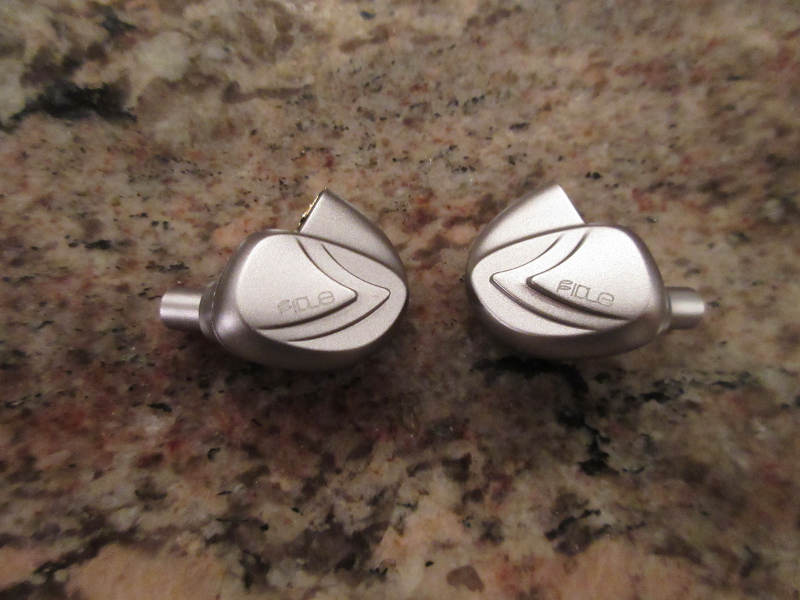
Upon receiving Virgo hybrid, I put this IEM through 100+ hours of burn-in to make sure the dynamic driver, crossover elements, and the cable reached its full potential. The testing was done using stock cable.
Once I started my critical listening, I found A85 to have an above the average soundstage expansion where I hear a little more depth than width. Based on that, imaging is good, but not outstanding. Also, it has a neutral-revealing tonality with a distinct mid-forward sound signature. As a matter of fact, I would have never guessed it’s a 3way hybrid since this is not a typical sound tuning of other 3way hybrids I’m familiar with. Also, the sound is dynamic, but not very layered or separated. The focus here is certainly on mids, their clarity and retrieval of details.
Bass has a good extension, going down to a deep sub-bass rumble, but the quantity is close to neutral. The same with mid-bass, having a tight fast punch and closer to neutral quantity. Not a very typical DD performance when it comes to 3way hybrid, but the focus here is more on accuracy and articulation rather than impact. If you expect a typical DD low end performance, these would not be for you.
Lower mids are very neutral, giving room for the star of this tuning – the upper mids which are rather forward, detailed, clear, and natural. The retrieval of details is not on micro-detail level, these are certainly not analytical, they just natural, clear, especially when it comes to vocals. Mids are not congested, but also do lack some layering which I usually hear when you sense air between the layers.
Treble has less focus in A85 tuning. It’s there, but lacking sparkle and airiness. It’s not necessary rolled off, just attenuated enough to push it into the background, giving more room for upper mids to shine. Just in case if you haven’t picked up on it, upper mids are the star of A85 tuning.
Comparison.
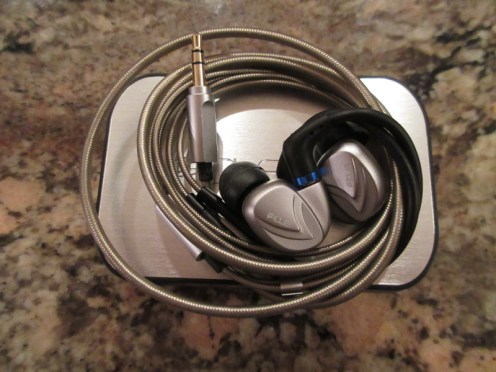
Of course, many would be curious to find out about A85 vs A83 comparison, to see if it’s an upgrade or a sidegrade, and how it stacks up against their current A91 flagship. In addition, I compared it to a few other popular 3way hybrids.
A85 vs A83 – very similar soundstage expansion, though A85 sounds a little narrower in comparison to A83. The big difference here is in a sound signature. While A83 has a W-shaped balanced sound tuning, A85 has a different tuning approach where in comparison at one side of the spectrum it reduces the sub-bass rumble and mid-bass impact, and at the other side it significantly cuts the 10k peak and rolls off the treble, reducing sparkle and airiness. As a result, you are left with a clear and detailed mid-forward signature with a focus on clarity and natural timbre of vocals and other instruments. A83 has a lot more treble energy and a relative boost in low end. The bottom line, A85 is not an upgrade, but rather a sidegrade.
A85 vs A91 – A91 soundstage expands in width, and the sound signature is more balanced. A91 bass is more lifted, in comparison to more neutral A85 bass. Mids have very similar quality and quantity with a forward detailed presentation where A91 is more refined and more layered. Also, in a comparison to a more neutral A85 treble, A91 has more sparkle and airiness, but not as much as the original A83. Staying true to its flagship status, A91 still holds the crown over A83 and A85.
A85 vs DN2kJ – 2kJ soundstage is wider and deeper, while the signature is more v-shaped in comparison to mid-forward A85. With a bass, 2kJ has a little more sub-bass rumble and maybe a touch more mid-bass impact, while A85 bass is more neutral in comparison. With lower mids, 2kJ is a little leaner, losing some body while A85 is more neutral. Upper mids are more natural in A85 while 2kJ tuning is more on analytical level, being brighter and colder. The big difference is around treble where A85 is smooth and neutral while 2kJ explodes with a bright crunchy treble that has a lot of sparkle and airiness. 2kJ treble is splashy, and those who crave more upper frequency energy will like it, but if you want something more natural, A85 is a better choice in this comparison.
A85 vs IT03 – IT03 soundstage is wider, while depth is similar. IT03 has a more balanced tuning vs mid-forward A85. Both have a similar bass extension, but IT03 has more sub-bass rumble and stronger mid-bass impact. Both have neutral lower mids, and A85 upper mids are more forward while IT03 upper mids pushed a little back. Both upper mids have a more natural tonality with plenty of clarity, but IT03 is more transparent and with better layering. With treble, while A85 is more neutral, IT03 has more sparkle and airiness with better treble extension.
A85 vs New Primacy – very similar soundstage expansion. Prim has a more balanced signature with a warmer tonality, while A85 is more mid-forward with a neutral revealing tonality. Prim sub-bass goes deeper with more textured rumble and mid-bass has more impact while A85 is more neutral in comparison. A85 lower mids are more neutral and leaner in comparison to fuller lower mids of Prim which gives these IEMs more body. Upper mids are more forward and more revealing in A85 while Prim is smoother and warmer and slightly pushed back in comparison. Both have a similar smooth warmer treble which lacks extra sparkle and airiness.
Fidue family picture (A91, A85, A83).


Pair up.
With an impedance of 20 ohms and sensitivity of 107dB, A85 is easy to drive, and I used a variety of DAPs in this pair up comparison.
Plenue 2 – wider soundstage, mid-forward sound sig with a more neutral bass, neutral lower mids, forward detailed upper mids, smoother treble. This was my baseline sound analysis.
LPG – wider soundstage, still mid-forward sound sig but the bass impact is stronger, including more noticeable sub-bass rumble, still neutral lower mids, and forward detailed upper mids, treble is smooth but has a little more sparkle. LPG here really helps with a bass.
Shanling M3S – wider soundstage, mid-forward sound sig, nicely textured sub-bass extension with a more neutral quantity, fast tight mid-bass punch, lean lower mids, thinner and more forward upper mids, bright crisp airy treble. This pair up benefits treble extension.
Opus#2 – wide soundstage, more balanced sound signature though mids-are still pushing more forward, bass has a deeper sub-bass textured rumble, mid-bass impact is stronger, not as neutral as some other pair ups, upper mids are forward, detailed, and treble has more sparkle and airiness. It was nice to see sound sig reshape a bit toward a balanced tuning.
Cayin N3 – wider soundstage, mid-forward sound sig, nice sub-bass extension with a little more quantity, fast mid-bass punch, neutral lower mids, uppers mids are detailed, transparent, forward, more revealing (though, less organic), treble is crisp and airy with a great extension.
Conclusion.
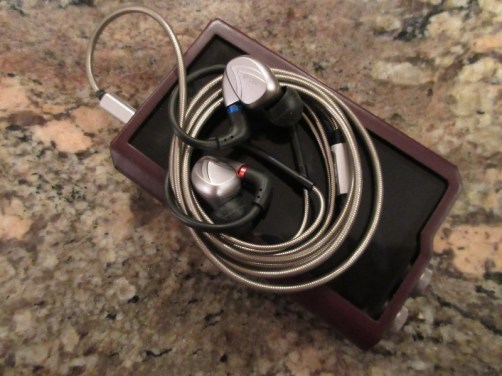
After receiving Fidue A85 Virgo, the big question I had was if this new 3way going to replace A83. I’m sure it will be a question on many Fidue fans mind, considering how long ago the original A83 was released. The conclusion I arrived to indicates that A85 is a sidegrade, rather than an upgrade to A83. It’s like a blend of refined A63 mid-forward signature with A73 compact shape and A83 driver configuration along with many design cues from A91 flagship. All this put together ended up being a new 3way hybrid A85 Virgo design.
A85 Virgo is not exactly an all rounder IEM due to its mid-forward signature, but its mid-forward tuning is done to perfection. It will surprise you when going through different pair ups where in some cases the signature became more balanced. Besides its unique tuning and fatigue free tonality, A85 Virgo has a solid beautiful all metal shell design with a very comfortable fit, great selection of accessories, and a premium removable stock cable. At the end of the day, I do find A85 to be a great addition to Fidue family of IEMs.

 Twister6 Reviews