
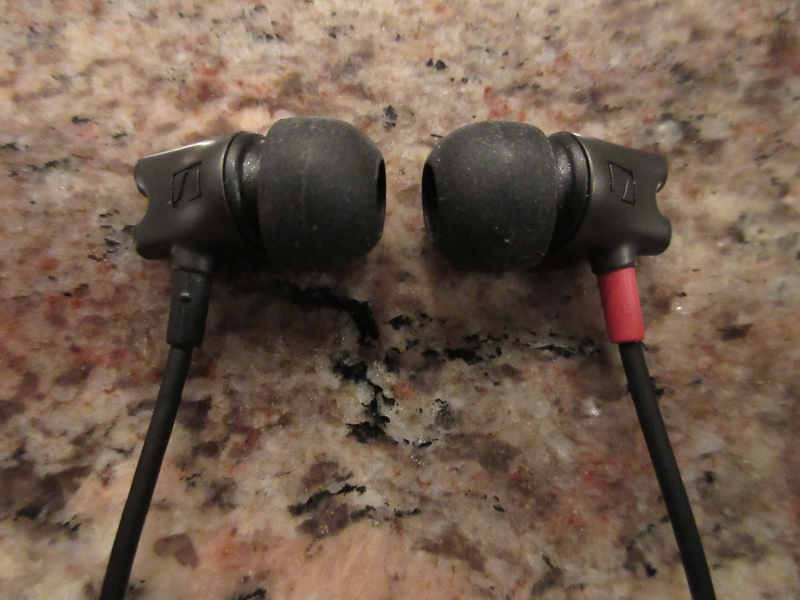
Sound Analysis.
IE800S has an impressive coherent tuning with a very natural and smooth tonality that has a mildly v-shaped sound signature and a bit laidback presentation where mids are just slightly pulled back. What strikes me the most about the tuning is the combination of transparency and resolution while still being smooth and natural in tonality with a nice body to the sound that gives it a touch of a pleasant organic warmth.
Another interesting observation, the overall sound is not necessary very airy or super transparent, but it never gets veiled or congested. As a result, the layering of sounds is just average, yet separation of instruments and vocals is very distinct. The dynamics of the sound goes along with its layering which results in more laidback presentation and less dynamic expansion of peaks.
Soundstage feels holographic with a remarkable width and a little more intimate depth, stretching in elliptical shape around you. Soundstage does expand nicely in depth, but not too far out of your head which gives the sound more intimacy. As a result of this more stretched holographic expansion, the imaging is very good with an accurate placement of instruments and vocals, and relatively accurate position of the sounds that surround you.
In more details, starting with low end, sub-bass goes deep with a smooth textured rumble that adds some weight to the bottom end, but not overwhelming. Mid-bass has a nice, slightly elevated punch, definitely above the neutral level. It’s not too fast when it comes to the speed, and has a more natural decay, yet still being well controlled without spilling into lower mids. The bass is relatively articulate, well controlled, not super tight; it’s just a good example of a less aggressive dynamic driver performance.
Lower mids are neutral, maybe a little north of it with a nice body they give to the sound, but the sound itself never gets congested or bloated. Upper mids are oozing with natural tonality, being very organic and at the same time having natural transparency and resolution. Don’t expect micro-detailed analytical sound, but the combination of naturalness and retrieval of details is very good. Both, male and female vocals sounded very realistic, very emotional.
Treble has an excellent extension, but at the same time a moderate airiness. Treble has a nice sparkle, well defined, and has a nice level of non-fatigue crunch. I actually noticed that out of the box the 10k peak was a little more aggressive, but after 100hrs of burn in, the peak got attenuated, and I’m not talking about the brain burn-in because I had IE800S set aside, playing standalone for over a week.
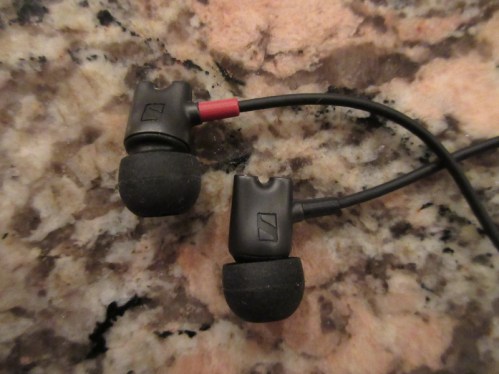
Comparison.
For this test, I used various DAPs and different music genres to derive a common performance difference between IEMs under comparison, where each pair was volume matched.
IE800S vs Campfire Audio Vega – IE soundstage is wider while Vega has a little more depth; IE sound is more balanced while Vega is more L-shape (actually, reversed J-shaped) in comparison. Vega has a higher quantity sub-bass with a more pounding mid-bass while IE bass, though a little elevated, more balanced, more linear, and with a better control, especially when it comes to a cleaner separation with lower mids. Vega mids have a little more body vs more neutral lower mids and more resolving/transparent upper mids in IE. Both have a crisp treble, but Vega could get a little harsher with poorly recorder tracks (due to 7k peak). Overall, Vega is tuned warmer, less resolving, and with a bigger bass slam, while IE is more resolving, more transparent and more balanced in comparison.
IE800S vs 64 Audio TIA Fourte – both have a very similar soundstage expansion width, while Fourte projects further with more out-of-your head depth; IE is more balanced in tuning while Fourte edging more toward the J-shaped signature with more emphasis on upper mids/lower treble. Both have a very similar bass quality and quantity, though Fourte has a faster and tighter mid-bass. Lower mids are very similar, tuned more neutral, while upper mids in Fourte have more forward presentation in comparison to IE upper mids which are slightly pulled back. Here, another difference is in tonality where Fourte is brighter, more analytical, a little colder, while IE is smoother, more natural, and with more warmth. Both have excellent resolution and transparency, but Fourte has more separation and better layering. Treble in Fourte is more aggressive, crisper, brighter, while IE is also crisp and well defined but sounds less fatigue, smoother, and more natural.
IE800S vs HiFiMAN RE2000 – both have a very similar soundstage width, while RE has a little more depth; in terms of a sound, RE2k is more v-shaped in comparison to mildly v-shaped IE where mids are slightly more forward. RE2k has a deeper sub-bass with a little more rumble, while both have a similar tighter well controlled mid bass. Both also have similar lower mids, while upper mids and treble is where they differ. IE upper mids, besides being a little more forward, are warmer, more natural, with a little more body while in comparison, RE2k is thinner, colder, brighter, and more analytical. And you can also hear a better separation with more air between the layers in RE2k, while IE is smoother. Similar to Fourte comparison, IE is crisp and well defined with a moderate airiness, while RE2k is crisper, brighter, thinner, and more airy. As a result, IE is less fatigue and more natural in tonality.
IE800S vs Beyerdynamic Xelento – in this comparison, I hear IE having a wider soundstage, while Xelento has a little more depth with a farther extension. They have similar signature, with a slightly v-shaped sound, but Xelento has more tilt toward the low end. They both have a tight, well controlled, articulate bass, but Xelento has more sub-bass rumble and stronger mid-bass impact. But from there, both lower and upper mids are nearly identical, being natural, resolving, not as layered. Treble is also very similar, being crisp and well defined, though IE has just a touch more sparkle, giving the sound a little more airiness.
IE800S vs Ultimate Ears UERR – Soundstage width and depth are very similar. In terms of an overall sound, UE has mids which are a little more forward in comparison, making its sound sig more balanced, vs IE having mids a little pulled back. IE has an advantage of bass going deeper with more sub-bass rumble and more weight in mid-bass punch, while UE has a more neutral bass in comparison. Both have close to neutral lower mids, but IE has a little more body while UE being slightly south of neutral. Uppers mids in UE are slightly more revealing while IE is a little warmer and smoother in comparison, while treble is very similar. Overall, I’m hearing IE as having a little more body in sound when compared to UE.
IE800S vs Westone ES80 – IE has a wider soundstage while ES is a little narrower but with more depth. Both have a neutral sound signature, though IE has more body in lower mids and being a little warmer in overall tonality. With bass, IE has more sub-bass rumble in comparison to ES having low end extension more neutral in quantity, both have articulate well controlled mid-bass where IE has a little more quantity in comparison to a more neutral and faster ES mid-bass punch. With lower mids, ES is a little south of neutral while IE has more body, being a little north of neutral. Upper mids are strikingly similar, maybe with ES being a touch more forward. Treble also has a lot of similarities in terms of extension and definition and moderate airiness (not too much), while IE has just a little more sparkle.
IE800S vs IE80S – I thought some might enjoy this comparison, even though there is quite a noticeable gap in sound tuning. IE800S has a lot wider soundstage in comparison to IE80S, while depth is similar. When it comes to sound sig, IE80S is a lot more v-shaped in comparison to a mildly v-shaped sig of IE800s. There is also a very noticeable difference in sub-/mid-bass, where even at a minimum setting, IE80S has more sub-bass rumble and a lot stronger mid-bass slam which is more bloated in comparison. Lower mids have more body in IE80S, while 800S is more neutral. Both have natural smooth upper mids, where IE800S is a lot more transparent and resolving in comparison to IE80S which is more congested and smoother, including a more pronounced 6k peak. IE800S also has a better treble definition. Overall, IE80S is more fun-tuned iem intended for bass lovers and non-audiophiles who want to enjoy their music on the go, while IE800S is more balanced tuned (in a relative comparison) for audiophiles who want to analyze their music in more details while enjoying it on the go.

Pair up.
With its 16 ohm impedance and average sensitivity, IE800S is very easy to drive from any source.
Cowon Plenue 2 – very wide soundstage with a nice depth, mildly v-shaped signature, being closer to balanced. Nice sub-bass rumble, articulate mid-bass with a moderate speed and nice control, neutral lower mids, very transparent, natural, resolving upper mids, crisp well defined treble, moderate level of airiness.
Sony WM1Z – very wide soundstage with a nice depth, mildly v-shaped signature, being closer to balanced. Great sub-bass extension with textured rumble, faster bass with an articulate well controlled mid-bass, neutral lower mids, a transparent, natural, resolving upper mids with improved layering, crisp well defined treble which has a little more airiness and more sparkle.
iBasso DX200 w/amp4 – very wide soundstage with a nice depth, more balanced sound, closer to W-shaped since I hear upper mids being a little more forward. Great sub-bass extension with a textured rumble, average speed (not too fast or too slow), articulate, well controlled mid-bass, neutral lower mids, a little more forward, very transparent, resolving upper mids with improved layering, crisp well defined treble, a little more airiness and more sparkle. Very similar sound to WM1Z, except upper mids being a little more forward in DX200, while the overall sound being a little smoother with 1Z.
Lotoo LPG – wide soundstage with a nice depth, more balanced sound, closer to W-shaped. Good sub-bass extension, punchy, articulate, well controlled mid-bass, neutral lower mids, resolving, transparent, natural, smooth upper mids which have a more forward presentation and good layering (not on the same level as 1Z or DX200, though). Treble is crisp and well defined with a moderate airiness.
FiiO X7ii – wide soundstage with a nice depth, mildly v-shaped signature, closer to balanced, Nice sub-bass rumble, articulate mid-bass with a moderate speed and nice control, neutral lower mids, transparent, natural, resolving upper mids, crisp well defined treble, moderate airiness. Very similar sound to P2, just with a touch more sparkle in treble.
theBit Opus#2 – wide soundstage with a nice depth, more W-shaped signature, with a little more sub-bass rumble, similar to other DAPs, tight, articulate mid-bass, neutral lower mids, and upper mids being a little more forward, still transparent, resolving, a little more layered. Treble has more sparkle and airiness, a little brighter in comparison to other DAPs.
Samsung Note 4 (smartphone) – wide soundstage with a nice depth, mild v-shaped sound, being closer to balanced, nice sub-bass rumble, and punchy well controlled bass, a little less articulate in comparison to dedicated DAPs, but still impressive. Neutral lower mids, natural, resolving upper mids, with a nice transparency but not on the same level as DAPs, a little smoother and less layered in comparison. Treble is crisp and well defined, with extra sparkle. This pair up was definitely a surprise to me.

Conclusion.
I can’t speak for the original IE800 model or how it compares to the new IE800S, but I can say how impressed I was listening to what Sennheiser accomplished using just a single 7mm dynamic driver. Of course, it’s not a generic off-the-shelf transducer, but rather a custom Extra Wide Band driver coupled with a dual-chamber absorber system used to shape the sound. But nevertheless, it’s the kind of a sound I would expect from fine-tuned multi-BA IEM, not a single driver unit.
In theory, a single driver tuning should be coherent, yet, some other single DD flagships I tested before felt like I’m listening to a hybrid IEM with a DD bass and BA mids/treble. Here, even with a mildly v-shaped tuning, the sound is still linear, expanded, flows smoothly without too much emphasis on lows and highs, very natural, detailed, transparent, and just relaxed and non-fatigued. Once you start listening, you forget that you have a pair of tiny ceramic shells in your ears because it sounds like a pair of full size headphones.
So, is IE800S a total perfection? That will depend on your sound preference, of course. If you want the sound with more bass impact or a more aggressive treble, these might not be for you. But one thing for sure, IE800S stands out with a unique tuning that doesn’t overlap but rather compliment many of my other flagship IEMs. The only concern I have is the cable with its permanent attachment to the shell. To minimize microphonics, I prefer to wear IE800S with wire up over the ears which can put a little more strain on the cable joint. But, at least Senns 2-year warranty should give you a peace of mind. And another important factor to mention that while many of today’s flagship IEMs are priced around $2k, Sennheiser still delivers TOTL flagship performance for under $1k.

 Twister6 Reviews
I am indecisive between full size headphones to IEM, Can you please tell me if there are differences in sound between the IE800S and HD800S and where?
LikeLike
I’m not familiar with HD800S, but planning to listen and to compare these two at CanJam NYC in a month.
LikeLike
Thanks for the answer!
In general, are there any quality differences between headphones over the ear to IEM at a similar price range?
And another question which IEM would be better for metal music IE 800S or XELANTO in general Which model is better?
LikeLike
between IE800S and Xelento, IE will be better for metal music since the bass it a little faster and you get more sparkle in treble (goot for guitar crunch)…. With over years vs IEMs, you have to consider many factors such as portability (IE is small and easy to wear on the go, vs HD800S pretty big and bulky), isolation (IE provides a decent passive isolation and no sound leakage, vs HD being open back which going to leak the sound and have poor isolation), and ease of driving in (IE is more efficient, easier to drive from a portable source, while I’m not sure if HD needs more power and/or some amp). And just in general, some people just don’t like to stick anything in their ear canal, vs full size are more comfortable over-ears.
LikeLike
Hi,
Are there any other better models than IE800S for Metal including Custom IEMs?
Thanks and Happy New Year!
LikeLike
sorry, I don’t listen to metal music at all, mostly EDM 🙂 If your budget is around $1k, perhaps Campfire Audio Andromeda is a good alternative. But I wouldn’t say it’s better. Better/worse is a subjective opinion.
LikeLike
Good comprehensive review. I found this a balanced but exciting iem straight out of the box. Seems to play nice on all genres.
LikeLike
Thanks, Andrew! Getting ie800 loaner in a few days, so will compare both.
LikeLiked by 1 person
Thanks for your review. I got one question: how would you think over IE800S and Fidue A91? Which one would suit better for a EDM/R&B lover? 🙂
LikeLike
I would go with ie800S, its sound tuning is more versatile for these and other genres.
LikeLike
Hey Alex, is it good for EDM, Heavy Metal and Epic Orchestral? I really love the form factor of this IEM small, light and minimalist design.
LikeLike
It is good, but keep in mind, no removable cable which can affect long term reliability, especially since you need to wear cables over ears to cut on microphonics.
LikeLike
I see… Hopefully wearing a shirt clips will reduce this microphonic effects. I’ve seen a few $800-$1100 IEM(SE846, Xelento, Vega, W60, Andromeda etc) but not sure which one to get bc I am no audiophile lol. I know it sounds funny but seriously, IE800s caught my attention just because of its form factor and minimalist look lol. 😂
LikeLike