

Comparison.
In these comparisons I used C/IEMs with their stock cables, driven from SPK-SS, volume matched for consistency.
N8 vs EE Legend X – both have a great soundstage expansion (width/depth), but N8 is more holographic, spreading a little wider. With bass, LX is more aggressive and slams harder, while N8 with its own elevated bass slam has less quantity and sounds more balanced relative to mids and treble. Also, N8 bass has a little more control, due to slightly shorter decay of bass notes. Both have lean lower mids, but due to an enhanced bass impact LX lower mids sound thicker in comparison to N8 which has more controlled bass. Another similarity is both have mids with a natural tonality, though LX is more neutral while N8 is a little warmer and more forward in comparison. While tonality of mids is similar, the presentation and forwardness really do affect the signature, making N8 more balanced and LX more L-shaped. When it comes to treble, here I hear more sparkle with more revealing details in N8, while LX remains more neutral and smoother. Plenty of treble clarity and details in both, but N8 has more sparkle.
N8 vs UE Live – Live soundstage has a little more intimate feeling, having a little less depth and width, doesn’t mean Live is lacking in soundstage expansion, just that N8 pushes it deeper and wider. Both have a very powerful deep analog bass, but N8 hits a little harder and its bass is faster and tighter, while Live bass has a little less impact, more rounded, and has a bit longer decay. Both have a natural organic mids, but Live mids have a little thicker body and more intimate closer presentation, while N8 mids are a little more revealing and presented more out of your head, related to their soundstage difference. With treble, the extension is similar in both, more controlled and with less airiness, but Live is crisper in tonality, giving upper frequencies a little more sparkle, which makes N8 sound a little more natural. One more obvious difference is around the 8k peak. This peak is on a borderline between higher definition and sibilance, and depending on the quality of the recording, can swing either way. When I took FR measurements (with Veritas coupler) of both N8 and Live, their FR had a striking similarity, yet they handle this 8k peak differently. You can throw in a poorly recorded track at N8, and it will handle it with more forgiveness in comparison to Live that brings up harshness of a poor recording.
N8 vs Westone W80 – Here I found W80 to have a little more soundstage depth, while N8 has more width. When it comes to bass, N8 certainly has an upper hand in both deeper rumble of sub-bass and more slam in mid-bass. W80 bass is elevated but not to the same level is N8, and it (W80) has a shorter decay and more control. That results in a leaner lower mids of W80, while in comparison N8 lower mids have more body. But it reverses in upper mids where N8 has a better retrieval of details while W80 is smoother, a little more distant, and more laid back in comparison to N8 which is more focused and has a more detailed upper mids. Also, N8 treble is a little crisper in comparison to a smoother and more organic treble of W80.
N8 vs 64 Audio U12t – Both have a similar soundstage depth, and while U12t has a nice staging width, N8 is still wider. As expected, the bass difference will be very noticeable with N8 having a lot more sub-bass and mid-bass impact while U12t being more neutral in comparison. Just keep in mind, I’m not saying U12t bass is neutral, only in comparison to N8 it’s noticeably attenuated. Lower mids of U12t are also leaner in comparison to a fuller body and a more neutral lower mids of N8. Upper mids are different as well, with U12t being brighter, more revealing, and more transparent in comparison to a more natural organic tonality of N8 mids. And the difference continuous into upper mids where U12t is brighter, crisper, and airier, while N8 is smoother, more natural, and with a tighter control of tia driver. The sound tonality between these too is quite different where N8 has a fuller more organic natural tonality with a bigger bass impact while U12t is leaner, more revealing, and more balanced.
N8 vs 64 Audio Trio – Both have a similar soundstage depth, while N8 is just a little wider in staging width (closer to N8, but still can’t match its width). With bass, Trio has a nice sub-bass rumble which approaches N8 in depth, but still doesn’t hit as hard as N8, and overall bass is a little faster in Trio. In a way, Trio’s bass comes close in quality and balance but scales down in quantity when compared to N8. Lower mids are a little bit leaner in Trio, while N8 has a little thicker body in comparison. Upper mids have a very similar tonality and sound presentation, perhaps with N8 being a little bit smoother and more organic, while Trio is a little brighter and a touch more revealing. Treble in N8 is more controlled, well defined, yet a little smoother in comparison to Trio crisper and airier treble. When listening and switching between these, it felt like N8 is a scaled up bassier version of Trio, sort of like a Trio on steroids.
N8 vs Campfire Audio VEGA – Both have a similar soundstage depth, while N8 staging is a little bit wider. With bass, the extension and the impact are nearly identical. The only difference here is N8 bass having a little more control with a shorter decay, giving lower mids a leaner body, while Vega’s bass decay is longer, making bass not as tight as N8. Mids have a lot of similarities as well, being natural, smooth, detailed. Perhaps, presentation of the mids in N8 is a little more intimate while Vega is more out of your head. The big difference here is in lower treble where N8 is more natural, smoother, more organic, while Vega is brighter, splashier, a little harsher in comparison (especially with poorly recorded tracks). This is another example where N8 is more forgiving when it comes to poorly recorded tracks.
Pair up.
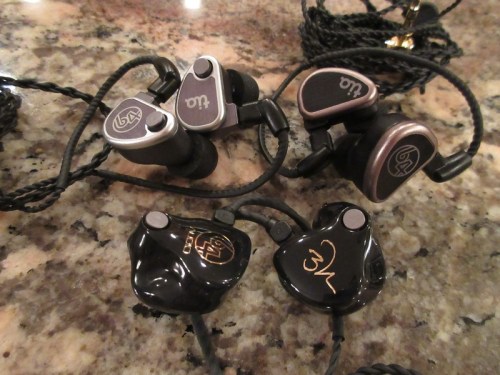
In each source pair up, I was using 3.5mm HO port and a stock cable. With many DAPs, going balanced sometimes widens the soundstage, but switching to a different cable with a balanced termination can also contribute to changes in tonality, so I kept everything stock for consistency. N8 is easy to drive considering its 105dB sensitivity which might need only a few extra volume clicks, and also due to its LID tech where the low 6ohm impedance didn’t seem to cause any issues with different output impedance sources.
A&K SP1000-SS – a very wide and open soundstage, smooth organic tonality with natural musical details. Excellent bass extension with a velvety sub-bass rumble and elevated mid-bass punch, but the bass is not too aggressive. Mids maintain good body, a little laid back, while treble is well controlled, very natural and slightly relaxed in tonality.
Sony WM1Z – relative to SPK-SS, here soundstage width is a little narrower, bass hits a little harder with a longer decay which adds a little more body to the sound and makes lower mids thicker. Also, I hear more sparkle in treble in this pair up.
FiiO X7ii w/AM3A – relative to SPK-SS, sound signature is more L-shaped (bass hits harder), and the tonality is smoother, including both mids and treble. Soundstage is expanded with a very impressive width.
Lotoo Paw Gold – relative to SPK-SS, LPG has more sub-bass rumble, goes deeper and hits harder, and treble has more sparkle and airiness. Soundstage was similar.
Luxury & Precision L6 – the sound it somewhere between SPK-SS and LPG, where bass hits a little harder and treble has more sparkle and airiness, but not quite on the level of LPG changes.
Cowon Plenue 2 mk2 – relative to SPK-SS, P2mk2 has a very similar bass impact, and natural mids tonality, though also being a little more revealing and transparent. Also, the treble is a little more crisp and airy in comparison.
Hiby R6 – relative to SPK-SS, R6 has a little stronger bass impact (both sub-bass and mid-bass), very natural organic mids with more transparency and some improvements in detail retrieval, and crisper and airier treble with a better extension. Also, soundstage is as holographic.
DX150 w/AMP7 – relative to SPK-SS, the soundstage is wide but not as wide as SPK, the bass impact is very similar, tonality is very similar, being smooth and organic, with great retrieval of details. While SPK has a superior technical performance, tonality had a lot of similarities.
Shanling M0 – relative to SPK-SS, M0 delivers a little stronger bass impact, and bass itself is very tight and well controlled. Mids have more transparency, a little brighter, and even with some improvement in detail retrieval, all at the expense of tonality being less organic now. Treble is crisper with M0.
Galaxy S9 smartphone – a little stronger bass impact, natural smooth detailed mids, and crisper treble. Like M0, the sound here is not as layered or separated on the same level as other flagship DAPs.
Conclusion.
When I started to listen to N8, it took me a little while to adjust my ears to its unique tuning since I’m used to a more revealing sound, such as U18t with Horus cable. But as I shifted the selection of music from synthesized EDM tracks to songs with real acoustic and electric instruments, more natural percussions, soulful vocals, and other non-synthesized natural tonalities, I quickly realized the added value of N8 smooth natural sound signature. I wouldn’t call it a basshead tuned CIEM because the focus here is not necessary on making the bass bigger and harder, but rather making it deeper and more analog with a rich full body natural tonality across entire frequency range.
The signature of N8 is an interpretation of Nathan East sound preference, where 64 Audio incorporated his tuning suggestions into their 9-driver hybrid. It will definitely appeal to many stage and studio musicians and performers. It will also be welcomed by bassheads who are not only after the quantity of the bass, but appreciate the analog quality of it. And by switching to pure copper cable, as noted early in my review, you can scale up (relatively speaking) the performance of N8 to a more revealing audiophile quality while still keeping the natural tonality of the sound.
Last, but not least, the sound sig of N8 doesn’t exactly overlap with other IEMs I have access to, and instead complements many of them. As a result, N8 is easy to recommend to audiophiles who want to try something new and different, something more natural and less analytical, something to tickle their inner-basshead senses, instead of another incremental upgrade of their existing revealing IEMs. And if you get a chance, make sure to listen to 64 Audio IEMs at CanJam shows, local distributors (for example, Music-Sanctuary in SGP or Audio46 in NYC), or if you are in US – take advantage of their Loaner program.

 Twister6 Reviews
What is the best match with hiby r6? N8 or U12T? Thanks.
LikeLike
Both pair up good since each one has LID (linear impedance design) crossover which is independent from output impedance of the source. So, you choose which sound signature suites you better here.
LikeLike
So N8 more warm than U12T right? Warmer just like U12?
LikeLike
yes, N8 wawrmer then U12t, just like U12. But it has a lot better retrieval of details in comparison to U12, especially when going between different pair ups since U12 was tuned for high output impedance sources to sound its best.
LikeLike
Thanks twister for your reply. I asked my dealer here but become more confused, because there is no demo yet for U12T, N8T and Tia Trio so I can not try it by myself. He suggested me to buy tia trio which like little brother of Tia Fourte.
Basically, my setup like this.. I will use R6 as my main dap, with ipod touch 6 or my samsung s8 as a secondary dap.
My main song mostly on Pop, Top40, hiphop and Jpop. Sometmes, I also listen to audiophile songs that more into vocal. I’m not a basshead but need bass that still rumble and treble still cruncy but not too much. I don’t like bright headphones. Currently i used Mr Speakers Ether open and also have Fostex THX-00.
I also owned aftermarket cables – alo ref8
Which audio64 that suit for my taste from your opinion?
Thanks.
LikeLike
I think Trio will work great, but it’s not a little brother of Fourte. In terms of hybrid design, it is, but Fourte doesn’t have as much bass and its treble is a lot brighter. So, go for Trio.
LikeLike
Nice review,
how does the n8 handle sibilant tracks? in particular these ones:
Sara Bareilles – Come Round Soon;
Esben and the witch – When That Head Splits;
Japanese Breakfast – In Heaven;
LikeLike
just listened to all 3 tracks on YT, smooth as a butter 😉
LikeLiked by 1 person
Hello, please tell me whether there will be a review on L & P L6,from the review I realized that you managed to listen to it.Is it worthy of attention?Unfortunately very little information about him, as we have in Russia, and you.
LikeLike
Good catch 😉 yes, it’s in queue for review, maybe in a month or two. It’s OK, but let’s just say, I had it for a few months and haven’t jumped on that review yet 😉
LikeLike
Thank you for the answer, so long I will not last)) probably take it at your own risk
LikeLike
Last question: please Tell me if he really plays at 1Z and SP1000?
LikeLike
Do you mean if it plays on the same level as 1Z and SPK? I need to spend more time listening to it, but from my early impressions it wasn’t on the same level. Perhaps others (headfonia) hear it differently.
LikeLiked by 1 person
From the review of headfonia I concluded that he plays at the level of tops from Sony and Astell & Kern and caught fire to buy it.Now I don’t know is as you say more.In your opinion who is the competitor L&L6 P and most importantly for me as he plays heavy metal music?
LikeLike
Please give me a little of time, I need to get back to L6 listening after I finish a few reviews. I assume you are planing to buy L6 and trying to decide? Can you ping me on FB? Would be good if you can provide me with your favorite heavy metal song (YT link) so I can use it for a comparison?
LikeLiked by 1 person
How does the soundstage of n8 compare with u18t?
LikeLike
Very similar, and I would say U18t has an even wider staging perception due to a more balanced low end.
LikeLike
I have been using the 64 Audio N8 for almost two months now. All i can say is that the sound signature is buttery smooth and if i were to A/B it with the Legend X the sound is almost identical in my honest opinion.
LikeLike
Hi Twister,
Getting Trios soon. But N8 or A12T? I own a Chord Mojo. I like listening to Classical, Pop, J-Pop, K-Pop, Anisong, EDM and Trance. Got Recommended the N8 from two local stores, but yeah curious how A12T or U12Ts sound vs N8 but yeah thanks for doing the review.
LikeLike
If you are not sure, why go for ciem instead of U12t or Nio as correspondent equivalents? N8 might be too smooth for you, so maybe U12t will complement Trio better. But you have to try it yourself.
LikeLike