
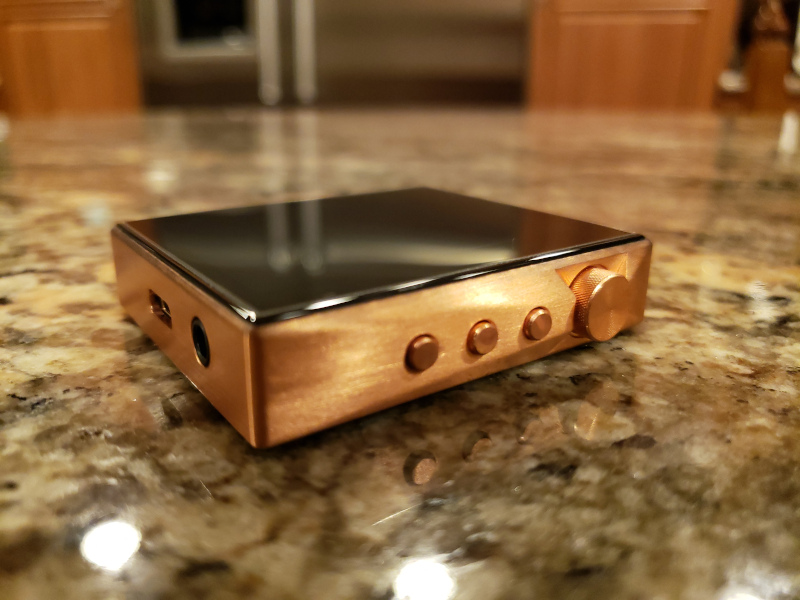
Under the hood.
Inside AP80 you have Ingenic X1000 processor, common for many smaller non-Android DAPs, and at the heart you have ES9218P DAC which also has a built-in amp capable to deliver 70mW @ 32ohm load, plenty of power for IEMs and some efficient headphones. There are also two other DAP features, not very common for audio players: FM radio (using 4705 chipset), and a step counter (built-in pedometer sensor, KX126). Clearly, AP80 is designed for users with active lifestyle, and it can even display a clock.
You will also find Bluetooth 4.0 supporting many codec protocols, including aptX, LDAC, and even the new UAT (ultra audio transmission). The BT is bi-directional, meaning you can use it as a transmitter to pair up with your wireless headphones or other BT DAC/amp devices. Or you can use it as a receiver to work as a wireless DAC/amp paired up with other sources. For example, you can pair it up to your smartphone to stream audio from various apps wireless to your AP80 using lossless LDAC protocol.
The internal battery capacity is 800mAh, 3.8V LiPo battery which I tested to last about 10hrs playing 320kbps mp3s non-stop in a loop. It’s not bad for such a small device. Plus, with fast charging you can have it up and running in about an hour. Just keep in mind, when you start playing lossless files or go up to DSD format, the battery will drain faster.
The operating system under the hood is Hiby 3.0 OS which is based around HibyMusic Player, including all of its bells’n’whistles, even Mage Sound 8-ball DSP effects and EQ with genre specific presets and custom adjustment. And because you are running Hiby, you can also implement HibyLink to control AP80 wireless from your smartphone. Many lossy and lossless audio formats are supported, such as FLAC, APE, WMA, WAV, ALAC, DSF, DFF, SACD-ISO, and native support of DSD 64/128 and PCM up to 384kHz/32bit.


When you start the DAP, you can see the main navigation screen with icons of Player (HibyMusic), Step (step counter), FM (radio), Bluetooth (wireless controls), System setting (lots of options), and About. When you start Player, you are dealing with a scaled down version of HibyMusic which many are already familiar with. Also, swiping the display up brings up short cut controls for playback and some functionality settings.


Sound analysis.
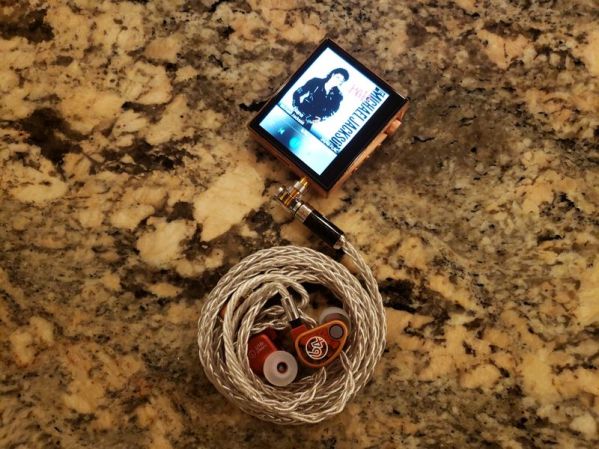
I played a selection of the following test tracks to monitor the sound of AP80: Agnes Obel “The curse”, Sandro Cavazza “So much better” (Avicii remix), C-Bool “Never go away”, Ed Sheeran “Shape of you”, Galantis “Hunter”, Alan Walker “Darkside”, Iggy Azalea “Black widow”, Indila “Boite en argent”, Robin Schultz “Oh child”, David Elias “Vision of her”, and Michael Jackson “Dirty Diana”. AP80 Cu had about 75hrs of play (burn in) time.
I prefer to describe the DAP sound based on the comparison to other DAPs and pair ups with different IEMs/headphones since the DAP by itself doesn’t have a “sound”. What we hear is how it sounds through IEMs/headphones connected to it or how it differs from other sources using the same pair of IEMs/headphones for monitoring the sound. As a result, this section of the review usually summarizes what I find in the follow up Comparison and Pair-up sections.
As far as tonality goes, I noticed across many different pair ups that AP80 sounds neutral with a warmer fuller body tonality. It’s not necessarily warm, but rather “warmer” which gives a sound more organic musical tonality, making it sound more natural. The sound is not congested, and actually has a good level of detail retrieval even for this type of signature. Yes, it’s an entry level DAP, so don’t expect outstanding layering or separation of sounds or dynamics expansion on the level of upper mid-fi or flagship DAPs. That’s just not a realistic expectation. But the sound is not compressed, has plenty of clarity, and has a surprisingly good soundstage expansion and imaging.
One thing I noticed right away, when in low gain the sound was a bit dull and was lacking clarity and energy, especially in upper frequencies. Once you switch to high gain, almost in every single pair up the sound came alive with more clarity in mids and more expanded soundstage width. After that, I didn’t even bother switching to low gain.
Another important thing to note, there was absolutely no hissing with sensitive low impedance IEMs, not even with Andromeda. Even during the playback with volume down to zero or when idling, I didn’t hear any hissing.
Page 3 – Comparison, and Pair Up.
Page 4 – Wired and wireless connections, and Conclusion.

 Twister6 Reviews
Hi,
Nice to know such thing exists, however it’s not available for purchase on the manufacturer’s site and on Amazon is listed at 835 $ as a Japanese import only. Is this a new device or an already gone limited edition?
Thanks.
LikeLike
I’m trying to find out the availability. Aluminum and Stainless Steel units are available right now, but Copper was just introduced. As soon as I find the link, I will add it to the review. I know China was on holiday list week, everything was closed, so there is a delay with responses.
LikeLike
Thank you
Good looks, tiny size, improved sonics, it’s tempting…. we’ll just have to wait then!
Cheers
LikeLike
Is the volume knob also made of copper?
LikeLike
I think so, or maybe it’s just copper plated.
LikeLike
Hi, have you had the chance to pair it with Andromeda Gold? Any hiss, overall impressions?
LikeLike
I don’t have Andro Gold, but when it comes to hissing it will be no different than original Andro.
LikeLike
Thank you. I’m asking as their impedance are different, 7 Ohm in the Andro Gold vs 12.8 Ohm in the Andromeda standard.
LikeLike
in this case the impedance will not make too much difference, they all have higher sensitivity and hiss with many daps. But as I mentioned in my review, I didn’t hear hissing with ap80 and expect Andro Gold to behave the same.
LikeLike