
Pair up.
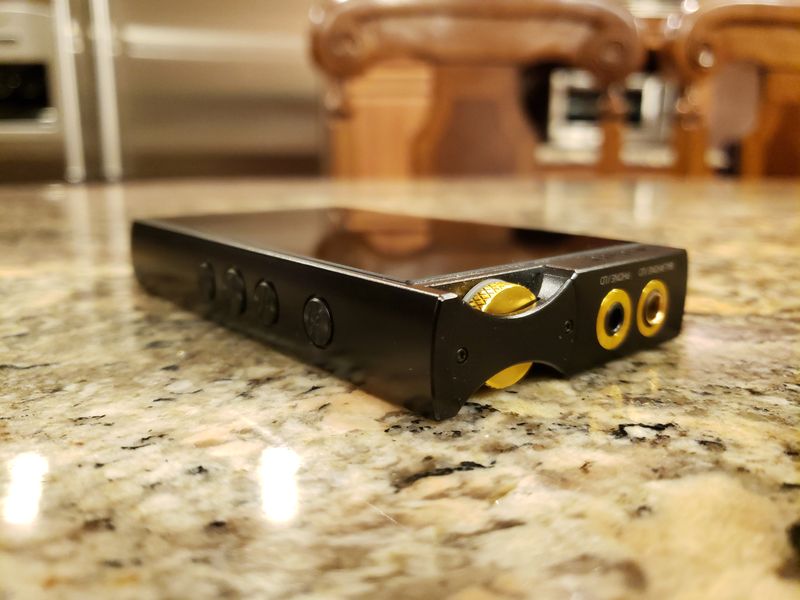
PAW6k has plenty of power to driver some of the demanding full-size headphones and at the same time take care of high sensitivity IEMs without any noticeable hissing. Here is how I hear PAW6k pairs up with a selection of headphones and earphones.
64 Audio U18t – wide soundstage expansion with a little more depth than width. The signature is balanced with a neutral natural tonality. Bass goes deep and has extra impact. Lower mids have extra body and upper mids/vocals are very detailed and natural in tonality. Treble has a great definition and extension, and overall sound has zero hint of brightness. This pair up delivers a very natural detailed sound with a nicely balanced sig. No hissing.
Campfire Audio Solaris – wide/deep soundstage expansion. The signature here is balanced with a slight hint of a mild v-shaped due to a little extra impact in bass and extra sparkle in treble. Bass impact is quite powerful, not L-shaped elevated, but has an extra dynamic-driver punch that cuts right through the mix, very articulate and fast. Mids are a little more on a leaner and more revealing side, nicely layered with a very good retrieval of details. Treble is crisp and airy, not harsh at all, but has a well control sparkle. The overall tonality here is neutral-revealing with additional fun factor, thanks to quality of bass. There is a very mild waterfall hissing when idling. Very hard to detect, and not audible at all when playback starts.
Campfire Audio Andromeda – wide/deep soundstage expansion, actually even wider than Solaris in this pair up. The signature is balanced for sure, and tonality is smoother and more natural. Bass sounds like it is coming from a dynamic driver, not BA, and bass is smooth, rounded, not as fast as with Solaris. Mids have a little fuller body, sound more natural, smoother, clear and detailed, but not as layered. Treble has nice definition, not as much sparkle, just very natural and detailed. The overall sound is neutral, natural, and smooth. There is a very faint waterfall hissing when idling, but hardly detectable when music is playing.
Fir Audio M5 – wide soundstage expansion with a little more depth than width in this pair up. The signature is slightly v-shaped due to extra impact in low end and more sparkle in treble. Bass has a powerful dynamic driver impact, going deep with a nice rumble and punching hard in mid-bass, fast, articulate, and layered. Lower mids are a little leaner and upper mids/vocals are clear, micro-detailed, layered, a little brighter, and with a slight out of your head presentation. Treble is crisp, airy, extended, and with a fun sparkle. No hissing here.
Empire Ears Legend X – the soundstage here is actually reaching a holographic level due to a wide left/right expansion and the depth expansion. The signature is L-shaped, your typical LX sound, but there is a very interesting phenomenon here. The bass is powerful and goes deep, actually more sub-bass rumble than mid-bass punch, but mids/vocals take the front row, grabbing the main focus of the sound presentation, while the bass is more in the background where you feel the rumble more than you hear it. And the same with treble, being crisp, airy, and well controlled, coming through clear and detailed, along with mids/vocals. Very interesting pair up, and kind of surprising since I don’t think I heard LX to have their bass pumping more in the background like I’m hearing here. No hissing.
VE Sun Dice – the soundstage is close to holographic in this pair up. PAW6k had no issue driving these 180ohm earbuds, and I only needed about 50/100 of volume in HG. The overall tonality is smoother and more organic in this pair up, with a balanced signature. Bass has a nice fast punch, mids/vocals are very detailed and a little more forward, smooth, organic. Treble is crisp and has a good definition. Personally, I liked the pair up of Sun Dice with LPGT, and I think these earbuds pair up better with more revealing sources, while PAW6k is a little too smooth for Sun. It’s not a bad pair up at all, just smoother and more laidback.
Final Audio A8000 – closer to holographic soundstage expansion, in both width and depth. The overall signature is a little v-shaped with a more revealing tonality. I’m hearing a deep extended sub-bass rumble, fast mid-bass punch, a little north of neutral bass quantity, fuller body lower mids with more organic upper mids/vocals tonality, crisp airy treble which I find to be brighter. Upper frequencies are more revealing and brighter with a slightly colder tonality. No hissing.
Audio-Technica ATH-R70x – open sound with a wide/deep soundstage expansion; of course, you would expect that from open back headphones, but it was also nice to hear that PAW6k wasn’t limiting this performance. The signature is balanced, and the tonality is very natural and quite detailed. I was expecting it to be a little smoother, but the retrieval of details here is very impressive, suggesting that PAW6k has no issues driving these 470ohm open back headphones. Bass is not the fastest, but it goes deep with a nice rumble you can hear and feel, and mid-bass has a nice average speed punch. Mids/vocals are natural, detailed, high level of clarity while still sounding organic. Treble is well defined and has a well-controlled amount of sparkle and natural airiness. I really enjoyed this pair up, definitely brings the best in R70x.
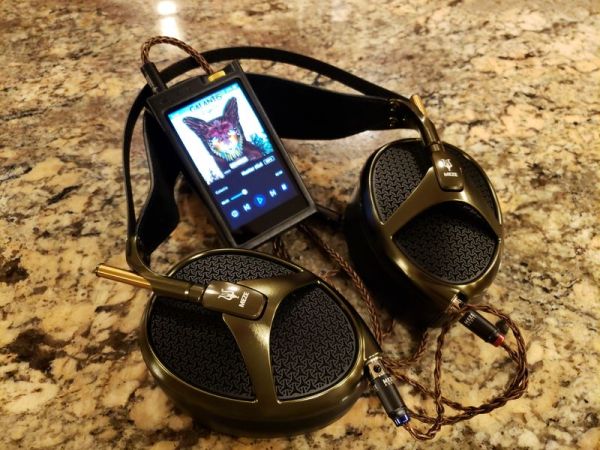
Meze Audio Empyrean – open sound with closer to holographic soundstage expansion. The overall signature is balanced and the tonality is neutral and natural, actually quite an organic sound. Bass goes deep, but has more neutral mid-bass punch, and overall low end is slower and smoother. Lower mids have a fuller body and upper mids are very detailed, smooth, natural, soulful. Treble is crisp, well extended, and well defined, has a natural sparkle. I have seen Empyrean sound a little faster and more revealing in some other pair ups, but with PAW6k it had a different, more natural and still quite detailed sound. I actually enjoyed the pair up with these planar magnetic cans.
Wired and Wireless Connections.
In this section of the review I will go over various wired and wireless connections I tested and verified with PAW6k.
Bluetooth DAC – the pair up was effortless, though I didn’t see an indicator of BT codec. In BT DAC mode you can use PMEQ and ATE effects. Also, I was able to adjust the volume from my phone (S9) and from PAW6k. Plus, I was able to remotely control my phone (S9) playback with Play/Pause/Skip buttons from PAW6k – verified with HibyMusic app and while streaming with Qobuz. I hear the tonality of the sound to be nearly identical when playing the same track from PAW6k internal storage vs using PAW6k as BT DAC.
According to Lotoo, it doesn’t support LDAC in BT DAC mode, only SBC, but they are working to add it soon. Still, as I mentioned already, the sound was close enough between local storage and wireless BT DAC playback.


Bluetooth (w/Senns HD1 M2 IEBT) – hassle free pair up, codec was indicated in BT list. Full dynamic crystal-clear sound, similar to what I’m used to with these from my S9. I can control the volume from PAW6k and from Senns, and I can control playback (Play/Pause/Skip) from Senns remotely. Was able to use headphones about 50ft away from PAW6k in open space with a solid connection. PMEQ/ATE could be used during wireless connection without problem as well.

USB DAC – (S9) fast connection, was using Neutron – the sound was nearly the same as playing from local storage. (T480s Win10 ThinkPad), within minutes device was setup in windows and ready to be used. I was testing with Qobuz on laptop, and to my surprise tonality had a little more transparency and soundstage was wider, noticeable change. ATE effects can be selected when used as USB DAC. While I enjoyed using PAW6k with my phone as BT DAC, I preferred a wired connection from my laptop, not the phone.


USB Digital Audio (as transport with iFi micro iDSD BL) – once connected and even before I turned micro iDSD on, PAW6k recognized USB-OTG cable and asked me if I want to enter USB Audio mode. When I turned micro iDSD on, playback started without a problem. Using PAW6k as a transport and micro iDSD BL as external DAC/amp, the sound I’m hearing now has a more typical tonality of iFi with narrower soundstage and a little thinner mids.


Line Out (w/FiiO E12A portable amp) – Line Out has to be selected as output, depending if you are using BAL or SE external amp. Also, you have the option of either Unfixed LO where you can use volume on PAW6k to control the output in addition to external amp vol control. Or you can select either 0.77Vrms, 1.2Vrms, or 2Vrms fixed LO output where you can control volume from the external amp. This is very convenient, depending on the gain of your amp, so you don’t saturate the input and allow wider range of volume change. Plus, with some portable amps without volume control, Unfixed option will allow to control volume from PAW6k.
One interesting observation since I consider E12A to be very neutral, the sound was a little more transparent with less body in mids. This suggests that PAW6k internal head amp adds more body to the sound.


Conclusion.
When I first heard of PAW6k, I was a bit skeptical based on my experience with PAW5k. Doesn’t mean PAW5k was bad, but I clearly remember a much bigger gap between build and sound quality of LPG. PAW6k turned out to be a nice surprise. LPGT is a flagship, and people often ask me if that makes PAW6k to be its mid-fi level counterpart. I honestly can’t say that, and just like I mentioned in the Intro of this review, calling PAW6k a cutdown version of LPGT would be insulting.
Of course, we have to be realistic. No company is going to release a lower model close to their flagship at a fraction of the price because it will kill the sales of the flagship. But Lotoo managed to preserve a nearly identical build quality and functionality, only changing the sound performance. Yes, relative to LPGT, PAW6k doesn’t have as wide soundstage or as high resolution and retrieval of details. But at the same time, PAW6k can go head to head with other higher end models and hold its own.
I actually talked to a number of my readers who found LPGT to be too revealing and analytical for their taste, preferring something smoother and more musical to pair up with their already revealing IEMs. The same people didn’t care about DSD512 support and had a stronger preference for micro SD over SD and for longer battery life. Those are the people who don’t have to give up on their dream of owning LPGT because they can get the same build quality, the same fast OS, the same PEQ and ATE effects, and most of the same bells and whistles of the original Touch at a fraction of the price.

 Twister6 Reviews
Regarding the Prelude DTR1 how will you compare it ?
LikeLike
Difference in functionality aside, dtr1 is a brighter tuned dap, more like a reference LPGT. Paw6k is warmer.
LikeLike
How does it compare to ibasso dx 160?
LikeLike
Functionality difference aside, Dx160 is brighter and more revealing, especially in treble.
LikeLike
Hello. How LP6k compare to Dx160 in technicalities? Soundstage, layering, detail retrieval? As I understand from your post tonality wise it is similar with noticeable difference in treble area? Functionality aside, of course…
LikeLike
Tonality is definitely a big difference, thus my reference to treble which makes dx160 brighter up top. And with that brightness I hear more air between the layers which helps with layering and separation (nod to dx160). But that will also depend on pair synergy. If you have brighter tuned iems, I would not use them with dx160, it will only make them sound thinner. Soundstage is also wider in dx160. Retrieval of details is simllar. Another thing to note, if you are using external amp, paw6k has a cleaner line out, great pair up with Cayin C9.
LikeLike
Do I understand correctly that the overall sound level is the same compared to the hiby r6 pro?
LikeLike
Relative to U18t, it is. I have a lot of IEMs and some headphones. It is very time consuming to go through many comparisons using different headphones and earphones, as you can imagine. And for sure, some my yield a bigger difference in sound due to a difference in pair up synergy with one dap vs the other.
LikeLike
compared to the Fiio M15? Which is better?
LikeLike
only heard M15 for 5min, on the go 2 months ago before they issued their big fw update. So, have no idea about the comparison or if sound tuning was updated. Back then (2months ago), M15 sounded like a warm source with slightly rolled off treble response. But honestly, I can’t offer an accurate comparison unless I have two things side by side and spend some time with each.
LikeLike
Excuse me if this has been asked before. Of the high/mid end 4.4mm DAPS available, which of these do you suppose has:
– Better detail retrieval, instrument separation, and general resolve.
– More linear and natural sounding, though not sterile. I like a lot of top end, brightish.
– More sophisticated PEQ.
– Better build quality.
My choice is between PAW6000; Cayin N6ii; Plenue L; and maybe even the Ibasso DX160. I already have the WM1A but would like something with a slightly different flavour. I lean toward the AKM chip.
BTW: off topic, I received the ROMI Audio BX-2 – excellent amp, really like it. Keen to hear your review.
Thanks!
LikeLike
Well, I think PAW6k, N6ii, and PL will git those description, and you did a good job narrowing it down. What it will come down to if figuring out which of these DAPs will have other “extras” you want. PAW6k has a unique PEQ (not easy to use, but it’s unique), very flexible configuration of 3.5mm/4.4mm headphone and line outputs, dual Bluetooth. N6ii is a fast android DAP (build on Hiby R6 pro digital platform) which a very unique modular design of not just replacing amps but the whole dac/amp infrastructure, and of course access to any app you can download from Google play store. PL is a beautifully crafted DAP with audio only playback, no streaming or BT, but it has a very powerful JetEffect dsp effects, probably among the best if you are into tweaking the sound with eq and effects. All 3 will sound good and natural, but each one offers its own special awesomesause 🙂
LikeLike
Thank you, this is very helpful. Streaming is not important to me at all and I prefer a closed system over Android, so probably the N6ii wouldn’t suit me. The PAW6K and PL look like contenders. I wish the PL2 MKii had a 4.4mm instead of 2.5mm output, as that would have also been ideal. 2.5mm isn’t the end of the world, but all of my cables are either 4.4mm or 3.5mm and I’m not keen on adaptors.
LikeLike
you mean P2 mkii? PL has 4.4mm HO output.
LikeLike
Yes, sorry. P2 MKii. They’re name branding needs re-marketing. This one – http://www.cowonglobal.com/product_wide/PLENUE2/product_page_6.php
It would be ideal, because I love the AKM chip, but the 2.5mm connection…. They’re more expensive in the EU sadly. Cheaper to have it imported from the US.
LikeLike
“Their name”….exhaustion typo.
LikeLike
I ended up getting the Paw6000 and am very happy with it. Love the transparency and neutrality. Now I’m wondering about the Gold Touch. Is the upgrade worth it at the expense of battery life? I understand the difference in sound and technical performance is not vast? Thanks.
LikeLike
Sky’s the limit 😉 LPGT is technically superior, but if you read my paw6k review, it’s not for everybody. I use LPGT all the time because I need to analyze the sound in my reviews. For others, they might prefer a lighter paw6k with its smoother tonality.
LikeLike
Thanks. I like your description of the Touch as being more revealing and analytical, – detail retrieval, imaging, and separation are key for me – though I’m not sure I’d want to sacrifice the sub-bass emphasis and battery life in the Paw6000….
LikeLike
Did you use the PMEQ to adjust the frequency of the headphones (like AutoEQ) when you compared them?
LikeLike
I never use EQ even during the regular listening because I want to hear the original sound of earphones/headphones I’m listening to. The same when reviewing, why would I want to change the sound which not going to represent the original tuning of headphones? It would be highly misleading if I’m describing a “great bass” after boosting it with EQ 😉
LikeLike
This is when I get confused. When I listen to the Lotoo with my ATH-AWKT it sounds like a cheap flat DAP (even worse than my PC). Only after applying these settings to the EQ it sounds good: https://github.com/jaakkopasanen/AutoEq/tree/master/results/crinacle/gras_43ag-7_harman_over-ear_2018/Audio-Technica%20ATH-AWKT
Did you experience something like that? Or is my Lotoo defective?
LikeLike
Hi,
Does it make sense to buy Paw 6000 alongside Sony WM1A?
I think a lot, but I don’t want to spend money unnecessarily.
Thanks
LikeLike
I don’t know how WM1A sounds to compare the sound performance, but one thing to keep in mind wm1a is underpowered and it doesn’t have analog Line Out. So, if you need more power and use external amplifier, PAW6k might make sense. Otherwise it will come down to a difference in sound.
LikeLike
Hi Twister, many thanks for your excellent reviews, always helpful thanks to a very “landed on earth” vocabulary!!!
In past times you’ve highly praised the wm1z for it’s natural, analog sound that makes it unique. Reading your review something is evoking me this feeling. ¿Would you say that this Lotoo has something of this magic sauce without the Wm1z’s warmth, with a more neutral tuning?
Is the lotoo paw 6000 one of these rare unicorns that don’t sound digital at all or that doesn’t exist out of the Sony world? (or maybe others that i don’t know, someone told me about sr25 having it, i’ll be glad to hear recommendations)
Thanks again!
LikeLike
that wm1z review was 4 years ago, Sony is asleep at the wheel and way overdue for flagship refresh 🙂 The rare unicorn award in the DAP world with a super natural sound goes to L&P P6 Pro with its all discrete R-2R DAC. But Paw6k is also great at a fraction of the price. Just keep in mind, PAW6k is more appropriate for IEMs, rather than demanding headphones.
LikeLike
just go get paw6k.. im using wm1a and zx507 before, im selling both then i get lp6k and never turn back and never regret. its OS interface so fast and sound got a bit lot data to my experience ..the peq, is ohsem, work for bluetooth,headphone out and even usb out! the good for sony is stable bluetooth connection even far away and wm1a battery life that 36hr playback. the PEQ on LP6K is sooo usefull.. difficult for 1st time user(Ull get use to it later). the best part u can make so much custom PEQ, I make it for each of my earphone and headphone(im not sure how much u can make custom PEQ, so far i made 5 custom peq, for my each iem and hp)… the best part, it can drive my audeze lcd-xc easily, even beyer t1 and hifiman he-1000.
LikeLike
Thank you very much for your fast answer!
Paw6k, second hand, is the limit to my economy. If it’s the champion of natural sound at this price then it’ll be the chosen one.
My most demanding headphones are Audeze LCD2 Classic. With my zx300 they are dead. I don’t expect the Lotoo to move them at full potential, but at least in a more vivid way…
LikeLike
You would definitely need an external amp with the PAW6K to drive the LCD2C. The PAW6K has way more output than the woefully powered SONY daps, but definitely falls short in terms of planar headphones. I’d recommend either the BX2 Plus or the Cayin C9.
LikeLike
Yes, i assume that portable daps with some basic features i need (not too big, very good battery, bluetooth…) won’t provide the LCD2 with the juice they need. The amps that you recommend me are far away from my budget anyway. For the moment i’ll keep connecting the Audezes to my stationary amp and after finding a good replacement for my zx300 (and recovering economically from te effort) i’ll see what can i find.
Thanks for your answer, drnostoi!
LikeLiked by 1 person
I owned all three of them. The PAW6K has a fuller mid range and better vertical soundstage, while the WM1A has a more horizontal soundstage and more flat. They are both quite neutral and noticably better than the ZX300 in terms of the sound quality. ZX300 is the most pocket friendly.
LikeLike
Does PAW 6k make good combination with UM Mest Mark II? I gravitate towards rich, organic, lush sound signature rather than cold, resolving or analytical sound.
I am confused between PAW 6k and Sony Nw-wIma.
Which one should I buy?
LikeLike
I have discovered the first big disadvantage, there is no option “play through folder”!
So you can not set the player to play automatically the next folder, I miss this badly on this player.
Is there possibility to report this somewhere to the Lotoo developer?
LikeLike
I think it has been reported before. This is an older product, don’t think they have any plans to add new features, and all the previously reported bugs have been addressed.
LikeLike
Hi Twister, seek your recommendation here. I really like the closed android concept and the size and look of LP6K, however it is abit dated and not sure if loto is gonna drop a new model to replace this anytime soon. If i’m deciding between this and the Ibasso DX320, (i really cannot withstand slow UIs), do you think it’s still a worthy pickup in 2023 given that the LP6k was released in 2019? Or does the DX320 trumps it?
LikeLike
Comparing playback only paw6k (Unix OS) vs modular dx320 (Android OS) is apples to orange, or apples to bananas lol. Different devices with completely different functionality. If you want streaming or using different audio playback apps or to change the sound sig by switching amp cards, that’s dx320. If you want a small and fast playback only dap and want to upgrade paw6k performance, then go for LPGT. If you still only care about playback only and don’t mind very limited touch interface and functionality, you can go for L&P P6pro. And if you want the best android dap at the current moment, that’s N30LE. All depends on what you are looking for and how much you want to spend… But reading between the lines of your question, you probably should look into LPGT.
LikeLike
Thanks for the reply! Yes very intrigued by the lotoo paw and I’m quite new to the hobby and only discovering them now. I guess my main concern is that since they are coming to 5 years old in the market, is it still wise to be investing in them at the end of 2023 since we most likely should see a revision update soon? Although I must say I like how their brand don’t dish out new models every single year
LikeLike
Staying away from Android is how they can afford their longevity since they don’t have to worry about Google support, constant updates, and micro processor support, etc.
LikeLike