
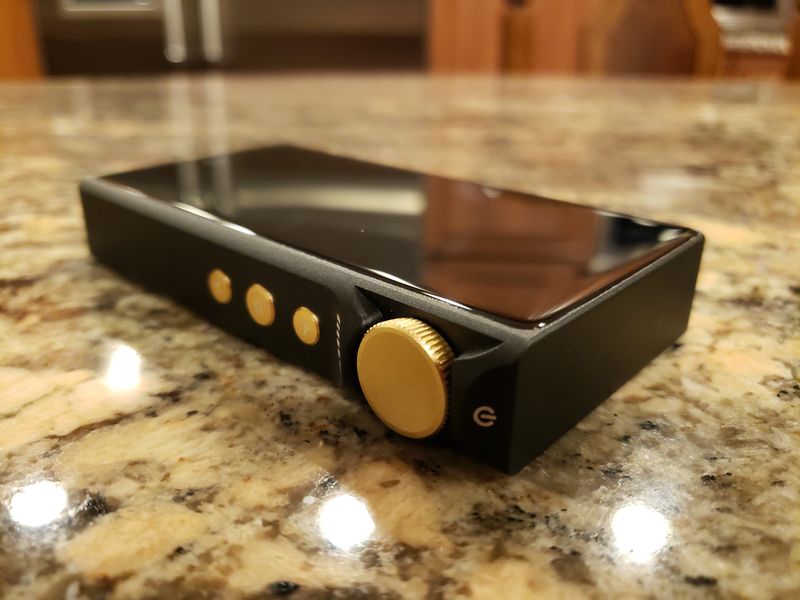
Sound Analysis.
I analyzed N3Pro sound with Odin, Luna, and Solaris ‘20 IEMs while playing a variety of my favorite test tracks, such as Agnes Obel “The curse”, Sandro Cavazza “So much better” (Avicii remix), C-Bool “Never go away”, Ed Sheeran “Shape of you”, Alan Walker “Darkside”, Galantis “Hunter”, Iggy Azalea “Black widow”, Indila “Boite en argent”, Dua Lipa “Love again”, Counting Crows “Big yellow taxi”, David Elias “Vision of her”, and Michael Jackson “Dirty Diana”. I let N3Pro burn in for 100hrs before starting my sound analysis.
I prefer to describe the DAP sound based on the comparison to other DAPs and pair ups with different IEMs/headphones since the DAP by itself doesn’t have a “sound”. What we hear is how it sounds through IEMs/headphones connected to it or the difference relative to other sources using the same pair of IEMs/headphones for monitoring the sound. As a result, this section of the review usually summarizes what I find in the follow up Pair-Up and Comparison sections.
Tubes vs SS (Solid State) – despite SS being 4.4mm BAL (and 4.4mm SS having wider soundstage than 3.5mm SS), 3.5mm Tubes (UL) output has an even wider soundstage. The difference is easy to pick up, the sound spreads wider left/right. When it comes to tonality, as expected, SS will be more transparent, colder, less colored, and with a blacker background. In contrast, Tubes output is smoother, softer, more musical, with fuller body, and more textured tonality. I also found Tubes (UL) output to have some improvement in vertical dynamics and more rumble in sub-bass. But what stands out the most to my ears was the analog texture of the sound when switched to Tubes timbre.
UL (Ultralinear) vs TR (Triode) – both of these Tube operation modes have a smoother fuller body tonality but the sound is quite different. TR is smoother, warmer, and slower, with a less aggressive sound that has shorter attack and longer decay, and slower transient response of note on/off. UL is faster, more articulate, more energetic. Both Tube operation modes have a wide soundstage, but UL is noticeably wider with a more open soundstage and better layering and separation of the sounds while TR sounds more intimate and even a little more compressed and congested in comparison.
Don’t get me wrong, Solid State output is not bad at all, and it is on par with other DAPs in the same price bracket. But when you switch to Tubes output and enable Ultralinear operation mode – the sound scales up with a wider and more open soundstage, more expanded vertical dynamics, and more natural and musical tonality. As a result, the contrast when going back and forth makes SS sound flatter and less exciting. Of course, everything will depend on pair up synergy, but for me personally, I went straight to Tubes output and kept it at UL as my favorite mode when using N3Pro.

Pair up.
The sound of a DAP is based on pair up synergy with different headphones. Afterall, you are hearing the sound of headphones connected to the Source. In this section of my review I will go over how various earphones and headphones pair up with N3Pro. In each pair up I noted the port (BAL 4.4mm or SE 3.5mm), SS Solid State or Tubes TR Triode or UL Ultralinear mode, HG high gain or MG med gain, and V# volume level.
Beyerdynamic T5p 2nd gen (full size Tesla drivers)
- 4.4mm, HG, SS, V33 – balanced clear signature, deep bass, smooth clear vocals with colder tonality, smooth treble, not as extended.
- 3.5mm, HG, Tubes TR, V38 – still balanced sig, some improvement in dynamics, bass is warmer, a little slower, mids/vocals are smoother, a little nasal mids, treble has a little more sparkle.
- 3.5mm, HG, Tubes UL, V38 – balanced sig, better dynamics, more sub-bass rumble, bass is tighter and faster, mids/vocals have more clarity and better definition, doesn’t sound as “nasal” as it was in TR mode, more sparkle than SS, but similar to TR mode.
Audio Technica ATH-R70x (470 ohm, open back full size)
- 3.5mm, HG, SS, V60 (don’t have BAL cable for this one) – balanced sig with a natural tonality and a smoother more laid-back sound presentation. More focused soundstage/imaging, even for open back feels a bit more intimate. Mids/vocals are smooth, not as layered or well separated.
- 3.5mm, HG, Tubes TR, V60 – sounds similar to Solid State SE, except SS has blacker background while with Tube TR is a little smoother and slower.
- 3.5mm HG, Tubes UL, V60 – soundstage expands wider, sound has blacker background like Solid State, but tonality has a little more body and richer texture. Mids/vocals have more focus, and improved layering and separation of sounds.
Meze Audio Empyrean (dual driver Planar magnetic)
- 4.4mm, HG, SS, V38 – a bit narrow soundstage, sound is balanced, smooth, laidback, mids/vocals are a bit veiled, lacking some clarity, too smooth overall.
- 3.5mm, HG, Tubes TR, V44 – very similar to solid state output, just a little bit smoother and more laidback.
- 3.5mm, HG, Tubes UL, V46 – wider/deeper soundstage, smoother detailed, but has more resolving mids with more clarity in vocals.
Out of these 3 headphones, I preferred using 3.5mm Tubes UL output/mode, and actually found T5p 2nd to pair up better, while R70x and Empyrean felt like they were not exactly driven to their full potential.

Campfire Audio Solaris 2020 (hybrid DD/3BA sensitive IEM)
- 4.4mm, HG, SS, V11 (MG, V21) – balanced signature with a nice sub-bass rumble, natural clear detailed mids/vocals, well controlled crisp treble. Average soundstage. Very faint background waterfall hissing. When I switched to Med gain, that waterfall hissing was nearly gone.
- 3.5mm, MG, Tubes TR, V27 – balanced signature with a deeper bass, smoother more natural mids, treble is more natural as well. No waterfall hissing at all.
- 3.5mm, MG, Tubes UL, V27 – similar balanced signature with a deeper and faster bass, natural more transparent mids with improved layering and separation, natural detailed treble, wider soundstage expansion. Probably one of my favorite pair ups with Solaris.
Dunu Luna (beryllium driver single DD)
- 4.4mm, HG, SS, V25 – relatively balanced sound sig with deep bass, smooth natural vocals, and sparkly treble. Average layering and separation, and dynamics is just OK in this pair up.
- 3.5mm, HG, Tubes TR, V31 – more balanced sound sig with mids coming more forward, but overall sound is still smooth and laidback.
- 3.5mm, HG, Tubes UL, V31 – similar to TR, but there are many more improvements. Overall sound is faster with a black background, bass has more rumble and also faster attack, mids are more forward and also slightly more revealing.
Venture Electronics SUN Dice (180ohm single DD earbuds)
- 4.4mm, HG, SS, V40 – smooth balanced natural tonality, but for some reason the mid-bass and mids/vocals sound hollow. I wasn’t too crazy about SS BAL output pair up with Dice.
- 3.5mm, HG, Tubes TR, V45 – still a smooth balanced natural tonality, and I also hear now a little more sub-bass rumble and more treble sparkle, but the most noticeable improvement is in mids/vocals where they have now a fuller more natural body.
- 3.5mm, HG, Tubes UL, V45 – very similar to TR, with the soundstage being wider now, but in my opinion, it ruins the sound because vocals are spreading wider and I was having a hard time focusing. With SUN Dice, I preferred to use Tubes TR mode.
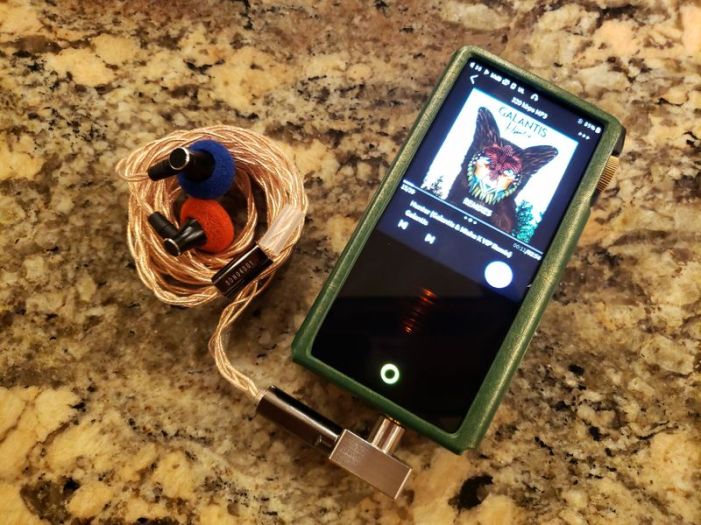
Empire Ears Odin (tribrid 2DD/5BA/4EST)
- 4.4mm, HG, SS, V26 – sound signature is a little more mid-forward with more focus on mids and lower treble. Plus, mids/vocals are brighter and colder and lower treble a bit harsher.
- 3.5mm, HG, Tubes TR, V30 – sound sig is more balanced, now I hear a deep sub-bass rumble and stronger punch of mid-bass, mids/vocals have more body which still sounds smooth, though also more resolving.
- 3.5mm, HG, Tubes UL, V30 – switching to UL mode fine-tunes the TR sound with a wider soundstage, blacker background, and fuller body vocals.
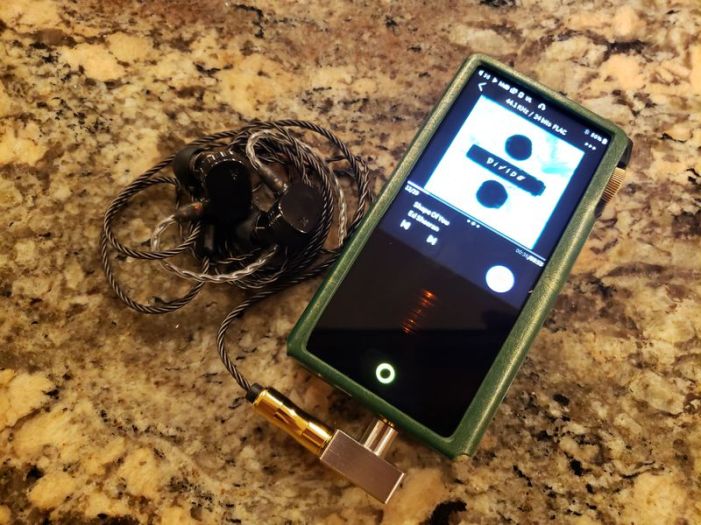
64 Audio U12t (12BA w/TIA driver and M15 APEX module)
- 4.4mm, HG, SS, V26 – balanced signature with a deep bass, clear detailed natural mids/vocals, and sparkly treble; actually, treble is a bit splashy.
- 3.5mm, HG, Tubes TR, V32 – similarly balanced signature, with more sub-bass rumble, mids/vocals have fuller body sound, more natural tonality, and treble is less splashy.
- 3.5mm, HG, Tubes UL, V32 – soundstage expands, background is blacker, the sound is not as laidback as in TR, but the biggest difference was in mids/vocals, given them more clarity and articulation.
In general, like in example with Solaris ’20, I found that more neutral or brighter/revealing IEMs to pair up better with Tubes output while warmer and bassier IEMs to have a better pair up synergy with SS output.
Page 5 – Comparison, Wired/Wireless connections, and Conclusion.

 Twister6 Reviews
Alex, Nice moniker given N8 Jr. 😊
I have been using it too, fully agree with the article. It punches above its price segment.
LikeLike
Hi i cannot decide witch one to buy the dtr1 or the n3pro,
Can you help me it is my first dap as well.
Mostly i listen to heavy styles of music (tech death metal /deathcore etc…)
Especially fan of heavy distorted guitars
Witch one by your opinion will suite me better
Thank you in advance
LikeLike
They are both great DAPs, but DTR1 will be more suitable for hard to drive headphones that are demanding and need more power and for user who already have another main DAP, while as a first DAP for all around use and covering my genres of music – N3Pro will be more appropriate.
LikeLike
thank you but where did you heard better
sound quality / guitar sound
i dont care about the touch screen wifi
im looking for the sound
LikeLike
And the quality of the sound will depend on pair up. If you are using sensitive iems or some other easier to drive multi BA or hybrid iems, dtr1 might not pair up as well, and I would suggest N3pro. But dynamic driver iems and full size harder to drive headphones will shine better with dtr1.
LikeLike
Any comparison on the sound quality and depth of imaging vs. the N6ii with E01 or E02? Thanks for the review!
LikeLike
I didn’t spend too much time comparing these, maybe in a near future I can update the review. But one thing I can comment on, N3pro SS output will be inferior in dynamics and soundstage to N6ii. Plus, N6ii gives you a lot of options of different dac/amp combos. If Cayin going to design N3pro at half the price to be better than N6ii, nobody is going to buy their N6ii 😉
LikeLike
I have the Hiby R5 and was thinking of upgrading. The R5 is a very nice sounding product, but it doesn’t quite work out for me because I find myself using BT headphones or IEMs sometimes (when I’m running around or walking the dog) and a wired connection if I am able to—usually rarely— have a moment to listen without multitasking. I mostly use the R5s android apps, particularly Qobuz. The problem is, and often discussed on head-if.org, is that the BT performance of the R5 is not great. You literally cannot put the R5 in a back pocket and not get constant drop outs. My iphone is rock solid in it’s connections. I also don’t love the size of the R5 screen, it’s small for my hands and the touch screen, even after removing the screen protector, is not always responsive. My iphone, on the other hand, has a terrific large and responsive touch screen. It sounds like the N3Pro might be a good step up for me because I can, as I understand it, use my phone as a transport and streaming device, and take advantage of essentially lossless transmission to the N3Pro, which will do the rest, including LDAC. I am I correct that this implementation is solid and that the N3Pro has a robust BT signal? Much appreciated. Dasa
LikeLike
You said you use iPhone? IPhone doesn’t support LDAC, the highest codec it support is aac, so not even aptx. N3pro doesn’t even officially support aac, not listed in the spec, even though a few people on head-fi mentioned they were able to connect using aac, so you might end up using only sbc codec. Also, with you running around and chasing after your dog, tubes output will be ringing when you shake the dap, unless you switch to solid state output (a good option in your case). If BT wireless is your main use, stick to your iPhone. Wireless transmission doesn’t involve dacs or amps or any other fancy features of higher end daps, it bypasses everything, and smartphones have the best implementation for wireless use, especially tws. Most of the dap wireless performance is average. R6Pro and N6ii have more solid wireless and R8 is one of the top Android and wireless performer, but the price goes up.
LikeLike
Thanks. I was under the impression that it was the N3Pro’s Bluetooth that was being broadcast to my headphones—therefore LDAC or something perhaps better than AAC would go to my headphones. Good to know about the tubes being not ideal if there is motion, even when walking? I am just trying to balance improved sound quality and the flexibility to go BT or not. I also like the “discovery” ability of using streaming services like. Qobuz. I don’t mind spending more, up to say around 1k, I just thought that the N3Pro was going to do the broadcasting to my headphones. I appreciate your thoughts.
LikeLike
Hi, I am in the market searching for an upgrade from my modded Zx507. I am interested in the n3pro, shanling m6 pro, m8, lotoo paw 6000 and the new hiby r6. I like warm and musical sound that is not overly analytical. Which would you recommend? Thank you.
LikeLike
saw you posted this question in N3pro thread. I’m not familiar with zx508, m6 pro or m8, so can only go by N3 pro, PAW6000, and new R6 2020 which I have tested. For the warm and musical sound, you can’t beat the tubes of N3 Pro, those are the real tubes, but it is not android DAP. PAW6000 is neutral smooth DAP, but not as musical as N3Pro, though it is more solid build. New R6 2020 is more revealing, brighter tuned. Now, I did read that M8 is also warm smooth and it has android, though you have to use a patch to get Google Play to work. But also, if you are looking into M8, Hiby R8 is also up there, being smooth and natural and with full android access.
LikeLike
Hey man how is it going?
As i told some time ago, i did purchase the DX120, very happy with its SQ.
But…this review makes me think of what im missing out of other DAPs. So, I’d sell my Dx120 on january. Considering i don’t care about wireless connections, is the N3pro better than the DX160? Or, does it have s different signature?
LikeLike
I covered comparison between N3pro and DX160 in my review 😉 https://twister6.com/2020/10/09/cayin-n3pro/5/ – 160 is a brighter DAP while N3pro is a warmer, smoother tube sound.
LikeLike
Thanks!
I’ll let you know if i have a question.
Merry Christmas (in advance) and stay safe.
LikeLike
Great review sir. Im looking to get the n3 pro to pair with moondrop s8 and since I saw u also reviewed those, I am interested to know how the waterfall hiss will be with the n3 pro since the s8 is quite sensitive.
LikeLike
I’m sorry, the Moondrop S8 was reviewed by another reviewer so I personally can’t comment on this pair up. But considering SS and Tube outputs and 2 tube modes it’s like you have 3 daps, and I’m sure you will find one will pair up better to your liking.
LikeLiked by 1 person
Oh Im sorry I didnt realise that. Thank you for you answers. 🙂
LikeLike
I am wondering whether it acts as a wireless receiver (Airplay, DLNA). Hiby r3 pro can do so, actually, so I really hope this one does! Thanks for the review!
LikeLike
It does support BT Rx so you can use it as a Wireless tube dac, I tested that. But I don’t know if it supports airplay or dlna. Don’t think it was listed on cayin product page. You might want to double check it.
LikeLike
how is Cayin N3 Pro pair up with Cayin C9 amplifier ?
LikeLike
Never tested that combo, but from the review notes of N3pro its LO was rather warm and colored. And once you add warmer colored C9 on top of that, the resolution and the retrieval of details will go down.
LikeLike