
Sound Analysis.
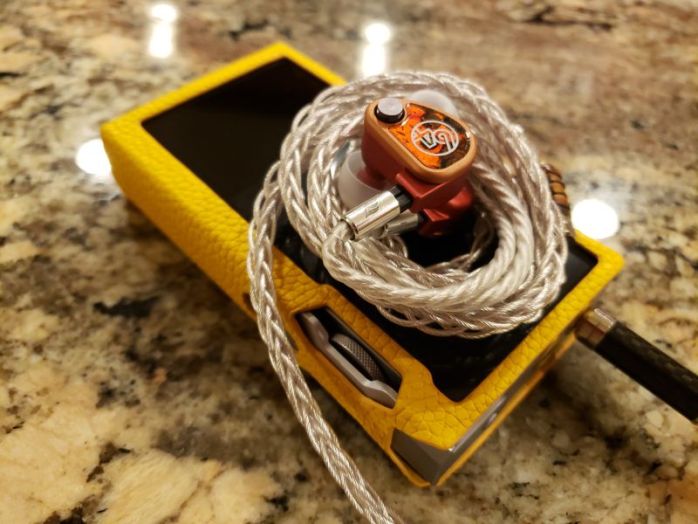
I analyzed P6 sound with EE Odin, 64 Audio U18t, CFA Solaris IEMs, and MEZE Audio Empyrean and oBravo HAMT Sig headphones while playing a variety of my favorite test tracks, such as Agnes Obel “The curse”, Sandro Cavazza “So much better” (Avicii remix), C-Bool “Never go away”, Ed Sheeran “Shape of you”, Alan Walker “Darkside”, Galantis “Hunter”, Iggy Azalea “Black widow”, Indila “Boite en argent”, Dua Lipa “Love again”, Counting Crows “Big yellow taxi”, David Elias “Vision of her”, and Michael Jackson “Dirty Diana”. I let P6 burn in for about 200hrs before starting my sound analysis. People have different opinions about the effect of burn in, but to my ears out of the box the sound was a little brighter, especially in treble, and after about 100hrs it became smoother and more natural.
I prefer to describe the DAP sound based on the comparison to other DAPs and pair ups with different IEMs/headphones since the DAP by itself doesn’t have a “sound”. What we hear is how it sounds through IEMs/headphones connected to it or the difference relative to other sources using the same pair of IEMs/headphones when monitoring the sound. As a result, this section of the review usually summarizes what I find in the follow up Comparison and Pair-up sections. All my sound analysis was done with NOS (non-over-sampling) digital filter which I found to yield the most natural tonality.
If I would to summarize the sound of P6 in one sentence, I would describe it as having a resolving natural tonality with a smooth reference sound that has minimal coloring. I know, it’s a mouthful, but basically the sound is just very clean and effortless, detailed, layered, but not micro-detailed and without too much air between the layers. It almost feels like a digital edge was taken off the sound to give it a more analog smooth texture, yet the sound doesn’t feel warm and smooth where it loses the resolution. It just feels very natural, non-fatigue, and realistic, especially when you focus on rich timbre of the instruments.
One thing that stands out, considering smooth nature of the tonality, the black background with a very low noise floor, making every note’s on/off transition clean and precise, giving the sound more clarity without making it faster. This is especially appreciated when listening to sensitive IEMs where the background is relatively quiet. And this low noise floor and clean background also enhances the vertical dynamics of the sound expansion. I also noticed in many pair ups it enhanced the punch and articulation of the bass, giving it more power without changing the sound sig.
Also, in many pair ups I found soundstage to be very wide and deep, approaching the level of spacious holographic expansion. Of course, it will depend on technical capability and limitation of earphones and headphones you pairing P6 with. Also, in some pair ups it reached nearly 3D imaging level with a very precise placement of instruments and vocals. Yet, the soundstage and imaging still remains natural and not exaggerated.
4.4mm vs 3.5mm
Besides the obvious difference in power output where I had to raise the volume by about 8 clicks when going from BAL to SE, I do hear BAL to have wider soundstage and blacker background which is very common in many DAPs with a proper balanced ckt design.

Comparison.
In this test, I was using EE Odin and Meze Audio Empyrean to listen/compare DAPs, volume matched in every comparison. Each of these DAPs, besides a difference in tonality and pair up synergy, has their own Pros/Cons when it comes to features, all of which should be taken into consideration depending on your priorities if you need streaming or not, which balanced termination you prefer, how much output power you need, battery life, and of course touch screen or non-touch screen interface.
P6 vs LP6 Gold – I hear a very similar soundstage expansion, pretty wide with all earphones and headphones I tested, and with a good depth/height as well, though LP6G stretches just a bit wider. Overall, soundstage does sound holographic in earphones and headphones paired up with either DAP. Both have a black background, but LP6G is blacker, which results in faster transient response of notes on/off and shows some improvement in vertical dynamics, reminding me of P6 Pro. In terms of vertical dynamics and noise floor, LP6G is in between P6 and P6 Pro, closer to P6 Pro. Tonality is not too far off, having a natural fuller body sound, but upon closer listening you can pick up the difference with LP6G having fuller body mids, especially giving vocals more body, and also LP6G bass having more rumble and impact. This could be all part of higher power output and how it affects the pair up synergy with IEMs and headphones under test. Overall, P6 sounds a little smoother and more relaxed while LP6G sounds faster and tighter which reminds me of P6 Pro. But at the same time, the smoother nature of P6 sig gives the sound more analog lush flavor.
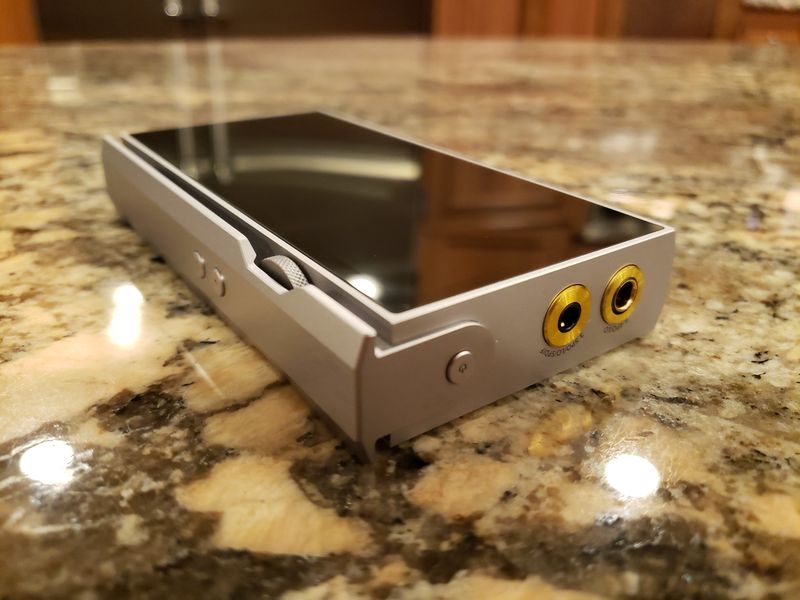
In terms of general functionality, I don’t think P6 and LP6G overlap at all. First of all, the design is different with P6 having all discrete R-2R DAC while LP6G having 2x R-2R DAC integrated chips. Also, LP6G has touch screen like P6 Pro, while P6 is non-touch screen. And also, if you are planning to use hard to drive headphones, LP6G will be better suited since it was tuned to drive even HD800S to their full potential. But at the same time, P6 is lighter and slicker and has BT Rx which allows it to work as a wireless DAC/amp to stream audio from your smartphone, while LP6G doesn’t have it. P6 and P6 Pro are suited better for IEMs and more efficient headphones, while LP6G has too much power for IEMs, especially sensitive ones, maxing out the volume at a very low dial setting.
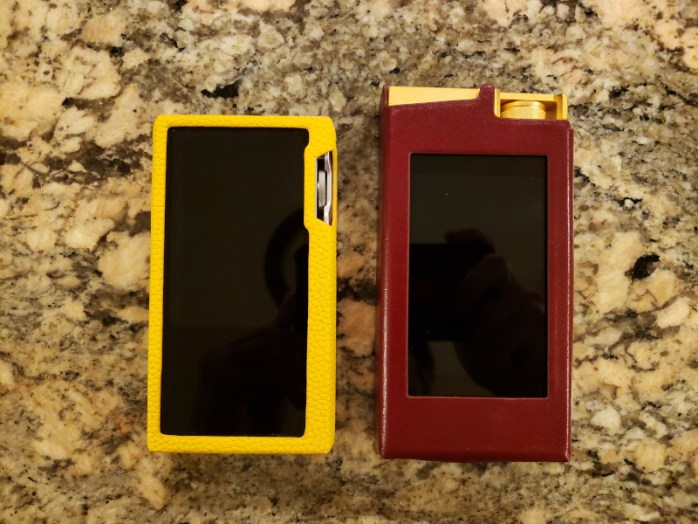
P6 vs Hifiman R2R2k (red) – Both have a wide soundstage expansion, but P6 has more depth, giving the sound more holographic feeling and more convincing 3D imaging. P6 also has lower noise floor relative to R2R2k when listening to more sensitive IEMs, and because of that P6 background sounds darker with a perception of a better vertical dynamics, though do need to keep in mind that Red uses 2x PCM1702k while P6 R-2R implementation is equivalent to 8x PCM1704k. Tonality is also slightly different, with P6 being smoother, more laidback, organic, while R2R2k Red being more revealing, still natural but not as smooth, even a bit more digital when you do a close comparison, though by itself R2R2k Red is smoother than many other DAPs. Also, considering that R2R2k Black (with 2x PCM1704k) sounds more revealing than Red, I assume the difference in tonality between P6 and R2R2k Black could be even more noticeable.
In terms of general functionality, P6 has the advantage of at least double the battery life, more precise controls using physical playback buttons vs capacitive touch buttons (R2R2k), more system setting options, and support of hi-res lossless wireless codecs which R2R2k doesn’t support.
P6 vs Sony WM1Z – Both have a wide soundstage expansion, perhaps with P6 stretching just a little bit wider. But the height/depth of P6 soundstage is more expanded which gives this DAP the advantage in 3D imaging where you can close your eyes while listening to music and feel being surrounded by sound (in P6). Now, when it comes to tonality these two are actually not too far off, both offering a more natural reference tonality with a deeper bass impact. But their technical performance does have some differences. P6 has a blacker background and lower noise floor which improves the vertical dynamics of the sound and gives a cleaner edge during on/off transient of the notes. Also, when listening and comparing with more analytical IEMs, you can pick up better layering and separation of the sounds in P6 vs WM1Z.
In terms of a general functionality, WM1Z has the advantage of a touchscreen and Bluetooth Tx (to pair up wireless headphones), while both support Bluetooth Rx (to function as wireless DAC/amp), and P6 has analog LO while WM1Z doesn’t.
P6 vs Lotoo PAW Gold Touch LPGT – Here the soundstage expansion is very close in width, depth, and height, and both have a similar quality imaging. When you start to compare the sound, you quickly realize the difference in tonality with LPGT having a more reference brighter tonality and more neutral bass impact and airier treble while P6 being more natural, smoother, with more authorative bass impact and more natural treble extension. Of course, everything will depend on pair up synergy with your specific IEMs, and because of this tonality difference a brighter tuned IEMs where more enjoyable during extended listening sessions with P6, while warmer tuned IEMs lost a bit of a resolution.
In terms of functionality, again, LPGT has the advantage of a touchscreen and Bluetooth Tx, while both support Bluetooth Rx, have lots of setting options, and have overall great sound quality. Also, LPGT is well known for its Parametric EQ if you are in need of custom EQ.
P6 vs A&K SP2000 SS – CU version of SP2k would have been probably better for this comparison, but I only have access to SS version. Both have a very similar soundstage expansion in width, depth, height, and a very similar imaging approaching 3D level. They also both have a very similar technical performance when it comes to vertical dynamics expansion and layering and separation of the sounds, though SS has more air between the layers. But their tonality is not the same where as you would have expected, P6 is smoother and more natural while SP2k is a little brighter and more revealing in comparison. Also, P6 bass impact is stronger and treble is smoother and more natural while SP2k has less bass impact and airier treble with more sparkle.
In terms of functionality, again, SP2k has advantage of a touch screen, BT Tx, custom EQ and being able to run selective apps while P6 will be relying on Bluetooth Rx pair up to stream apps wireless from your phone.

Page 4 – Pair up, Wired/wireless connections, and Conclusion.

 Twister6 Reviews
Excellent review. I have the P6 and find it to be an amazing sounding DAP with both the Odin IEMS and Meze Empyrean headphones.
I have only used the micro SD card which I loaded directly from my Mac. I have never added music to the card or internal storage directly. To add music to the internal storage do you just drag and drop the music into the P6 when connected to the laptop?
Thanks for your detailed and spot on review. I thoroughly enjoyed it.
LikeLike
Yes, when you connect it to your computer, it becomes visible like external storage drive where you can drag and drop the songs.
LikeLike
Thank you. I was curious as to what small/desktop amp is a good pairing with the P6 and Empyrean headphones in your opinion?
LikeLike
sorry, don’t have too many desktop amps, I’m more into portable setup. Romi Audio BX2 I mentioned in the review is a great little portable amp,.
LikeLike
Thanks for the suggestion for a portable amp to pair with the P6 and Empyrean. I’ll look into it.
LikeLike
Another amp connection question. I got the iFi Zen Can amp and I am clearly doing something wrong. I am connection the P6 3.5mm with RCA cables to the input on the Zen Can. What setting should I change in the P6 for it to send music through the amp?
LikeLike
System setting, audio output setting, SPDIF out -> On. And make sure you are using coax cable with 3.5mm plug that has 4 rings
LikeLike
I have Audioquest Evergreen 3.5mm and RCA interconnect cables. The 3.5mm has 2 rings on it. How does this differ from one with 4 rings on the plug? Sorry for a stupid question. Will this cable not work with the P6 to amp?
LikeLike
Needs 4 rings 3.5mm plug, that’s how the jack is designed because it is combined between audio and digital outputs.
LikeLike
https://extreme-audio-usa.myshopify.com/products/extreme-audio-3-5mm-stereo-4-pole-to-rca-digital-coaxial-audio-connection-cable-for-fiio-x3-2nd-generation-fiio-x5-2nd-generation-and-fiio-x7-6ft this is the cable I’m using, but you can probably find a cheaper one, though this one is good quality.
LikeLike
Thank you for the information and the link for the correct cable I need. Will get one ordered so I can try out my amp.
I appreciate all of your help with this!
LikeLike
Sorry for another question. The Zen Can needs 2 RCA input connectors and the P6 needs one 3.5mm. The link you sent has only one connector for the amp. Are there 2 RCA cable connectors that have the 3.5mm with 4 rings?
LikeLike
Here is an example of the type of cable I need to connect the P6 to the Zen Can amp. Would this work?
https://extreme-audio-usa.myshopify.com/products/extreme-audio-premium-quality-gold-plated-3-5mm-stereo-to-rca-audio-connection-cable-for-high-resolution-audio-players-headphone-amps-smartphones-wireless-headphones-and-tv
LikeLike
Sorry, I totally misread your question. I saw iFi and assumed you were talking about their DAC/amp where you need a digital SPDIF input, but this is amplifier where you need a dual RCA audio input. Dual RCA connection is for amplifier input, the output of P6 internal R-2R DAC will go to 3.5mm Line Out (selected from System settings, Audio output setting, Headphone interface mode, Line output. And if you have headphone already plugged in when selecting Line Out, unplug and plug it again, it will pop up with a message to confirm Line Out) and instead of internal amplifier you will connect to external amplifier. That is audio output, not digital SPDIF output, thus you should be able to use the cable above. I’m using this cable https://www.audioquest.com/cables/analog-interconnects/bridges-falls-series/evergreen with external XI Audio Broadway amplifier and P6 and it works perfectly. But AQ Evergreen is the same as the Extreme audio cable above, just that AQ will be higher quality copper and better shielding.
LikeLike
Perfect. Thank you for that help. I was looking at the Audio Broadway as it is a nice small size. What headphone jack is needed to connect with the output of that amp? Does it take a 4.4mm balanced or something different?
LikeLike
There are 2 versions, Broadway S (single ended, 6.3mm, so you can use with 3.5mm adapter) and Broadway with balanced 4.4mm, but it has too much power for iems. Great thing about this DAP is that it runs on batteries. But Romi Audio Bx2+ is even better, the one I mentioned in my P6 review.
LikeLike
The Romi Audio BX2+ looks great however I don’t think it is available in the States.
LikeLike
“Equalizer where you can ONLY select presets (normal, rock, pop, classic, bass, jazz)”
That is a shame. I’ve been on a kick with AutoEQ measurements and tweaking my IEMs. For some, it’s made a huge difference. Have the PAW 6000 and thinking about upgrading, but feel like the LPGT is too similar (and I wish their PEQ had more range for Q). I really don’t want to buy a high end Android player, but using something like UAPP would certainly give one a lot of EQ power.
Maybe the P6 Pro will get the option for custom EQ? Looking forward to your post on that one, you do great work!
LikeLike
It doesn’t, P6 Pro has identical GUI/OS just wit a touch screen. I should have the review very soon, just too overload with personal stuff now. Many manufacturers believe that a true audiophile source doesn’t need to be tweaked since EQ introduces distortion and other artifacts. Others, like Lotoo have a very high quality Parametric EQ or if you want sound shaping, Hiby app and small hiby OS daps have MSEB or another option is Cowon with their JetEffects. Keep in mind, P6 and P6 Pro have Bluetooth Rx mode, you can pair it up with your phone to use as a high-res LDAC wireless R-2R DAC/amp and do all your sound tweaking on the phone. With L&P, LP6 has a custom EQ, but not P6 or P6 Pro.
LikeLike
I have been in the ‘no EQ’ camp for a long time. Finding professionally (or pseudo-professionally) derived PEQ settings for specific IEMs has changed my mind though. My Rai Penta were okay before EQ, but wow what a difference after EQ. My VE8 on the other hand, I like with no EQ.
That said, I’m still interested in the P6 Pro. Maybe the ideal setup is a cheaper Android DAP for streaming and tweaking, and something like the P6 or LPGT for my owned music collection.
Great point about Bluetooth Rx, although as an iPhone user I think I may be capped with codecs.
Hope you’re doing well Twister, love all your content!
LikeLike
Any information and Ra c cu IEM 182 ohms by oBravo, I heard bad and good reports about it, and that confuses me, don’t know what to believe, However, I own one pair of oBravo iem, eamt 1c and I love it, and it makes me believe that it’s Ra c cu iem it could be better than what I have and I am attempting to get it, please let me know what you know. Thank you
LikeLike
Just replied to your other question after DX300 review. Just search on my site, I have reviewed RA C Cu years ago. They just released RA 21 updated 2021 version. Will try to get a sample from Phil as soon as I’m done with other reviews. And usually reports vary because people look at RA C Cu price and expect a lot more. oBravo doesn’t buy off-the-shelf parts, they design and manufacturer their own drivers, and sell these high end RA C Cu models in low quantities. Thus, cost is high because R&D and Manufacturing is very expensive.
LikeLike