
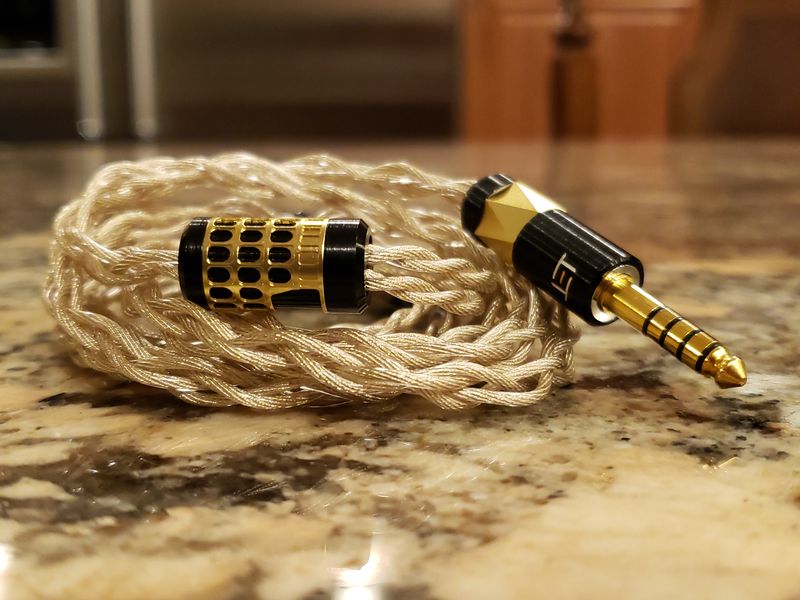
Pair up.
Here is how I hear Eletech Aeneid cable pairs up with different IEMs in comparison to their stock cables. In this test I was using LPGT as a neutral reference source, volume matched, and playing the selection of my usual test tracks, such as Agnes Obel “The curse”, Sandro Cavazza “So much better” (Avicii remix), C-Bool “Never go away”, Ed Sheeran “Shape of you”, Counting Crows “Big yellow taxi”, Galantis “Hunter”, Alan Walker “Darkside”, Iggy Azalea “Black widow”, Indila “Boite en argent”, Robin Schultz “Oh child”, Dua Lipa “Love again”, David Elias “Vision of her”, and Michael Jackson “Dirty Diana”.
Please keep in mind, I’m describing the sound of IEM paired with a specific cable, driven from LPGT source. I don’t want to imply that cable will have a drastic EQ-like effect on the sound of IEM. Based on what I’m hearing, cable can finetune the sound, but if you find the original signature of IEM to be not your cup of tea, no cable alone will fix that.
MMR Balmung
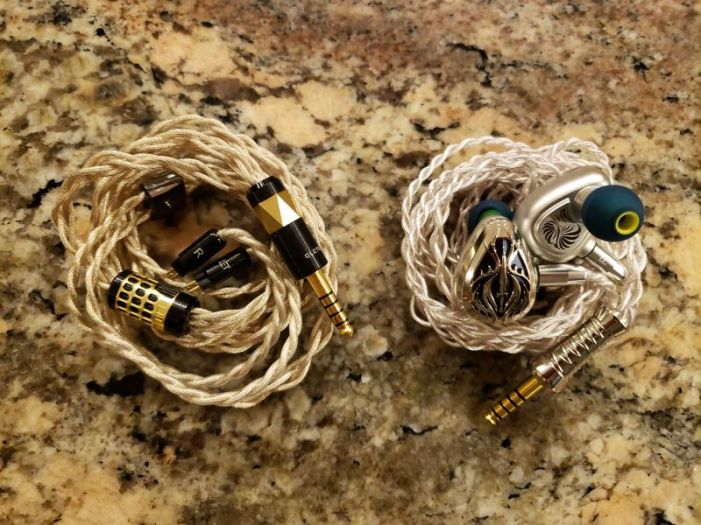
Stock SPC vs Aeneid – I noticed right away a wider soundstage expansion with improvement in imaging. Stock cable looks and sounds great, but it gives the sound more depth than width, which also affects the imaging where sounds are positioned closer to the center. Aeneid expands it in width and depth. I also hear the mid-bass being a little stronger and tighter which improves the articulation of the punch. Furthermore, Aeneid gives Balmung a natural refinement with a little more body in mids which changes the sound sig to be more balanced. It also adds more sparkle in treble relative to a smoother treble tonality with a stock cable.
VE Erlkonig
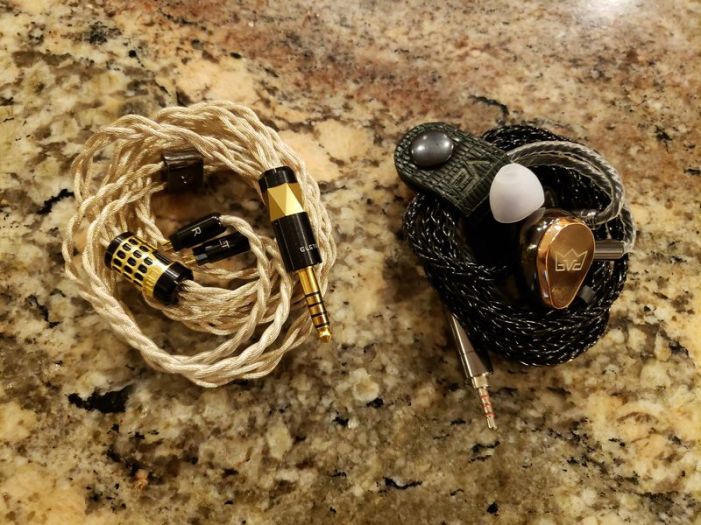
Stock silver 8W vs Aeneid – The soundstage expansion is very close, maybe with Aeneid stretching it a little wider. There is a difference in imaging and placement of mids/vocals where stock cable pushes vocals further out of your head, while Aeneid brings vocals closer to you. Overall, the tonality is not too far off, but technical performance differs. In pair up with Aeneid I definitely hear a blacker background with Erl, and as a result of that the sound is tighter and a little faster. Also, stock silver cable sounds a little smoother in comparison to Aeneid which is more revealing and more micro-detailed in comparison. Last, but not least, Erl is very picky when it comes to 2pin connectors due to its tight shell socket, so I had to apply a bit of a force to get this one in.
VE Elysium

Stock SPC 8w vs Aeneid – I voiced my opinion before and will repeat it again, I’m not a fan of Ely’s stock cable which shrinks its soundstage width and makes treble sound harsh and unnatural. Aeneid fixes both of these problems. Soundstage perception is wider and more holographic now, which also improves the imaging and placement of sounds in space. Not too many changes in bass and mids, though I do hear them being more balanced relative to each other. The biggest change is in treble, now being smoother and more natural with Aeneid.
EE Legend X

Stock EA Ares II vs Aeneid – A lot of other cables I used in testing with LX typically have some effect on mids, boosting them higher to balance out the sound sig. Here, in pair up with Aeneid the most noticeable effect is the bass boost. LX is a basshead IEM with an elevated bass slam. Now, imagine even more elevated sub-bass and even bigger mid-bass impact. Surprisingly, even with a bass boost, the bass itself is still well controlled without spilling into mids. Also, I hear a slight edge taken off the treble, making it a little more natural.
EE Odin
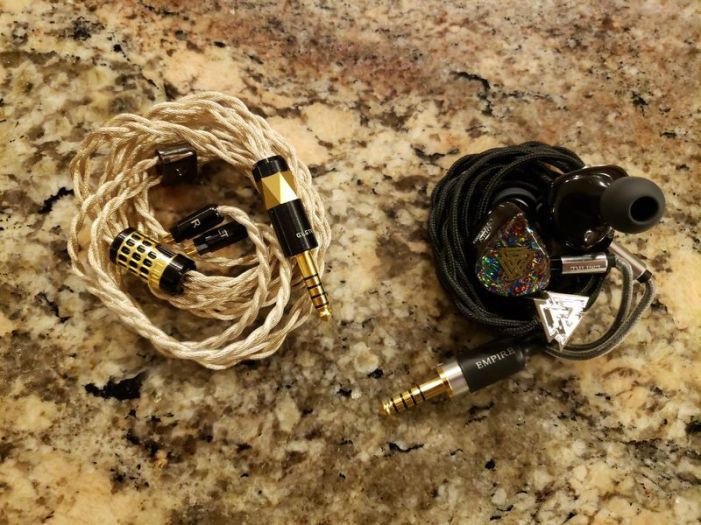
Stock 1960 2w vs Aeneid – this impression going to be short because I found Aeneid not to be a good pair up with Odin. Odin is a more mid-forward brighter revealing tuned IEM. Pair up with Aeneid makes it even brighter, more revealing, more analytical and micro-detailed. Some might like the change, but I personally wasn’t too crazy about it. Plus, in comparison to 1960 2wire stock cable, Aeneid pair up with Odin made the soundstage a bit narrower.
UM Mest MKII
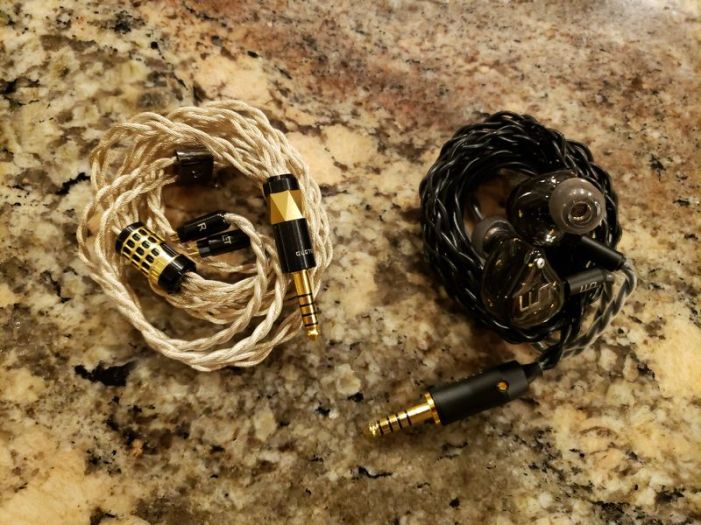
Stock PWA Copper vs Aeneid – The only noticeable change I hear is in upper mids/lower treble where with stock copper cable it sounds brighter, more revealing, with a lot more energy and crunch which could get a bit fatigue after the extended listening session. What Aeneid brings to the table here is a complete transformation off upper mids and treble, bringing it down in quantity to make it more balanced with the rest of the tuning, making it a little smoother and more natural. I personally enjoyed this change.
Comparison.
Consistent with my cable testing philosophy, I used the same IEM (MMR Balmung) and the same source (LPGT), and only changed one variable at a time to note the sound difference I hear while keeping volume matched. Keep in mind, I’m describing how a particular IEM sound compares between Aeneid and other cables.
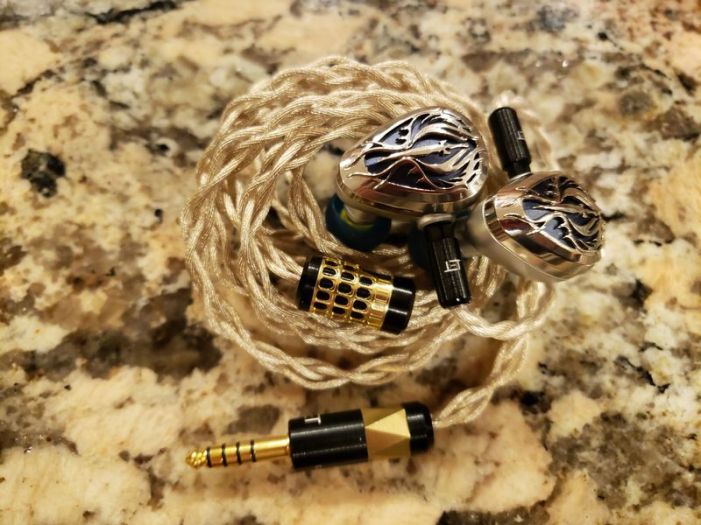
Aeneid vs EA Horus X – Considering both are GPS material cables, I thought the performance will be similar, but it turned out to be not the case. I went back and forth many times, comparing these two and constantly coming back with a conclusion of Aeneid soundstage stretching a little wider relative to HX, and the imaging is a little more 3D with Aeneid, perhaps due to a wider soundstage expansion. Both yield a black background, but HX sounds a little tighter with a sharper decay of notes while Aeneid in this pair up has a slightly longer decay, still keeping a faster tighter pace of the sound, but at the same time giving it a touch more laidback analog flavor. The biggest difference I noticed was presentation of upper mids/vocals, being more forward with Aeneid and slightly pushed back with HX. As a result, Balmung sounds more W-shaped, balanced with Aeneid, while having a mildly U-shaped sound sig with HX. Both cables might use the same wire material, but Aeneid gave Balmung a more balanced sig with a slightly more musical tonality while HX pulled vocals a little back and made the sound tighter and faster.
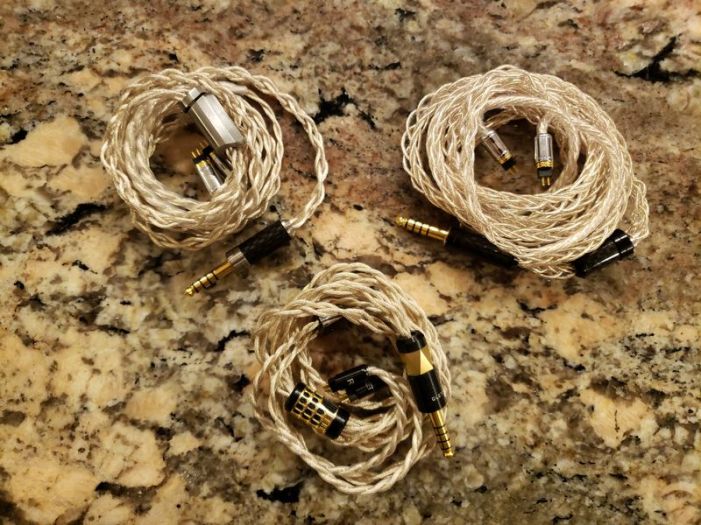
Aeneid vs EA Code 51 – Contrary to my previous comparison with similar wires, here with totally different wires I hear more similarities. First of all, with Balmung the soundstage expansion between these two is nearly the same in all 3 directions, including a very similar imaging. Next, I examined the signature and found both of them being quite balanced, having W-shaped sound, but C51 had vocals just slightly more elevated and positioned a touch more forward. As a result, the perception of bass had more punch and better articulation with Aeneid, while being slightly laidback with C51. Another difference which I found to be noticeable was a smoother tonality of C51 vs sharper tighter sound when paired up with Aeneid. As a result, Aeneid has a blacker background, while pair up with C51 yields a more analog tonality. I went back’n’forth many times in this comparison, trying to decide which one I like better, and was still undecided. In Aeneid vs HX I liked Aeneid better with Balmung, but here either one is great, just giving you a different flavor.
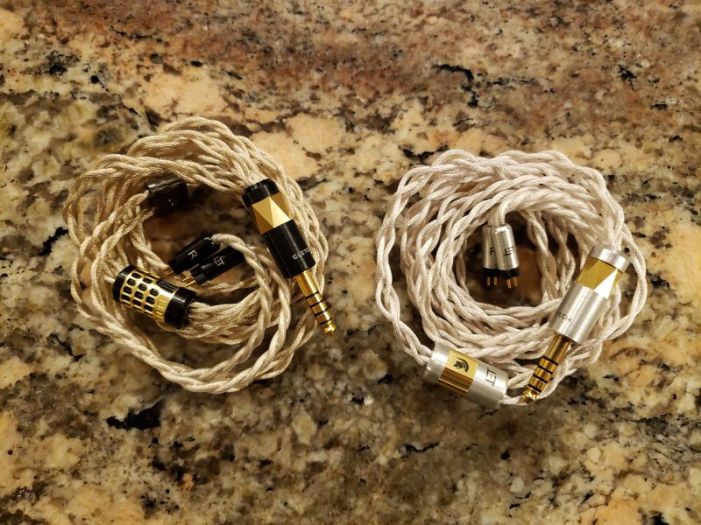
Aeneid vs Eletech Iliad – And yet another twist in this comparison where Iliad performance with Balmung was like a combination of HX and C51. Right away I noticed the soundstage to be wider with Aeneid, while Iliad was wide but with more height/depth. Next, I was listening closely to compare the signature, and found both to have W-shaped balanced sound sig when paired up with Balmung. The difference came in tonality. The pair up with Iliad was smoother, more musical, with the sound being a little more relaxed. In a contrast, Balmung pair up with Aeneid yielded a tighter and faster sound with a blacker background, and overall faster sound pace. Especially if you prefer a tight articulate bass, Aeneid maximized Balmung lower end performance.
Bonus:
Oriolus Traillii (w/1960 4W stock cable) and Aeneid vs Iliad.
Aeneid pair up with Traillii is different than Iliad. Iliad has a similar (or close enough) tonality and technical performance as stock 1960 4wire, except the soundstage is a little narrower, what I hear as more depth/height rather than width. In contrast, Aeneid changes the technical performance of the bird. The soundstage is close in width, but the sound becomes tighter and faster, with sharper decay of the notes which results in blacker background. This change sharpens the tonality and takes the analog edge off it. I wouldn’t say it is better or worse, just different, and to my ears stock cable sounds more laidback and analog while Aeneid gives the sound a faster toe-tapping digital edge.
So, if microphonics of stock PWA cable bothers you and you want a blacker background and don’t mind a slightly colder tonality with close enough soundstage expansion, Aeneid is a good alternative. If you don’t mind a slightly narrower soundstage while keeping the rest of the performance close to stock cable, go with Iliad.


Conclusion.
Based on what I have seen over the years of reviewing, there are no shortcuts when you start a new company in a competitive audio gear market. So, it was impressive to see how in such short period of time Eric and his team elevated the name of Eletech cables to a level of other popular brand names that have been around for a long time. Of course, Eric is not exactly a noob in this field and has many years of accumulated experience when he was a part of EA team. But nevertheless, lately I have been noticing Eletech being mentioned in many discussions along with EA and PWA cables.
And as always, when I talk about cables, I want to point out that you shouldn’t expect a drastic EQ-like changes in sound. But in a number of my pair up and comparison examples, I did hear a noticeable refinement level of sound changes. For example, when switching to Aeneid I do hear an improvement in soundstage expansion and imaging, especially imaging with more accurate placement of instruments and vocals. I also found Aeneid to add a more articulate bass punch, more body in the mids, and in some cases to bring upper mids more forward to balance out the signature while adding natural micro-details.
There is always going to be a lingering question about the pricing since Aeneid is not a cheap cable, and when dealing with summit-fi cables you should have more realistic expectations of diminishing returns. Some people are willing to pay high premium even for 5% of sound improvement. Otherwise, Eletech offers more budget friendly cables, including Socrates which has an impressive price/performance ratio.

 Twister6 Reviews
Can’t wait your MMR Balmung review
LikeLiked by 1 person