
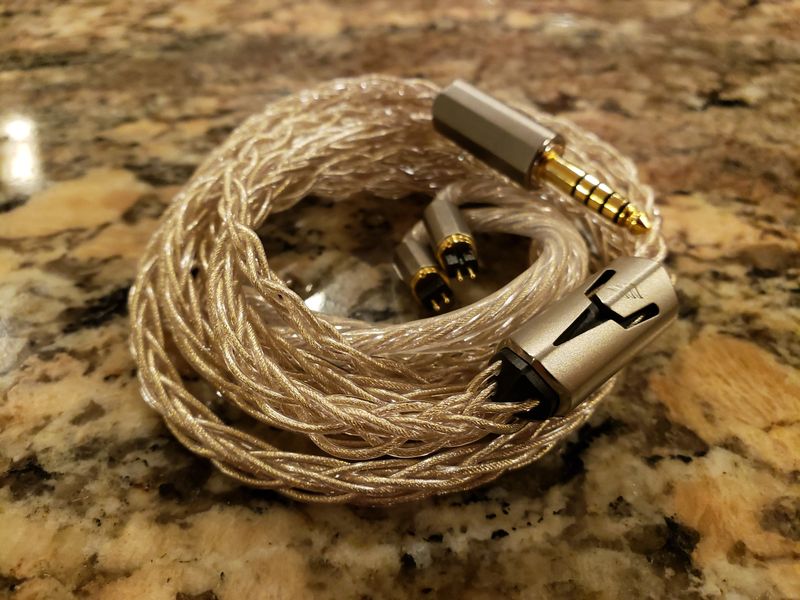
Comparisons.
Consistent with my cable testing philosophy, I used the same IEM (Traillii, a.k.a. the Bird) and the same source (LPGT), and only changed one variable at a time to note the sound difference I hear while keeping volume matched. Keep in mind, I’m describing how a particular IEM sound compares between Centurion and other cables.
Centurion vs PWA Orpheus – these two cables are among few I tried with the Bird where relative to its stock 1960 4W cable the soundstage still maintains its wide expansion with 3D imaging. Also, both of these pair ups still yield a deep and powerful bass impact that makes you question if Traillii has BA or DD bass drivers. There is one small difference in bass rendition where Orph has a slightly longer decay in notes while Cent decay is shorter, making the bass tighter and a touch faster. Listening closer to upper mids and lower treble, you can hear how these two cables affect Traillii tonality in a different way. Orph makes upper mids and lower treble of Traillii smoother, still detailed and resolving, but the tonality is more organic, smoother, and vocals presentation is a bit less forward, slightly pushed back. Also, the treble with Orph is smoother and has a little less sparkle. In contrast, Centurion brings upper mids/vocals a bit more forward, with more energy, more punch, more revealing tonality, more micro details, and also more sparkle in lower treble. As a result of these changes, Traillii with Centurion sounds like it has a tighter sound with a blacker background. In contrast, pair up with Orph makes Traillii sound more analog, slightly more laidback and softer, just more organic relative to Cent.

The difference is noticeable enough to hear these cables as complimentary in tonality rather than overlapping. When adding 1960 4wire into the mix, you realize that stock cable tonality fits somewhere in between Orph and Cent. With a stock cable the mids are closer to Orph while the treble is closer to Cent. Another thing to keep in mind, Centurion is lighter in weight (Cent 46g vs Orph 58g), easier to wear while being thinner and less bulky, and for those who have issues with PWA cable microphonics, Centurion does not have that problem.
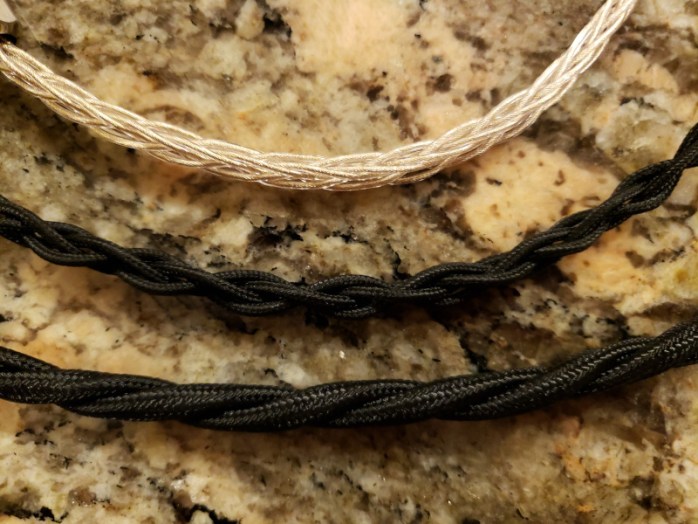
Centurion vs PlusSound PPH8 – PPH8 is the king of soundstage width and when listening with Traillii I do hear the left/right field spreading a touch wider than stock cable. When it comes to tonality changes, these two have a similar bass response, being tighter, faster, and more articulate due to a shorter decay of notes. And I also hear a similar treble response, just with a little more sparkle in PPH8 which gives a pair up with Cent a bit more natural treble tonality. But the biggest difference here is in mids, sounding a little brighter and a touch thinner with PPH8, while having more body and sounding more natural with Cent. Nothing is night and day, but the difference in mids here made it easier for me to separate these cables in a blind test.
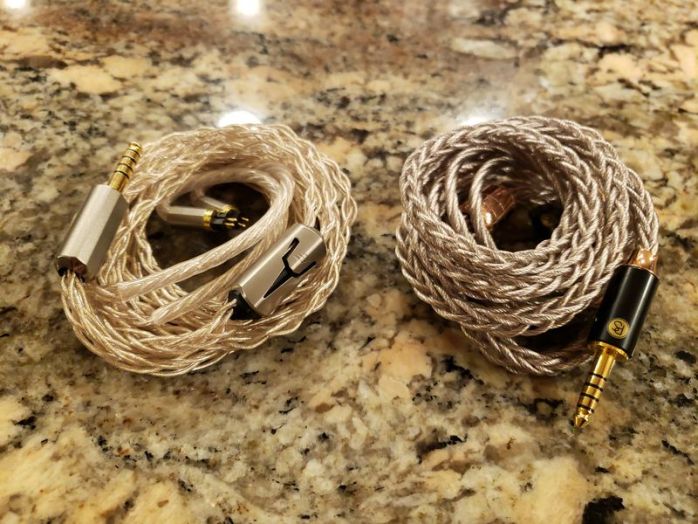
Centurion vs EA Code 51 – I love C51 with many IEMs, but relative to Traillii and its stock 1960 4W, I found it changed the soundstage shape, having more depth/height than width. And in comparison, Centurion has a wider/deeper/taller soundstage than C51. The bass between Cent and C51 has a similar rendering, being faster, tighter, more articulate. With mids and vocals, C51 pushes it more forward and makes them more revealing, and the same goes for treble which C51, making it crisper and a little brighter. In contrast, Cent renders mids/vocals with a more natural tonality, still detailed and revealing, but a little smoother and not as forward. All is a matter of a personal preference, and I did prefer Cent’s pair up with Traillii over C51.
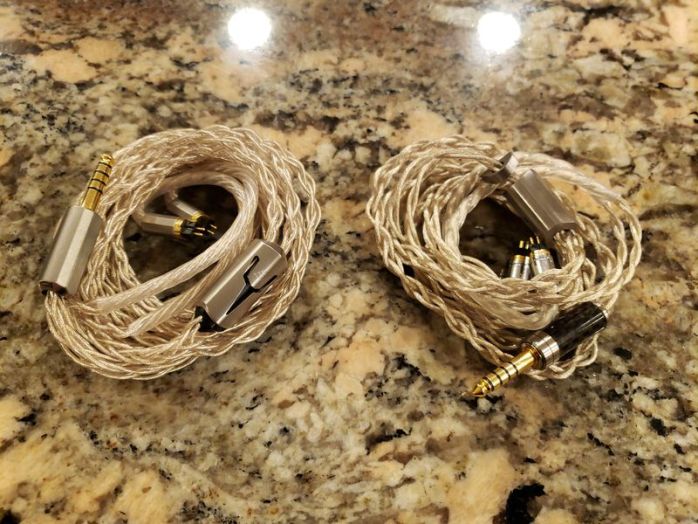
Centurion vs Eletech Aeneid – the soundstage expansion of Traillii with Cent is a little wider than Aeneid; not exactly a night’n’day difference, but you can spot that during a close listening. Rendition of bass notes is similar here, with shorter decay, more control, tighter and more articulate. Mids is where I hear the main difference, with Aeneid making them smoother, less forward, a touch more organic in comparison to vocals with Cent being more micro-detailed, more revealing, and with overall background being blacker. Also with treble, Cent brought a little more crunch and air to Traillii which Aeneid kept under more control and on a smoother side.

Centurion vs EA Horus X – the soundstage expansion of Traillii with Cent is wider, creating a more holographic space in comparison to HX. By no means the Bird pair up with other cables has a narrow soundstage; just that Cent stretches it wider to push the limit. Tonality is actually not too far off, being natural and revealing/detailed at the same time. The bass is as tight and articulate, well controlled with a faster punch. Mids are as revealing, maybe just a tiny bit pulled back with HX in comparison to Cent. Treble with HX is a bit smoother, and I hear more sparkle and a little extra crunch paired up with Cent. Also, w/Cent the background is blacker which makes the sound tighter.

Conclusion.
Effect Audio Centurion cable has unique design and sound characteristics that make it stand out from the crowd of other ultra-premium cables. In many pair ups of Centurion and different IEMs, I hear a more 3D holographic space, expanding in width, depth, and height, especially in soundstage width. The overall tonality improvement is a mix of natural and revealing, maintaining the fuller body of the sound while adding more micro-details. It’s not a warmer or colder cable, it is more revealing, like removing a fine layer of a thin veil. It tightens the sound, almost like decay of notes is shorter, creating a slightly faster pace and blacker background. If you have a brighter tuned IEMs, this pair up could push the sound toward a bit of a harshness and dryness. I preferred Centurion pair up with more neutral or warmer, and in general, more balanced tuned IEMs. Anything that was more mid-forward or treble-forward made it a bit too energetic and intense for my personal preference. It is not a bright cable, but it amplifies IEMs tuning with more revealing and still natural micro-details.
In my parting words, I would like to say that it is not my intent to encourage you to take a 2nd mortgage on your house in order to buy a cable that cost 2x more than your IEMs. As I already mentioned in my Intro, if Centurion eyewatering price makes you upset, EA also offers Vogue series cables starting at $99 that are affordable and look and sound great. There is also a new EVO line with a really cool new design and great sound. EA Centurion is an ultra-premium cable aimed at those audiophiles who already invested into Traillii, Mason FS, Erlkonig, and other premium $4k-$6k IEMs, and want to squeeze out every last ounce to maximize their performance and to compliment their design with a beautifully crafted cable.
Also, for those who are attending this weekend (August 6-8th) Hong Kong High End AV Show, make sure to check out EA Centurion at Booth B01.

 Twister6 Reviews