
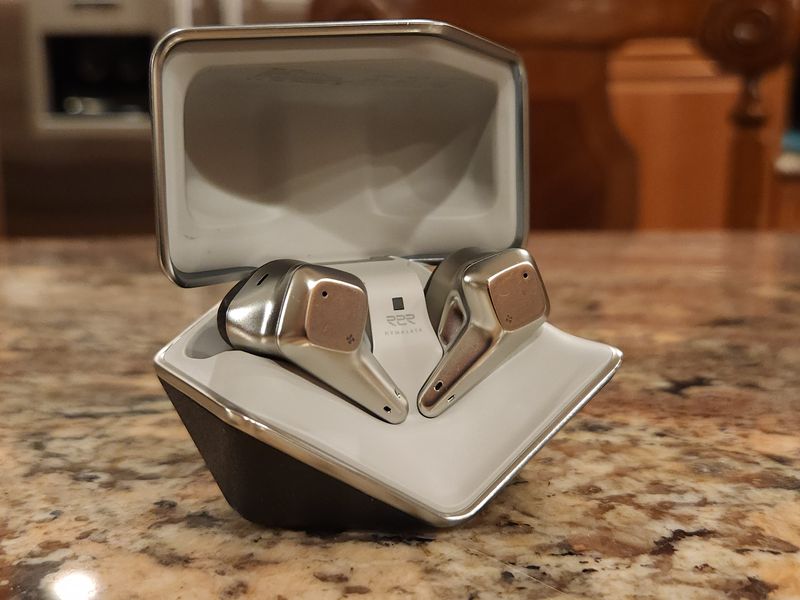
Comparison.
All the comparison was done with Svanar TWS set to HiFi mode, using Crystal eartips, and paired up with my Galaxy S22 smartphone.
Svanar TWS vs Svanar wired (stock 3.5mm) – TWS has a more 3D soundstage with a holographic imaging, noticeably better stereo separation than a wired version. TWS has a deeper sub-bass rumble, not over-whelming, just slightly more elevated, and more resolving mids, also having more sparkle in treble which improves resolution of mids. Wired Svanar tuning has a similarly natural smooth tonality, but it is more neutral and warmer and has smoother treble in comparison to TWS version with a mildly v-shaped sound sig and a more dynamic fun tuning. One is not better than the other, perhaps, more on a complementary level.
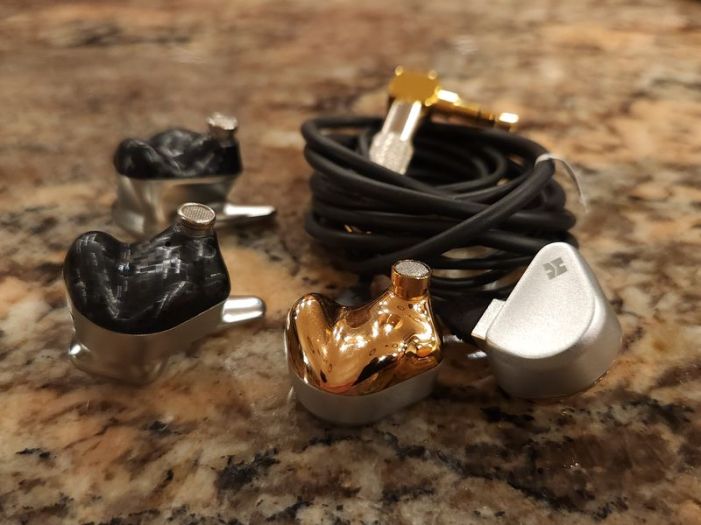
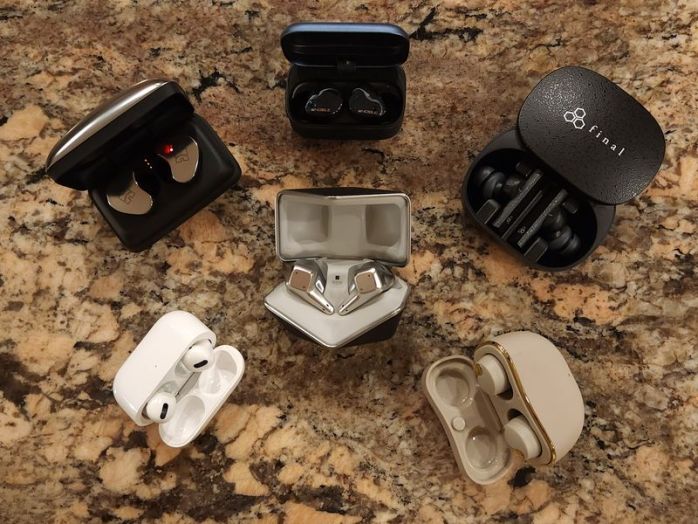
Svanar TWS vs Hifiman TWS800 – It has been a while since I listen to TWS800. The first thing you hear is the soundstage width which is noticeable wider in Svanar. The depth of the stage and the imaging are nearly the same. TWS800 bass is faster and tighter while Svanar is a little slower and more laidback, plus Svanar had a deeper and more textured sub-bass rumble. Mids are about the same, perhaps with lower mids of TWS800 being a bit leaner, making its vocals more revealing. In contrast, Svanar mids sound warmer, smoother, more organic. And the same with treble, TWS800 has more sparkle while Svanar treble is smoother. So, in comparison, TWS800 are more revealing, more micro-detailed, and colder in tonality, while Svanar TWS are tuned smoother, more organic, and with laidback presentation of the sound. And, of course, with Svanar you get lots of other functionality like R2R DAC, LDAC, and ANC noise canceling.


Svanar TWS vs Final ZE8000 – both have a very similar soundstage expansion and holographic level of imaging. They also have similarities in tuning with a smooth natural detailed tonality. Both have extra weight in sub-bass, with ZE8k having a little more which results in their (ZE8k) mids being thicker in comparison. But Svanar TWS treble is smoother. The thing is that ZE8k comes with an app where I absolutely need to use built-in EQ to drop the bass and to raise the pinna gain to bring up mids. When applying this EQ, Svanar TWS and ZE8k are almost on the same level, except Final tws treble is still a little brighter. Their noise canceling functionality is not too far off either.
Svanar TWS vs Noble FoKus Mystique – similar soundstage expansion and imaging, with FoKus being a bit more holographic since it has leaner mids. Their tuning varies with Svanar being smoother and more organic in tuning while FoKus being more u-shaped with focus on elevated sub-bass rumble and mid-bass punch and elevated treble, while its mids are leaner and pulled back. Svanar is just smoother and warmer in tuning.
Svanar TWS vs UM U-Free – I hear a similar soundstage expansion and imaging between these two earphones, but the tuning is not the same. They both offer plenty of sub-bass rumble, though mid-bass is a little faster in U-Free while Svanar TWS has a slightly longer attack and decay. The mids in U-Free are more revealing, more detailed while Svanar TWS has mids with more laidback smoother organic tuning. Treble is not too far off, though U-Free has a little more sparkle. But due to a difference in tuning of mids, Svanar TWS is more v-shaped and smoother in comparison to U-free being more balanced and more revealing in tuning. Noise canceling was not too far off in performance either.
Svanar TWS vs Apple Air Pods Pro 2 – Pods have a narrower soundstage while Svanar TWS expands its soundstage wider and taller. When it comes to the tuning, Pods tonality is more neutral and smoother in comparison to more “fun” tuning of Svanar with deeper and more elevated sub-bass rumble and more sparkle in treble. I find Pods tuning to be very neutral, clean, and detailed, but at the same time, sounds are not as layered or separated and sometimes could feel a bit compressed. In comparison, Svanar TWS tuning is more dynamic, more textured, and with better layering and separation of the sounds. Air Pods Pro 2 noise canceling feels a little more isolated.
Source pair up.
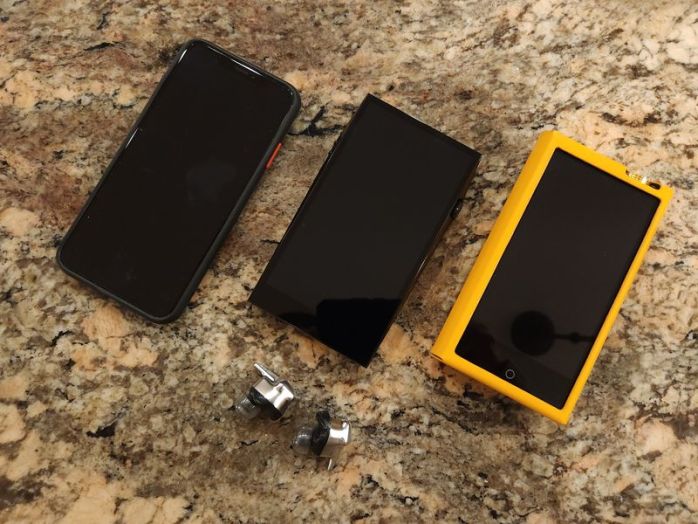
When it comes to wireless earphones and headphones, and especially TWS, it doesn’t matter what DAC or amp your source has. None of this matter because your source will digitally encode and transmit the sound and TWS earphones will decode and drive the transducer inside the shell. But in case of Svanar TWS, LDAC did make a difference when testing with my S22 and Android DAPs vs iPhone XS MAX. With iPhone, which doesn’t support LDAC, I found the soundstage to be narrower and the sound to be a bit less dynamic.
Another very interesting observation, with LDAC enabled, using my S22 in open space I could step away 45ft from my phone. When using Cayin N7 and A&K SP3000, the distance was about 35ft, probably less due to DAP manufacturers reducing BT wireless signal strength to optimize the battery. With iPhone XS MAX, it was beyond 50ft.
Conclusion.
True wireless earphones have been making waves for quite some time now, and it’s no longer a rarity to see one from an established audiophile company. But what’s rare is to see a product which includes the best features from many other commercial and audiophile tws releases. And that is what I think Hifiman tried to accomplish here. We got a futuristic looking shell and a charging case supporting wired and wireless charging, and a ton of features under its hood, including deep ANC noise canceling, LDAC support, R2R DAC implementation, proximity sensor, and even topology diaphragm driver design found in their flagship Svanar wired iems.
Apart from not having the app support and corresponding customizable EQ, this Svanar TWS release has everything-but-the-kitchen-sink which in my humble opinion justifies its higher price. Of course, all these features mean nothing without a desirable sound tuning. And while the tuning is usually a matter of a personal taste, if you are into a natural detailed tonality that has a warmer fuller body sound with a well-controlled hi-res sparkle in treble, Svanar TWS will certainly be your cup of tea which I have been enjoying as a wireless alternative to their wired Svanar IEMs.

 Twister6 Reviews