

Comparison.
Since this is a wireless adapter, I wanted to compare sound performance of many different IEMs connected wired w/LPGT versus wireless w/Go Pod paired w/Galaxy S22. The analysis was done while playing a variety of test tracks, such as Agnes Obel “The curse”, Sandro Cavazza “So much better” (Avicii remix), C-Bool “Never go away”, Ed Sheeran “Shape of you”, Alan Walker “Darkside”, Galantis “Hunter”, Iggy Azalea “Black widow”, Indila “Boite en argent”, Dua Lipa “Love again”, Counting Crows “Big yellow taxi”, Bob Marley “Jamming”, David Elias “Vision of her”, and Michael Jackson “Dirty Diana”.
Elysian Audio Annihilator 2023 (w/Liquid Links silver/palladium & copper gold cable)
- Anni is not an easy to drive IEMs, while Pod had no issues driving them with plenty of headroom. The Pod soundstage is just a touch wider, but overall, the soundstage expansion is very similar. The bass and the treble between wired and wireless pair up is nearly the same too. The biggest difference here is in mids, being a little brighter and more forward, easily noticeable with vocals. Definitely not night’n’day difference, but Pod make Anni mids a bit more revealing and forward.
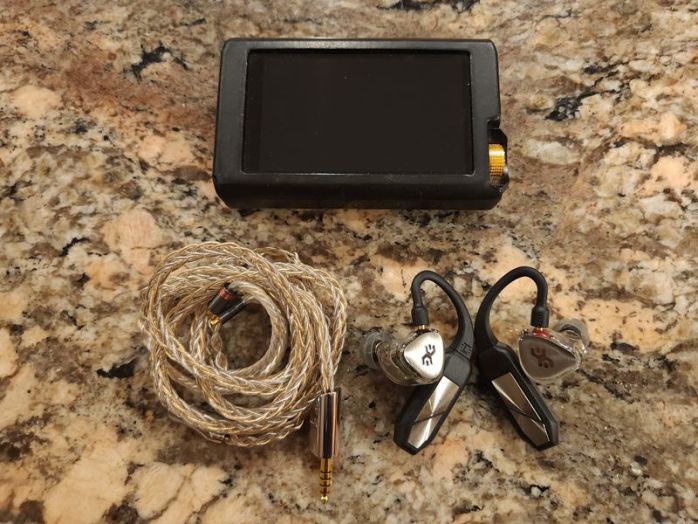
EE Odin (w/PWA 1960 2w cable)
- The Pod adds more depth/height to the sound, making it more 3D, especially the imaging, feeling like the sound wraps around you, even going behind you. The tonality change is not that drastic, but there are changes. “wired” pair-up has a little smoother mids and slightly more laidback presentation of the sound. “wireless” pair-up has mids/vocals sounding a bit more revealing, less colored, and with slightly more forward presentation. Also, the overall sound is tighter, faster, especially noticeable in bass, punching through with a faster attack and just a bit more sub-bass rumble. Dead quiet and no hissing. Comfortable fit.
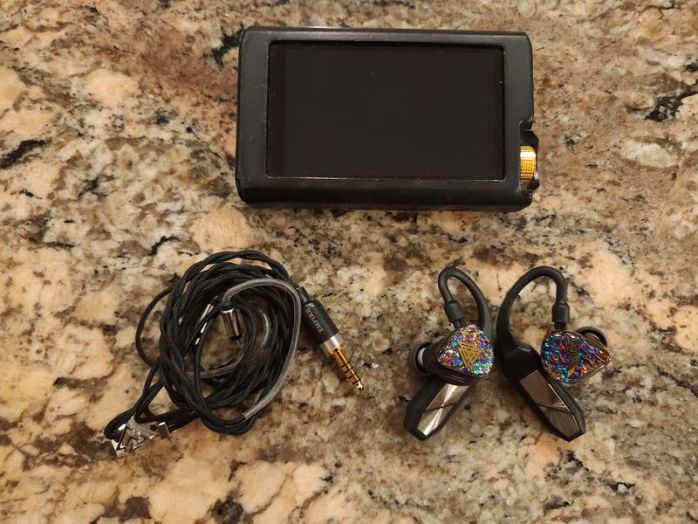
UM Mentor Multiverse (w/PWA shielding Deep of Universe cable)
- This comparison is very close as well. Starting with a soundstage, “wired” pair up has a bit wider expansion, while both have nearly the same depth/height and holographic level of imaging. When it comes to a tonality, they are very close, nearly the same sound signature and the presentation of mids and treble. But the bass is a bit different. The “wireless” pair-up has a tighter and a faster bass which improves the bass quality and gives it a bit more sub-bass rumble, a BA speed with a DD weight. If you don’t mind a touch narrower soundstage in comparison to wired (and the soundstage is still wide, just not on the same level as wired), then Pod is a great source alternative, especially giving you some improvement in bass. Dead quiet and no hissing. Comfortable fit.
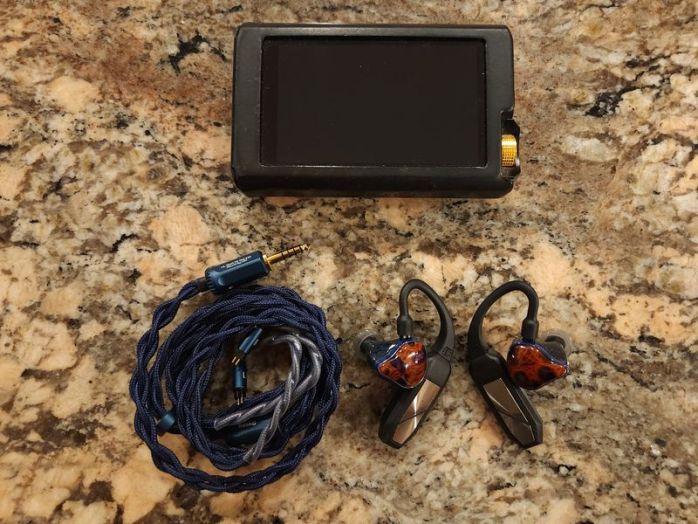
Aroma Jewel (w/PWA First Times cable)
- The soundstage expansion and imaging between wired and wireless connection here is nearly the same, and this is a big deal. As many are probably aware, stock Jewel cable is not that great; it is microphonic and it shrinks the soundstage. Here, Pod brought the soundstage/imaging expansion to the level of flagship cable pair up. With a tonality and overall sound signature, the sound is not too far off. Mids/vocals are just a little more revealing, and the sound is a bit more forward, so the change mainly gives the mids a bit more transparency. Wireless pair up bass is also a little tighter, faster, and having a bit more of textured rumble. Dead quiet and no hissing. Comfortable fit.
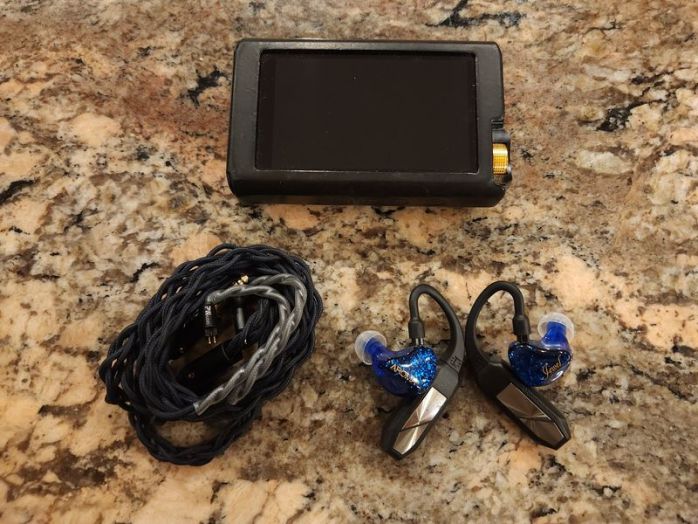
VE Phoenix (w/silver/gold alloy & copper cable)
- Relative to its stock cable, wireless Pod connection expands the soundstage width, and it is quite noticeable in this comparison. So, going wireless improves the soundstage vs the stock cable. With a sound, I’m noticing similar changes as with other IEMs, where the mids/vocals have more transparency, making them a bit more revealing and less colored, and the bass is tighter, faster, and has a bit more of textured rumble. Even so not as drastic, I did welcome these changes. Also, the background is dead quiet, no hissing. The fit is a bit tighter due to a smaller size of Phoenix shell, but it is still comfortable and secure.
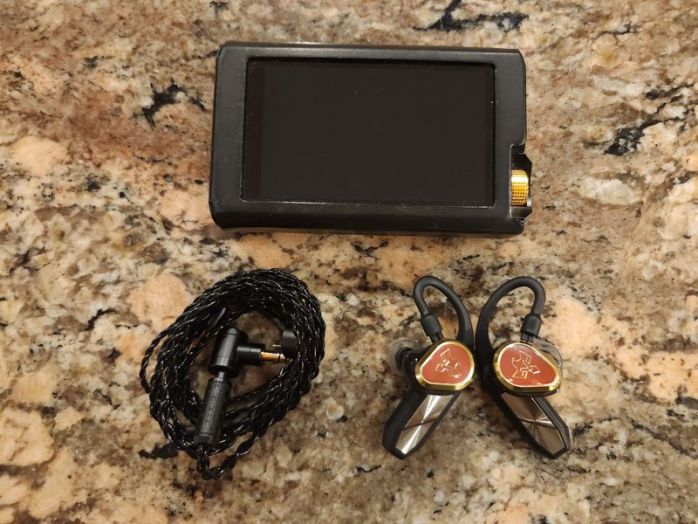
FirAudio RN6 (w/pure silver w/OFC shielding cable)
- Now, we are getting even closer between wired and wireless connection. With the soundstage and imaging, they are nearly the same, don’t hear much of a difference. With a sound tuning, the same when it comes to mids/vocals and treble, similar presentation, very close quantity, and overall tonality is nearly the same. The only difference here is in bass, specifically sub-bass quantity of the kinetic DD driver. With Pod, the sub-bass rumble is a bit elevated, bringing it to XE6 level. But, since they have a modular design, you can switch to a different atom module if you want to lower it down. So, overall, the sound is nearly the same. Dead quiet, no hissing. Comfortable fit.
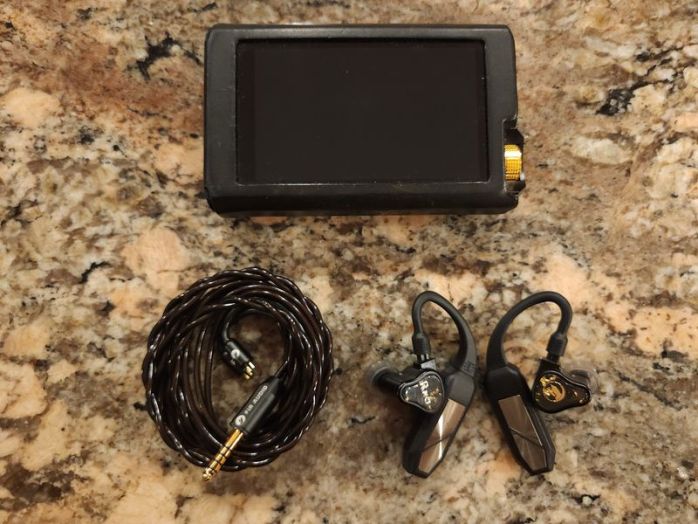
CFA Solaris (w/SPC cable)
- This comparison is not too far off either. Regarding the soundstage, the width is very similar, but wired pair up has more depth, putting the sound a little more out of your head, while wireless connection with a Pod brings it closer, putting you closer to the performer on stage. Bass in wireless connection has a bit more rumble, maybe even a little tighter, faster, and more articulate. But the mids and the treble are very similar, don’t hear much of a difference. Of course, the big question, does it hiss? Nope, not even a bit, the sound is dead quiet, no hissing. The fit is a bit tight for my ears due to a smaller size of Solaris shells, but it was OK once I twisted the shells in my ear to adjust the angle of the earhook.
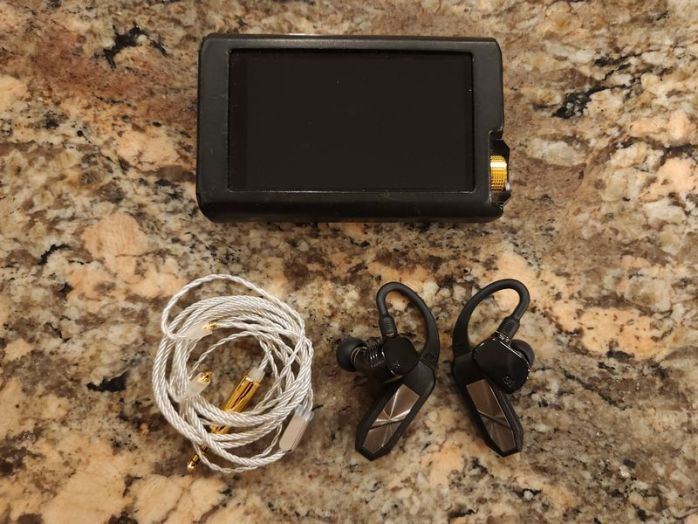
Source pair up.
When it comes to wireless earphones and headphones, and especially TWS, it doesn’t matter what DAC or amp your source has. None of this matter because your source will digitally encode and transmit the sound and TWS earphones will decode and drive the transducer inside the shell. But in case of Go Pod adapter, LDAC did make a difference when testing with my S22 and Android DAPs vs iPhone XS MAX. With iPhone, which doesn’t support LDAC, I found the soundstage to be narrower and the sound to be warmer, while with Android based LDAC devices the soundstage expanded wider and the sound had more sparkle up top.
Another observation, with LDAC enabled, using my S22 in open space I could step away 38ft from my phone. When using Cayin N7, the distance was about 33ft, probably less due to DAP manufacturers usually reducing BT wireless signal strength to optimize the battery. With iPhone XS MAX, it was beyond 50ft.
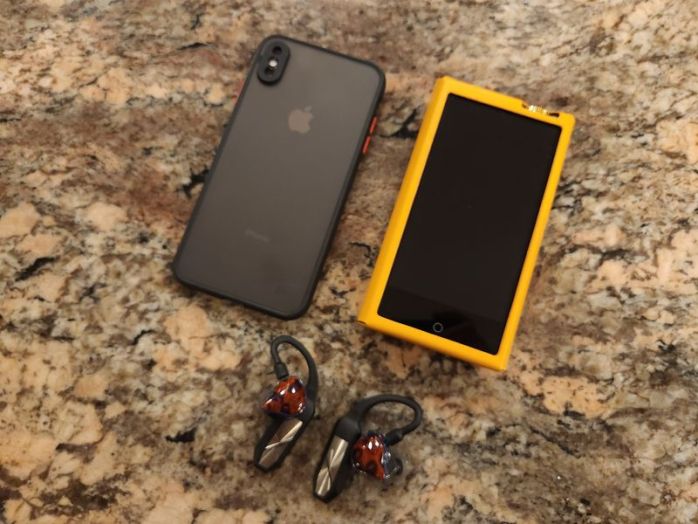
Conclusion w/Sound Analysis.
In my testing with various IEMs, I found many common sound characteristics when comparing wired w/DAP vs Go Pod wireless connection. Go Pod expands the soundstage/imaging of IEMs which in some cases even matched high end after-market cable/DAP combos. Also, I do hear a bit more weight and rumble in sub-bass, found in most of the pair ups I tested. The bass feels tighter, faster, and a bit more articulate in comparison to a wired connection w/LPGT. There was also a change in mids, giving them more transparency, less coloring, which made them sound more revealing, though not necessarily bright. It will be up to a personal preference how you find these changes, but overall, they are not that drastic, which makes Go Pod a great wireless source alternative for IEMs, regardless of if they are entry level or mega kilobuck caliber.
Go Pod is more expensive than some other alternatives, but you get a modular design with different popular connector options unlike other adapters where you get only mmcx or need to buy a separate 2pin and mmcx versions of the same adapter. They also feature advanced BT chipset, support LDAC and every other codec, have impressive battery life, and auto-impedance detection with a decent output power. It cost more than competition, but also offers more, and in reality, can easily replace some of the popular dongles as well as mid-fi DAPs. Color me impressed!

 Twister6 Reviews
Aptx Adaptive on the higher resolution recordings is much better than LDAC but very few Smartphones support the 24 bit 96khz aptx Adaptive codec.
LikeLike
Any specific adapter? There are many with advanced chip sets, yet no dedicated amp, no proper isolation, poor sound quality and hissing. Support of a specific codec alone is just one variable.
LikeLike
No I meant with the iFi Pod Go when using a smartphone as the source. Try this adapter which is what I use with my Pod Go with Meza Penta Rai IEMs
“Creative – BT-W5 USB Bluetooth Transmitter”
LikeLike
Oh, cool! Will check it out!
LikeLike