
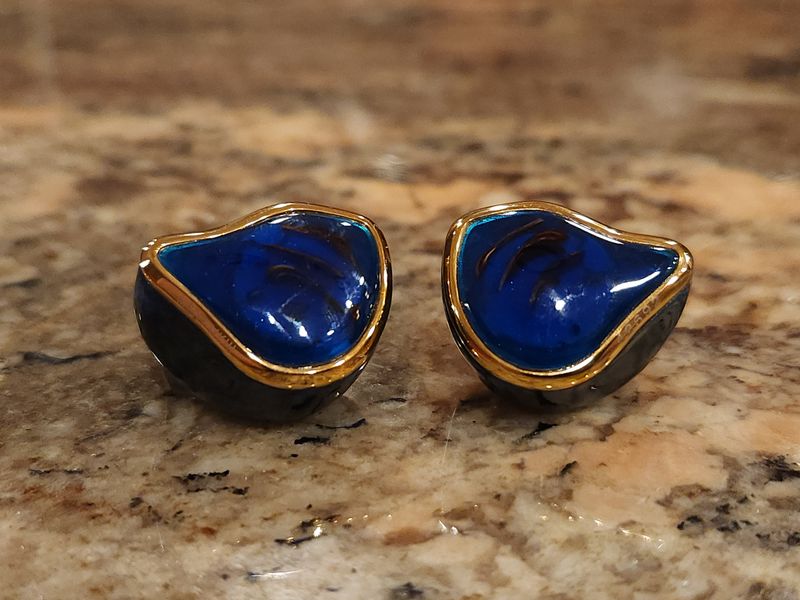
Sound Analysis.
I analyzed MK3 sound performance paired up with a neutral LPGT source while playing a variety of test tracks, such as Agnes Obel “The curse”, Sandro Cavazza “So much better” (Avicii remix), C-Bool “Never go away”, Ed Sheeran “Shape of you”, Alan Walker “Darkside”, Galantis “Hunter”, Iggy Azalea “Black widow”, Indila “Boite en argent”, Dua Lipa “Love again”, Counting Crows “Big yellow taxi”, Bob Marley “Jamming”, David Elias “Vision of her”, and Michael Jackson “Dirty Diana”. I let it burn in for about 100hrs before I started taking my notes. Also, for my sound analysis I was using Azla Crystal and Symbio F eartips along with a stock cable.
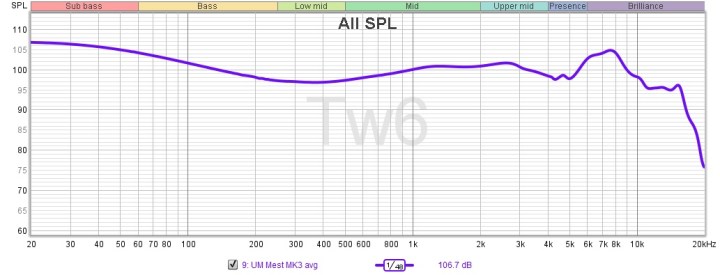
I hear MK3 to have a balanced W-shaped sound sig with a clear natural tonality and excellent retrieval of details. This new refined tuning sounds like the next step in a direction of bringing a more natural coherency to Mest quadbrid design. While previous Mest releases were known for its “fun” mild U-shaped tuning with more emphasis on bass and treble, the limited-edition Indigo release was their first step in a direction of a balanced tuning. After spending more time with MK3, I can hear it taking a further step with a smoother treble while still maintaining a high level of natural resolution and clarity.
You are still greeted with a rumble of a deep sub-bass texture, but it is now less elevated and has a more linear transition into rounded mid-bass punch and fuller body lower mids. Despite their more natural tuning, the mids/vocals are still very clear and detailed with a slightly more forward presentation since they no longer need to hide behind the bass and the treble. By avoiding any exaggerated lower treble peaks, you don’t have to worry about sibilance and can raise the volume higher to enjoy non-fatigue listening. Mid-treble has a well-controlled peak to give the sound higher resolution without any harshness, again, letting you raise the volume higher during the listening if you want to hear more bass.
The treble does have a decent extension with plenty of natural airiness, just enough for a clear layering and separation of the sounds without feeling compressed or congested. The soundstage is wide, but also feels more oval-shaped, stretching wider while you still feeling closer to the performer on stage, like you are sitting in the 2nd or 3rd row. The imaging has a good placement of instruments and vocals, actually with instruments spreading wider while vocals being more centered.
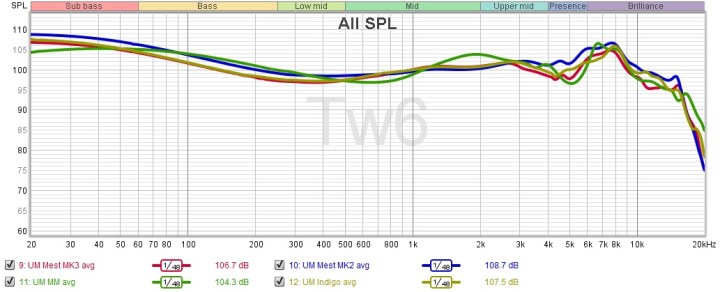
In terms of music genres, MK3 works with anything you throw at it. Of course, going to a more balanced tuning vs previously U-shaped tuning of MK2, for some will mean less bass slam. And that’s where the listening volume will come into play. With MK2 I usually listen at a little lower volume to keep treble under control. In that case, bass still has plenty of impact, but vocals will be pushed back. With MK3, I can raise the volume a bit higher, to elevate the bass impact, and never had to worry about treble harshness. And even at higher volume, MK3 still maintained its balanced tuning with mids/vocals being forward, clear, natural, and detailed.
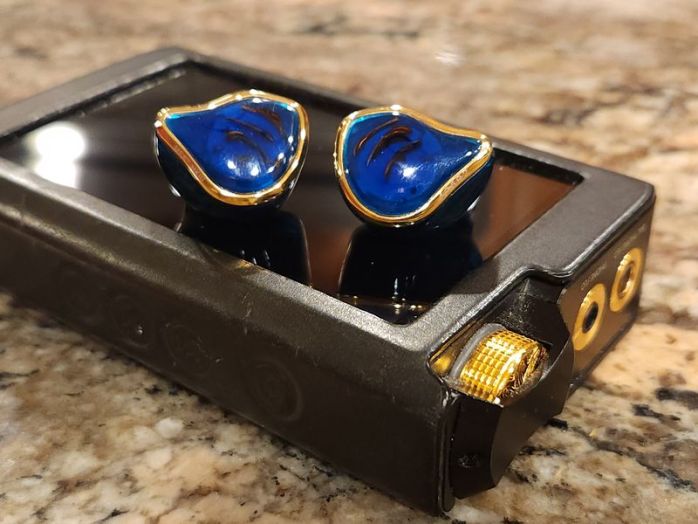
The effect of BCD driver.
As many are aware, Mest was the first model that implemented Bone Conduction drivers. It’s funny how usually a new tech gets trickled down to lower models, while in this case it trickled up to their flagship Mason and Mentor. But the question remains, what is the effect of BCD driver in terms of the sound contribution to the tuning? We can all speculate, but there is no way to know for sure. So, UM made a special MK3 model, just for the CanJam show, with a switch to enable/disable BCD driver. A number of people tried it, saying they couldn’t hear the difference in tonality, and they were partially right. But if you focus on the technical performance in a quieter corner of the CanJam showroom, it jumps right at you. With BCD enabled, the vertical dynamics of the sound was more expanded, with the sound being more layered, also affecting imaging which spreads wider and deeper. With BCD disabled, the sound felt more compressed and imaging felt more centered and intimate. And I have to add, since at first I didn’t know the purpose or the position of the switch, to my ears it was truly a blind test when I noted these changes.
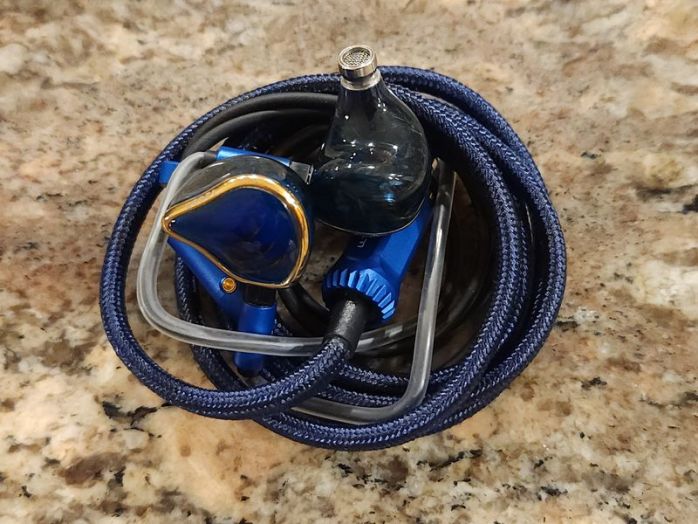
Eartips Selection.
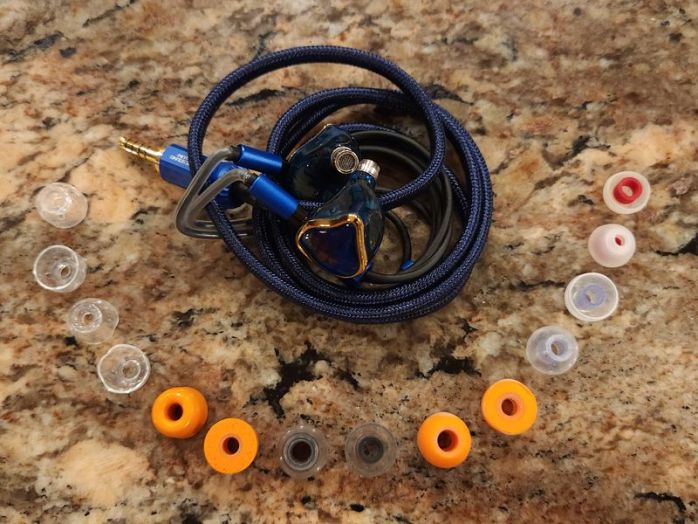
The selection of eartips is crucial to any universal in-ear monitors and will affect the sound, especially the bass impact depending on the seal. Due to a large opening of my earcanals, I usually go for the largest size eartips to get a better seal. Also, please keep in mind, eartips impressions are subjective and will be based on anatomy of your ears.
As a quick side note, both new UM silicone eartips seems to be the same as their U-Free TWS eartips which have a very short stem. Neither of them worked well with my ears. Obviously, this is very subjective, but when you first start listening, don’t get shocked if you hear the sound without a bass or earpieces falling out of your ears because you can’t get a secure fit. Go through your collection of eartips to find the one that works the best with your ears. Here are some quick observation notes of what I found while tip rolling through my collection of favorite eartips while using LPGT and stock cable.
UM open tips (w/holes) – no seal, no bass, not even a secure fit with L-size eartips.
UM petal tips – not the best seal, missing some bass, L-size was a bit too small for my ears.
Azla Crystal – perfect seal, plenty of bass down to sub-bass rumble, clear natural mids, clear detailed treble.
Spinfit W1 – perfect seal, plenty of bass down to sub-bass rumble and slightly more elevated mid-bass punch, natural detailed mids, and a bit smoother treble. But the treble lost a little bit of sparkle.
Spinfit CP100 – similar to W1, treble lost some sparkle, and the sound was not as hi-res because of this.
Final Type-E – the soundstage got a little narrower and I also hear less sparkle in treble, making the sound a bit more compressed.
Symbio W – nearly the same as Crystal with a perfect seal, plenty of bass down to sub-bass rumble, clear natural mids, clear detailed treble. The overall sound a little bit warmer, especially in mids.
Symbio F – this was truly a perfection, probably the best eartips pair up with MK3, very balanced sound, natural detailed analog tonality, punchy bass, smoother treble.
Symbio F and Azla Crystal were among my 2 favorite eartips paired up with MK3.
Cable pair up.
I’m aware that some people don’t believe in cables and have very strong opinion about it. It’s not my intent to change those minds. Instead, I’m just sharing what I hear during my testing. What makes sense to me, a metal wire is a material with physical properties of resistivity, conductivity, purity, and unique geometry, all of which put together act as a filter between your source and headphones. Variations of these physical properties can affect the conductivity of analog signal, resulting in a sound change, from a subtle to a more noticeable level. If the talk about cables upsets you, please skip this section. Otherwise, enjoy these short impressions.
Another important thing to note. Based on the feedback from their MK2 customers, UM used a different 2pin socket in MK3 for a tighter fit with aftermarket cables. That was quite noticeable as I started cable rolling where it required a bit of force to attach other cables. It does loosen up a bit after a few insertions, but felt noticeably tighter than original MK2. And, as already mentioned, due to some people finding ergonomics of stock PWA cable to be stiff, Musicteck now offers an option to buy MK3 without a stock cable or with a few other cable options at 50% cable discount (LL Martini, LL West Lake, or EA Eros S).
stock to PWA 1960 2wire – a little brighter upper mids with more revealing vocals.
stock to Eletech Raphael – very similar presentation of the sound, maybe just a touch wider.
stock to LL Venom – very similar tonality with the main difference I hear in mids/vocals being a little more out of my head.
stock to EA Eros S – brighter treble tonality which brings MK3 closer to Indigo sound tuning.
stock to EA Code 23 – very similar tonality, just a little more sparkle in treble.
If you have other cables, go ahead, it never hurts to try everything, to see if you can bring more refinement to the sound. But, unless the stiffness of the stock cable really bothers you and considering the quality of stock PWA copper cable, I don’t think it’s necessary to invest into a cable upgrade with MK3. I personally enjoyed pair up synergy of MK3 with its stock cable, and after trying different alternatives went back to it.


 Twister6 Reviews
Hello! Did you use Azla crystal or Azla crystal tws?
LikeLike
Regular. tws don’t work with mk3 for my ears, the reason why the included stock eartips failed.
LikeLiked by 1 person
How would you compare these against the Radon 6 and u12t that you reviewed too. (Apart from the the price tag).
Better technicalities, better bass, better mids, more details?
LikeLike