
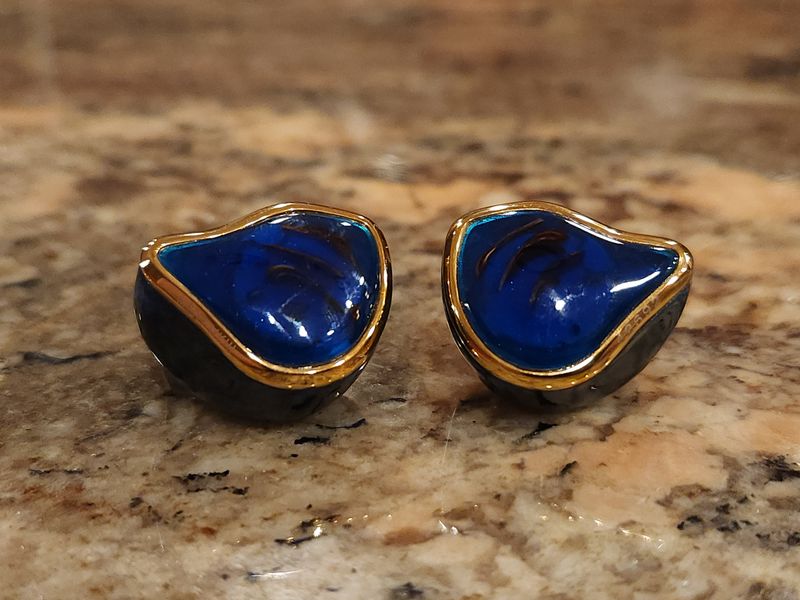
Comparison.
The comparison was done using MK3 with a stock cable, Crystal and Symbio F stock eartips, and LPGT source; volume matched in every comparison.
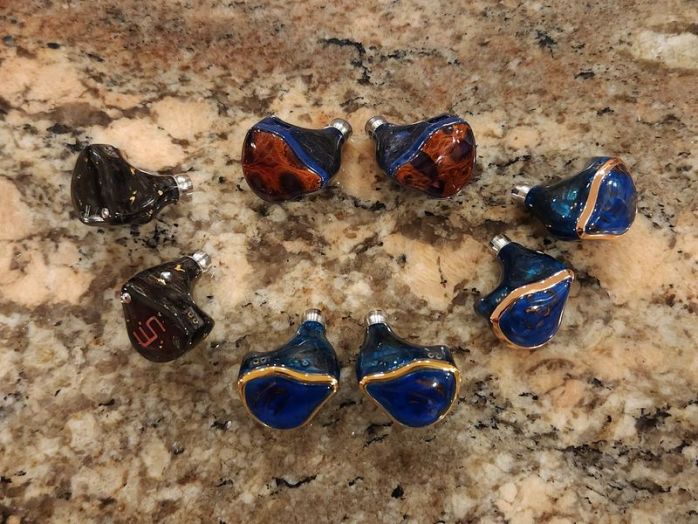
MK3 vs MK2 – Both IEMs have a very similar soundstage expansion and imaging, don’t hear much of a difference here. But their sound tuning does vary. MK2 has a mildly U-shaped sound signature with more emphasis on the bass, especially sub-bass rumble, and mid-treble which gives the sound higher resolution and more sparkle. MK3 scales down that extra bass emphasis found in MK2, and as a result the tuning of MK3 is more evenly balanced across the spectrum. You still have the same natural detailed mids, slightly north of neutral in lower mids with an additional body, and that didn’t change much between MK3 and MK2, but the bass and the treble in MK3 are scaled down. While you still hear that textured sub-bass rumble and rounded mid-bass punch, it is more linear with lower mids, and a bit less emphasized in MK3. And the same with lower and mid treble, you still hear that extra sparkle and crunch that gives the sound higher resolution, and extra air that helps with layering and separation of the sounds. But the treble emphasis in MK3 is slightly scaled down in comparison to MK2. As a result of that, the mids in MK3 are more balanced relative to bass and treble, and have a more forward presentation. That becomes quite noticeable when you are focusing on vocals which become more forward, more soulful, more pronounced. To my ears, MK3 is not an upgrade of MK2, it’s rather a side-grade with a different flavor of a fine-tuned sound signature. As a result, I can’t decide which one I like better because I enjoy both of them.
MK3 vs Indigo – This comparison gets a bit tricky. First of all, the soundstage expansion and the imaging are nearly identical. Then, as I started listening and switching between these two IEMs, I wanted to correlate the changes I hear with FR measurements I see. Indigo sound changes relative to MK3 are similar to MK2, but there is still a difference in tunning while transitioning from upper mids to lower treble which makes Indigo treble sound brighter, somewhere in between MK3 and MK2. When you look at the graph, you might think it’s a very marginal change, but it is more noticeable when you analyze it with your own ears rather than your eyes. UM has a variation in tuning around 5k-6kHz across their Mest iems, and that affects both the perception of mids and the treble. Indigo was a special limited-edition version of Mest, and MK3 became a fine-tuned version of Indigo by slightly scaling down that 5k-6kHz region to give the treble even more natural tonality which results in mids being a bit more organic and natural as well. As they say, a small change can go a long way. I also switched their stock PWA cables and found new MK3 cable to be a bit smoother in treble while Indigo cable to be a touch brighter. Is there a big change going from Indigo to MK3? Not really, more like a refinement to take some edge off the treble. And I also want to mention, when I tested Indigo pre-production unit 2yrs ago, the bass was a bit more elevated in comparison to Indigo IEMs I just borrowed for this review.
MK3 vs Mentor Multiverse – To my surprise after mentioning that I’m reviewing MK3, I got a number of questions asking me to compare it to UM’s flagship Mentor Multiverse. Not sure if people are looking for a scaled down budget version of MM or maybe they want to complete their UM IEM collection. Staring with a soundstage, while MM is a little bit wider, its imaging is more holographic, something Mentor excels even relative to other flagships. With the bass, MM has a stronger mid-bass punch, but MK3 still holds an upper hand when it comes to sub-bass rumble, going deeper and being more elevated. While both have a balanced sound tuning, MM pinna gain gives upper mids more boost, bringing vocals even more forward relative to MK3 and giving them slightly more body. Their treble is close in quantity, but the actual perception is slightly different because bringing mids slightly more forward in MM pushes treble a bit back, while the opposite is true with MK3 where treble has a bit more energy. But overall, while tuning is a matter of a personal preference which makes it hard to decide if one is better than the other, from a perspective of a technical performance, the flagship MM is a noticeable step up in comparison to MK3. And for those who like to correlate improvements relative to a price difference, please keep in mind that as you go up in price there is always a factor of diminishing returns.
Source pair up.
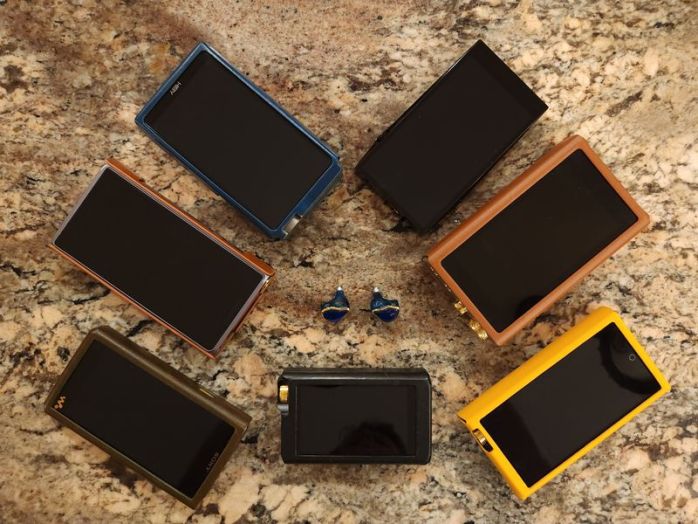
In each source pair-up I was using a stock cable. MK3 is easy to drive, and no hissing was detected. For your reference, here are my brief pair up notes. And by brief, I just focus on any changes related to signature and general tonality, without going into too many details of technical performance difference.
Lotoo LPGT – this is my baseline sound where I hear a balanced W-shaped tuning with a clear and natural tonality, deep elevated sub-bass rumble, natural detailed mids, and clear natural treble sparkle.
A&K SP3000 – the imaging is more 3D holographic; everything else is similar except I hear more sub-bass rumble in comparison to mid-bass punch which makes bass go deeper, and also be a little softer.
Shanling M9 – as expected, M9 being a “V-shaped” tuned source, the bass in this pair up is lifted and the treble is brighter and crisper, and as a result MK3 sounds more like MK2.
Hiby RS8 – I hear the soundstage to spread a little bit wider and upper mids being slightly more revealing. Otherwise, it sounds the same.
Cayin N7 – I hear a little more sub-bass rumble and upper mids having just a touch more clarity when switched to DSD256. When I switched to DSD64, I still hear more sub-bass rumble, but mids/treble now have a more natural tonality.
Sony WM1ZMK2 – nearly identical to what I hear with LPGT.
iBasso DX320 MAX – this was probably the most impressive sound transformation, expanding the soundstage wider and deeper, improving the dynamics with corresponding layering of the sound, bringing more speed to the bass, more clarity and transparency to mids, and extra air in treble.
Conclusion.
It’s a challenge for any manufacturer to deliver a follow up to a successful release because of high expectations. UM set a very high bar with Mest MK2 in design, tuning, accessories, and pricing, and then pushed it further with a limited-edition Indigo release. So, where do you go from there? After spending time with MK3, I found it to be leaning more toward Indigo v2. It definitely has Mest DNA, but felt like UM was testing waters with Indigo release, and after seeing the demand and collecting the feedback, they decided to follow its direction.
Mest MK3 has a very mature, natural, detailed tonality with a balanced W-shaped coherent tuning of its quadbrid (DD/4BA/4EST/BCD) design. And its carbon shell and new Fruitwood faceplates give it a premium look on the level of UM’s other higher end flagships. The cable “sound performance” is what you would expect from a premium PWA brand, and I personally found it to have a great synergy with MK3. But for those who are not fans of its ergonomics, you have the option to buy MK3 from Musicteck without a cable or with another cable.
Indigo was truly a limited release, and once it was gone, that was it. For those who missed it, now you have a chance to get it as a refined Mest MK3 version. I even think some Indigo owners would be interested in MK3 as well, especially since it is finally available as CIEM or as Uni in red. If you have Mest MK2 and would like to upgrade it to MK3, I wouldn’t rush to sell it (MK2) off yet because MK2 and MK3 with their complementary tuning do coexist in Mest Universe created by UM. And from there, the next logical upgrade step is into Multiverse 🙂

 Twister6 Reviews
Hello! Did you use Azla crystal or Azla crystal tws?
LikeLike
Regular. tws don’t work with mk3 for my ears, the reason why the included stock eartips failed.
LikeLiked by 1 person
How would you compare these against the Radon 6 and u12t that you reviewed too. (Apart from the the price tag).
Better technicalities, better bass, better mids, more details?
LikeLike