
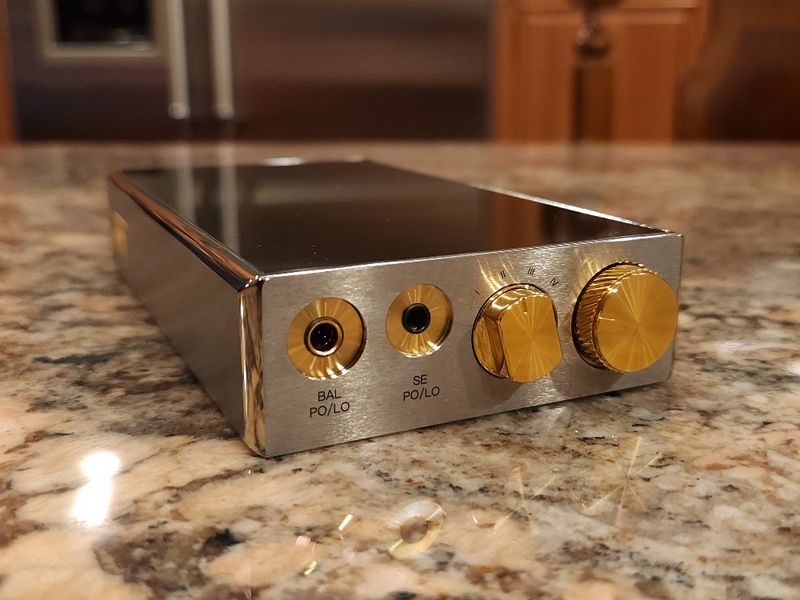
Sound Analysis.
I analyzed 320Max sound with Aroma Jewel while playing a variety of my favorite test tracks, such as Agnes Obel “The curse”, Sandro Cavazza “So much better” (Avicii remix), C-Bool “Never go away”, Ed Sheeran “Shape of you”, Alan Walker “Darkside”, Galantis “Hunter”, Iggy Azalea “Black widow”, Indila “Boite en argent”, Dua Lipa “Love again”, Counting Crows “Big yellow taxi”, David Elias “Vision of her”, and Michael Jackson “Dirty Diana”. As recommended by manufacturer, I kept 320Max on burn in for 200hrs using the provided balanced burn-in cable before I started sound analysis.
I prefer to describe the DAP sound based on the comparison to other DAPs and pair ups with different IEMs/headphones since the DAP by itself doesn’t have a “sound”. What we hear is how it sounds through connected IEMs/headphones or the difference in sound relative to other sources using the same pair of IEMs/headphones. As a result, this section of the review usually has a shorter summary of what I find in the follow up Comparison and Pair-up sections. A more detailed sound analysis is found in Comparison section of the review. Of course, this is my subjective opinion, describing how and what I hear.
Overall, 320Max has a reference sound quality with a super clean, detailed, transparent, neutral tonality which still sounds quite natural to my ears using IEMs I tested it with. Especially in mids, I hear a very transparent natural tonality without any coloring and a very precise layering and separation of the sounds. And while being transparent, it is not brighter, colder, or analytical, but rather cleaner and more micro-detailed. And the same with a treble where I noticed more airiness and better extension, yet I can still hear a natural smoothness. When it comes to bass, it is fast, tight, and very articulate. It is not exaggerated and 320Max doesn’t add extra weight to the low end, but it does enhance the quality, especially the speed.
The speed is one of the key words describing the sound performance of 320Max. With the black background and the fast transient response, you can appreciate more clarity in sound with details pop out of the blackness without the need to enhance the resolution through a brighter treble response. Also, with a precise layering and separation of the sounds and the air between the layers, I hear a more expanded dynamics, giving the sound multi-dimensional feeling unlike some other sources which makes the sound more compressed. And speaking of multi-dimensional expansion, the soundstage was on 3D level, expanding in every direction along with a holographic placement of instruments and vocals.
One thing which is very important to note here, while I do consider 320Max to have a reference sound quality, I enjoyed this DAP when analyzing the sound details and at the same time being natural and less intense so I can enjoy non-fatigue listening for extended period of time.
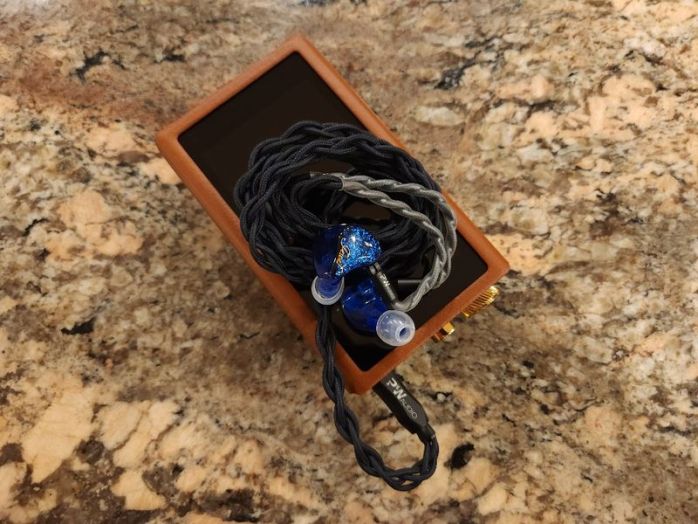
3.5mm (SE) vs 4.4mm (BAL).
The tonality and the sound signature are nearly identical. There is a difference in soundstage expansion with BAL output being a little bit wider relative to SE. Also, BAL has a higher output power, so while using the same pair of IEMs I had to adjust the volume going between these ports by a few clicks. Otherwise, performance is very similar.
Standard vs Ultimate mode.
I hear a noticeable change in soundstage expansion, being wider in Ultimate mode. Also, I can hear a blacker background with corresponding improvement in vertical dynamics when Ultimate mode is enabled. Another very noticeable change is in density and transparency of the mids where in standard mode vocals sounds warmer and a bit thicker, and when ultimate mode is enabled, I can hear less coloring and improved layering and separation of the sounds. I know you lose some battery life when Ultimate is on, but it well worth it, and I didn’t even bother switching it off.
Mango App vs Mango OS sound.
Some might expect that regardless of dual OS we are still dealing with the same set of hardware and the sound should be identical, but I found some differences. To my ears, Mango app (Android OS) sounds a little more revealing, and with a bigger and more expanded soundstage and a blacker background. While playing the same song in Mango OS, I hear the sound to be a touch smoother and a bit more intimate due to a slightly narrower width in soundstage. I’m sure for many the deciding factor will be either Mango OS with audio only playback or Android OS with streaming capability, but for others it could also provide a choice depending on pair up synergy with their IEMs and headphones.
Digital Filters comparison.
Digital filters are part of the DAC (ROHM) design, and 320Max offers you 2 choices. Not as many as other DACs, but you do have a choice. Based on what I’m hearing:
D1 filter (sharp roll-off) vs D2 filter (slow roll-off) – these are not too far off, and you really need to take your time to hear the difference. But to my ears, D2 has a bit of a fuller sound with a longer decay of notes. Maybe it’s a placebo effect of knowing it is “slow” vs “fast”, but it did sound like it added a bit of weight to the notes. I preferred D1 filter setting since it sharpened the details and yielded faster transient response of the notes, but this is purely up to a personal preference. Again, you have a choice, pick whichever sounds better to you with your IEMs/headphones.

Pair up.
In this section of my review, I will go over how various earphones and headphones pair up and sound with 320Max. In each pair up I noted the gain (G#) and analog volume (vol # o’clock) setting. Also, every pair up was tested from balanced output, with digital volume set to 85 (min 83 to give you more headroom when dealing with sensitive iems), and digital filter set to D1. These are short analysis notes to give you the basic idea of what to expect.
Pair up with Headphones.
Audio-Technica ATH-R70x (G4, vol 2 o’clock) – R70x are open back 470ohm headphones and they do need to be pushed harder to drive them to their full potential which 320 did without a problem and plenty of volume headroom. The soundstage is very open, but surprisingly wasn’t 3D holographic, but rather mid-centered. Overall, tonality is very natural, clear, and transparent. Sub-bass is deep and textured, a bit rare to hear it in R70x, mid-bass is tight and punchy, very well controlled. Mids/vocals are very transparent (not much coloring), detailed, and still sound quite natural to my ears. In some pair ups R70x vocals can get warm, but not here. Treble also has a nice natural clear sparkle and good extension.
MEZE Audio Empyrean (G4, vol 11 o’clock) – another pair of open back, and these planar magnetic headphones do sound very open with nearly 3D holographic imaging. The sound sig is balanced, fast, very clean and clear. I hear a deeper sub-bass rumble with a little extra weight, and mid-bass punch being fast and articulate; overall bass is just north of neutral, not as elevated. Mids/vocals have a natural, detailed, transparent tonality with just a little bit of thickness in lower mids to give them extra soulful texture. Treble is crisp and airy, not harsh, or bright. Overall, I hear a very clean detailed sound, the overall tonality is transparent, though there is a touch of warms in lower mids.
Beyerdynamic T5p 2nd (G4, vol 10 o’clock) – despite these being closed back, soundstage was very open and exceptionally wide. The sound is very clear, with tonality being clean and detailed. Bass has a deep textured rumble with extra weight, and mid-bass has a fast articulate punch. Mids/vocals are natural, transparent, and a little more revealing in upper mids, but not too bright. The treble is crisp and airy, doesn’t sound harsh, and has a great extension. In this pair up, again, I felt like mids very shining while being less colored. In many other pair ups T5p 2nd end up having a brighter treble and more neutral sub-bass, while here it was driven to perfection.
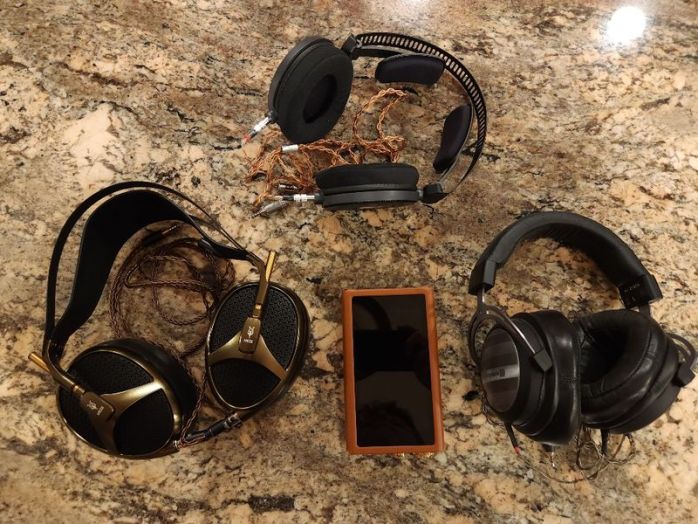
Pair up with IEMs.
Aroma Jewel w/FT (G3, vol 10 o’clock) – The soundstage is wide open and expanded in all 3 directions with holographic imaging. Sound signature is balanced as well, and tonality is neutral, natural, with a revealing presentation of the sound in upper mids. Bass goes deep, with a textured sub-bass rumble and a punchy mid-bass; the bass is very tight and articulate, almost BA like but with a texture of DD. Lower mids are neutral which gives upper mids more transparency, less coloring, making them more revealing, micro-detailed, yet still remaining natural. Treble is crisp and detailed, not splashy, or harsh. Treble has a decent extension.
EE Odin (G3, vol 10 o’clock) – Right away I can appreciate a pitch-black background with zero hissing. The soundstage here is huge, and so does the expanded imaging, being on 3D level. Bass is actually pretty good, goes deep with a nice rumble, though not as much weight while mid-bass has a nice tight punch. But mids are leaner, more revealing, still nicely layered, and micro-detailed, a little brighter and “infused” with extra energy. Treble is crisp, clear, detailed, more revealing, and yet, still well controlled and without any sign of splashiness. But overall sound is leaner and brighter in tonality. I felt like the sound was missing fuller body.
UM Mentor Multiverse (G3, vol 9 o’clock) – Surprisingly, the soundstage was wide, but not as wide as I have heard these iems sound with other sources, it has more depth/height than width; imaging was 3D holographic. In this pair up I hear a natural and slightly more revealing tonality with a balanced W-shaped sound sig. The bass is more neutral, relaxed, good extension down to sub-bass rumble, but it was less elevated, giving more power to mid-bass punch. But overall, bass is more neutral and less aggressive. Lower mids also have a more neutral body which brings more attention to the upper mids, the star of this pair up. Upper mids/vocals are clean, clear, detailed, layered, and still sound natural. Treble is clear and detailed as well, not too bright, just perfectly balanced, giving mids the extra boost in retrieval of details and scaling up the resolution. It is still W-shaped tuned sound but leaning more toward being slightly more mid-centric here.
FiR Audio RN6 (G3, vol 10 o’clock) – A huge holographic soundstage expansion. A more W-shaped balanced sound sig with a powerful speaker like analog bass, thanks to RN6 kinetic bass drivers. Then, you have natural revealing mids/vocals which are perfectly balanced with lows and high. There is just enough body in lower mids to give them natural tonality and plenty of clarity and details in upper mids with a more forward natural presentation. RN6 is more balanced than u-shaped XE6, but still, in some pair ups a bass can overpower the mids even with red or black atom modules. Here, it was perfectly balanced. And treble is crisp, clear, and extended. Probably one of the best RN6 pair ups I heard.
Campfire Audio Solaris 2020 (G1, vol 9 o’clock) – Since this is Campfire Audio iem, the first question: does it hiss? The background was black, though not exactly pitch black, but I didn’t detect any hissing. I did have to switch to low gain in order to “gain” some headroom for volume adjustment, still keeping it at 85 digital volume. The soundstage is big, with an overall sound being holographic and quite expanded. Also, the sound sig is balanced, while the tonality is brighter, more revealing, less colored, more transparent. Bass has a good sub-bass rumble with a fast well controlled punch, though the weight of the bass is not as elevated. But it is for sure above neutral and unmistakably DD quality. Mids are clear, detailed, a bit more revealing, but still leaning more toward a natural tonality. No sibilance in lower treble as you can get in some of the pair ups with Solaris. The treble is still crisp, sparkly, but not too elevated or fatigue.
UM Mest MKII (G3, vol 10 o’clock) – Big holographic soundstage expansion in this pair up. To my surprise, MKII is usually mildly U-shaped, while here it was perfectly balanced, reaching closer to W-shaped tuning. I hear a deep analog quality dynamic bass with more emphasis on sub-bass rumble which adds extra weight to the low end, and mids-bass is also fast and punchy. Lower mids are neutral with just a hint of body, giving more transparency to the sound, making upper mids more revealing and detailed with a more forward presentation. Treble is crisp and airy, but not too bright. This was another surprisingly good pair up that actually changed and improved the sound sig of Mest MKII, making it more balanced and less harsh at the top.
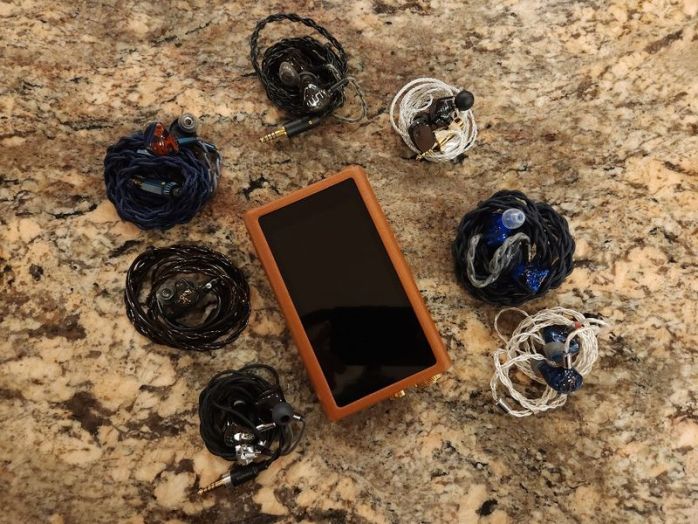
iBasso IT07 (G3, vol 9 o’clock) – I’m always curious about iBasso pair-up synergy with their own flagship IEMs, and usually save this test for last. In pair up with IT07 I hear a holographic soundstage with a 3D imaging. The tuning is very balanced, typical of W-shaped sound sig. I hear a deep analog dynamic bass impact with a textured elevated sub-bass. Bass is slightly elevated but done in a tasteful way. The mids have fuller body lower mids which adds more natural texture to the upper mids/vocals; upper mids are organic, detailed, with a touch of natural smoothness. The treble also has a natural smooth sparkle, not too bright or too energetic, but still enough to give upper mids a good level of detail retrieval. The sound is very natural, detailed, on a smoother side and with a great analog bass punch.

Page 5 – Comparison, Wired/wireless connection, and Conclusion.

 Twister6 Reviews
Hi, thanks for the last help in choosing Dx320 Max It’s already ordered and it’s on its way. I’m thinking of one more dap for jazz, blues, female and male vocals for mentor, jewel and phoenix, which one would you recommend hiby rs8 vs cayin n7?
LikeLike