

Pair up.
Here is how I hear PS SPC XL cable pair up with a few selected IEMs. In this test I was using LPGT as a neutral reference source, volume matched, and playing the selection of my usual test tracks, such as Agnes Obel “The curse”, Sandro Cavazza “So much better” (Avicii remix), C-Bool “Never go away”, Ed Sheeran “Shape of you”, Counting Crows “Big yellow taxi”, Galantis “Hunter”, Alan Walker “Darkside”, Iggy Azalea “Black widow”, Indila “Boite en argent”, Robin Schultz “Oh child”, Dua Lipa “Love again”, David Elias “Vision of her”, and Michael Jackson “Dirty Diana”.
Please keep in mind, I’m describing the sound of IEM paired with a specific cable, driven from LPGT source. I don’t want to imply that cable will have a drastic EQ-like night’n’day effect on the sound of IEMs. Based on what I’m hearing, cable can finetune the sound, but if you find the original signature of IEM to be not your cup of tea, no cable alone will change that.
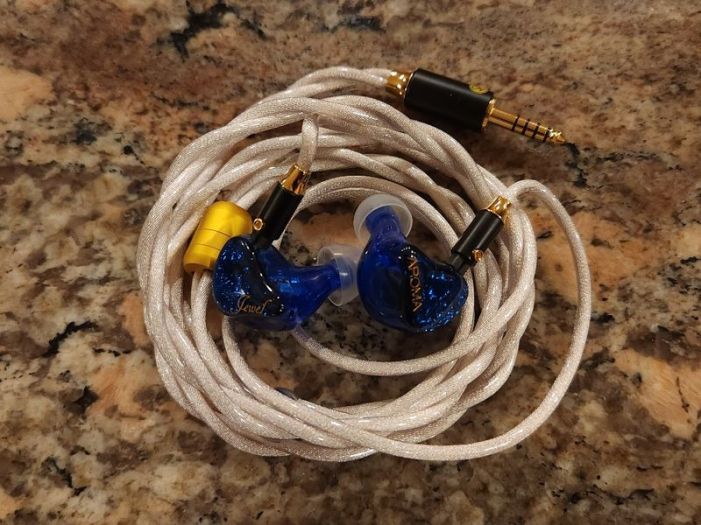
w/Aroma Jewel – I enjoyed this pair up which gave Jewel a more balanced, natural, and smoother tuning. The soundstage expansion is big, and the imaging is on a holographic level. The highlight of this pair up was a deep sub-bass extension with a rich textured rumble. Softer mid-bass punch with the weight of the low end being shifted more toward the sub-bass. Fuller body, yet still closer to neutral level lower mids, and more forward, clean, detailed, natural upper mids/vocals. Smooth clear treble with a well-controlled natural sparkle. I consider Jewel to have a more reference tuning, while XL gave it a bit more natural smoother tonality.
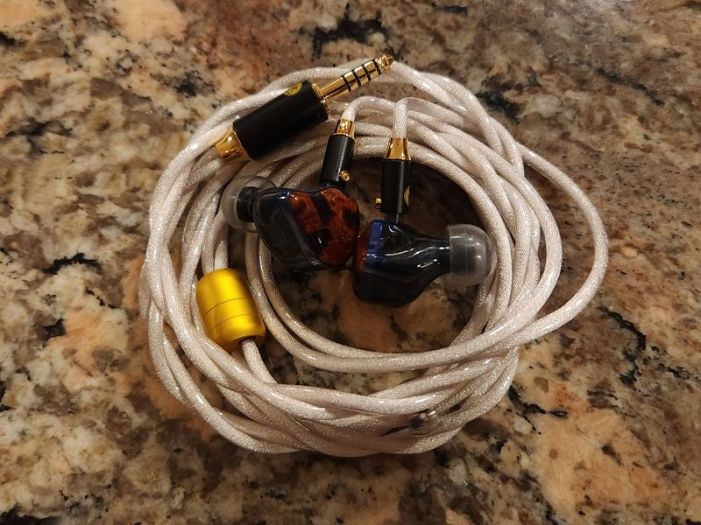
w/UM Mentor Multiverse – Another pair up example where the cable maximized soundstage expansion in all 3 directions while maintaining the holographic imaging. MM still has a balanced sound signature with a natural detailed tonality. The bass here also has more emphasis on sub-bass with a softer mid-bass punch. MM BA bass doesn’t have a strong punch to begin with, and with XL the bass is more relaxed, more rounded, and goes deeper. Lower mids have a fuller body while upper mids are clear, natural, and still very detailed. Treble has more emphasis in mid-treble and sounds smoother in comparison to its stock cable.
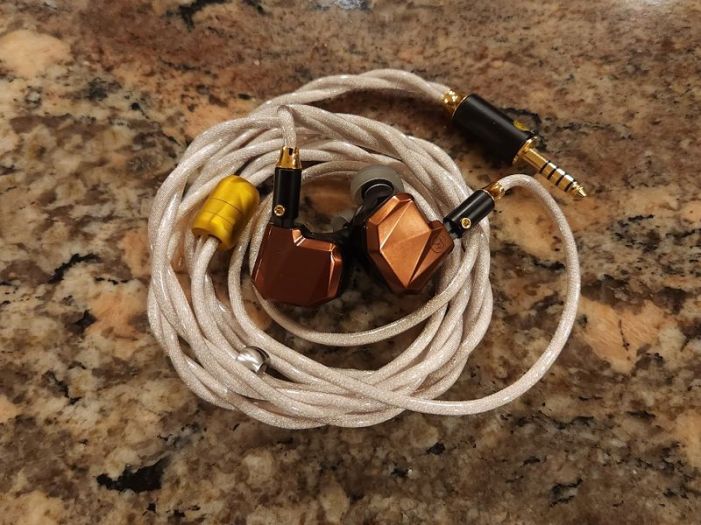
w/PS Allegro – PS own Allegro iems have a balanced sound sig with a clear detailed tonality and quite a vivid crisp presentation of the sound. XL helps to maintain the powerful bass impact with a linear balance between sub-bass extension and mid-bass punch, though I think it’s still slightly biased toward sub-bass. Mids are clear, natural, detailed, more neutral in lower mids and a bit more revealing in upper mids. Treble is crisp, detailed, energetic, with more emphasis on mid-treble, but overall, not as vivid, or as bright.
Comparison.
Consistent with my cable testing philosophy, I used the same IEM (Jewel) and the same source (LPGT), and only changed one variable at a time to note the sound difference I hear while keeping the volume matched. Keep in mind, I’m describing how Jewel sound compares between different cables within PlusSound family.
SPC XL vs PS Copper+ – While Copper+ soundstage width is decent, XL is “extra” wide with the sound wrapping around your head. Also, Copper+ imaging is closer to the center while XL is a lot more holographic. Tonality is quite different here. XL puts more focus on vocals and treble, bringing mids more forward, adding more details, removing coloring. XL keeps the mid-bass more neutral in comparison to Copper+, though it does add a nice sub-bass texture. It also does add more sparkle to treble, but still keeps the sound natural to my ears.
SPC XL vs PS Silver+ – The “extra” soundstage width caries over in this comparison as well. Silver+ soundstage is wide, but XL stretches it even wider. Both have the holographic imaging. Relative to IEM under test, these cables do sound closer in tonality, having more focus on vocals and treble, especially with vocals, bringing mids slightly more forward. Also, they both have crisp treble which adds resolution to the sound, perhaps with Silver+ having a little more sparkle while XL staying a bit more natural. I also hear a similar depth in sub-bass rumble, but mid-bass has a little more punch with Silver+ while closer to neutral with XL.
SPC XL vs PS Hybrid+ – The performance of Hybrid+ is unmistakably “hybrid”, combining Copper+ and Silver+, and that reflects in comparison to XL. As expected, the “extra” width of soundstage is still here, and XL still has a bit more holographic imaging while Hybrid+ is closer to the center. And again, I’m talking about a relative comparison because Plus series does have great imaging, but XL just has some extra sauce. In tuning, Hybrid+ has similar mid-bass punch as other Plus cables, so it will be stronger than XL, but they all do have a nice deep textured sub-bass rumble. Both have similar presentation of the mids, but Hybrid+ has a little more coloring in lower mids, probably due to the weight of the bass, while XL has more neutral lower mids, resulting in less coloring and more transparency. With treble, similar to Silver+ comparison, Hybrid+ has a bit more energy in mid-treble, while XL takes the edge of it with a more natural upper frequency.
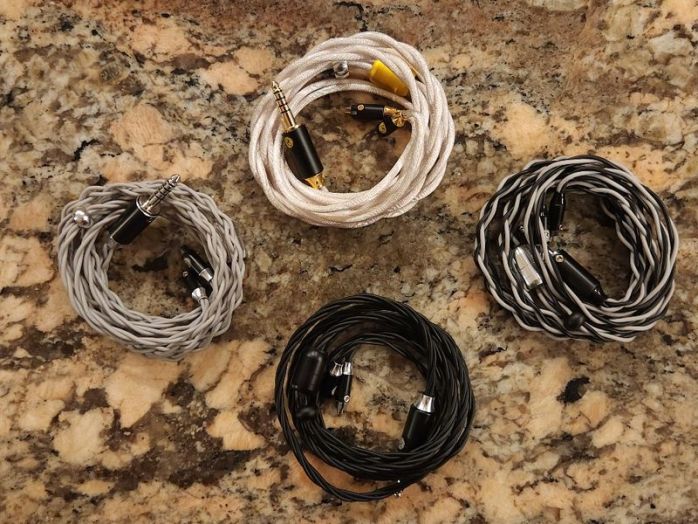
SPC XL vs PS Tri-Silver – In this comparison, I do hear XL soundstage to spread “extra” wide and imaging to be more holographic, while Tri-Silver soundstage is a bit narrower, and imaging is closer to the center. Tri-Silver has more elevated bass and fuller body mids which results in XL mid-bass being more neutral in comparison and lower mids having less body which results in less coloring of upper mids/vocals (in XL). Their treble presentation and tonality are very similar. And the same goes for the sub-bass rumble, but mids-bass punch and lower mids thickness are different. If you want more coloring and warmer tonality, then go with Tri-Silver. If you want more transparency, better retrieval of details, and more forward presentation of vocals, then go with XL.
SPC XL vs PS Quad-Copper – No surprises here, XL soundstage does spread wider, but their imaging is very similar, both having a holographic placement of instruments and vocals in space. Both are smoother tuned cables thanks to a more natural presentation and tonality of the treble, but there are a few differences. Quad-copper has a little more elevated sub-bass rumble, giving its low end more weight. Both XL and Quad have nicely textured sub-bass, but Quad is more elevated in quantity. Another difference, mids are a little more forward in XL, while slightly pulled back in Quad. This difference doesn’t affect the sound signature of the tuning, but it is noticeable. And as a result, due to mids/vocals being slightly pulled back in Quad, its tonality will be a little warmer in comparison to XL which has more forward and more detailed mids/vocals.
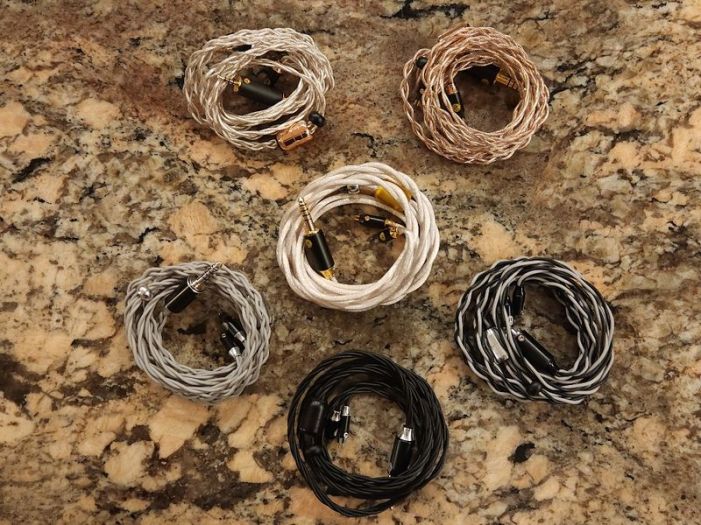
Conclusion w/Sound Analysis.
PlusSound has been around for over a decade and has a very impressive portfolio of products which is still expanding, though the core of the business is still focused on cables. With so many cables to choose from, some might get overwhelmed, especially trying to determine which one is better. But in reality, it is not about finding which cable is better, but rather finding which cable is going to be better for a particular sound sig of your IEMs in order to finetune it to a perfection. That was the reason why I decided to focus this review on comparison of various PS cables. And of course, when people ask about the price difference, it all comes down to a difference in cost of the material and the amount of the material being used in a construction of the cable.
Based on my testing, I found PS Silver Plated Copper XL cable to have a unique sound characteristic with “extra” wide soundstage expansion and a more holographic imaging. Soundstage enhancement is very common to many PS cables, but I feel like XL stretched it even wider, to the level of their PPH8 flagship cable. And with IEMs I tested, I do hear a deeper sub-bass rumble, less coloring in lower mids while keeping them clean and transparent, and more forward presentation of upper mids/vocals along with a more natural tonality of the treble. Typically, SPC wires make upper frequencies brighter, more forward, and with a boost in treble which can make the sound more aggressive and even fatigue. XL has some of the trends of SPC with more forward presentation of vocals and less coloring in lower mids. But when it comes to the bass, there is not as much enhancement in mid-bass, just the improvement of texture in sub-bass. And while also enhancing the sound resolution, it still kept the tonality natural, clean, detailed, especially the treble which had a non-fatigue musical sparkle. Overall, it’s a great looking and sounding cable!

 Twister6 Reviews