
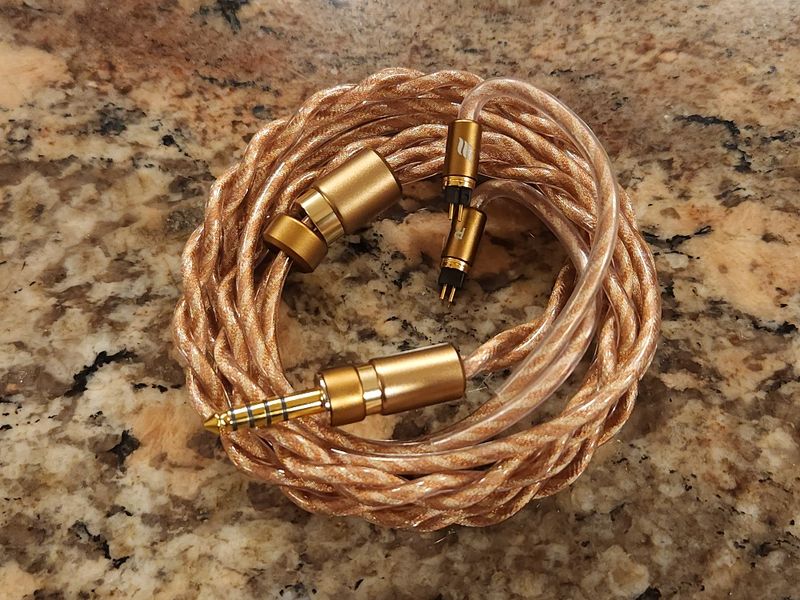
Pair up.
Here is how I hear EA Fusion 1 cable pair up with a few selected IEMs. In this test I was using LPGT as a neutral reference source, volume matched, playing the selection of my usual test tracks, such as Agnes Obel “The curse”, Sandro Cavazza “So much better” (Avicii remix), C-Bool “Never go away”, Ed Sheeran “Shape of you”, Counting Crows “Big yellow taxi”, Galantis “Hunter”, Alan Walker “Darkside”, Iggy Azalea “Black widow”, Indila “Boite en argent”, Robin Schultz “Oh child”, Dua Lipa “Love again”, David Elias “Vision of her”, and Michael Jackson “Dirty Diana”.
Please keep in mind, I’m describing the sound of IEM paired with a specific cable, driven from LPGT source. I don’t want to imply that cable will have a drastic EQ-like night’n’day effect on the sound of IEMs. Based on what I’m hearing, cable can finetune the sound, but if you find the original signature of IEM to be not your cup of tea, no cable alone will change that.
w/UM Mentor Multiverse – when IEM already comes with a premium cable that was used during the tuning by its manufacturer, sometimes it is hard to find an upgrade. Besides, “upgrade” is a very subjective term. MM tuning with its default PWA cable is relatively balanced with more focus on mids. F1 keeps this balanced tuning which is now more evenly balanced across the entire frequency range thanks to additional weight in the bass. One common complaint about MM was its BA bass response. Here with F1, the bass gains more sub-bass rumble with slightly elevated and stronger mid-bass punch. With additional weight in low end, you also getting a little more body in lower mids, making vocals a little smoother. But upper mids and lower treble are still quite resolving and detailed, just have more body overall.
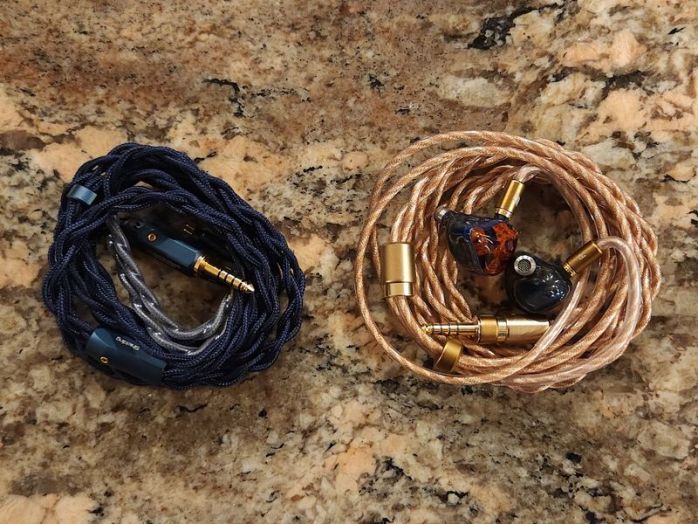
w/Empire Ears Odin – another popular IEM which I’m often being asked about cable upgrade, and another example of a manufacturer using PWA stock cable and tuning its drivers around it. Odin does have a more mid-forward tuning complemented by a textured, extended, yet neutrally tuned bass. Pair up with F1 reinforces that mid-forward tuning which affects the perception of the bass to sound slightly below neutral level. The bass is still there in quality, but not as much in quantity. If you want to enhance further the mid-forward revealing performance of Odin, F1 does a great job, but please keep in mind that you will also loose some weight in the bass.

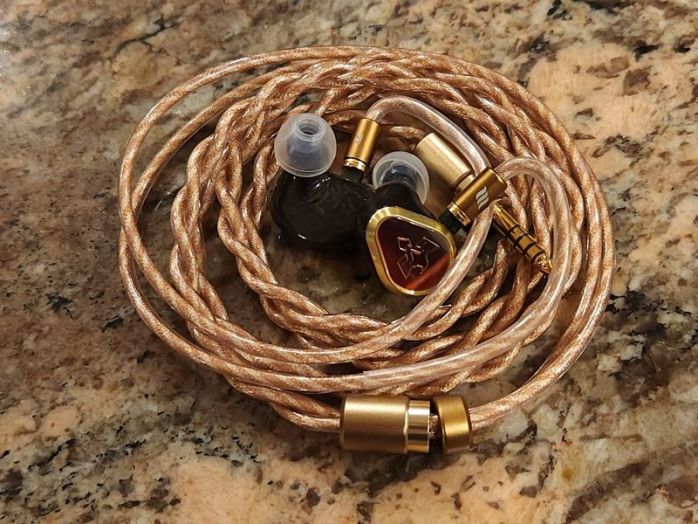
w/Vision Ears Phoenix – here we got not just a perfect sound match, but also a perfect color match since the color of the cable and the hardware looks great with Phoenix IEM shells. When it comes to the sound, it scales up on every level. The soundstage has more width and more height, and the imaging is more holographic now. The bass hasn’t changed too much, still sounds tight and punchy, but the mids are more revealing, more detailed, better layered, and with more forward presentation in comparison to using a stock cable. Treble also has more air and a bit more crunch now. The original cable had mids/vocals pushed back, yielding a warmer tonality. With F1, Phoenix vocals have more forward presentation and better clarity. Probably one of the best cable pair ups with Phoenix I tried so far.
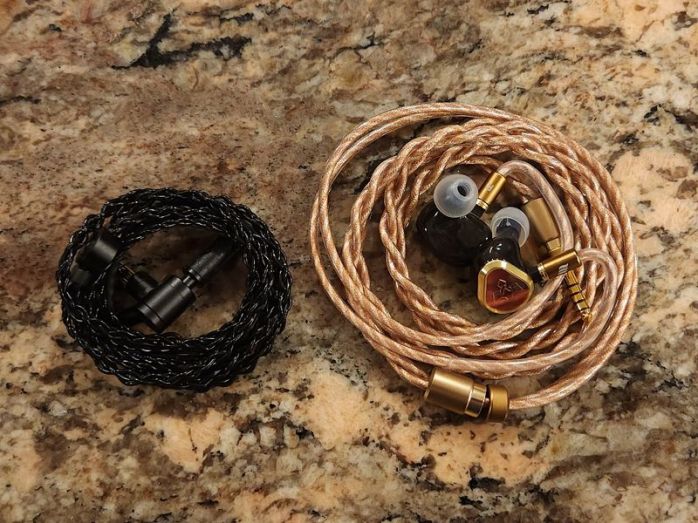
w/FirAudio RN6 (black atom) – another great pair up with an excellent synergy. While being tuned more balanced in comparison to XE6, RN6 is still the bass cannon thanks to its kinetic DD driver. With F1, upper mids/vocals in RN6 get a boost with a more forward presentation which gives this IEM a perfect W-shaped tuning. Mids now have improved clarity, better retrieval of details, and more forward presentation. Treble also benefits from a little more sparkle and airiness. But the most important thing, bass doesn’t loose its power. It still has a bold presentation with an elevated rumble and a strong impact. But now, the bass also has a better balance with mids, more linear transition from mid-bass to lower mids. Also, one of the top cable pair ups with RN6 I tried.

Comparison.
Consistent with my cable testing philosophy, I used the same IEM (Jewel) and the same source (LPGT), and only changed one variable at a time to note the sound difference I hear while keeping the volume matched. Keep in mind, I’m describing how Jewel sound compares between different cables and Fusion 1 (F1).
EA Code 23 to F1 – as expected, less stiff cable design is the first thing you notice. I loved C23 pair up with Jewel, but the comfort level became more transportable than portable to me. Both of these cables do pair up great with Jewel, but there are variations in tonality. Both yield a tighter and faster presentation of the bass, both give the bass a nice level of analog texture, but C23 brings out a little more sub-bass rumble while F1 has a more linear transition from sub-bass to mid-bass. Both have a faster attack mid-bass with controlled decay. The mids presentation with Jewel is similar in lower mids while F1 has a bit better retrieval of details in upper mids, which also brings mids/vocals a little more forward. The treble is a touch splashier with C23, while has a better controlled sparkle in F1. As a result of these changes, Jewel sounds mildly U-shaped with C23 and more balanced with F1. But like I said, I enjoyed both of these pair ups, though chose to use F1 on the go and C23 while less mobile at home.


PWA FirstTimes to F1 – lifts a layer of veil off mids. While FT added more body and smoother analog tonality to Jewel, with F1 the mids still have the weight to keep them above neutral level but the clarity and the resolution of the vocals has improved. In other words, lower mids still have fuller body, but upper mids have more clarity with improved retrieval of details when paired up with F1. Bass sounds tighter and faster, not as relaxed, sub-bass rumble is similar but mid-bass attack is faster to bring up the best in Jewel’s DD bass performance. Treble has a little more sparkle, but that could be also a result of upper mids higher resolution. And that change in upper mids also affects the soundstage expansion and imaging since mids/vocals placed a little further our, giving the sound a bit more holographic presentation. FT gives Jewel a smoother and warmer tonality while F1 changes the “warmer” part with more transparency, higher resolution, and better retrieval of details.
EA Cleo II Octa to F1 – didn’t know what to expect in this comparison, and obviously Octa version of Cleo II cost more. I did find the soundstage expansion being slightly wider with F1, while the imaging with either of these cables is similar. Sub-bass rumble is slightly more elevated with Cleo II, not on the same level as C23, but just slightly more than with F1. But if you want a more linear and still quite textured sub-bass rumble, F1 does a great job. Mids are a little warmer with Cleo II octa due to a little more body in lower mids, thus end up being more detailed and more resolving with F1 in upper mids. But interestingly enough, Cleo II octa has a bit more sparkle and air in treble while F1 is more controlled, still with plenty of air and sparkle, but smoother. F1 is a little stiffer in comparison to Cleo II octa, but not as stiff as C23, and it is not too far off in tonality which makes F1 a great alternative to either cable.
PlusSound SPC XL to F1 – another comparison where you don’t know what to expect because of the difference in wire material, but I was quite surprised considering one is SPC and another one is a blend of different premium materials. To start off, they have a very similar soundstage expansion and imaging, nearly identical width/depth and holographic imaging. And they also have very similar presentation and tonality of upper mids and treble, being more revealing in upper mids and having plenty of sparkle and air yet still keeping the treble under control without any splashiness. But going down from there, things do start to vary. Lower mids have a fuller body in F1 while more neutral in XL. As a result, XL mids/vocals sounds a little more revealing while F1 sounds fuller in body without any additional warmth. But the bigger difference is in the presentation of the bass where XL has less sub-bass rumble and more polite mid-bass slam while F1 gives you more texture and rumble in sub-bass and a tighter and a faster mid-bass. Another interesting observation, despite of XL being 18awg in thickness when compared to F1 21awg, they both have the same level of suppleness.

Conclusion w/Sound Analysis.
I always mention in the conclusion of my cable reviews that cable will not change or transform the sound signature of your IEMs if you are not happy with its tuning to begin with. There is no magic “EQ” silver bullet or fairy dust behind the cable. If you are not happy with the sound signature of your pair of IEMs, get another one with a different sound sig. But in case of Fusion 1, I do hear the changes which are easy to spot when you are focusing on mid-range tunning of IEMs paired with F1, and I found it to be quite consistent. I also enjoyed the ability to go between single ended and balanced plugs, and the solid feel of its TermX connector felt very secure. And of course, the implementation of ConX is a big plus here as well.
In a summary, I found F1 to enhance the low end with a tighter performance of faster attack and shorter decay that gave the bass more control, articulation, and better separation from mids. F1 also brought more focus to mids/vocals by enhancing their resolution and retrieval of details, in some cases even feeling like a layer of veil was lifted off and mids having the perception of being positioned more forward. But even with that change in mids, the body of lower mids wasn’t affected. With treble, in my pair ups I heard a more controlled sparkle and airiness, still being very detailed yet more natural. The change in mids also affected the perception of the soundstage with improvements in the sound spreading more left/right. If this is a type of sound finetuning you are looking for, Effect Audio Fusion 1 is a great cable to consider!

 Twister6 Reviews
I love fusion with Odin
but I like it more with vission ear aura
try it when u see vission ears aura pair it with fusion
i see alot of people praise c23 but when i hear it, it still not burn in, short term impression still not good
LikeLike