
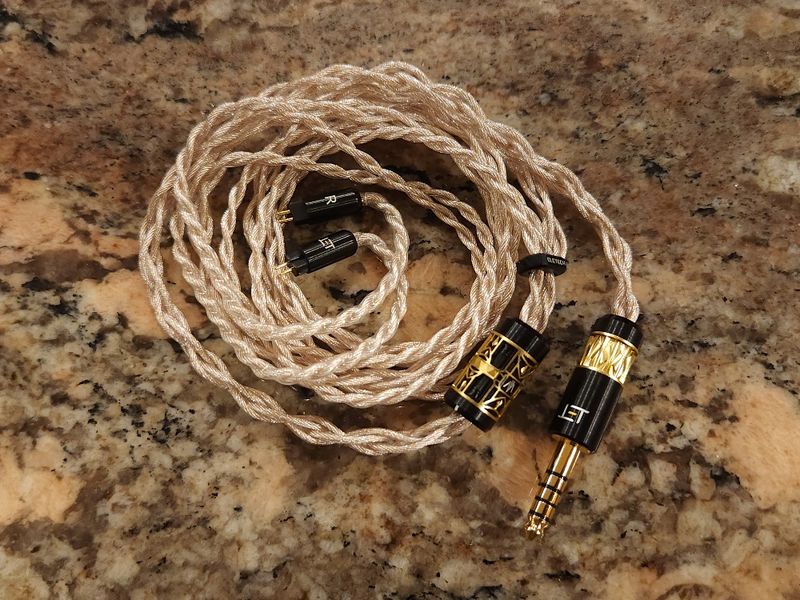
Pair ups.
Here is how I hear Adam cable pairs up with different IEMs. I chose a handful of popular premium monitors for this testing, to compare the sound between their stock and Adam cables.
In this test I was using LPGT as a neutral reference source, volume matched, and playing the selection of my usual test tracks, such as Agnes Obel “The curse”, Sandro Cavazza “So much better” (Avicii remix), C-Bool “Never go away”, Ed Sheeran “Shape of you”, Counting Crows “Big yellow taxi”, Galantis “Hunter”, Alan Walker “Darkside”, Iggy Azalea “Black widow”, Indila “Boite en argent”, Robin Schultz “Oh child”, Dua Lipa “Love again”, David Elias “Vision of her”, and Michael Jackson “Dirty Diana”.
Also, please keep in mind that I’m describing the sound of IEM paired with a specific cable, driven from LPGT source, and how the sound of that IEM compares when I switch cables. I don’t want to imply that cable will have a drastic EQ-like night’n’day effect on the sound of IEMs. Based on what I’m hearing, cable can finetune the sound, but if you find the original signature of IEM to be not your cup of tea, no cable alone will change that.
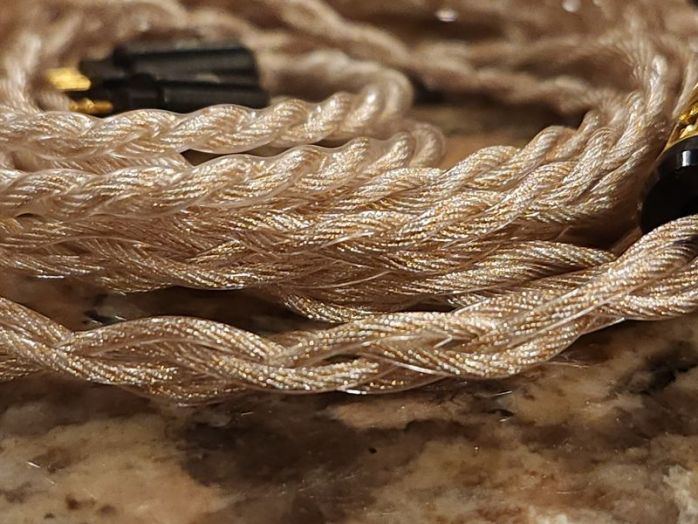
Aroma Jewel (stock vs Adam) – a noticeable transformation in every aspect of the sound tuning and ergonomics. Jewel’s stock cable shrinks the soundstage of the sound, softens the bass, thins the mids, and makes treble a bit splashy. Adam expands the soundstage in every direction, including a more 3D imaging. I hear more sub-bass rumble, fuller body in lower mids, and more natural treble extension. Also, stiff and microphonic Jewel’s cable is no match for supple and non-microphonic Adam’s design.
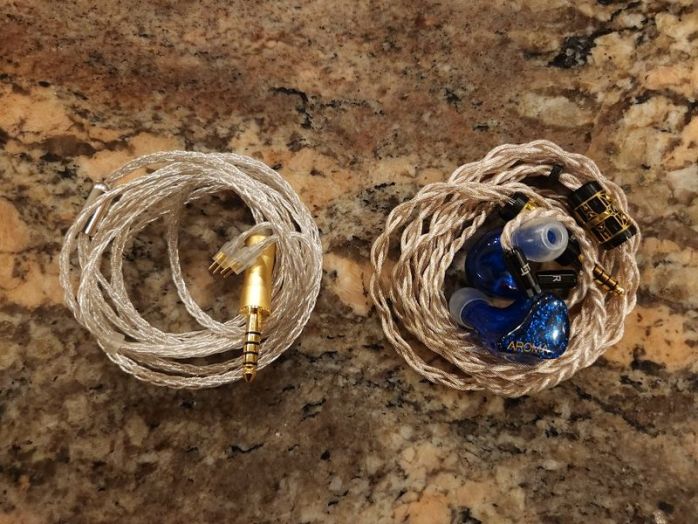
EE Odin (stock 1960 2w vs Adam) – when comparing to another premium stock cable, there are not as many changes, but still a few noticeable one’s worth mentioning. While imaging remains 3D holographic, the actual left/right width stretches a bit wider, almost wrapping around you. Bass sounds very similar, but mids gain a bit more body, smoothness, a bit more texture. And as a result, the perception of treble is also a bit smoother.

VE Phoenix (stock silver-gold alloy and copper vs Adam) – the expansion of the soundstage width is the first thing I noticed, how it stretches more to the left and to the right. Bass sounds similar, perhaps a little more sub-bass texture and overall tighter presentation of the bass with Adam. Mids/vocals still sound very natural, organic, but with a bit more clarity now, like a very thin layer of veil was lifted off.
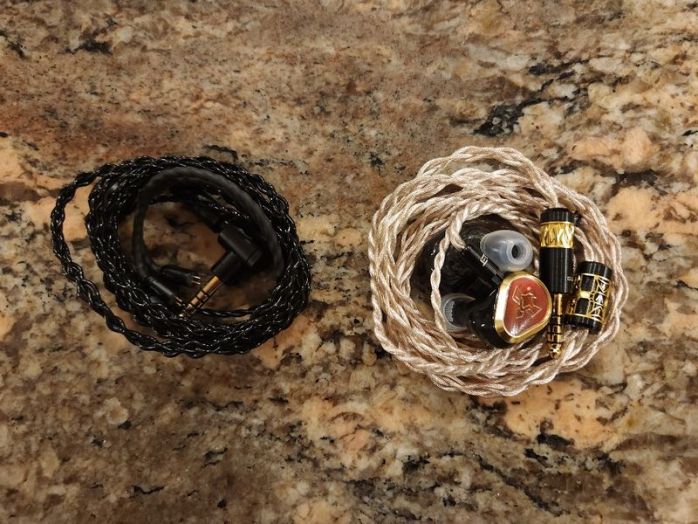
FirAudio RN6 (stock copper plated silver vs Adam) – despite the basshead level of tuning, I still hear some improvements in soundstage expansion, stretching a bit wider to the left/right. But there are quite a few other more noticeable changes. It is still basshead iem, but the weight of the bass is slightly scaled down, a bit reduced in sub-bass along with more clarity and more forward presentation of mids, giving the tuning a more W-shaped sound sig. The bass reduction here is quite tasteful, just slightly scaled down to make the tuning more balanced and to improve the resolution and retrieval of details.
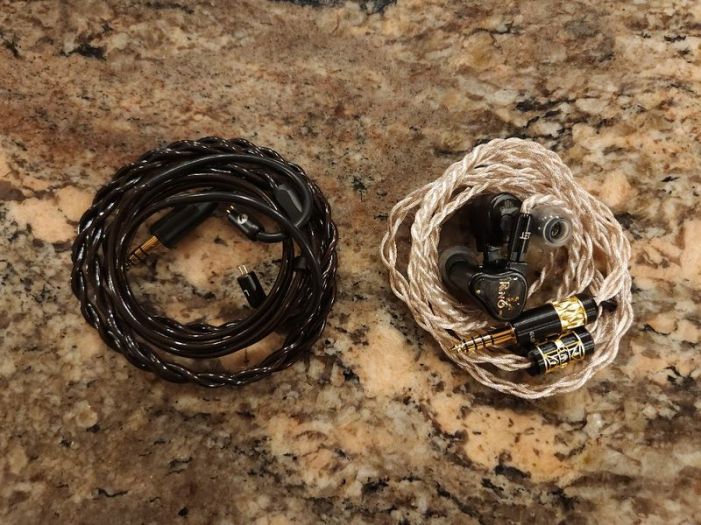
Oriolus Traillii (stock 1960 4W vs Adam) – this change is all about mids, both lower and upper, and how they scale up with an improved clarity, improved resolution, and improved retrieval of details. Adam cable is great with iems that have fuller body organic mids tuning, and Traillii fits that mold. This IEM already comes with a well-known premium stock cable, but there is always a room for improvement. Adam takes away some coloration from lower mids of Traillii, making them more neutral, and that opens up upper mids with more clarity and higher resolution. It also has the effect on improvement in imaging because more open upper mids expand the sound as well.
Comparisons.
Consistent with my cable testing philosophy, I used the same IEM (Jewel) and the same source (LPGT), and only changed one variable at a time to note the sound difference I hear while keeping volume matched. Keep in mind, I’m describing how a particular IEM sound compares between Adam and other cables. I will also provide the wire material used in the cable I’m comparing to Adam.
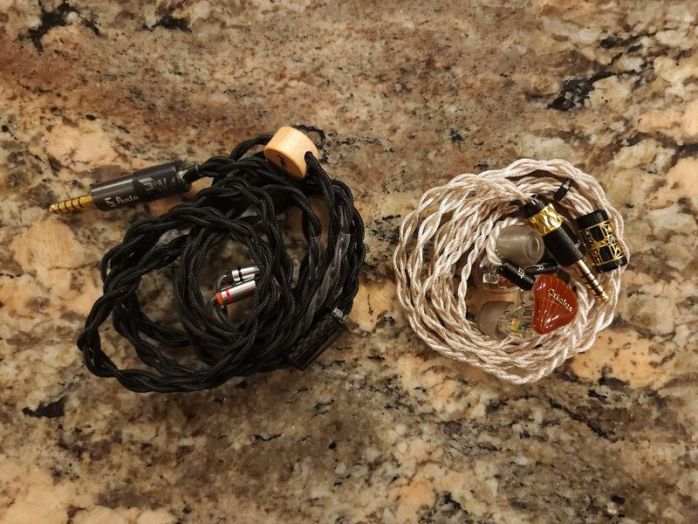
Adam vs EA Chiron (gold-plated silver, gold-plated silver gold alloy) – there are quite a few differences in tonality between these cables. Chiron fine-tunes Jewel to sound warmer, from a slightly more weight in the bass due to a lift in sub-bass to more body in lower mids to give vocals fuller body warmer tonality. With Adam, Jewel has a more balanced linear bass tuning between sub- and mid-bass, no tilt toward sub-bass like with Chiron. Also, with Adam the lower mids are more neutral which gives mids less coloring and more transparency with an improved retrieval of details. Furthermore, Adam adds more sparkle to the treble, even improves the extension due to more airiness in the sound. That also translates in a slightly wider soundstage. While both cables use similar wire material, they don’t sound the same, and have their own unique characteristics to fine-tune the sound of IEMs they paired up with. For my own personal preference, Adam would pair up better with neutral or warmer tuned IEMs, especially if you feel like the bass is a bit overbearing for your preference or if you want to improve the retrieval of details.
Adam vs PlusSound PPH8 (palladium-plated silver, palladium-plated copper) – I was surprised to find quite a few similarities between these two cables while paired up with Jewel, though there are also a few expected differences. First of all, a very similar soundstage expansion and imaging since both cables lean more toward a revealing transparent tonality with plenty of airiness between the layers of the sound. When it comes to the bass, PPH8 adds just a touch more sub-bass rumble, but otherwise they both have a very similar bass presentation, adding a bit of texture without lifting or boosting anything. They also both have a slightly more revealing mids and crisp airy treble, but here you will find a noticeable difference when paired up with Jewel where I hear a more natural revealing tonality with Adam and more analytical revealing tonality with PPH8. I guess adding Palladium does give the sound a more analytical sound presentation while Adam’s Gold takes the edge off it.
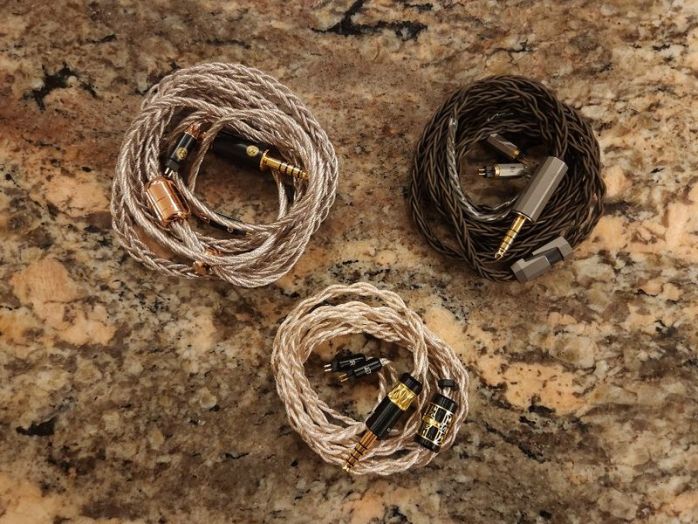
Adam vs Eletech Aeneid (gold-plated silver) – while going between these two cables paired up with Jewel, it really felt like Adam was an upgrade of Aeneid. The first thing you notice was a more expanded, wider soundstage with Adam and slightly narrower width with Aeneid. In no way Aeneid has a narrow soundstage, but relative to Adam it shrunk a bit in width where I heard more depth than width. And a wider expansion of the soundstage with Adam also gives the sound a more holographic imaging. Their treble is very similar, extended and airy without any harsh peaks. The bass is not too far off either, though Jewel low end with Aeneid had a bit warmer tonality though that could be attributed to their difference in mids, specifically in lower mids. Aeneid lower mids are a bit north of neutral, slightly warmer and fuller in body, while Adam scales it up with more neutrality which extends into the upper mids, giving them more natural revealing tonality without extra coloring. It’s a perfect example of where the sound with Adam became more revealing and with improved res rather than brighter.
Adam vs Eletech Ode to Laura (triple bespoke copper blend) – the changes between these two cables were expected and quite easy to spot. The triple-shot of copper expresso in Laura gave Jewel and fuller body more textured tonality with elevated low end, boosting both the sub-bass rumble and mid-bass punch, fuller body lower mids which gave vocals smoother and more organic tonality, but the treble still retained its sparkle and airiness. Adam pair up synergy with Jewel had a similar effect on the treble, though the treble extension was improved with a bit more airiness. With Adam, mids also had a more revealing tonality with better layering and separation between the layers of the sound. The difference was more noticeable in transparency of lower mids with Adam. And with Adam, Jewel’s bass had a more linear tuning without any extra weight like I found it with Laura. Pair up with Laura is great for neutral or brighter tuned IEMs, while Adam does better with neutral and warmer tuned IEMs if you would like to cut out some of the heft from mids and the bass and would like to give the bass a more articulate tighter presentation.
Adam vs Eletech Iliad (palladium-plated silver, gold-silver alloy) – Iliad was the cable which started Parnassus flagship Eletech cable series, and you can clearly hear how it progressed through Aeneid and now into Adam. But as I always say, changes don’t have to be perceived always as an upgrade because it is always up to a personal preference. The first change, quite obvious to my ears, is the soundstage expansion where Adam paired up with Jewel makes the sound noticeably wider. They both have a great imaging, but the sound with Iliad expands more forward and less to the left/right while with Adam it has a full 3D expansion. Iliad does have a bit more sub-bass rumble and also thicker body lower mids, giving Jewel a smoother and more neutral sound presentation. On a contrary, Adam bass is more linearly tuned between sub-bass and mid-bass and has more transparent and less colored mids. Adam’s mids have a better layering and separation of the sound and improved retrieval of details. But when it comes to treble, both have a very similar crisp extension with plenty of airiness.

Conclusion w/Sound Analysis.
Based on my testing with a number of IEMs and comparison to other cables, I found Adam to have a very clean and clear sound presentation with a natural revealing fine-tuning of the tonality. Paired up with Adam, I also hear IEMs to have a more linear tuning of the bass, enhancing its articulation and layering without adding more weight or boosting the sub-bass rumble. It gives neutral transparency and less coloring to the lower mids which enhances the layering and separation of the sounds, improves retrieval of details, and enhances the resolution without making upper mids too analytical or revealing. It improves the extension of the treble by adding more air to the sound without boosting upper frequency peaks. And as a result of the above changes, especially in mids, I found Adam to always maintain a wide-open soundstage, even expanding it wider relative to some other stock cables.
Of course, everything will depend on the pair up synergy since the essence of the cable is about the finetuning of the baseline signature of your IEMs. As I always say, there is no magic “EQ” silver bullet or fairy dust behind the cable. If you are not happy with the sound signature of your pair of IEMs, get another one with a different sound sig. But Adam certainly does have the unique sound characteristics with finetuning changes focusing on mids, both lower and upper, scaling them up with an improved clarity, improved resolution, and improved retrieval of details. That change works great with iems that have fuller body organic mids tuning. And as you would expect with all Eletech cables, you also treated with a unique custom hardware design, premium accessories and packaging, and FINALLY… the chin slider!

 Twister6 Reviews
does the cable Fit For XE6
LikeLike
XE6 uses standard universal 2pin connector. Should not be a problem.
LikeLike