
Sound Analysis – Evolution of Janus.
I analyzed Janus 3 sound performance paired up with a neutral LPGT source while playing a variety of test tracks, such as Agnes Obel “The curse”, Sandro Cavazza “So much better” (Avicii remix), C-Bool “Never go away”, Ed Sheeran “Shape of you”, Alan Walker “Darkside”, Galantis “Hunter”, Iggy Azalea “Black widow”, Indila “Boite en argent”, Dua Lipa “Love again”, Counting Crows “Big yellow taxi”, Bob Marley “Jamming”, David Elias “Vision of her”, and Michael Jackson “Dirty Diana”. I left Janus 3 on a continuous playback for about 100hrs before I started taking my notes.
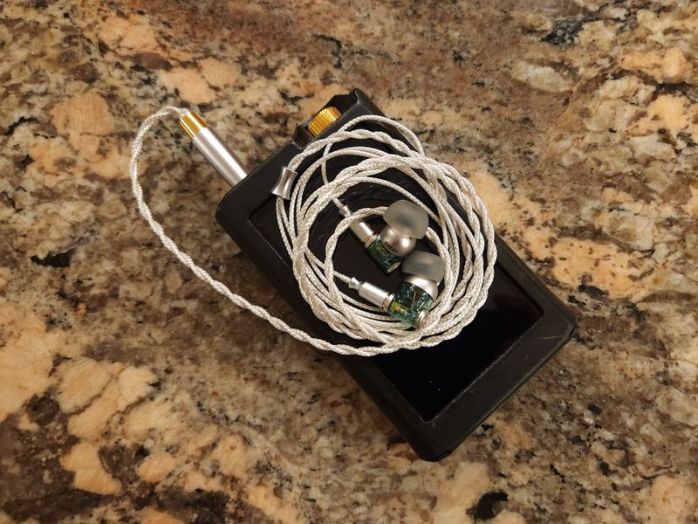
Here, I approached my sound analysis by studying the evolution of Janus tuning, starting from its prototype and going up to Janus 3 with its stock and M120B digital cables. I always believe that a relative comparison plays a very important role in sound analysis, but due to the lack of other popular chi-fi “budget” IEMs for comparison, here I decided to keep it within ddHiFi family.

Janus 1 (proto) – when I originally received it for testing, I found a narrow soundstage, rolled off sub-bass, neutral flat mid-bass, a bit south of neutral lean lower mids, and boosted upper mids and treble. It was their first attempt with a mid-centric plasticky tuning, emphasizing more on the upper mids and the lower treble.
Janus 1 – the final production version of Janus debut was much better with a more balanced neutral organic tuning. It had a wider soundstage, more sub-bass presence, still neutral and more relaxed mid-bass, a little bit north of neutral lower mids with some added body, (in comparison to proto) attenuated down and more natural upper mids and treble. The included cable was copper based.
Janus 2 – the second gen of Janus had a much bigger soundstage with a more holographic imaging. The sub-bass rumble was also more elevated and the mid-bass had a faster punch. But the lower mids were tuned leaner, so there was less body in sound, and the upper mids and treble have been significantly boosted, making the sound brighter, more revealing, even with a few sibilant peaks depending on what music you are listening to. Instead of the usual 2k-4k pina gain, it has been shifted higher to 3k-6k. The sound became more J-shaped where despite the improvement in sub-bass and mid-bass, the upper frequencies were more elevated, dominating the tuning which I understand was quite popular at that time with some other chi-fi IEMs. This release featured SPC cable.
Janus 3 – here I also found a noticeable change in tuning, with sub-bass being more elevated and mid-bass staying closer to a more neutral level, though gaining more punch and speed. Lower mids are still closer to neutral and upper mids now have a more proper pina gain which brings more attention to the vocals. Another big change in Janus 3 was a reduction in mid-treble (relative to Janus 2) which took care of sibilant peaks, but also reduced the treble extension and made the sound smoother with less crunch and more subtle airiness. The sound with a stock cable has a more balanced, smoother, natural tuning with more focus on sub-bass and upper mids. The soundstage is still wide, but not as wide or as holographic as it was with Janus 2. The new cable uses copper wires.
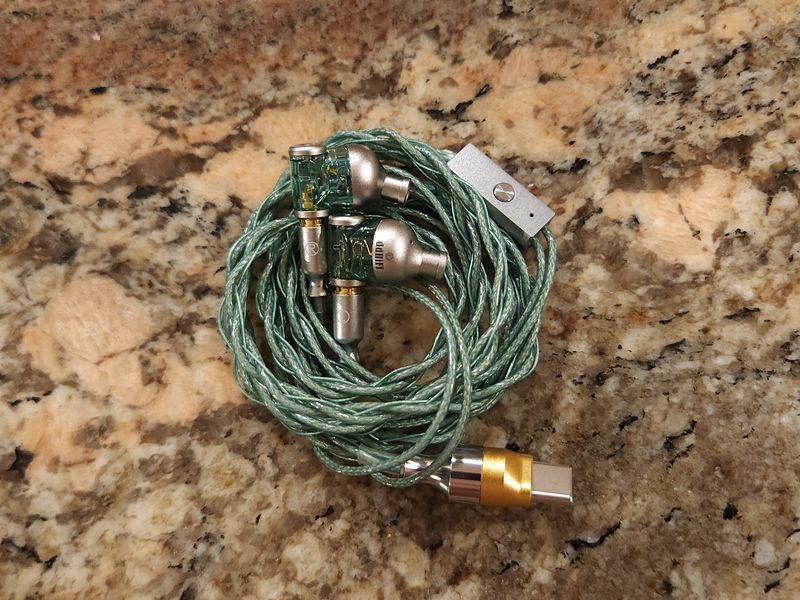
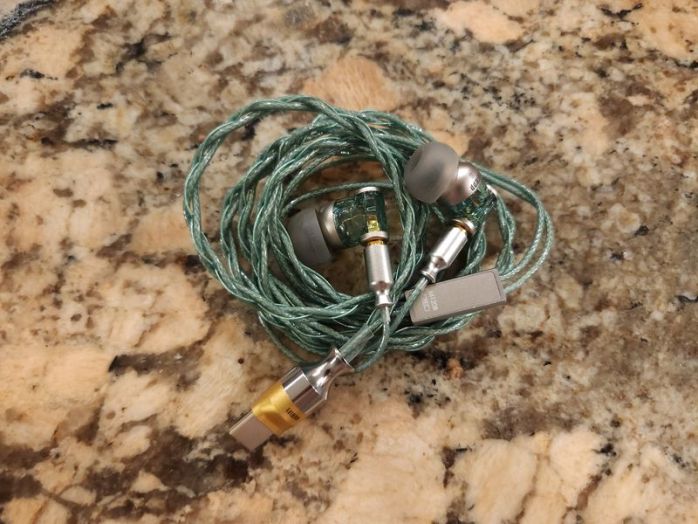
Janus 3 (w/M120B) – this turned out to be an unexpected surprise, actually scaling up the performance of Janus 3 by adding the missing treble sparkle and also more rumble to sub-bass. The treble change was done in a very delicate and tasteful way, just enough to improve the extension, to add more resolution to the sound, to improve the layering and separation with more “air” between the layers which led to the improvement in sound imaging as well. Definitely enjoyed this pair up. And as a bonus, the greenish finish of M120B cable matches nicely Janus 3 shells.


It is safe to assume that Janus 3 is my favorite tuning among three, and I will go as far as saying that pair up with M120B cable finetuned Janus 3 sound to the next level while simplifying the connection with my smartphone on the go without a need for usb dac dongle.
Eartips rolling.
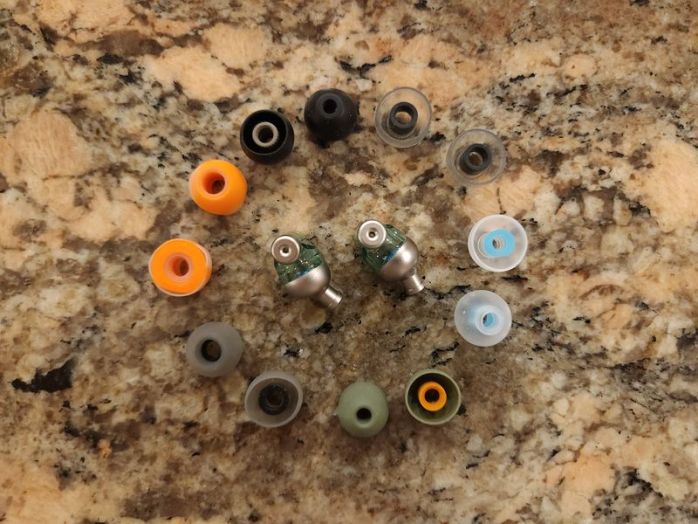
The selection of eartips is crucial to any universal in-ear monitors and will affect the sound, especially the bass impact depending on the seal. Due to a large opening of my earcanals, I usually go for the largest size eartips to get a better seal. Also, please keep in mind, eartips impressions are rather subjective and will be based on anatomy of your ears.
Janus 1 and 2 ddHiFi wide-bore shallow fit medium softness silicone eartips – these eartips were included stock with Janus 1 and 2, and while using these with Janus 3 I hear a balanced tuning with a natural detailed tonality.
New ddHiFi ST35 with narrow bore regular fit soft-silicone eartips – unfortunately, even with large size tips, the soft nature of this silicone material loosened up the seal with my earcanal and introduced harsh treble peaks with plasticky tonality. These didn’t work with my ears.
Sedna Crystal – these wide bore eartips create a perfect seal with my earcanal; I still hear a balanced tuning with a natural detailed tonality and a deeper sub-bass extension. Also, upper mids had a slight improvement in resolution.
SpinFit CP100+ and Omni – with either of these I was able to hear a decent balanced tuning and natural detailed tonality, though a bit more elevated lower treble.
Final Type-E – narrow bore and softer eartips material loosened up the seal, causing the treble to be a bit too peaky for my taste.
Symbio W – balanced tuning with a natural detailed tonality and just the perfect amount of treble to bring natural resolution to the sound.
At least for my ears, seems like wider bore eartips had the best pair up synergy with Janus 3, while narrow bore eartips exaggerated treble, making it harsher in tonality.

 Twister6 Reviews