

Sound Analysis.
I analyzed E12 sound performance paired up with a neutral LPGT source while playing a variety of test tracks, such as Agnes Obel “The curse”, Sandro Cavazza “So much better” (Avicii remix), C-Bool “Never go away”, Ed Sheeran “Shape of you”, Alan Walker “Darkside”, Galantis “Hunter”, Iggy Azalea “Black widow”, Indila “Boite en argent”, Dua Lipa “Love again”, Counting Crows “Big yellow taxi”, Bob Marley “Jamming”, David Elias “Vision of her”, and Michael Jackson “Dirty Diana”. I let E12 burn in for about 100hrs before I started taking my notes.
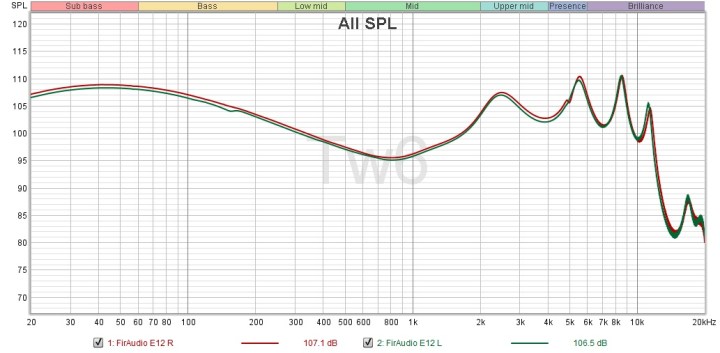
I hear E12 to have a mildly V-shaped sound signature with a clear, detailed tonality. The focus of the tuning is split between a very tactile, articulate, elevated bass impact and clear, detailed, transparent, and more energetic upper mids having a forward presentation. While some multi-driver designs strive for the unison of coherency, the single DD driver of E12 creates a more hybrid-sound presentation where it literally feels like you are listening to an IEM with DD bass and multi-BA mids and highs.
The bass is definitely one of the stars of E12 tuning. It extends deep, with a sub-bass rumble you can feel, but it is not over-done here. It certainly adds the weight to the sound, but it also gives the room for a bouncy, energetic mid-bass punch with a more rounded attack. When sub-bass is too elevated, the attack of mid-bass punch becomes slower, which makes the mid-bass loose its energy. Here, there is a perfect balance of being able to hear and to feel the sub-bass rumble, and at the same time appreciate the punch and the power of mid-bass impact. Plus, the dip in lower mids gives the bass snappier decay, making the overall bass tighter and better controlled.
That lower mids dip doesn’t thin out the mids/vocals. It is not necessarily attenuated down, but rather close to neutral, to keep a nice separation between the bass and the mids, which also gives the tuning its mild V-shaped sig. As I already mentioned, upper mids have a forward presentation with an appropriate pinna gain which gives vocals clarity with a very good retrieval of details. Not on microscopic level, but rather on a natural revealing level without over emphasizing any sibilant or harsh peaks. There is not as much warmth in the mids, something you would miss if you were used to fuller body sound of XE6 or RN6, but mids/vocals still sound relatively natural to my ears, just a bit colder in tonality. It’s a different type of sound tonality with less analog texture.
Treble is also clear and detailed. It works in conjunction with upper mids to give you natural clear details without any harshness or fatigue. When you look at the FR graph, you can clearly see how well these peaks are positioned, avoiding any unpleasant sharpness, working around sibilance, bringing you the clarity and details in a more natural way. The very upper region of the treble is not as extended, so you don’t get as much of that multi-dimensional airiness, but it works well with this type of tuning since keeping the lower mids more neutral still gives you a nice sense of layering and separation of the sound.
I often attribute the layering and separation of the sounds to the air between the layers. In E12 this is accomplished without that extra “air”, but rather with a balance of keeping lower mids more neutral, and upper mids clear, detailed, revealing, giving the sound transparency without too much coloring or congestion in mids. And the bass just like in hybrid design, feels like a separate DD driver added in a perfect balance without interfering with mids/highs.
The soundstage is quite expanded, rounded, going wide to the left and right, as well as deep and tall. Perhaps it is not exactly on a holographic level, but it is far away from being intimate, and feels very expanded and 3-dimensional. You definitely get a good sense of imaging with a sound placement of instruments and vocals, quite accurate to pin-point their position.
No matter what tracks I threw at E12, it handled everything from acoustic instruments with natural timbre to electronic synthesized instruments very well. As a matter of fact, the depth, the impact, and the weight of the bass worked very well to enhance the timbre with a more natural tonality of acoustic instruments and to give you a hard-hitting punch in EDM tracks. But as I mentioned before, if you want more warmth and smoother analog texture in your mids, E12 doesn’t exactly deliver that. Its focus is on the analog textured bass and clear detailed upper mids and treble.
Also, there wasn’t as much of variation with different sources I tried. Perhaps, it is due to it being a single DD design instead of multi-driver multi-hybrid design with complex crossover. There were a few variations in terms of bass impact, but overall, the sound signature and the soundstage expansion remained close as I stepped through different DAPs.
Eartips Selection.
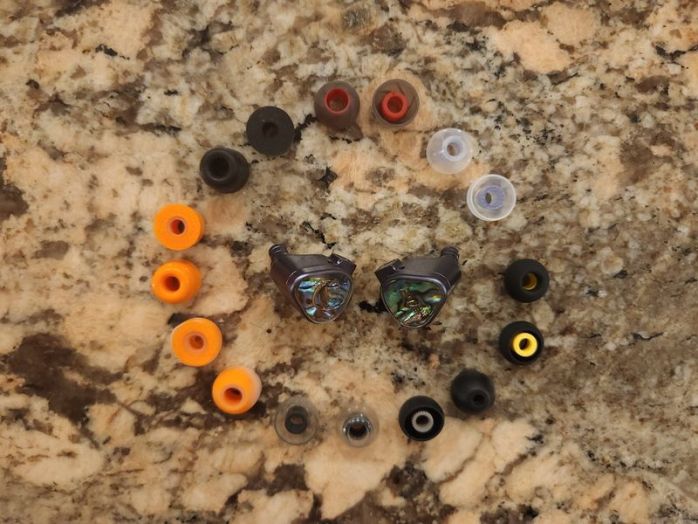
The selection of eartips is crucial to any universal in-ear monitors and will affect the sound, especially the bass impact depending on the seal. Due to a large opening of my earcanals, I usually go for the largest size eartips to get a better seal. Also, please keep in mind, eartips impressions are subjective and will be based on anatomy of your ears.
Stock foams – mildly V-shaped tuning with deep bass impact, clear detailed upper mids, and a touch smoother treble. Wide soundstage.
Stock silicone (whirlwind) – mildly V-shaped tuning with deep bass impact, clear detailed with a touch more body mids, and brighter treble with a bit of harshness to my ears.
SpinFit W1 – mildly V-shaped sound sig with deep bass impact and clear detailed upper mids and treble. Wide soundstage. Treble is a touch brighter in comparison to stock foam tips.
Symbio F – very similar to stock foam tips, yielding a mildly V-shaped tuning with deep bass impact, clear detailed upper mids, and a touch smoother treble. Also, a big soundstage expansion. Symbio Foam advantage is a better comfort in comparison to stock foamies.
Symbio W – Very similar to SpinFit W1, maybe with just a touch brighter treble.
Azla Crystal – Very similar to SpinFit W1, but with a little harsher mid-treble peak.
Final Type-E – To my big surprise, the sound was similar to Symbio Foam and stock foam, only the bass impact was slightly increased and I hear a touch more treble presence.
Eletech Baroque – Also, an improvement in bass impact, but the treble was a bit harsh to my ears
Symbio F and SpinFit W1 were my two favorite eartips to pair up with E12, but as I already mentioned, this is relative to my ear anatomy and my personal sound preference.
Cable pair up.
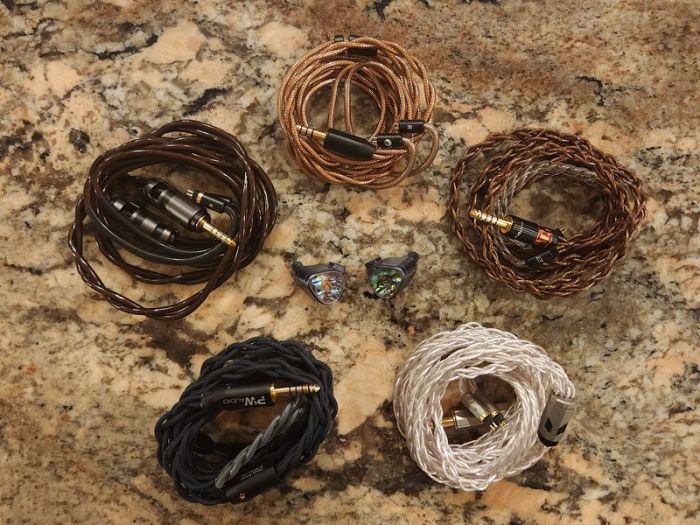
I’m aware that some people don’t believe in cables and have very strong opinion about it. It’s not my intent to change those minds. Instead, I’m just sharing what I hear during my testing. What makes sense to me, a metal wire is a material with physical properties of resistivity, conductivity, purity, and unique geometry, all of which put together act as a filter between your source and headphones. Variations of these physical properties can affect the conductivity of analog signal, resulting in a sound change, from a subtle to a more noticeable level. If the talk about cables upsets you, please skip this section. Otherwise, enjoy these short impressions.

Stock vs EA Code 23 – I found C23 to lift the sub-bass rumble, adding more weight to the sound. Also, another interesting observation is with vocals having a more center-focused position instead of spreading wider like with stock cable. The overall soundstage has the same width, but vocals were a bit narrower and positioned closer to the center.
Stock vs PWA FT – FT also adds more weight to the bass, elevating both the sub-bass rumble and mid-bass punch. The soundstage expansion was similar. And with more weight in bass, the focus of the tuning shifted a little more toward L-shaped sig, giving a bit smoother perception to upper mids/treble.
Stock vs Eletech Ode to Laura – Laura also adds quite a punch to the bass, elevating the quantity and adding the texture to both the sub-bass rumble and mid-bass punch, keeps treble the same, but also gives more body and analog texture to the mids/vocals. It was a very interesting change, exactly what I was craving for in tuning of E12, adding just a touch more analog texture. The soundstage remained the same.
Stock vs EA Cleo II octa – As expected, Cleo II turned out to yield the “warmest” pair up synergy with E12. The bass didn’t change too much, and I actually found the decay of notes being a touch longer, making bass fuller in body. The overall mids/vocals also gained more texture and analog warmth. Noticed the same with the treble, being a bit warmer and smoother.
I enjoyed Laura and Cleo II octa pair ups, especially since they add more body, warmth, and analog texture to the vocals. Laura also enhances the bass while Cleo II octa makes the treble smoother. But overall, the provided stock silver cable with copper shielding is a great choice. If you have other cables, go ahead, give it a try, but the upgrade it not absolutely necessary.

 Twister6 Reviews