
Comparison.
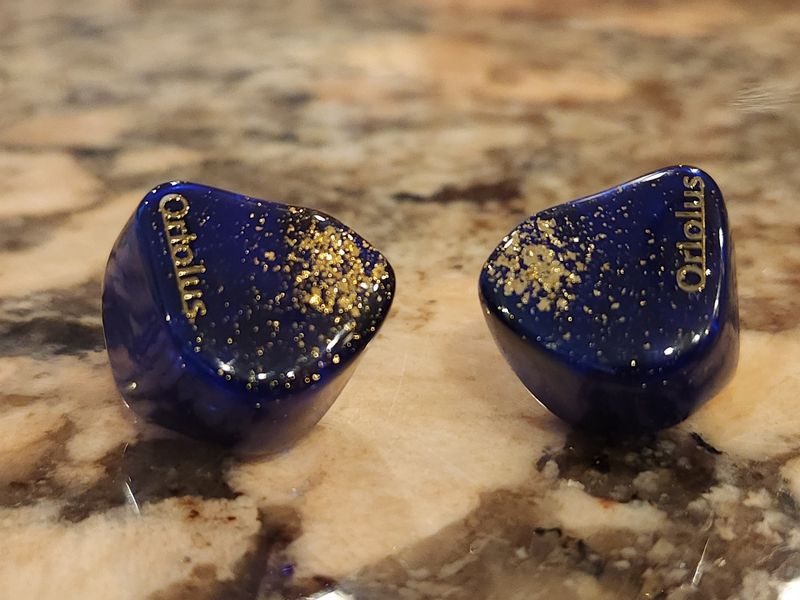
The comparison was done using Monachaa with a stock cable, stock eartips, and LPGT source; and as always, volume matched in every comparison.
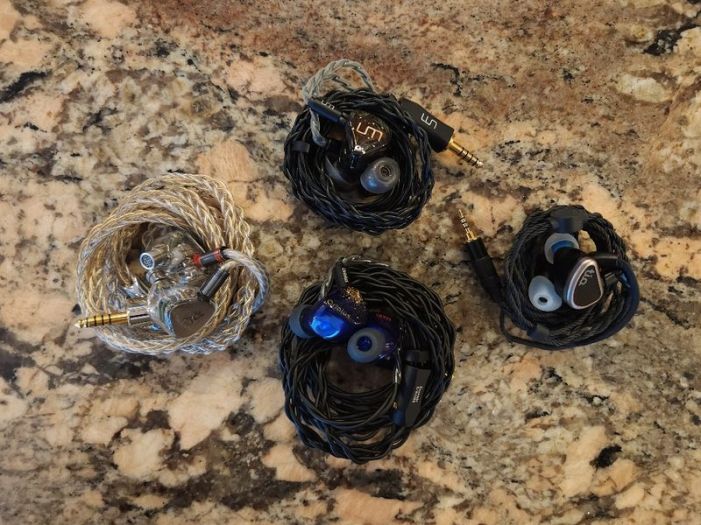
Monachaa vs Elysian Acoustic Labs Anni 2023 – When it comes to the overall tuning, these IEMs have a number of things in common, but there are some important differences to note as well. While Monachaa needs a few extra clicks of volume to drive them properly, Anni needs even more on top of it. When it comes to the bass, both have a deep sub-bass rumble, but the perception of Monachaa sub-bass has more weight and texture which you can actually “feel”. Also, Anni has a stronger mid-bass punch, but it is more relaxed and with slower attack and longer decay of notes, while Monachaa mid-bass punch is faster, tighter, and leaner. As a result, you can hear more contrast in Monachaa between sub-bass and mid-bass, while Anni’s bass tuning blends in more. The mids have a different presentation where Anni lower mids have more body while Monachaa lower mids are leaner in comparison. Both have clean and detailed upper mids, though Anni has them a bit more forward, especially noticeable in vocals. Both have extended crisp detailed treble, with Anni having just a little more airiness. With Anni having slightly more forward upper mids, the treble sounds a bit smoother in comparison to Monachaa having a crisper treble. Neither one has harsh or fatigue presentation of treble. Also, both share a very similar technical performance in terms of layering/separation and dynamics, but Monachaa soundstage expansion is wider, and imaging is more holographic. In general, and while not being exactly night’n’day, Anni will give you a bit smoother performance while Monachaa will give you more micro-detailed, tighter, leaner performance. But what surprised me the most, Monachaa achieved this tuning using quad DDs while Anni uses DD for bass and the rest are BA and EST drivers.
Monachaa vs FirAudio E12 – Another comparison which came to my mind while listening to Monachaa was a recently released E12. Its single DD performance has a more V-shaped sound tuning in comparison to mildly V-shaped tuning of Monachaa due to a stronger and more elevated impact of E12 mid-bass and more forward and brighter upper mids of E12. In comparison, Monachaa has a more polite mid-bass punch and less forward and more natural sounding upper mids. It’s an interesting observation suggesting that you can never assume about IEM performance based on its driver design. Since DD design of E12 sounds almost like a hybrid tuning with a very powerful DD bass and colder BA-quality mids and treble. In contrast to that, quad-DD design of Monachaa keeps the textured tonality of the sound throughout the entire span of the Frequency Response. Even its (Monachaa) more revealing mids, due to leaner body of lower mids, still sound natural with its analog texture which you could only expect from DD driver performance. Both have a soundstage with a similar depth/height and imaging, while Monachaa width spreads even wider. E12 width is pretty wide but has a perception of being wrapped around your head instead of going wider left/right (just in a relative comparison).
Monachaa vs 64 Audio Trio – Another comparison that piqued my interest was between V-shaped tuned Trio and Monachaa. Right away you spot a difference between fuller body tonality of Trio vs leaner body tuning of Monachaa. Trio bass is more elevated, also with a deep sub-bass rumble but having a more rounded mid-bass punch. In comparison, Monachaa bass has a bit deeper and more extended sub-bass rumble and a tighter, more articulate, faster mid-bass punch with better control. Fuller body lower mids is probably the biggest difference between the tuning of these IEMs which affects Trio’s retrieval of details, as well as layering and separation of the sounds. In contrast, Monachaa mids have a noticeably better retrieval of details and improved layering and separations of the sounds, making Trio to sound a bit more compressed in comparison. What is interesting, before burn in Monachaa mid-treble sounded closer to Trio, being more raw and a little brighter/peakier. After the burn in, Monachaa treble sounds more refined, more natural, less glaring. Their soundstage is very similar, expanded in all 3 directions, but imaging is more holographic in Monachaa.
Monachaa vs UM Mest MK2 – Right away you can hear the difference in sound signature where Monachaa is V-shaped due to its leaner lower mids and less aggressive mid-bass, while Mest MK2 is U-shaped since the mids are pulled back, paving the way for more treble emphasis. Also, the soundstage width spreads just a bit wider in Monachaa. Starting with the bass, while there is more contrast between sub-bass rumble and mid-bass punch in Monachaa, MK2 sub-bass rumble is less elevated and blends in better with its mid-bass. They both have leaner lower mids which trims the body/fullness of the sound, but it differs in upper mids where Monachaa has a more forward presentations while MK2 keeps those pushed back and on a leaner side. Monachaa actually has a better treble extension, but its treble sounds more natural in comparison to a brighter treble in MK2. Mest MK2 treble has more emphasis due to pulled back upper mids, making its treble brighter. Monachaa treble is more revealing, but with a more natural presentation. Both have a similar technical performance when it comes to layering and separation and dynamics expansion.
Source Pair up.
In each source pair-up I was using a stock cable and stock eartips. With an impedance of 24ohms and sensitivity of 111dB, Monachaa is not that hard to drive from a portable source, but it does require a bit more power, on average about 8-10 more volume clicks in comparison to other IEMs. And I found the tuning to be VERY source dependent. Here are my brief listening notes, focusing on changes related to signature and general tonality, without going into too many intimate details.
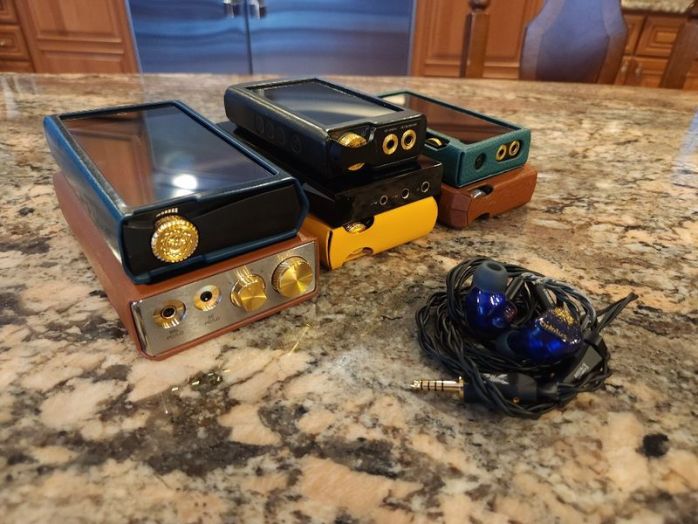
Lotoo LPGT – this is my baseline tuning with a clear revealing natural tonality, mildly V-shaped sound sig, deep analog sub-bass extension, punchy fast mid-bass, leaner lower mids and clean and clear, detailed upper mids, along with a crystal-clear non-fatigue treble.
L&P P6 Pro – I hear more textured bass, actually sub-bass sounds a bit more elevated and mid-bass scales up a bit as well. Mids are more forward with a touch more warmth in lower mids, and as a result the sound sig is closer to balanced here. Treble is crystal clear, non-fatigue, just like in LPGT but with a touch more air. Relative to LPGT, the layering slightly improved, perhaps due to more airiness between the layers, and the overall macro-dynamics being more expanded.
Hiby R8ii (turbo on, med gain, Class AB) – to my surprise this pair up sounded nearly the same as with P6 Pro, maybe with P6 Pro having just a touch more airiness. The bass has a deep textured extension along with a stronger mid-bass punch. Mids are as forward with a touch more warmth and more natural tonality, pushing the sound sig closer to balanced. With treble, I had to play with Gain and Class A/AB to find the optimal setting, settling on med Gain and Class AB. Pushing it to high gain made treble brighter. P6 Pro and R8ii pair ups were my favorite with Monachaa.
Hiby RS8 – similar to LPGT, just adds a little more body to lower mids.
A&K SP3000 – the bass scales up with more weight, especially the sub-bass rumble, and the treble sounds crisper and brighter, gaining a bit more zing. As a result, the signature has a deeper U-shaped tuning.
Cayin N7 – bass and mids are similar to LPGT, but to my big surprise I hear more elevated treble response, making the sound brighter, more analytical, shifting the sound sig to a deeper U-shaped tuning.
Cayin N8ii (tube, Class A) – very similar to N7, having leaner mids and brighter treble which shifted the sound tuning to a deeper U-shaped.
iBasso DX320Max Ti – in this pair up I hear Monachaa to have the deepest U-shaped signature where mids/vocals are pushed all the way to the back and most of the sound focus is on deep elevated sub-bass rumble and crisp treble.
With external amp.
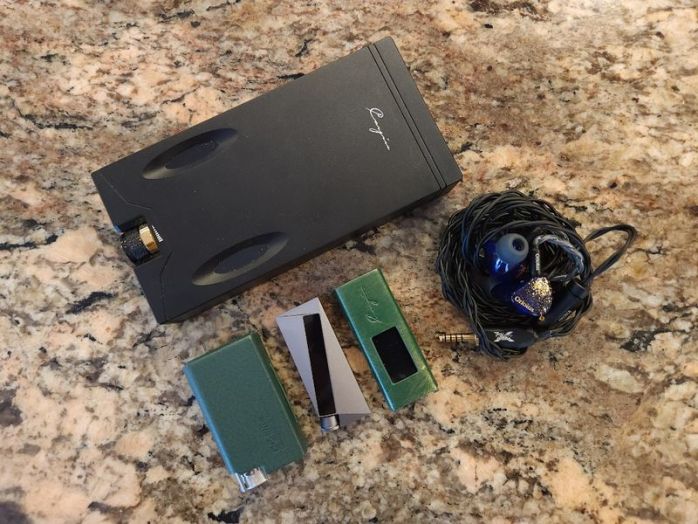
Lotoo LPGT + Cayin C9 (low gain, Tube, Class AB) – the sound still has a very mild V-shaped tuning signature, but with extra power of C9 the tuning does scale up to a more expanded sound (in both soundstage and dynamics), gaining more body in mids so it doesn’t sound as lean, and keeping the treble crystal clear, airy, and still quite natural. The tonality was not too far off from my favorite pair ups with R8ii and P6 Pro, but the sound gained extra dimension with improvement in imaging, bringing your sound listening experience even closer to full size headphones.
With usb-dac dongles.
iBasso DC Elite – pushed the volume a bit higher to 12 o’clock (S22 digital volume was at 85), the sound performance is very similar to R8ii and P6 Pro, exhibiting a huge soundstage expansion, very precise layering and separation of the sounds, and the sound sig being closer to balanced, though mids are a little more transparent in comparison to R8ii/P6Pro which makes the sound a bit more revealing with DC Elite.
Cayin RU7 – to my surprise, I actually enjoyed this pair up more than with N7 since the sound had more body, treble was not as elevated, and the bass had a bit more rumble.
L&P W4 – also a rather good pair up. The sound sig is still mildly V-shaped. Bass has a nice analog texture with slightly more weight, scaling up in quantity, mids were smoother, gaining more natural body, and treble was a bit smoother. The soundstage wasn’t as holographic, a little more intimate in comparison to other pair ups, but in terms of tonality this was a very good pair up.
Conclusion.
As I mentioned before, the Bird did raise the bar for many other manufacturers. It also raised the bar for its own follow up releases, especially when people look at the price tag while trying to figure out where the new IEM fits relative to other Oriolus releases. And speaking of the price tag, you have to keep in mind that unlike the Bird which came bundled with a premium PWA 1960 4wire cable (sold by itself for $2k), Monachaa IEMs are priced at $2k and come with less fancy PWA cable.
Monachaa does require a long burn-in time for the sound to settle in, and the sound itself was quite dependent on a source pair up and eartips. But once you find a perfect combo of these variables, you will be rewarded with a hi-res tuning of a mildly V-shaped signature and a clear, detailed, natural tonality that makes you feel like listening to full size headphones. I didn’t know what to expect from a quad-DD tuning, and was pleased to find Monachaa with its deep textured bass, neutral detailed mids, and clear airy treble being able to keep up with any track I threw at it.
I enjoyed this latest Oriolus bird because of its natural detailed tuning, and also appreciated the design due to building blocks used to accomplish it. In today’s latest IEM releases, we are more used to multi-hybrid designs with DD, BA, EST, and BCD drivers. Here, while trying to stand out from the crowd, Oriolus designed and tuned their latest Monachaa IEMs using a combination of 4 different DD drivers working in a unison inside of a rather compact shell. Now, if they can only borrow that DD bass driver from Monachaa and make it work with the Bird 😉

 Twister6 Reviews