
Sound Analysis.
I analyzed VE10 sound performance paired up with a neutral LPGT source while playing a variety of test tracks, such as Agnes Obel “The curse”, Sandro Cavazza “So much better” (Avicii remix), C-Bool “Never go away”, Ed Sheeran “Shape of you”, Alan Walker “Darkside”, Galantis “Hunter”, Iggy Azalea “Black widow”, Indila “Boite en argent”, Dua Lipa “Love again”, Counting Crows “Big yellow taxi”, Bob Marley “Jamming”, David Elias “Vision of her”, and Michael Jackson “Dirty Diana”. By force of habit, I had VE10 on burn in for at least 100hrs before I started to collect my impressions.
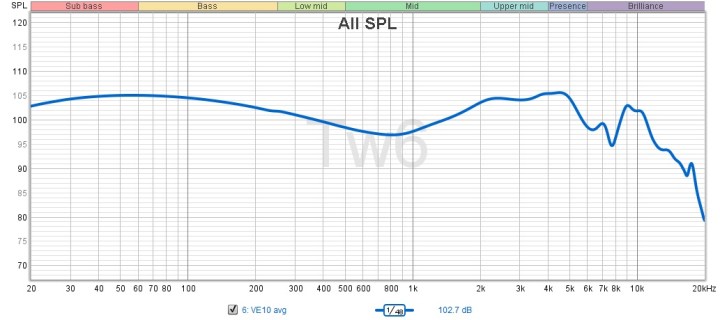
VE10 has a balanced sound signature with a fuller body natural detailed tonality. Unlike some other smoother tuned IEMs, VE was able to achieve the organic tuning with plenty of natural resolution without muddying the sound or compromising the retrieval of details. The tuning has a fuller body sound with a punchy dynamic bass, organic detailed mids with a more forward presentation, and a natural resolving treble. A very important point here, the tuning is naturally resolving rather than revealing. And I found all 10 drivers to work together in a perfect unison of a smooth organic harmony.
The bass has a deep, analog low end extension with a moderately elevated rumble and a rounded mid-bass punch. The DD driver does its magic, giving the bass its analog texture with a noticeable (but not exaggerated) fullness and articulation at the same time. The bass notes have average attack and decay speed, giving the bass a decent control. I actually hear a little more mid-bass punch than sub-bass rumble, but overall bass has a linear tuning. Also, the mid-bass blends in nicely with lower mids while still maintaining a good control without spillage or muddiness.
Lower mids are definitely north of neutral, with natural fuller body musical tonality. When I first started listening to VE10, I even had to go back and double check if VE used more than one DD driver because it sounded like a multi-DD config. It is hard to believe they were able to give mids this level of organic musicality and natural resolution using only BAs (in mids), though I probably shouldn’t be too surprised considering similar results in tuning of their PHX and AURA IEMs. Upper mids have a proper pinna gain, with more forward presentation and excellent level of natural retrieval of details. For a smoother tuned IEM, it was impressive to hear so much clarity in sound even without additional treble sparkle, though lower treble peak around 5kHz does help in here. Typically, the pinna gain is found around 2k-4kHz region, while VE extended it from 2kHz to 5kHz, including lower treble presence to improve the resolution and the retrieval of details without the need for mid-treble boost.
The treble tuning of VE10 has a moderate amount of sparkle, though doesn’t have as much air in its extension. But even while keeping the treble tuning more natural and musical, VE was still able to maintain a pretty good level of natural retrieval of details by blending in and extending upper mids into the lower treble region to make the sound more organic and still quite resolving. I threw at these IEMs a number of my sibilant test tracks, and VE10 handled everything without an ounce of harshness. If you are a treble-head or prioritize technicality over musicality, these might not suit you. But if you want a natural clear treble extension without losing the resolution in mids, VE10 does it very well.
From a technical perspective, despite of having less airiness between the layers of the sound, VE10 is still able to have a precise layering and separation of instruments and vocals to easily distinguish everything in the mix without being congested or veiled. Then, when it comes to the soundstage, I hear above the average width, maybe not the widest but definitely having more width than depth to form the oval-shape expansion. This brings you closer to the performer on stage and gives the sound a more intimate feeling. But unlike other IEMs striving for the intimate soundstage feeling which brings sounds closer to the center, VE10 was able to achieve nearly 3D level of imaging with a very precise and accurate sound placement.
In my opinion, the unique nature of VE10 tuning makes it suitable for audiophiles, musicians, and casual listeners who enjoy natural detailed non-fatigue sound with any genre of music.
Eartips Selection.
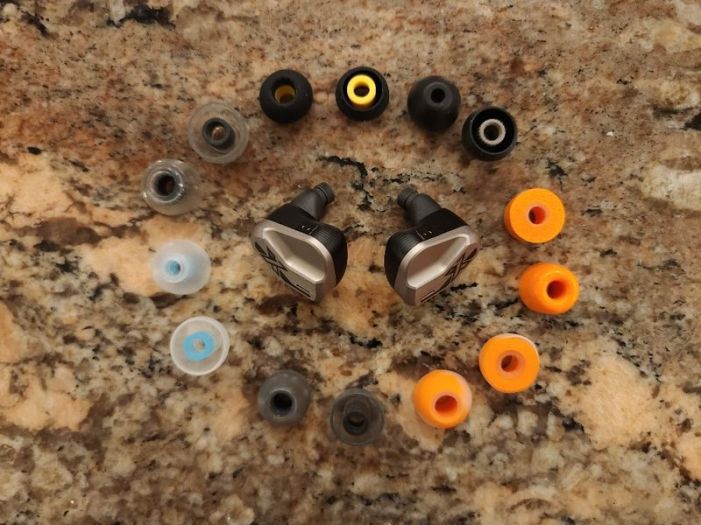
The selection of eartips is crucial to any universal in-ear monitors and will affect the sound, especially the bass impact depending on the seal. Due to a large opening of my earcanals, I usually go for the largest size eartips to get a better seal. Also, please keep in mind, eartips impressions are subjective and will be based on anatomy of your ears.
Azla ORGIN (stock) – a balanced sound signature with a fuller body natural detailed tonality. The soundstage has more width than depth, yielding a more intimate presentation of the sound. This is my baseline sound reference as I described it in Sound Analysis section.
SpinFit CP145 (stock) – the sound is very similar to ORGIN, but relative to my ears, the fit is a bit less secure due to an olive-shaped cap of this SpinFit model.
SpinFit CP100+ – the sound is very similar to ORGIN, but relative to my ears the comfort is improved due to flexible nature of SpinFit design which adjusts to your earcanal shape. Also, I do hear a touch more sparkle at the top.
SpinFit W1 – a slightly more relaxed bass weight.
Eletech Baroque – a little fuller body in lower mids.
Final Type-E – a bit narrower soundstage and more sparkle in treble.
Azla Crystal – a touch more sparkle in treble.
Symbio F – brings mids a little more forward, with improved retrieval of details and a bit more sparkle in treble.
Symbio W – improves the retrieval of details in mids and also improves soundstage depth, creating a more rounded soundstage expansion.
Relative to the anatomy of my ears, SpinFit CP100+ and Symbio W were my favorite eartips in this pair up, both from a tonality and a comfort perspective.
Cable pair up.
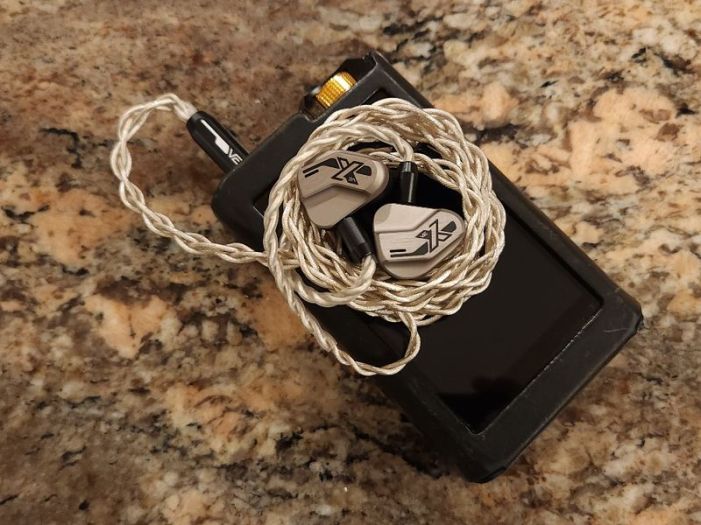
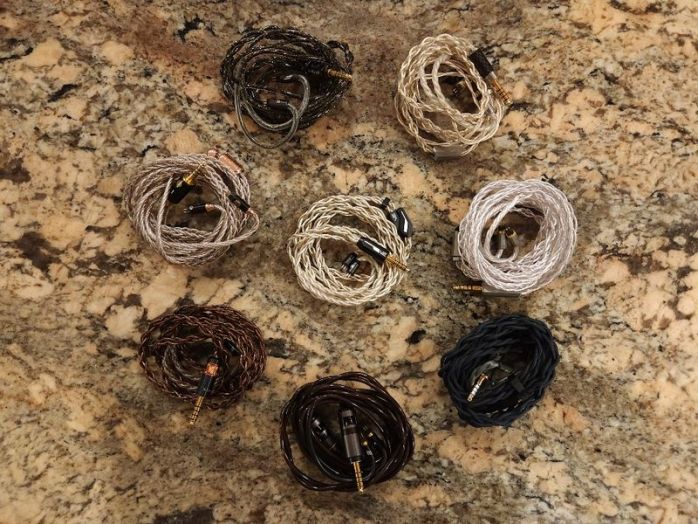
I’m aware that some people don’t believe in cables and have very strong opinion about it. It’s not my intent to change those minds. Instead, I’m just sharing what I hear during my testing. What makes sense to me, a metal wire is a material with physical properties of resistivity, conductivity, purity, and unique geometry, all of which put together act as a filter between your source and headphones. Variations of these physical properties can affect the conductivity of analog signal, resulting in a sound change, from a subtle to a more noticeable level. If the talk about cables upsets you, please skip this section. Otherwise, enjoy these short impressions.
PlusSound PPH8 – to my big surprise, the soundstage got a bit narrower here; mids have a bit more transparency, less coloring.
EA Centurion – the soundstage gained a bit more depth, and lower mids are a touch more neutral.
LL Venom – the soundstage gained more depth, expanding more out of my head, and mids are a bit more transparent, less organic.
EA Cleo II octa – similar to stock cable, just a touch smoother, losing some of the resolution.
Eletech Ode of Laura – the soundstage does expand wider and deeper, not by a lot, but definitely an improvement over the stock cable. The bass is tighter and more articulate, the mids are still natural and organic but with improved retrieval of details, and the treble is also a bit crisper. Copper does VE10 good!
EA Code 23 – very similar improvements as I hear with Laura. No surprises here since C23 is a copper cable. The soundstage expands in depth, less in width. The bass is tighter, faster, and more articulate, and mids have improvement in retrieval of details. The ergonomics of a thicker C23 is not exactly ideal here, but this is a solid pair up.
PWA FT – my second favorite cable pair up after Laura. The soundstage has the improvement in both the width and the depth. The tonality is still natural, organic, but there is also an improvement in retrieval of details. Laura has a little more transparency, while FT is smoother, but both are good upgrade cables that work well with VE10.
In case of VE10, its stock cable does a great job, but if you have other quality copper cables, go ahead, give it a try. Other wire materials don’t seem to work as well with VE10, but copper does, and I found Laura to have the best pair up synergy to the point where I’m considering keeping it permanently with VE10, though the color match in this pair up is kind off.

 Twister6 Reviews
Would love to see a fei wan/jewel comparison in there.
LikeLike
just replied to you in Messenger with a comparison graph 🙂
LikeLike
Wish they would have taken the HALC driver they spent all that R&D on and used it for the midrange. The Elysium has the best vocals of any IEM I’ve ever heard, nothing comes close. I sense a new flagship in a year or 2 with all the best qualities of VE10 with the HALC midrange driver, no way they abandon that driver.
LikeLike
For the source pair up, how about VE 10 goes with SP3000SS? Thanks
LikeLike
Don’t have SP3000 with me now, it was on loan for review. But from my experience with SP3k when I was using it with other iems, I think VE10 bass might be a bit softer due to DD bass driver.
LikeLike