

Sound Analysis.
All listening was done with the Lotoo PAW Gold Touch, connected (wired) to my MacBook Pro for streaming Tidal.
–Andromeda ‘Emerald Sea’–
I am not sure what I expected the ‘Emerald Sea’ to sound like, despite all the time I have had to read people’s comments on how much they loved the various iterations of the Andromeda. However, continuing from the cliff hanger in the preamble, I can happily state that the ‘Emerald Sea’ immediately resonated with me. Generally speaking, I find that I have to get used to the signature of IEMs I review, but not here. From the first moment I felt immersed in my music and enjoyed it thoroughly.

I picked the music to listen to randomly and ended up with Agnes Obel’s album ‘Aventine’ for starters. This album is by itself quite intimate sounding and with the Andromeda it felt warm and enveloping. Despite a fairly large soundstage, the music was conveyed with a great sense of intimacy. Agnes was whispering the words in my ear. This is what the Andromeda do really well, envelop the listener in the music and make the experience especially engaging. How do the Andromeda ‘Emerald Sea’ pull this off?
The ‘Emerald Sea’ are warm IEMs (comparison to the 2020 Andromeda below) with a notable lift in the bass and lower mids. Such a lift often results in veiled mids and a lack of transparency. The ‘Emerald Sea’ avoid this by achieving an unexpected level of clarity in their presentation. The image the ‘Emerald Sea’ construct is spacious with excellent separation and incredibly good positioning within a holographic stage. This makes the music feel comfortable in the way it envelops you, combined with a very stable and precise image that lets you follow everything that is going on with ease. They are not detail monsters in any way, but the balance between comfort (or “forgiving”) and precision is such that you never feel like anything is missing.
The Andromeda ‘Emerald Sea’ strike me as “music lover” IEMs, meant for those of us who prioritize musical enjoyment over technical prowess. They certainly do not forgo technical performance, it is just not pushed as much forward as Campfire Audio could have done. I personally gravitate to these types of IEMs because I am convincingly in the “music lover” audiophile camp. For those of us who prefer more analytic IEMs that, like surgeon’s tools, help you dissect every little nuance of the music, I would advice to keep reading as we check out Campfire Audio’s latest iteration of their Solaris.
–Solaris ‘Stellar Horizon’–
The ‘Stellar Horizon’ have been a very interesting introduction to Campfire Audio’s Solaris IEMs for me, which I think is in part because of the significant improvements over the 2020 iteration (more on that below). Accurate or not, I have (up to now) always associated the Solaris with youthful exuberance. This was probably because of my generalised perception of hybrid IEMs, with a dynamic driver for the bass, being tuned more towards the fun end of the spectrum. While the 2020 Solaris might have that thumping bass, the ‘Stellar Horizon’ are a different proposition altogether.

What struck me most about the ‘Stellar Horizon’ is the overall balanced tuning with a clear (pun intended) emphasis on detail retrieval. The ‘Stellar Horizon’ have a neutral tuning that still maintains an accurate timbre. The stage is very large and airy, and much like with the Andromeda above, Campfire Audio have managed to achieve very clear and stable positioning. The notes are a bit leaner, which adds to the sense of space and airiness.
The bass is exceptionally done. It is capable of reaching very deep, but is well controlled and articulate. With classical music I find instruments such as the tympani positioned very far back (i.e., a very deep stage) while I can feel its impact and texture within the presentation as a whole. This is a good indication of a powerful, well-controlled and transparent bass. The mids are pretty good with an accurate timbre, but what is most noticeable is how well the vocals are done. These are particularly strong and present themselves firmly within the music. Mind you, they are not especially forward, just very clearly defined within the music. Treble is well extended and has a great sparkle to it, without becoming offensive.
Overall, the ‘Stellar Horizon’ are very balanced IEMs capable of excellent detail retrieval and, importantly, of conveying the emotion of the music well. This results in IEMs that work like a surgeon’s toolset, allowing you to dissect every detail of the music, without losing emotion or musicality. If you prefer more analytical IEMs, then the Solaris ‘Stellar Horizon’ might suit your preferences better than the Andromeda ‘Emerald Sea’.
Comparisons.
–Andromeda ‘Emerald Sea’ vs Andromeda 2020–
The ‘Emerald Sea’ is “a top-to-bottom revision” of the Andromeda that incorporates Knowles’ new dual-diaphragm balanced armature drivers into completely re-engineered shells. Indeed, Campfire Audio states that the ‘Emerald Sea’ is “a special iteration of Andromeda that stands alone“.
In terms of the shell design, the ‘Emerald Sea’ have a smoother design that steps away slightly from the facetted, industrial design that has been so characteristic of the Andromeda, as well as some other Campfire Audio IEMs. It is still facetted and the DNA is clearly there, just not so hard around the edges. That said, I actually prefer the design of the 2020 version. Purely a personal preference for the aesthetics, as I do get a much better fit with the ‘Emerald Sea’.

In terms of sound, it is immediately clear what Campfire Audio mean when they refer to the ‘Emerald Sea’ as an iteration that stands alone. Much like the shell design, the tuning has the Andromeda DNA, but opts for a smoother approach. The ‘Emerald Sea’ offer a warmer tuning, where by comparison the 2020 Andromeda feel more balanced. The ‘Emerald Sea’ have a more present bass that digs deeper, the notes feel fuller. The 2020 Andromeda has by comparison a leaner note size with a slightly clearer and crisper presentation that results in an overall more balanced feel. While I would call the 2020 Andromeda natural, the ‘Emerald Sea’ move more into the organic.
The Andromeda DNA can be found back in the presentation. Both are holographic, with a large stage that envelops you in the music. Positioning, separation and coherency are excellent, further improving your immersion in the music. This is also where I think the most important difference can be found between these two iterations. While the ‘Emerald Sea’ extend the stage beyond the dimensions of the 2020 Andromeda, they still manage to bring the listener closer to the music. There is a better connection (for me at least). The holographic presentation is stronger and provides a more immersive feeling. While listening to Racoon’s ‘Nickel for Goodbye’, I found the 2020 Andromeda musical and enjoyable, but with the ‘Emerald Sea’ I found myself getting caught up by the tune and bouncing along in my chair. That is what I mean with creating a more immersive experience, or a closer connection to the music. It is not as balanced as with the 2020 Andromeda and while listening to Paolo Nutini’s ‘New Shoes’ I have to admit that, objectively speaking, the ‘Emerald Sea’ might have too much bass presence by comparison, but it is just so incredibly infectious that I don’t care. To be honest, I have never cared for the theoretical “ideal FR graph”-type of reasoning. I am all about the music and in that regard the ‘Emerald Sea’ provide a richer, more musical listening experience.
The experience of listening to the music is still a matter of personal preference and as such, the tuning changes might still lead some people to prefer the earlier iteration. In terms of technical performance, however, the ‘Emerald Sea’ improve significantly upon the 2020 Andromeda. Ultimately, for pure musical enjoyment, I think that most people will enjoy the ‘Emerald Sea’ more.
–Solaris ‘Stellar Horizon’ vs Solaris 2020–
As with the Andromeda ‘Emerald Sea’, the Solaris ‘Stellar Horizon’ represents a significant update to the Solaris compared to the 2020 iteration. Internally there are changes and the design of the shells looks completely different. The new brushed stainless steel with gold inlay looks much more refined than the glossy black finish of the 2020 Solaris. Although you can’t judge a book by its cover, the more refined design in this case does reflect what we can expect from the sound as well. In terms of fit, I find that the newer version gives me a better fit than the older one.
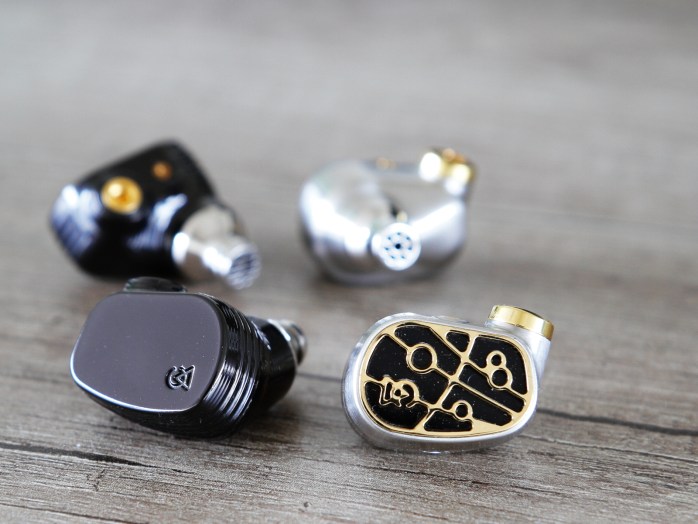
Where the differences between the Andromeda ‘Emerald Sea’ and 2020 were easy to define, I find that between the Solaris ‘Stellar Horizon’ and 2020 Solaris, the differences are both clear and yet more nuanced at the same time. Certainly, I think that the ‘Stellar Horizon’ are a significant step up in technical performance and I suspect that this step has been key to allowing Campfire Audio to refine the tuning in the way that they have done. I am not sure if this is due to the new radial venting for the dynamic driver and the new Knowles dual-diaphragm armature drivers, but the ‘Stellar Horizon’ come across as significantly more mature.
Much like with the two Andromeda iterations above, the Solaris DNA is present in both. Both feel technical, detailed and clear. There is a crystalline quality to the sound. Campfire Audio uses that term, “crystalline”, and I think it is very accurate to describe both Solaris iterations. The stage is large and airy with lots of details all around. Note size is fairly lean, with a neutral tone that is still accurate.
What about the differences then? Here is where the ‘Stellar Horizon’ pull away from the 2020 Solaris. The 2020 iteration has considerably more bass presence and they might initially come across as more forgiving, but upon closer inspection, I actually find the ‘Stellar Horizon’ more forgiving. The key here is the quality of the sound. The ‘Stellar Horizon’ pull back the bass and have a slightly leaner note size, while managing to achieve a more accurate tone that is both clear and smooth. Vocals are a great illustration of this. Listening back-to-back, the 2020 Solaris have okay vocals, whereas the ‘Stellar Horizon’ have strong vocals that convey tangible emotions. In a sense the Solaris move in the opposite direction from the Andromeda by reducing the warmth in the tuning. They then go on to prove that warmth is not synonymous with being forgiving or emotional by conveying more tangible emotions in such a crystalline manner.
This is what I meant earlier on when I said that I think the technical improvements were key to allowing this tuning. Creating a very clear sound with such a “crystalline” quality, while maintaining an accurate tonality and a forgiving nature, is quite the technical feat. It is what sets the ‘Stellar Horizon’ apart from the 2020 Solaris. The ‘Stellar Horizon’ are simply a much more mature expression of that Solaris DNA.
–Andromeda ‘Emerald Sea’ vs Solaris ‘Stellar Horizon’–
After comparing the “old” and the “new”, let’s have a look at comparing the latest versions. What do the Andromeda ‘Emerald Sea’ and the Solaris ‘Stellar Horizon’ have to offer comparatively?
The build quality with both is very similar and feels extremely durable, while the designs do differ and thus offer a different fit. For me personally, the Andromeda had an excellent fit and were very comfortable, while the Solaris were comfortable, but not ideal in their fit. I expect that experimenting with various sizes and types of tips might improve the fit beyond what I found now (I stuck with the same Final E-type tips to make the comparisons as consistent as possible).
In terms of sound, I think both are very interesting in their own right and perform very well in terms of technicalities. The Andromeda will give you a warm and immersive experience, while the Solaris will allow you to hear every last detail with crystal clarity. If we ignore the difference in price point for the moment, then the choice here is more about personal preferences and how you like to enjoy your music.
With both the Andromeda and the Solaris, musicality is great and they convey tangible emotions. There is some difference though in how well they do that for various types of music. Because the Andromeda have more of a mid-bass kick to them, I find they work great with genres such as rock, while the Solaris’ ability to extract every last detail is great with classical music. The differences here are not huge, but I did find myself gravitating to one or the other depending on the music I was listening to.
The Solaris offer a more expansive stage with a leaner note size, while maintaining accurate timbre and positioning. These aspects also benefit classical music. By comparison, the Andromeda have a lusher notes and more organic timbre, while retrieving fewer details. That makes classical music enjoyable enough, but the Solaris clearly perform better at it. With vocals the Solaris again perform better by presenting clearer and stronger vocals that have more presence. What might be missed is that while the Andromeda have bass that is more present and has a nice mid-bass kick, the Solaris’ bass digs deeper and has more texture and transparency.
Although it might seem that the Solaris have a comfortable lead over the Andromeda, they are of course considerably more expensive. More importantly, if details are not that important to you and you enjoy a warm and comfortable sound that nonetheless offers good clarity, the Andromeda might well be hard to beat. The experience of listening to music with the Andromeda is thoroughly immersive and enjoyable, while the Solaris always have a slightly clinical feel to them by comparison. That is actually the main reason why I personally, prefer the Andromeda. In that sense, I think that by today’s market standards, the Andromeda offer excellent value.

Conclusions.
With the Andromeda ‘Emerald Sea’ and the Solaris ‘Stellar Horizon’, Campfire Audio offers two excellent and complimentary IEMs that are a significant step up from their previous 2020 iterations.
The latest iteration of the Andromeda combines warmth with clarity and excellent imaging, resulting in IEMs that forge a strong connection to the music. The latest iteration of the Solaris on the other hand offer clarity and detail with a more neutral tone, revealing all there is to be revealed in the music. This makes the ‘Emerald Sea’ perfect for those seeking ‘music lover’ IEMs with a high level of engagement, whereas the ‘Stellar Horizon’ offer a more analytical sound without forgoing any of the musicality. The build quality in both cases is superb, as we are used to from Campfire Audio, and the three included cables ensure you can connect to any source you might have.

 Twister6 Reviews