
Sound Analysis.
I analyzed MP145 OG/LE sound performance paired up with P6 Pro and LPGT sources while playing a variety of test tracks, such as Agnes Obel “The Curse”, Sandro Cavazza “So much better” (Avicii remix), C-Bool “Never go away”, Ed Sheeran “Shape of you”, Alan Walker “Darkside”, Galantis “Hunter”, Iggy Azalea “Black widow”, Indila “Boite en argent”, Dua Lipa “Love again”, Counting Crows “Big yellow taxi”, Bob Marley “Jamming”, David Elias “Vision of her”, and Michael Jackson “Dirty Diana”. I had both, MP145 OG and LE versions on burn-in for at least 100hrs before I started to collect my impressions. Also, I was using the stock cable, silver filter, and Symbio W eartips in my sound analysis.
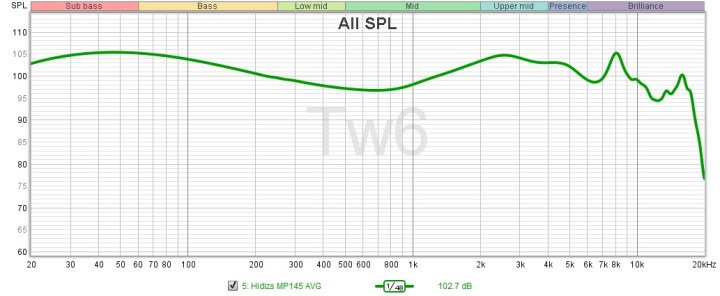
I hear MP145 to have a fast-speed balanced sound signature with a clean, clear, detailed tonality. To my ears, the tonality of their upper frequencies has a strong dependency on eartips selection which affects the presentation of mid-treble. If you enjoy a crystal clear high-res treble enhancement and want a bit more zing, you don’t even have to worry about which eartips you are using. But if you are like me, being sensitive to mid-treble peaks around 8kHz, and would like a more natural treble response without losing the resolution, you will have to spend some time doing tip-rolling to get there. But overall, it’s an impressive tuning for a single PM driver with a hybrid/tribrid-like coherent performance.
The bass is definitely above the neutral quantity with a nice textured sub-bass rumble you can actually feel and even mistake for DD driver performance. I will talk below about filters, but you can definitely lift the weight of the bass and improve its presence by switching to a silver filter and then even further by switching to a copper cable. But even as you scale up the weight, the rumble, and the impact of the bass, it remains tight, fast, articulate, and well-controlled.
Mid-range has neutral lower mids, adding clarity to the sound without any additional body, keeping mids lean, clear, detailed, and well separated from the bass. Upper mids have a proper pinna gain, reassuring vocals to be well-balanced and up-front with plenty of clarity, without too much coloring or harshness, and still keeping them non-fatigue. Mids do maintain a good layering and separation of the sounds.
The treble is crisp and detailed, well extended, adding airiness to the sound. It does pack plenty of energy, the reason I spent more time tip-rolling to find the ideal set of eartips that will take the edge of a mid-treble peak without reducing the resolution of the sound. Symbio W eartips yielded the best pair-up synergy to my ears.
With plenty of clarity and a pretty good treble extension, it’s almost expected to hear a great layering and separation of instruments and vocals, with plenty of air between the layers, and zero congestion of the sounds. The soundstage is very big and expanded, actually expanded in all 3 directions with a very impressive width. The imaging is on a 3D level, where every sound, instrument, and vocal can be accurately pin-pointed in space.
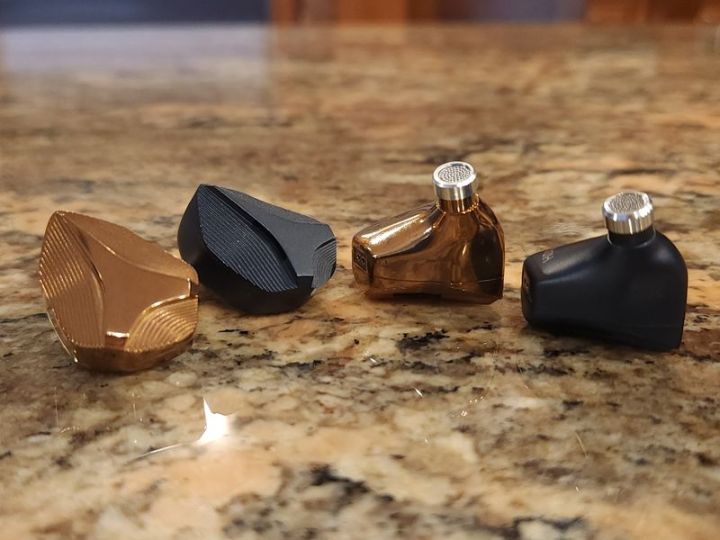
Nozzle Filter comparison (OG and LE)
- Rose filter – wide soundstage, deeper sub-bass, clear detailed mids, crisp energetic treble
- Red filter – wide soundstage, less rumble in sub-bass and slightly more relaxed mid-bass, clear detailed mids, more energetic treble
- Silver filter – wide soundstage, deeper sub-bass with stronger mid-bass, crisp energetic treble
Silver Filter was the one I enjoyed the most.
Eartips Selection.
The selection of eartips is crucial to any universal in-ear monitor and will affect the sound, especially the bass impact depending on the seal. Due to a large opening of my ear canals, I usually go for the largest size eartips to get a better seal. Also, please remember that eartips impressions are subjective and will be based on the anatomy of your ears. The following notes were taken and compared using both the OG and LE version of MP145.
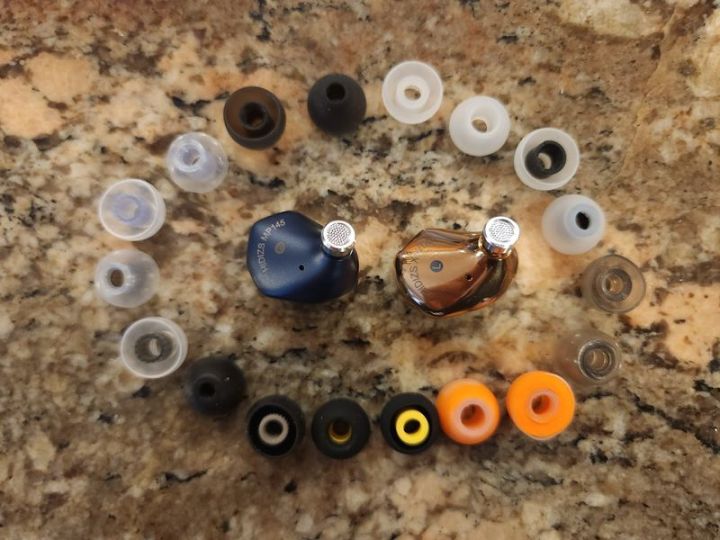
- Stock silicone white/black – wide soundstage, deeper bass, clear mids, crisp energetic treble.
- Stock silicone white – narrower soundstage, less bass, brighter mids/treble.
- Stock silicone black – wide soundstage, deeper bass, revealing mids, harsh treble.
- Azla Crystal and Max, SpinFit W1 and CP100+, Final Type-E, Eletech Baroque – treble was a bit harsh to my ears.
- Symbio F – treble was a bit smoother, but for some reason, the soundstage shrunk a bit.
- Symbio W – the perfect combination of visceral deep bass, clear detailed mids, crisp, and less fatigue treble.
As previously mentioned, Symbio W was my go-to eartips to deliver a more natural tonality in treble.
Cable pair up.
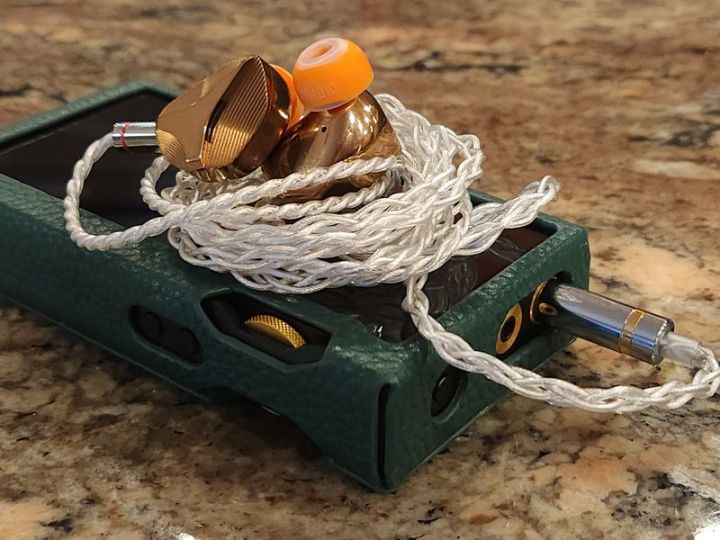
I’m aware that some people don’t believe in cables and strongly oppose them. It’s not my intent to change those minds. Instead, I’m just sharing what I hear during my testing. What makes sense to me, a metal wire is a material with physical properties of resistivity, conductivity, purity, and unique geometry, all of which put together act as a filter between your source and headphones. Variations of these physical properties can affect the conductivity of analog signal, resulting in a sound change, from a subtle to a more noticeable level. If the talk about cables upsets you, please skip this section. Otherwise, enjoy these short impressions.
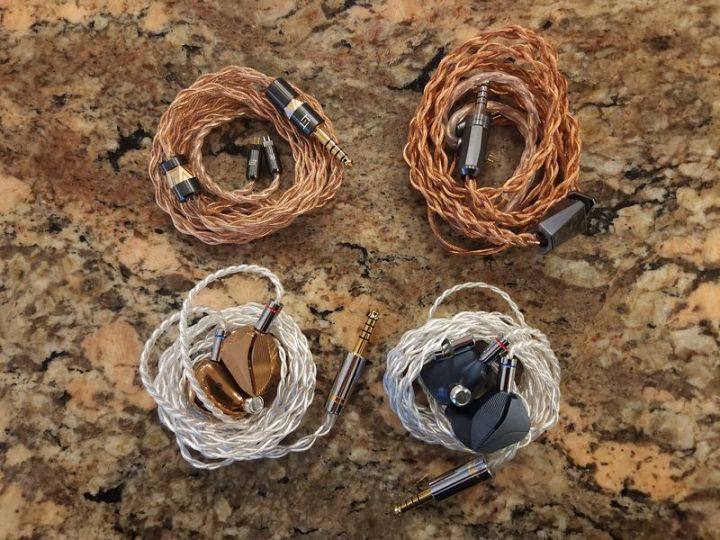
- Eletech Azrael (copper) – more elevated punchier bass, crisper treble, big open soundstage.
- Eletech Cassiel (SPC) – more neutral bass, more forward mids, crisper treble, big open soundstage.
- Ares S 8w (copper) – more elevated punchier bass, natural crisper treble, big open soundstage.
- Ares S 4w (copper) – more elevated punchier bass, natural crisper treble, big open soundstage.
- Cadmus 8w (SPC) – punchy bass, more forward mids, crisper treble, big open soundstage.
- Eros S (pure silver/copper) – more elevated punchier bass, more forward mids, crisper treble, big open soundstage.
Copper wire is the way to go if you want deeper and more textured bass, natural detailed mids, and crisp and still non-fatigue treble with MP145. Then, selecting between Azrael, Ares S, and Ares S 8w is just a matter of finetuning the sound. Ares S (4w and 8w) gives you a bit stronger bass impact, while Azrael and Ares S (4w) give you a bit smoother treble. So, for me, it came down to choosing either Azrael or Ares S (4w) because more natural treble was higher on my priority list, and then choosing if I wanted a bit more or less of the bass impact. With MP145 OG I leaned toward Ares S (4w) and with MP145 LE I preferred Azrael because of the bass impact variation.

 Twister6 Reviews
Thank you for the review. I have a question, is the S9 Pro Plus better than the Tanchijim Space? For the same price, which one would be the better purchase if I want a more monitor-like sound with an extended high-frequency range?
LikeLike
Sorry, I’m not familiar with Tanchijim Space dongle.
LikeLike
Great detailed review! Q: have you tried Hidizs MS5-4.4-RC Upgrade Cable (8-Strand 26AWG Single Crystal Copper Silver-Plated Wire Core)? Your recommended cables are great but $$$ the Hidizs is only $70. thanks.
LikeLike
Wasn’t aware of that cable. Will keep it in mind. Thanks!
LikeLike
same soundstage on supermoon and mp 145. 🤔 ❓️
I don’t like how mp 145 sound lean not so much texture. I much prefer sound of xelento.
I was thinking to buy supermoon but after reading this review I changed my mind. Is there good set worth buying over xelento? With better bass vocals and soundstage?
I like xelento so much It beats everything I tried hype 10 tea pro and mp 145.
LikeLike
i know you like your xelento 🙂 I reviewed those 8+ years ago, have them somewhere in the box. Back in the days they were OK, right now I don’t know how well they will stack up against many new releases. I even remember trying Xelento 2, and it was just a muddy mess… I’m more familiar with high end IEMs since I don’t test a lot of budget stuff. Under $1k, something like FlipEars Legion or JoMo Nautilus will have a great bass slam, detailed natural mids, and crisp treble. Going up in price of $2k-$4k, you have VE VE10, EE Raven, Forte Ears MacBeth, etc.
LikeLike