

Comparison.
This testing was done using 3T-154 with a stock balanced cable, Xelastec eartips, and DX320Max, D16, and P6 Pro sources, volume matched in every comparison.
3T-154 vs iBasso IT05 – IT05 stretches wider in soundstage expansion. The tuning here is quite different. IT05 has more elevated sub-bass and leaner lower mids which create a bigger contrast between a deeper bass and a thinner upper mids. Also, the IT05 treble has more crunch. In contrast, 3T-154 bass has a more linear tuning with less elevated bass, fuller body mids, more natural presentation of vocals, and less fatigue treble. IT05 has a more “fun” revealing tuning, while 3T-154 has a more “mature” coherent, clean, detailed, natural tuning.
3T-154 vs FirAudio E12 – again single DD contender, but with a different sound tuning. E12 has a V-shaped tuning with a heavy emphasis on sub-bass, upper mids, and mid-treble lift, including rather lean lower mids. The sound is not as balanced or as coherent as 3T-154 where you have a linear tuning between sub- and mid-bass, more neutral and natural tuned lower mids with clean, clear, and detailed upper mids, and smoother and less fatigue treble. Again, E12 falls into a “fun” more revealing tuning, while 3T-154 has a more natural, detailed, coherent tuning.
3T-154 vs Beyerdynamic Xelento – 3T vs 1T, I thought this should be an interesting comparison. They both have a more mid-forward presentation of the sound. When it comes to the bass, Xelento has a bit more weight with a deeper sub-bass rumble and more elevated mid-bass punch, while 3T-154 is more linear and slightly scaled down. Mids have a lot of similarities, perhaps with a bit more weight in Xelento lower mids and more natural tonality in 3T-154 mids/vocals. Treble is probably where I hear the biggest difference since Xelento has a few sibilant peaks while 3T-154 is clear and natural. The difference in their treble also affects their upper mids, giving 3T-154 more natural tonality while Xelento has more revealing tonality.
3T-154 vs Hifiman Svanar – lots of differences in this tuning as well. Svanar bass has a lot more weight, being elevated higher in sub-bass and mid-bass regions while 3T-154 is more neutral in comparison, but also more articulate, faster, and cleaner (3T-154). Svanar mids also have a different presentation, with more bass and thicker tonality due to contrast with more elevated bass. 3T-154 mids are cleaner, more detailed, and more forward. Both have a clear detailed treble, but the Svanar treble is crisper and brighter, while the 3T-154 treble is smoother and more natural. Also, Svanar is harder to drive.
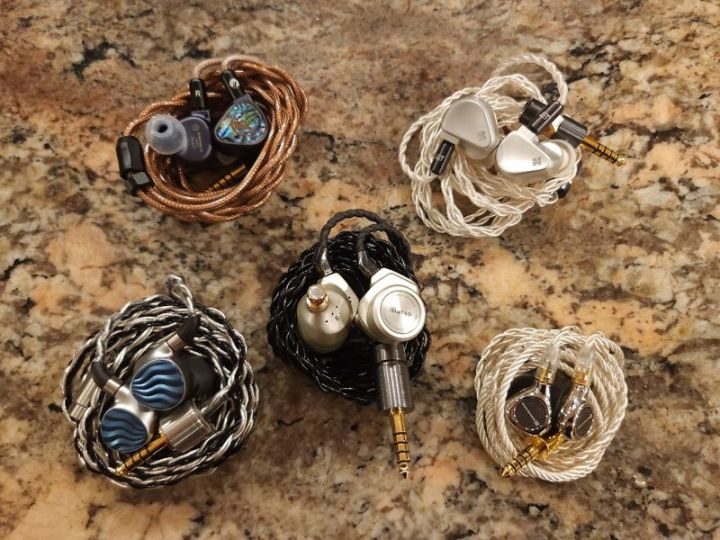
3T-154 vs Beyerdynamic T5p2 – since I already compared it to a smaller “T” version of Xelento, might as well compare it with its big “T” T5p 2nd gen brother. I know the soundstage comparison between IEMs and semi-open headphones is not fair, but tbh, the spherical soundstage expansion was not too far off, the reason why 3T-154 felt to me like wearing full-size headphones. But T5p2 has more holographic imaging with instruments and vocals positioning being on a 3D level. The bass of T5p2 is not elevated, but has a little more rumble in sub-bass, while 3T-154 sub-/mid-bass tuning is more linear and slightly scaled down in quantity. Mids have a different presentation with 3T-154 being more forward, cleaner, and with more natural tonality, while T5p2 is pulled back and a bit nasal in clarity, lacking a bit in pinna gain when compared to 3T-154. Also, the T5p2 treble is brighter and a bit harsher, while the 3T-154 has a cleaner and more natural treble tonality. Both of these do benefit from a more powerful source, but 3T-154 doesn’t need any extra coloring, while T5p2 does benefit from an extra warmer coloring, like adding PB5 into the audio chain.
Source Pair up.
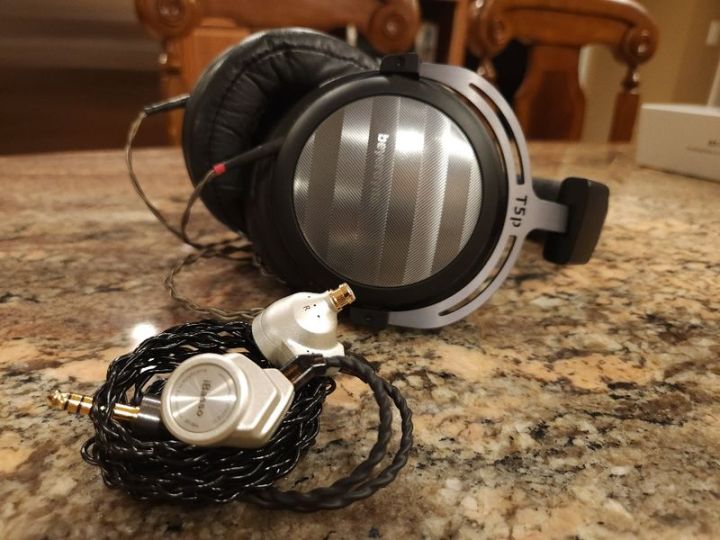
In each source pair-up comparison I was using 3T-154 with a stock balanced cable and Xelastec eartips. Here are my brief listening notes, focusing on changes related to a sound sig and a general tonality without going into too many intimate details.
DX320Max Ti (gain 3, D1 filter, dac vol 95, analog vol 7 clicks) – the bass impact is elevated with a noticeably higher level of sub-bass rumble and stronger mid-bass punch, more sub-bass than mid-bass here. The treble also gains more airiness and becomes a bit crisper. The mids still have a forward presentation but are a bit leaner (due to contrast with the bass) and more micro-detailed (due to the treble enhancement)
DX260 (high gain, D3 filter, 4x FIR) – smoother, natural, neutral tuning, with a laidback bass, forward clear detailed mids, and natural detailed treble. The tuning was a bit too laidback for my liking, especially the bass which lost some of its punch. DX260 pairs up great with neutral and more revealing IEMs, but here it probably needed a little more power to get these IEMs to shine.
DX260 + D16 (coax input, dac vol 95, dac high gain, amp high gain, analog vol 4 clicks) – the bass impact is elevated, not on the same level as 320Max, but higher than DX260 by itself. There is more rumble in the sub-bass and the mid-bass punch is stronger and a bit faster, both sub-bass and mid-bass scaled up by an approximately even amount. Mids still have a more forward presentation, but unlike 320Max, they are more neutral, and not as lean. The treble also gains a bit more air and becomes crisper.
DX260 + D16 (coax in, LO out) + PB5 (low gain analog vol 5 clicks) – relative to DX260/D16 stack, adding PB5 expands the soundstage to a more holographic level. Mid-bass is a bit more elevated, coming through with a stronger and faster punch. Mids still have a forward presentation, but lower mids gain a bit more body, just enough to put them a little north of neutral. Treble has the same amount of airiness, but tonality is a touch more natural. Still crisp and detailed, but just a touch more natural.
DX320 w/AMP14 (high gain, D1 filter) – the soundstage is a little wider in this pair-up. The bass is also above the neutral quantity, with a linear scale-up of sub-bass rumble and mid-bass punch. Not as elevated as I heard it with previous iBasso sources I just covered, but it is higher in quantity in comparison to DX260. Mids here are as forward, but they do gain more body, still clear and detailed, but more natural and fuller in tonality. The treble is clear, and smooth, though not as extended or as airy as with 320Max or D16.
DX240 w/AMP8mk2 (high gain, D1 filter) – smoother, natural, neutral tuning, with a laidback bass, forward clear detailed mids, and natural detailed treble. This pair-up sounds similar to DX260, however, DX260 has a wider soundstage and smoother analog tonality. Just like with DX260, I felt this pair-up was a bit too laidback for my licking.
iBasso DC Elite (D1 filter, analog volume 5 clicks) – big, expanded soundstage, elevated bass, definitely above the neutral level, evenly scaling up the sub-bass rumble and mid-bass punch quantity, giving sub-bass a deeper rumble and mid-bass a stronger and faster impact. Mids still have a forward presentation, with lower mids being slightly above neutral, adding a bit more body to the sound. The upper mids are clear, detailed, and layered. The treble is clear, detailed, airy, and extended as well. I enjoyed the pair-up synergy between DC Elite and 3T-154.
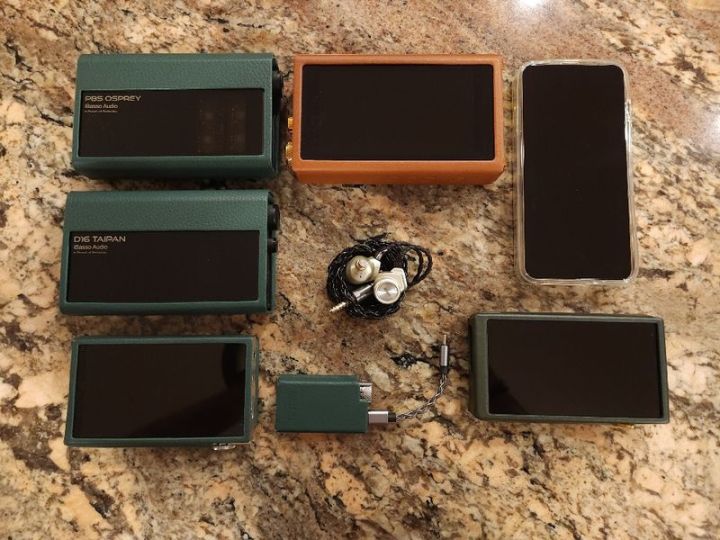
Hiby R8II (high gain, Class A, Turbo on) – the soundstage is noticeably wider. The bass, both sub-bass rumble and mid-bass punch, are more elevated, though I hear mid-bass punch being stronger and more elevated related to sub-bass. Mids remain more forward presentation, but lower mids do have a fuller body, keeping mids still very clear and detailed and adding more natural tonality. The treble is crisp, airy, and natural. Not as expended or airy as 320Max, but I do hear treble enhancement here, more noticeable when switching Turbo on to boost the output voltage.
Cayin N7 (high gain, Class A, DSD512 output) – the bass is more neutral and softer in this pair-up, with more emphasis on sub-bass rumble rather than laidback slower mid-bass punch. Mids do have a forward presentation and fuller body smoother natural detailed tonality. Vocals come through being more organic than in any other pair-up. The treble is smooth and detailed, with a moderate amount of sparkle, just enough to give the sound a natural clarity.
L&P P6 Pro (high gain) – a nicely textured sub-bass rumble with a faster and punchier mid-bass. The bass is not too elevated, a bit north of neutral quantity, but scaled up in quality. Mids do have a forward presentation, very clear and detailed, and with fuller body more natural tonality. The vocals are very smooth and detailed, not exactly warm or organic, but natural, smooth, and very clear. The treble has a natural clear tonality as well with a moderate amount of airiness.
Conclusion.
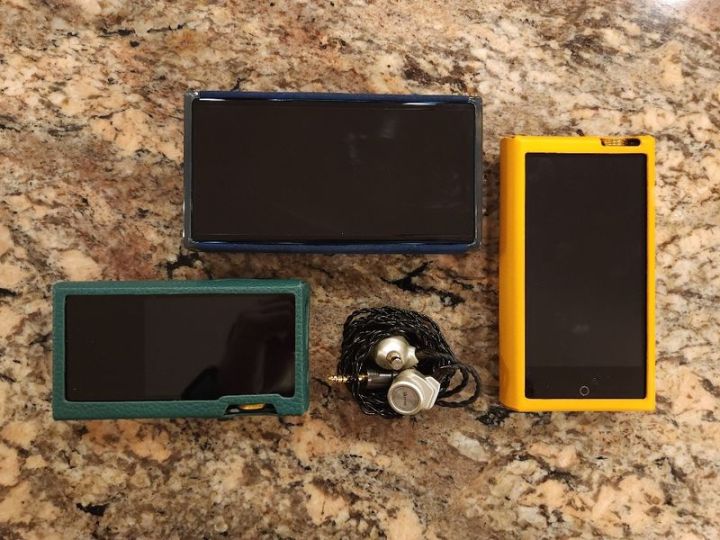
I find it ironic how all the latest iBasso releases come dressed in cool-looking green cases, the color of money, yet they continue to surprise us with the high value of their price/performance ratio. But as I have mentioned before, don’t judge a book by its cover, or IEMs by their price. Last year when I reviewed iBasso IT05, I tested those IEMs before knowing their cost, assuming double the price. This year, when I saw the $149 price tag of 3T-154, I was a bit skeptical but then decided not to jump to any conclusion. I wasn’t even sure at first if I was going to review these, not until a proper burn-in when I got into a more critical listening and testing with different sources to quickly realize they deserve a detailed write-up!
This IEM does come with a big DD driver and a big DD sound. But to unlock its potential, you need to spend some time going through your sources to properly match it. The source pair-up with 3T-154 was even more important than eartips or cable rolling. But what I found more interesting in my testing of 3T-154, is that unlike with many other IEMs where I go through different pair-ups to find the best synergy in tonality, here the focus shifted to finding the best pair-up synergy with a powerful enough source to drive these IEMs to their full potential. I’m not going to stop reviewing flagship IEMs, but I’m paying more attention now to budget gems like these iBasso 3T-154 that are worth serious consideration!

 Twister6 Reviews