
Sound Analysis.
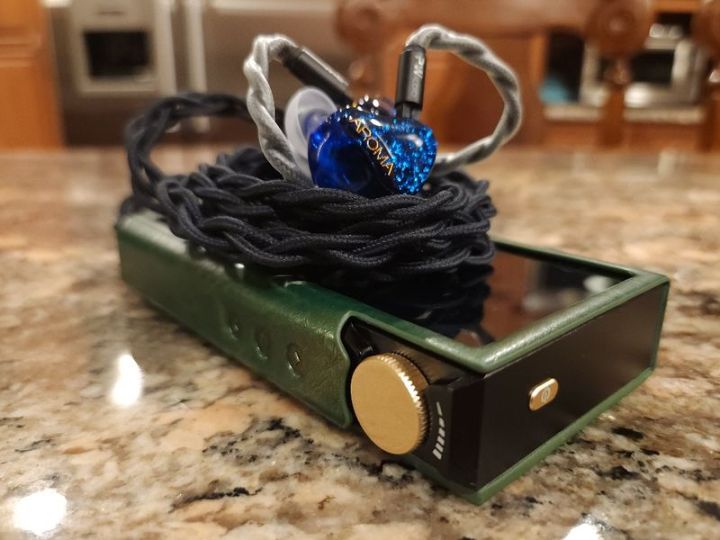
I analyzed N3U sound using Aroma Jewel IEMs while playing a variety of my favorite test tracks, such as Agnes Obel “The Curse”, Sandro Cavazza “So much better” (Avicii remix), C-Bool “Never go away”, Ed Sheeran “Shape of you”, Alan Walker “Darkside”, Galantis “Hunter”, Iggy Azalea “Black widow”, Indila “Boite en argent”, Dua Lipa “Love Again”, Counting Crows “Big yellow taxi”, David Elias “Vision of her”, and Michael Jackson “Dirty Diana”. I left N3U on continuous playback for 150 hours before starting my sound analysis.
I prefer to describe the DAP sound based on the comparison to other DAPs and pair-ups with different IEMs/headphones since the DAP by itself doesn’t have a “sound”. What we hear is how it sounds through IEMs/headphones connected to it or the difference relative to other sources using the same pair of IEMs/headphones for monitoring the sound. As a result, this section of the review usually summarizes what I find in the follow-up Pair-Up and Comparison sections. Also, here I will cover Solid State, Modern Tube, and Classic Tube modes, all tested from 4.4mm BAL output.
N3U SS – a clean, clear, detailed, neutral tonality. A bit more intimate soundstage expansion without any exaggeration. Also, decent dynamics.
N3U Modern Tube – a hear a bit more weight and texture added to the notes. It sounds like an edge was taken off SS tonality, with the sound having a touch more laidback smoother feeling. I also hear a noticeable improvement in soundstage width expansion, spreading wider to the left/right. Also, while I hear a bit more analog texture in the sound, to my surprise I found a bit more sparkle and air in the treble.
N3U Classic Tube – the wider soundstage expansion in Modern tube mode now gains more depth/height to give the sound more holographic imaging, like another dimension is added to the sound, as an example, giving vocals more depth. This change is more noticeable when going from Solid State to Classic Tube mode and a bit less when switching from Modern to Classic Tube mode. The Classic Tube mode also adds more analog texture to the sound, giving it a smoother tubey treatment with a fuller body and smoother, more relaxed presentation of the mids. But while being smooth and natural, the sound remains clear, detailed, and dynamic in its vertical expansion. Also, you can hear more sparkle and air in treble relative to Solid State performance.
After the Classic Tube mode going back to Solid State mode felt like the sound was less dynamic (flatter) and more confined in soundstage expansion (not as wide/holographic). Not saying that SS sound tuning is bad, but Classic Tube mode is just so much better to my ears. Also, some DAPs achieve a more musical tonality by keeping the treble smooth. Here, mids get a more analog textured treatment, while treble in tube mode is airy and has a well-defined sparkle. This is something to keep in mind for those who expect/prefer tube sound to be warm and with rolled-off treble – that is not what you are going to find with N3U.
3.5mm vs 4.4mm (in Classic Tube mode)
Besides the obvious difference in output power where I had to raise the volume by a few clicks as I switched from BAL to SE, the only other noticeable difference is the 4.4mm soundstage spreading wider between the L/R. I also found the background to be a bit darker when switching to BAL output.
Pair up.
The sound of a DAP is based on pair-up synergy with different headphones. After all, you are hearing the sound of earphones and headphones connected to the Source. In this section of my review, I will go over how various earphones and headphones pair up with N3U. In each pair-up, I noted the Timbre (SS Solid State, Modern Tube, Classic Tube), Gain (HG or MG), and V# volume level. Every pair-up test was done from 4.4mm BAL output.
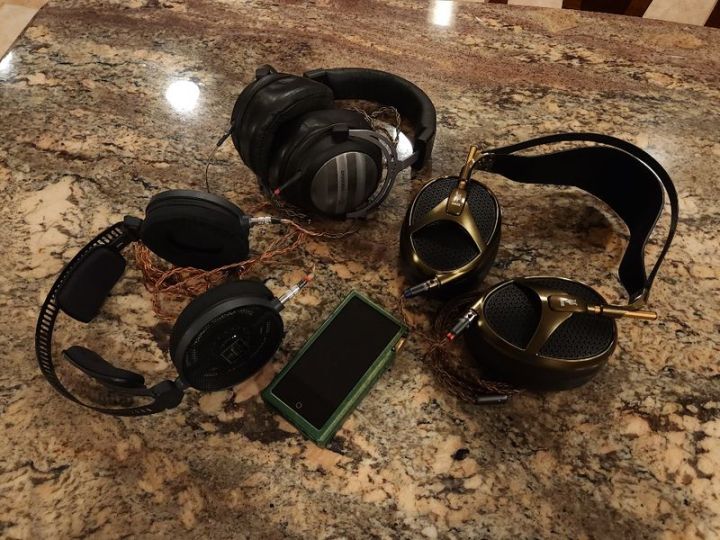
Beyerdynamic T5p 2nd gen (full size Tesla drivers)
- SS, HG, V37 – balanced signature with a clear tonality, deep bass, neutral clear slightly nasal vocals with colder tonality, clean and clear treble, not as extended.
- Modern Tube, HG, V37 – still balanced sig, some improvement in dynamics, bass has more rumble, a little slower, mids/vocals are smoother, still a bit nasal performance of mids, treble has a little more sparkle.
- Classic Tubes, HG, V37 – balanced sig, improved dynamics, more sub-bass rumble, bass is tighter and faster, mids/vocals have more clarity and better definition, doesn’t sound as “nasal” as it was in Modern mode, treble has more sparkle than SS, though similar to Modern mode.
Audio Technica ATH-R70x (470ohm, open back full size)
- SS, HG, V55 – balanced sig with a natural tonality and a smoother more laid-back sound presentation. More focused soundstage/imaging, even for an open-back cans it feels a bit more intimate. Mids/vocals are smooth, not as layered or well separated.
- Modern Tubes, HG, V55 – tonality has a little fuller body in comparison to SS, and from a technical perspective, the sound has improved dynamics, doesn’t sound as flat, and I even hear some improvement in retrieval of details.
- Classic Tubes, HG, V55 – soundstage expands wider with more holographic imaging, sound has a blacker background, tonality has more body and richer texture. Mids/vocals have improved layering and separation of sounds. When compared to SS, Classic Tubes mode makes the R70x sound come alive.
Meze Audio Empyrean (dual driver Planar magnetic)
- SS, HG, V41 – a bit narrow soundstage, the sound sig is balanced, smooth, laidback, mids/vocals are clean and clear, though a bit nasal in tonality, lacking some clarity, being too smooth.
- Modern Tubes, HG, V41 – very similar to solid state output, just having a little bit more clarity and body in mids.
- Classic Tubes, HG, V41 – a bit wider/deeper soundstage, more body in mids, but also slightly higher resolution and more clarity in vocals.
With these headphones, I preferred balanced output and Classic Tubes timbre. Out of these 3 headphones, I enjoyed T5p2 and R70x, while found Empyrean not exactly to be driven to its full potential.
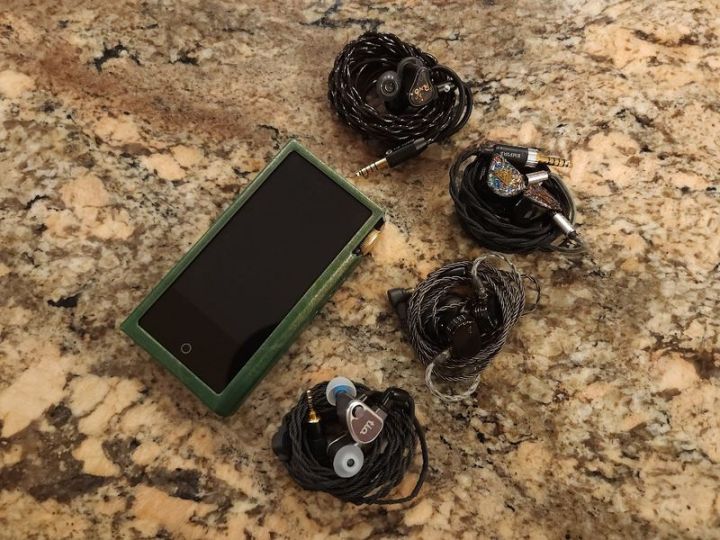
Campfire Audio Solaris 2020 (hybrid DD/3BA sensitive IEM)
- SS, MG, V21 – balanced signature with a nice sub-bass rumble, natural clear detailed mids/vocals, well-controlled crisp treble. More intimate soundstage. No hissing.
- Modern Tubes, MG, V21 – balanced signature with a deeper bass, smoother more natural mids, treble is more natural as well. No hissing.
- Classic Tubes, MG, V21 – similar balanced signature with a deeper and faster bass, natural more transparent mids with improved layering and separation, natural detailed treble, wider soundstage expansion. A noticeable improvement in retrieval of details as I switched from SS and even from Modern Tubes mode.
Empire Ears Odin (tribrid 2DD/5BA/4EST)
- SS, MG, V35 – sound signature is more mid-forward, focusing on mids and lower treble. The mids/vocals are thinner and colder.
- Modern Tubes, MG, V35 – sound sig is similar, but I hear a deeper sub-bass rumble and stronger punch of mid-bass, and lower mids/vocals have slightly more body.
- Classic Tubes, MG, V35 – switching to Classic Tubes modes makes the sound sig more balanced and expands the soundstage wider, even giving a blacker background, and fuller body mids so the vocals don’t sound as thin and cold as in SS mode.
64 Audio U12t (12BA w/TIA driver and M15 APEX module)
- SS, MG, V33 – balanced signature with a deeper bass, clear detailed natural mids/vocals, and sparkly treble, though treble is a bit splashy.
- Modern Tubes, MG, V33 – similarly balanced signature, with more sub-bass rumble, mids/vocals have fuller body sound, more natural tonality, and treble is less splashy.
- Classic Tubes, MG, V33 – soundstage expands wider, background sounds a bit blacker, the sound is not as laidback as in Modern, but the biggest difference was in mids/vocals, giving them more clarity and articulation. Enjoyed this pair-up a lot with its fuller body tonality and improved clarity.
FirAudio RN6 (tribrid DD/4BA/EST)
- SS, MG, V31 – borderline L-shaped sound sig with deep elevated bass, organic natural mids/vocals, clear natural treble, and big soundstage expansion.
- Modern Tubes, MG, V31 – the sound sig is more balanced with mids being slightly more forward and a bit more elevated, and treble has a slightly better definition.
- Classic Tubes, MG, V31 – soundstage expands wider, and the sound sig is more balanced, similar to Modern Tubes due to mids coming up in quantity. Treble has similar improvement in definition and so does mids, having more clarity and some improvement in layering and separation of the sounds.
Similar to headphones pair-up, I found Classic Tubes mode to sound the best with most of the IEMs I tried, with a common effect of the improvement in the retrieval of details and soundstage expansion. While I only listed a handful of IEM examples above, I went through over a dozen of my favorite IEMs and haven’t found a single pair-up where I didn’t enjoy Classic Tube mode.
Page 5 – Comparison, Wired/Wireless connections, and Conclusion.

 Twister6 Reviews
How does cayin n3 ultra compare soundwise to ibasso dx300 or dx320 wirh amp13. I want a more compact player butj like the tube sound alot.
cheers Jonathan
LikeLike
I have dx320 with amp14 now, tonality should be the same as amp13. Based purely on the tonality, N3U in Classic Tube mode still has warmer and more textured sound. Dx320 w/amp14 mids sound more revealing. Also, N3U soundstage has more depth while both have the same L/R width spread. Of course, keep in mind, dx320 is a modular android device, so completely different functionality.
LikeLike
Tell me how the 10-band equalizer works in this dap, does it narrow the stage and cause distortion? I own a shanling m7, the equalizer is similar to the m9. When I just turn on the equalizer, it seems to make the image more compressed and, most importantly, it makes the sound quieter. In the end, I can’t compare with and without an equalizer because the volume levels are different. I heard that Sony dap and Lotoo gold toch are good in equalization. Which dap equalizer really works?
LikeLike
I’m not too familiar with the latest Shanling daps, thus can’t comment on it. Hiby used to write software for many manufacturers, including Cayin, Fiio, Shanling, etc until FiiO and Shanling decided to use someone else. I can only speak for Cayin DAPs I tested and their fw/sw which is written by Hiby. In N3U just like other Cayin daps just by enabling EQ you don’t change the sound. I have N3U in my hand now, playing a song, and turned on and off EQ and PEQ without any changes; you can’t even tell a difference in sound. Then, depending on the song mastering if you start boosting some eq bands, pushing them to the max, you could get some distortion. Then, you use pre-amp setting to lower the input so you get more headroom for eq band boosting/adjusting… So, as far as N3U goes and its EQ/PEQ algorithm by Hiby, there are no issues I encountered.
LikeLike
I am afraid they use some “obsolete” cheap hardware, so I really wonder when this device set in DAC mode behind a smartphone, the connection is compatible with UAC 2.0, so with still active hardware button (FF/Play/RW) ? a little device like Qulooz MBU1 can manage it perfectly.
LikeLike
from audio playback perspective, there is nothing obsolete. I have SP3000T with the same dual JAN6418 tube config and it picks up noise and ringing when tube is enabled and wifi/bt is on with sensitive iems. So, for pure audio performance, Cayin nailed it by getting rid of all the wireless stuff. Now, regarding Snapdragon 425 and old Android OS, it would probably be an overkill to use 665 and Android 13 on a device without any wireless capability, no streaming, no BT, and then putting a ton of work to optimize the OS by disabling 80% of its functionality 🙂 Plus, draining the battery faster… With remote playback control in USB DAC mode, are you referring to wireless Bluetooth or wired through OTG cable connection? I’m not aware of too many DAC devices that support this protocol wired. But as part of the BT wireless profile, similar to how you can control the playback remotely from your wireless headphones, it is supported. If that feature is important to you and at the top of your priority list, N3U doesn’t support it. This DAP is all about the sound quality, mainly in Classic Tube mode with a design that tricked down from their $5k flagship N30LE.
LikeLike
Thank you for you answer
I was just refering from a wired DAC mode setup. the recent Quloos MBU1 manage to keep their hardware button activated like in BT DAC receiver mode…
I am not really sure to be interested in any Vacuum tube solution, but as the N3Ultra is a rather “cheap” device, it could be like a chance to give a try to such tech, before investing in more high end DAP if I am convinced that it’s a real step up for some of my IER Z1R&M9 from my usual NW-WM1A/Z.
Hardware button of the DAC are necessary for me on the way, as I need to ba able to play Streaming music (online and offline).
LikeLiked by 1 person
Will the sound of the SP3000T in tube mode be similar to the N3Ultra?
LikeLike
Just from a sound perspective, not too far off. But obviously, these DAPs have a very different set of features.
LikeLike
I am curious about the difference between SP3000t and N3ultra, as well as the difference between SP3000t in OP mode and SP3000.
If possible, could you talk about these differences?
LikeLike
I covered SP3k vs 3kT difference in my 3kT review I just posted. And as I mentioned in another reply, from the tonality/sound perspective the difference between 3kT and N3U (both in Tube modes) is not too far off, but they do differ in functionality and the set of features.
LikeLike
wie klingt die N3u im Vergleich mit N8II ? Ich habe ein N3u aber ich interessiere mich an N8II Kann mir jemanden was sagen nur über Klang mehr nicht
LikeLike
Had to use Google translate 🙂 Based on a sound alone, N8ii will be more revealing, not as smooth or as analog as N3U. NuTubes don’t have the same tonality as this JAN6418 vac tubes. But with N8II you are getting solid state and dual nutube, class a and ab amp mode, P+ power boost, cleaner and more detailed tonality, fast android performance with streaming of all the apps. N8ii is a great DAP, but N3U Classic Tube tuning is still very unique.
LikeLike