
Sound Analysis.
I analyzed 622B sound performance paired up with P6 Pro source while playing a variety of test tracks, such as Agnes Obel “The Curse”, Sandro Cavazza “So much better” (Avicii remix), C-Bool “Never go away”, Ed Sheeran “Shape of you”, Alan Walker “Darkside”, Galantis “Hunter”, Iggy Azalea “Black widow”, Indila “Boite en argent”, Dua Lipa “Love Again”, Counting Crows “Big yellow taxi”, Bob Marley “Jamming”, David Elias “Vision of her”, and Michael Jackson “Dirty Diana”. By force of habit, I had 622B on burn-in for at least 100 hours before I started to collect my impressions. I was using a stock cable and stock smoky silicone eartips.
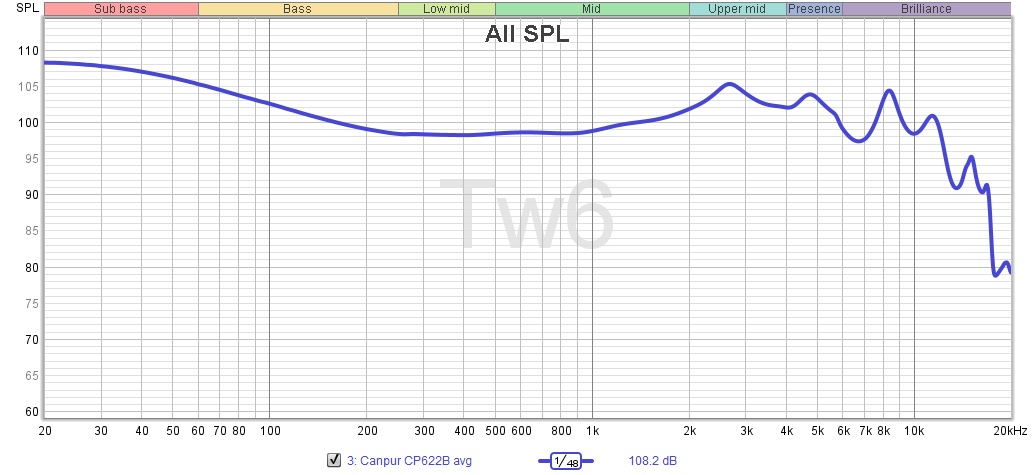
I found 622B to have a relatively balanced signature with a neutral sound tuning and a clear natural tonality. There is a bit of warmth in the mids which gives the tonality its natural flavor, but overall, the tuning is neutral. Considering its natural detailed tuning, while nothing extreme jumps out across the frequency range, every sound feels to be in the right place and at the right gain level where it is supposed to be. As a result, you hear a coherent tuning with all 10 drivers (6BA/2EST/2BC) working together in perfect smooth harmony.
Despite having only BA bass, 622B has a slightly elevated deep sub-bass rumble and a rounded mid-bass punch which does resemble the performance of a DD driver. The balance of the bass is tilted more toward a beefier sub-bass rather than a softer mid-bass. The overall quantity of bass is not elevated, though it is north of neutral. It has a decent presence and fullness thanks to the rumble which adds a nice texture to the sound. Otherwise, if you are looking for something with a stronger and faster mid-bass punch, 622B will make you crave more.
The mids are clear and detailed, more natural in tonality. The lower mids are neutral, just with an average thickness. They do add a body to the sound, so I wouldn’t say they are lean or thin. But they are not too thick either, don’t add too much coloring to the upper mids, just a little bit of warmth, and allow them (upper mids) to shine through. Upper mids are clear, natural, and detailed, even slightly on the revealing (but not brighter) side since you can easily extract micro-details from the sound. So, overall, mids do have a natural tonality with an enhanced definition.
The treble has a good amount of clarity and airiness without any exaggeration. I do hear treble as being clear, natural, and detailed, with a good well-controlled extension that adds a modest amount of airiness and crunch to the sound. It is not bright, sibilant, or harsh. Also, it is not too forward, just perfectly balanced with upper mids. It has a natural crystal-clear quality that enhances the resolution of the sound, helps with layering and separation of the mids, and adds a well-controlled sparkle to the sound without being too forward.
Thanks to a neutral quantity of the lower mids, a clear detailed nature of the upper mids, and a natural clear sparkle of the treble, I find 622B to have a good level of layering and separation of the sounds with a clear distinction of instruments and vocals. Also, thanks to its dual Sonion BC drivers, I hear 622B to have nearly holographic imaging with 3D positioning of sounds in space. The soundstage itself is spherically shaped and evenly expanded in all 3 directions.
The tuning of 622B works with any genre of music I throw at these IEMs. The deeper sub-bass helps reproduce the timbre of natural instruments and vocals when listening to instrumental/vocal, classical, jazz, etc. music. And when you switch to Pop or EDM, it also gives the bass more weight to drive the rhythm with more authority. The natural detailed tonality of mids works with both male and female vocals and gives more clarity to instruments. The treble extension and its natural clear sparkle give a well-controlled crunch to percussions and don’t attenuate the tail of snare hits prematurely. Pretty much I found 622B to work great with natural and synthesized instruments of any genre of music. The tuning is not too revealing or too bass-heavy if that is what you want, but it is great for extended non-fatigue listening sessions.
Eartips Selection.
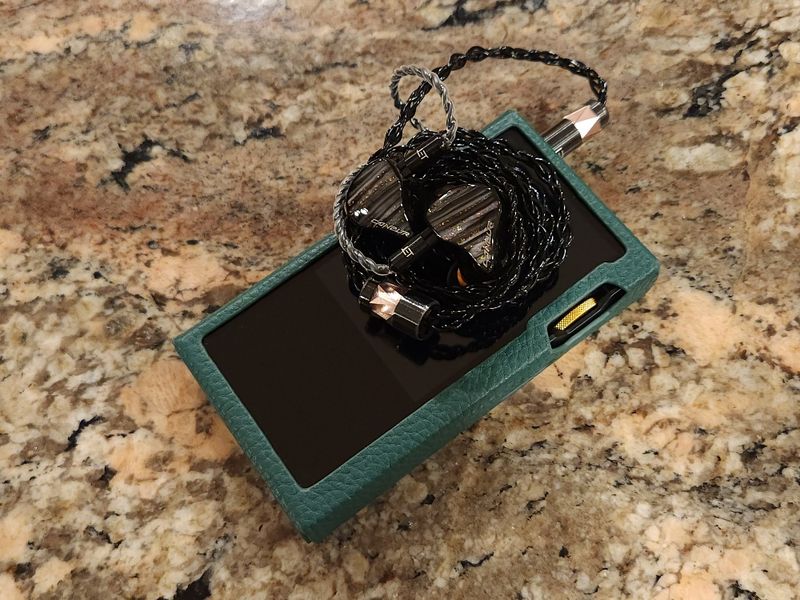
The selection of eartips is crucial to any universal in-ear monitor and will affect the sound, especially the bass impact depending on the seal. Due to a large opening of my ear canals, I usually go for the largest size eartips to get a better seal. Also, please keep in mind, that eartips impressions are subjective and will be based on the anatomy of your ears.
Stock smoky hybrid-silicone – with these eartips I hear a balanced signature with a neutral sound tuning and a clear natural tonality.
Stock white hybrid-silicone – these have a softer silicone cap which changes the seal in my ears, reducing some bass weight which brings more attention to the upper mids, making them a bit more revealing. But also, it had the effect of a slight reduction in the soundstage width, giving the sound more depth, and making it expand further out of my head.
Azla Crystal – slightly narrower soundstage, extending more out of my head, and more sparkle in treble.
Final Type-E – slight reduction in bass weight which opened up the presentation of upper mids and treble. These are softer cap eartips, and they improve the comfort of wearing 622B.
SpinFit W1 – there is not much change in tuning/tonality, but it does sound like a faint veil was lifted off the sound, bringing more details to the sound, and improving the resolution. These are more like fine-tuning eartips when paired up with 622B. Also helps with the comfort of the fit.
SpinFit CP100+ – similar to stock smoky silicone tips.
Symbio F – for some reason these eartips reduced the soundstage width, narrowing it down, and placing the image right in the center.
Symbio W – beautifully expanded soundstage, deeper and slightly more elevated bass, clear natural mids, and clear detailed treble.
Eletech Baroque – improves soundstage expansion; bass depth is similar, with the biggest change here being in treble, adding more air, and crunch, and giving the sound a higher resolution.
Relative to the anatomy of my ears, SpinFit W1 and Symbio W worked the best for me with 622B IEMs.
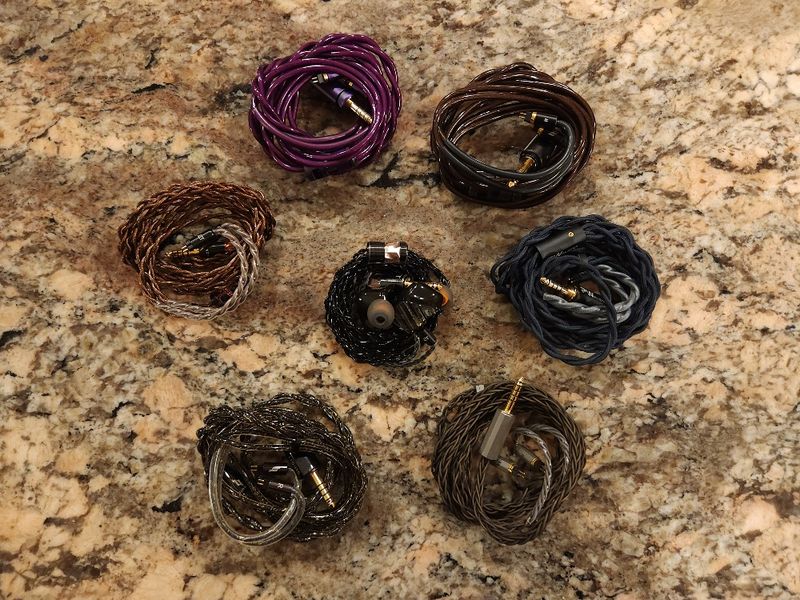
Cable pair up.
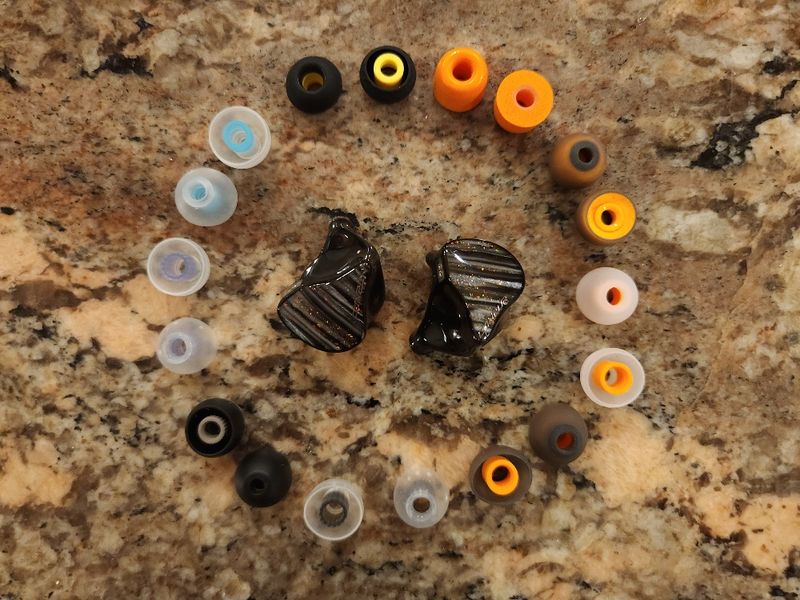
I’m aware that some people don’t believe in cables and have a very strong opinion about them. It’s not my intent to change those minds. Instead, I’m just sharing what I hear during my testing. What makes sense to me, a metal wire is a material with physical properties of resistivity, conductivity, purity, and unique geometry, all of which put together act as a filter between your source and headphones. Variations of these physical properties can affect the conductivity of analog signal, resulting in a sound change, from a subtle to a more noticeable level. If the talk about cables upsets you, please skip this section. Otherwise, enjoy these short impressions.
Socrates to Eletech Ode to Laura – switching to OTL gave a nice refinement in tuning with a slightly wider soundstage expansion, more texture in sub-bass, a bit more forward mids, and a touch more crunch in treble. It was a nice refinement but nothing too drastic.
Socrates to PWA FT – here I hear an improvement, rather than just a refinement, with vocals being closer to the listener, and treble gaining more sparkle, more airiness, and the improvement in the extension.
Socrates to EA Chiron – the soundstage is more holographic, and the overall sound is more revealing. This cable gives a noticeable boost to upper mids and makes treble brighter, airier, and with more crunch. It was a bit too bright for my taste.
Socrates to LL Venom – bigger and more holographic soundstage expansion. Bass is tighter and more tactile, especially noticeable in faster and slightly more elevated articulate mid-bass punch. Mids are slightly more forward with improved retrieval of details. The treble has more airiness and improved extension.
Socrates to EA C23 – more clarity in upper mids and more sparkle in treble. Here the difference is more noticeable in upper mids.
Socrates to EA C24C – I hear a deeper sub-bass rumble and improvement in retrieval of details in mids. It is kind of similar to C23, just with a deeper sub-bass and more natural treble.
Just my personal subjective opinion, but the pair-up of 622B with Venom was my favorite.

 Twister6 Reviews
Comprehensive review as always. May I ask if the 74E comparisons was with the Socrates or the Eletech custom 74E cable?
Contemplating a purchase. I’ve heard the 622B but not the 74E
LikeLike
It was with 74E own cable, not sure which material, but it looked like copper.
LikeLike
Thank you for another great review. May I ask how you would compare them to the Kinera Loki (international tuning) in regard of resolution, soundstage width/depth and holographic imaging?
LikeLike
I’m yet to hear Loki thus not familiar with its tuning.
LikeLike
Your review is really helpfu, I’m looking for a cable, may I ask the brand of “LL Venom” please, is that Liquid Links?
LikeLike
Yes, Liquid Links. Great cable, though be aware that it is a bit stiff.
LikeLike
how this Canpur 622B comparing to UM Maven II?
LikeLike
622B will have a more elevated sub-bass rumble and more forward upper mids/vocals, with an overall a warmer tonality. Maven II tuning is more balanced, less colored, and has more clarity and higher resolution in upper frequencies.
LikeLike
Thanks Twister6. So in terms of the price performance ratio, is Maven II a better choice?
LikeLike
Yes, Maven II has a great price performance ratio. But relative to which one is better, that is purely subjective and based on your sound preference.
LikeLike