

The yin to Loki’s yang!
PROS: Premium build quality, attractive shell design, well done warm W-shaped signature, bass feel, depth and dynamics, holographic imaging and stage, depth layering, very good unboxing experience, good quality accessories, premium quality cable and different types of premium stock ear tips.
CONS: Lower-treble dip leads to warmer than neutral treble tuning that can sound a bit too warm to fans of reference-neutral and brighter signatures, high output Bone Conduction driver’s ringing with tapping and mouth movements can be distracting at times.
The product was provided to me free of charge for purpose of testing and review.
About Kinera.
Kinera was established in 2011 as YuTai Electronic Acoustics in Dongguan, China. They developed the world’s first high resistance 5mm micro dynamic speaker for military hearing aids. In 2013, they began mass manufacturing balanced armature driver and became an internationally and locally renowned supplier of drivers. In 2014 till 2015, Yutai Electronic Acoustics has developed a number of patents for various driver technologies such as bone conduction. In 2016, they released the first hybrid driver IEM BD005 under the “ Kinera “ brand. Since then they’ve released several DD, BA, hybrid and tri-brid IEMs.
Links – Kinera Verdandi(Official Website)
Technical Specifications.
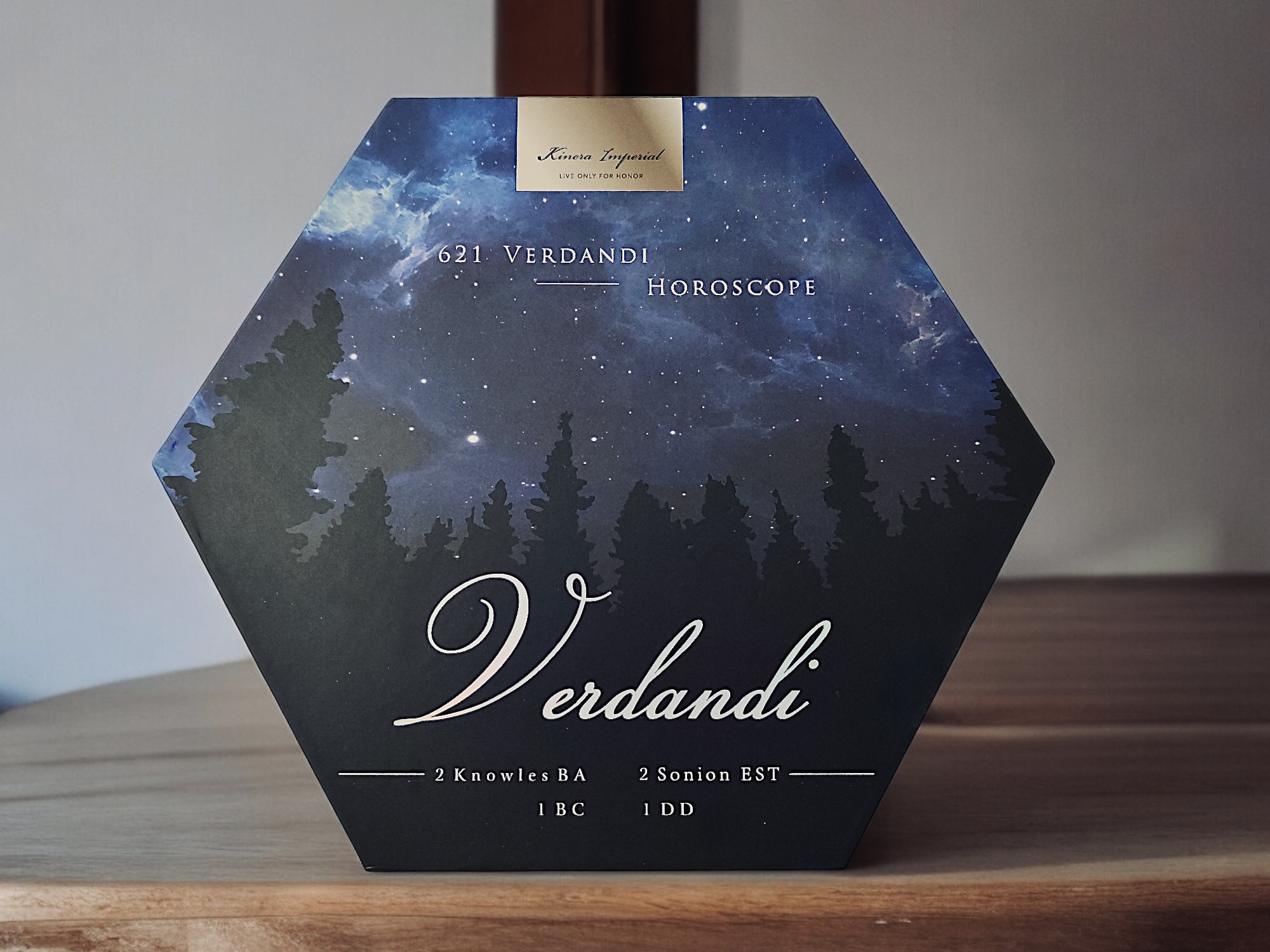
- 2 Knowles BA + 2 Sonion EST + 1 DD + 1 Bone Conduction Driver
- Impedance: 14 ohm
- Sensitivity: 105 dB
- Frequency Response: 20Hz-50kHz
- Plug with 3.5mm and 4.4mm

Included in the box.
- One pair of Kinera Verdandi In-ear monitors.
- Flash Acoustics Monocrystalline Copper + High Purity 4N Silver Cable
- AZLA SednaEarfit Crystal Eartips
- Final Type E Eartips
- Kinera K-07 Balanced Eartips
- Foam Eartips
- Genuine Leather Carry Case.
- Cleaning Brush.
- User Manual.
- Thank You Card.
- Design Background Intro Card.
Packaging and Build Quality.
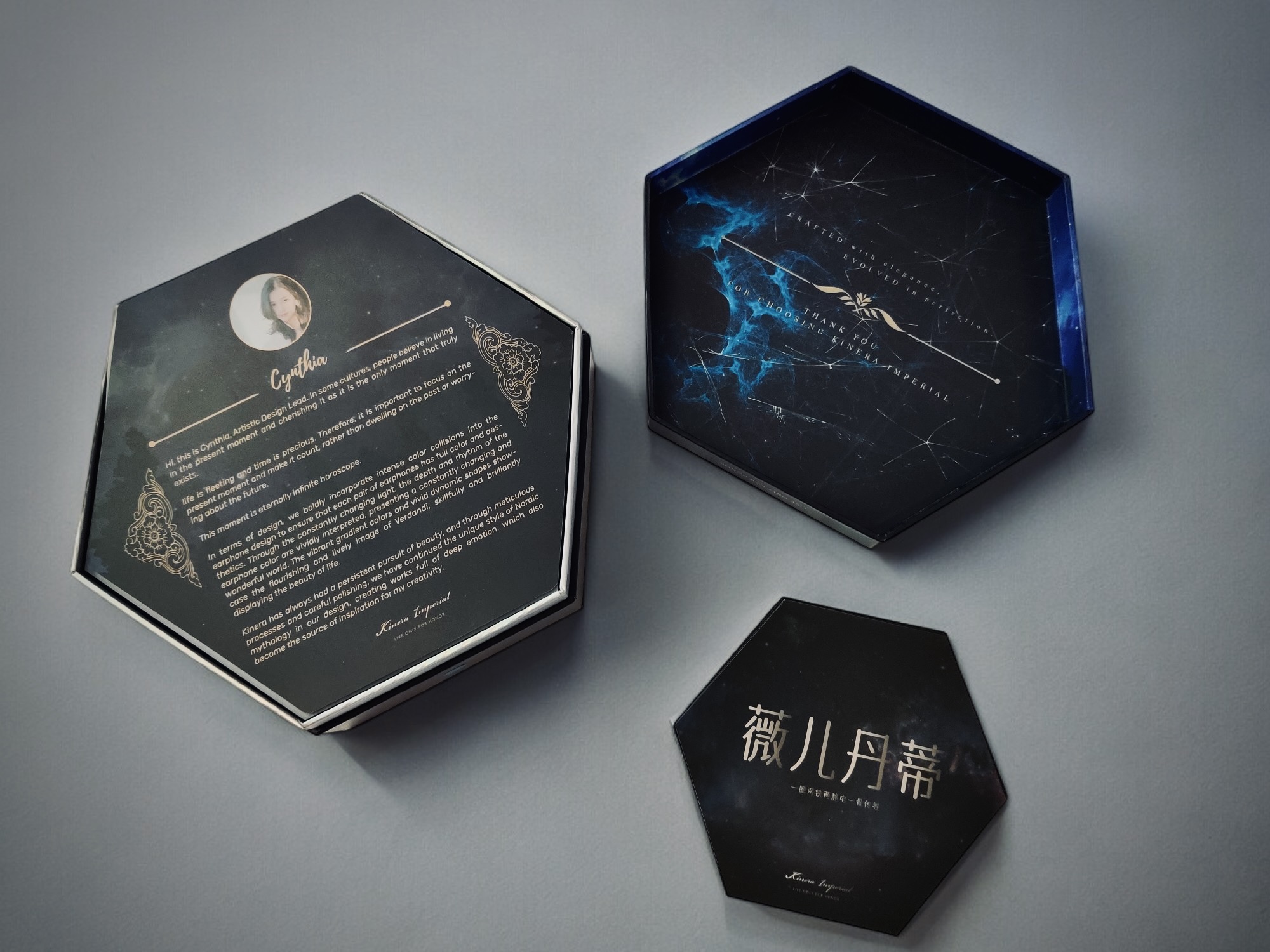
Verdandi, in fact Kinera’s packaging, unboxing experience and accessories in general are all really well chosen and executed. Just the design, the way the bottom box separates and slides down slowly, the way the internal part is split into two shelves, how the IEM is placed in the top shelf and how everything else is laid out in the box in the bottom shelf with a variety of top brand ear tips that they’ve included – everything is designed very tastefully to give the buyer a sense of money well spent.

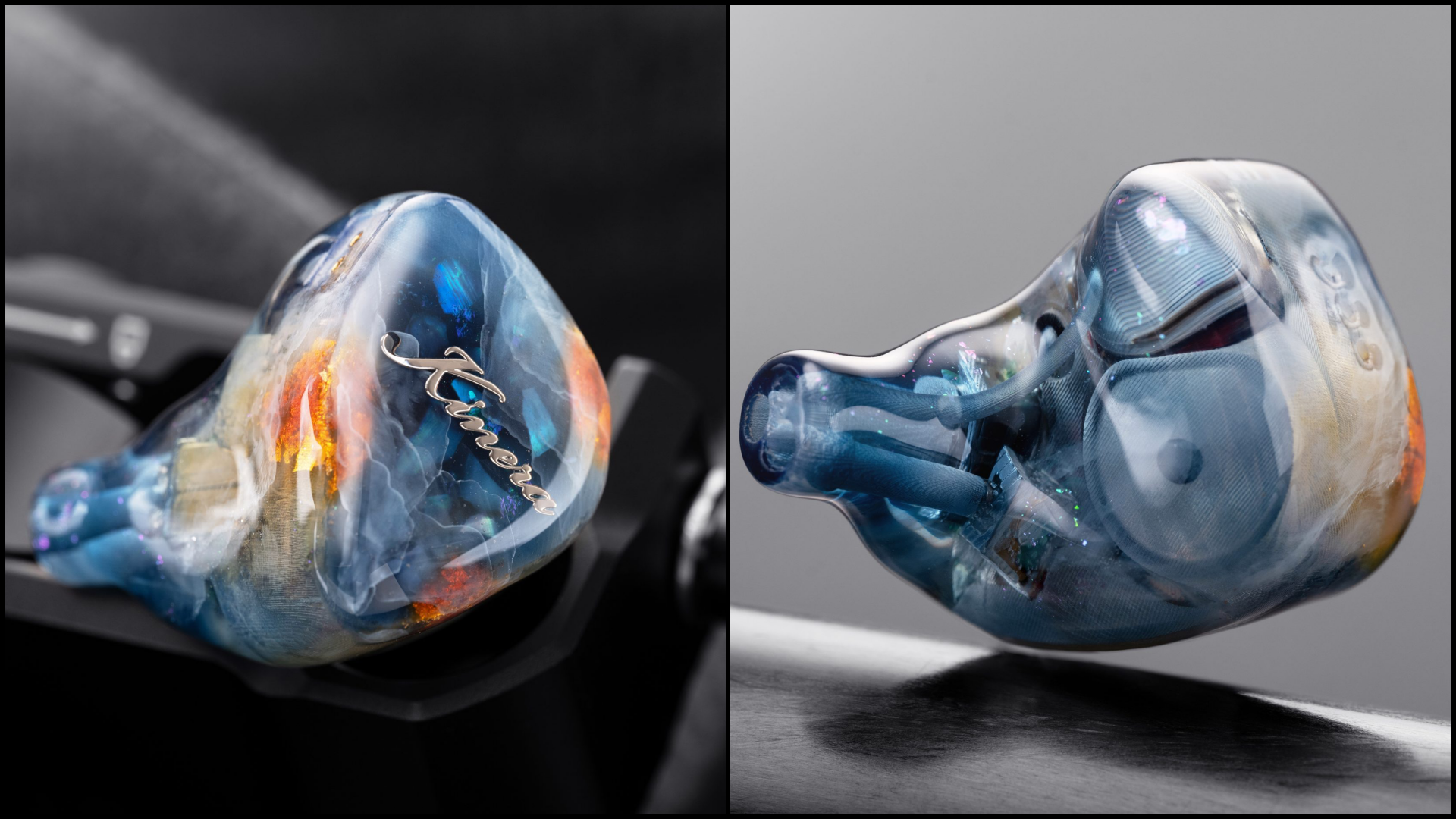
Build wise, Verdandi has a standard resin build with very attractive blue tinted clear shells with a hand painted faceplate design. Even though design liking is quite subjective, I personally quite dig the overall aesthetic, even more, the new black and red colour way.
Cable – The stock cable is Flash Acoustics’ Monocrystalline Copper + High Purity 4N Silver Cable with swappable jacks. I’d never heard of Flash Acoustics before until now. They started out in 2016 and are majorly an OEM cable based out of China. Verdandi’s the cable is quite premium with well made connectors, jacks and y-split, if not a little stiff and not as supple as I like my cables.

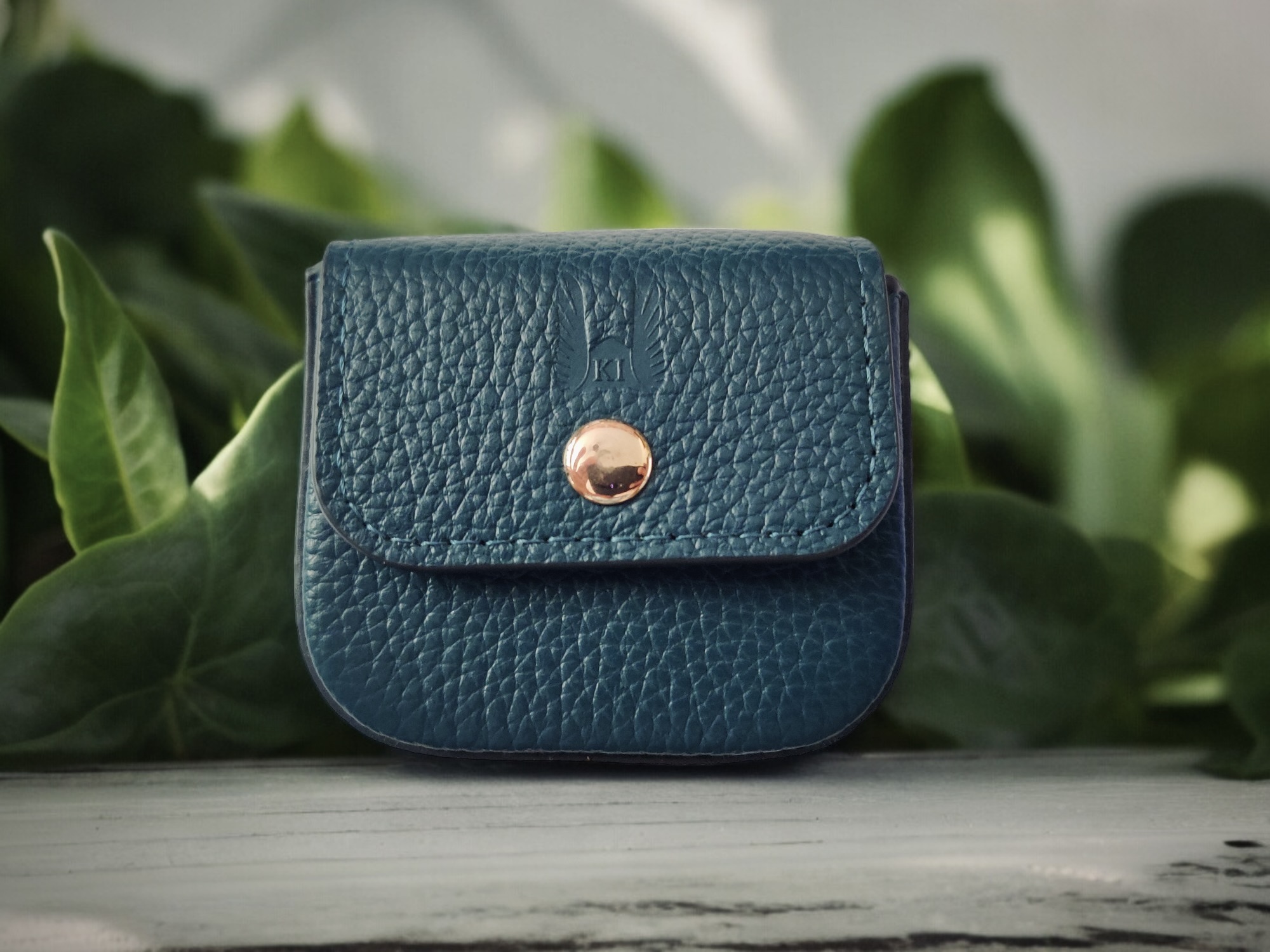
Case – Verdandi comes with a bluish green coloured buttoned leather case which isn’t too roomy and just manages to fit the IEMs with the cable.
Fit and Comfort.
I have medium-large size ears and Verdandi has a very comfortable fit for me even though the shells are on the chonky side. It has a 6mm nozzle size and it takes on all the tips really well and I get a very nice fit with most types of ear tips. Even with the triple hole venting on the top, the noise isolation is fairly good, just not at the level of snug fitting, non-vented IEMs.
Sound Analysis.
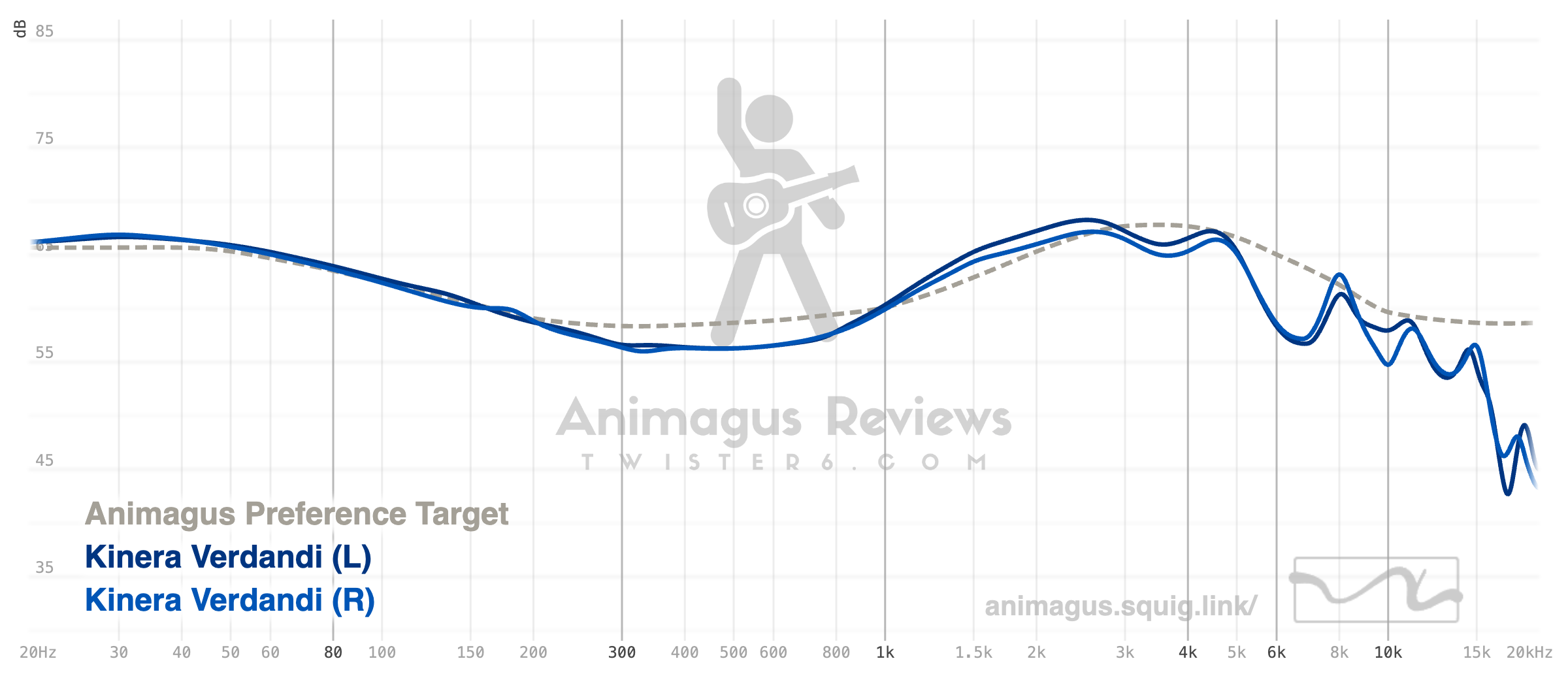
Graphs are measured using an IEC60318-4 (IEC711) setup. You can compare all the graphs on my IEM Graph Database here – Animagus Squiglink.
Summary – Kinera Verdandi has a smooth, warm leaning signature – a warmer take on their flagship Loki Emerald (review here) tuning with a similar setup of BC+DD+BA+EST but 4 BAs and 2 EST less in total. It primarily goes for an easy going, comfortable listen compared to a much more vivid and energetic signature of the Loki Emerald. Its Bone Conduction driver implementation is the same as Loki Emerald’s and is implemented to work alongside the 6mm dynamic driver and just like the Loki Emerald, one can actually hear the Bone Conduction driver in play by tapping Verdandi’s faceplate, which is quite unlike other BC drivers. This is mainly because their Bone Conduction driver’s sensitivity is much higher and as a result, it has much higher power output of 30mW, where other drivers are generally in the range of 3-5mW. How the BC driver plays a role in the perception of sound is discussed in the later technical performance section of the review.
But first, let’s dig in deeper into the tonal performance…
Bass – Verdandi has about 7dB of a bass boost that is very linear in nature and almost traces the Loki Emerald’s shelf because they share the same driver configuration handling the bass, barring the sub-bass amount that Loki Emerald has more of on paper but not as much in reality because of its significantly brighter tuning. The shelf focuses more on sub-bass and as a result represents rumbles and drops really well while keeping the space clean of mid-bass boom. The mid-bass, even though boosted, is very cleanly presented. I don’t know if it’s the Bone Conduction playing a role (one can never truly know unless you blind test Verdandi with and without the BC driver while keeping the signature absolutely the same) but I do hear very good dynamism in bass that has more depth, dynamics and feel than an average IEM following a similar tuning.

Midrange – Even though you can see a dip in the lower-midrange of 250-1kHz region in the graphs, it actually has a slightly fuller bodied sound owing to the warmer treble region giving that perception. It has good ear gain of about 9dB leading to a good natural forward definition of vocals and instruments. The slight focus on a boost in the 1-2.5kHz region and the dip in the 3.5kHz region takes it away from absolute reference accuracy and naturalness of instruments but by very little in the larger scheme of things. In fact, you’d only hear it if your ears are tuned to perceive an absolute ideal ear gain. Lovers of coloured signatures might not even care for it. I personally would’ve liked it to be more in line with my Preference Target’s ear gain but it’s not really the upper-midrange I have a problem with but in fact the lower-treble.
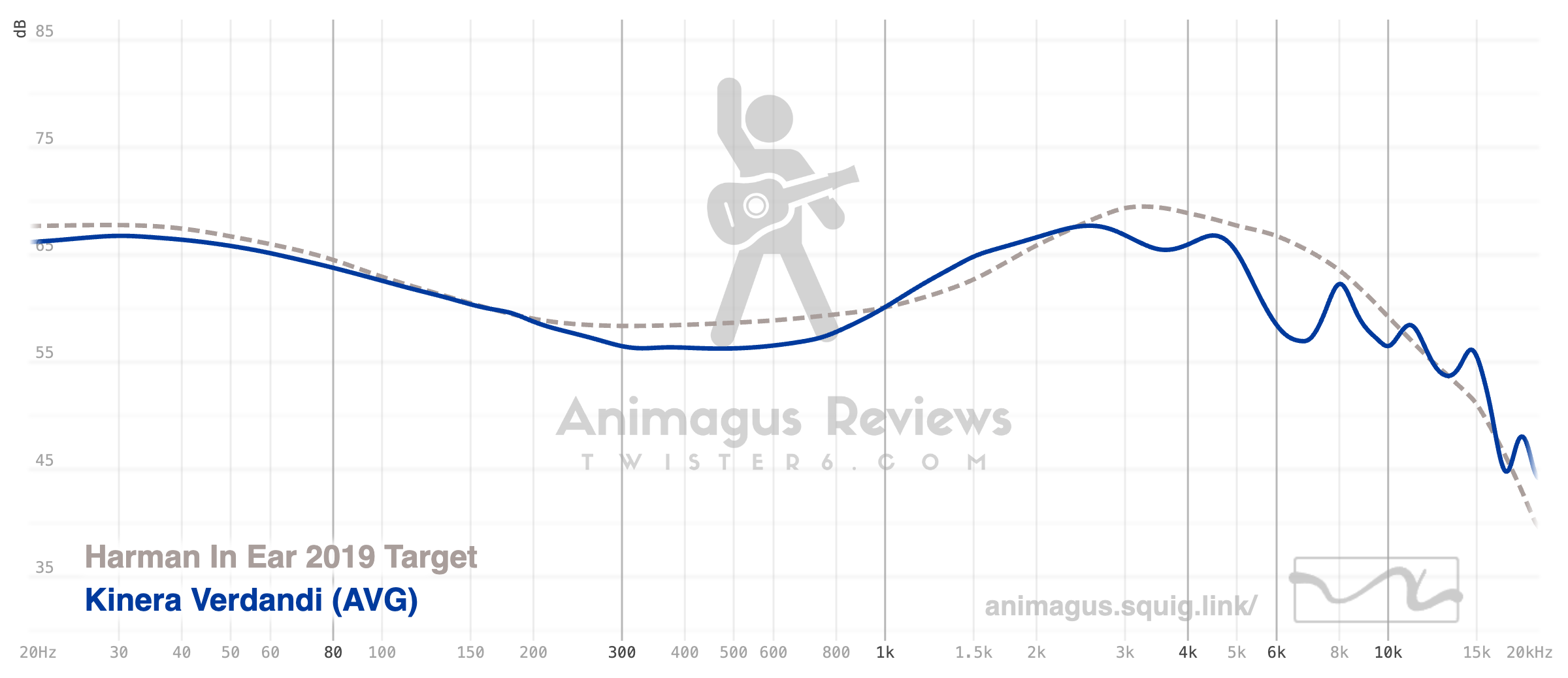
Treble – Overall treble presentation leans towards warmth, making Verdandi a more laid back listen than neutral. The 5-8kHz dip leads to it having much softer attack, instrument sheen and presence. The mid-treble and air region are still on the neutral side of things, even the popular Harman In-Ear 2019 Target, but on the warmer side of my own Preference Target. I would’ve loved it if Kinera would’ve nailed this section with a proper linear treble curve because of how well the rest of it is. But on the upside, it is neither dark nor deficient of energy, nor does it lack detail retrieval because it’s otherwise quite fine and linear above 8kHz and I think the Bone Conduction driver adds some special sauce in there because it doesn’t sound dull to me as other similarly tuned non-BC IEMs do. The overall balance does promote a comfortable listen at louder than average levels without anything ever being intrusively sharp and that is quite welcome for times when you want to enthusiastically listen to the music while tap dancing and head banging. This helps even more when using it as an IEM for live performance because even with CIEM levels of noise isolation, you still need to run the volume a little loud to drain out the stage and crowd noise and Verdandi makes for a very good easy listen for those times.
Technical performance – This is where the BC driver comes in and plays a fair role. It majorly helps in perceiving a roomy soundstage, deeper depth than usual and more pin-point precise imaging. Verdandi has deeper depth than width and very good detail retrieval for its warm signature, which other similarly tuned warm IEMs generally aren’t as good at it. Because Verdandi enables a comfortable listen at louder volumes, the space and imaging almost sounds holographic with well mixed songs that have good space and depth mixed in. It has fairly good left to right separation and space between instruments but falling short of segment leaders Symphonium Helios and Custom Art FIBAE 5, primarily because of its warmer tuning.

Comparisons.
Kinera Loki Emerald.

They share 1DD, 2EST and 1BC driver while Loki Emerald has 4 BA and 2 ESTs more. The primary difference that you’ll hear right off the bat is Loki Emerald being significantly brighter. With that brightness comes a more open sense of space, better sense of depth layering and better micro-detail retrieval. Loki Emerald also has wider boundaries and slightly stronger presence of instruments because of more 5-10kHz of presence region. As a result, both cymbals and acoustic guitars are more prominently heard, being much brighter and sizzlier than neutral and that leads to Loki Emerald having a more vivid and energetic presentation overall. Verdandi on the other hand comes across much warmer and a more laid back listen, but also one that is easier on the ears when you want to listen to music a bit more enthusiastically at louder volumes, where Loki Emerald can get bright. I primarily see Verdandi as a warmer, slightly less technical version of the Loki Emerald and Kinera trying to make their DD + proprietary BC driver more accessible to a wider range of audience at a cheaper price point and a significantly different sound signature too.
Yanyin Moonlight Ultra.
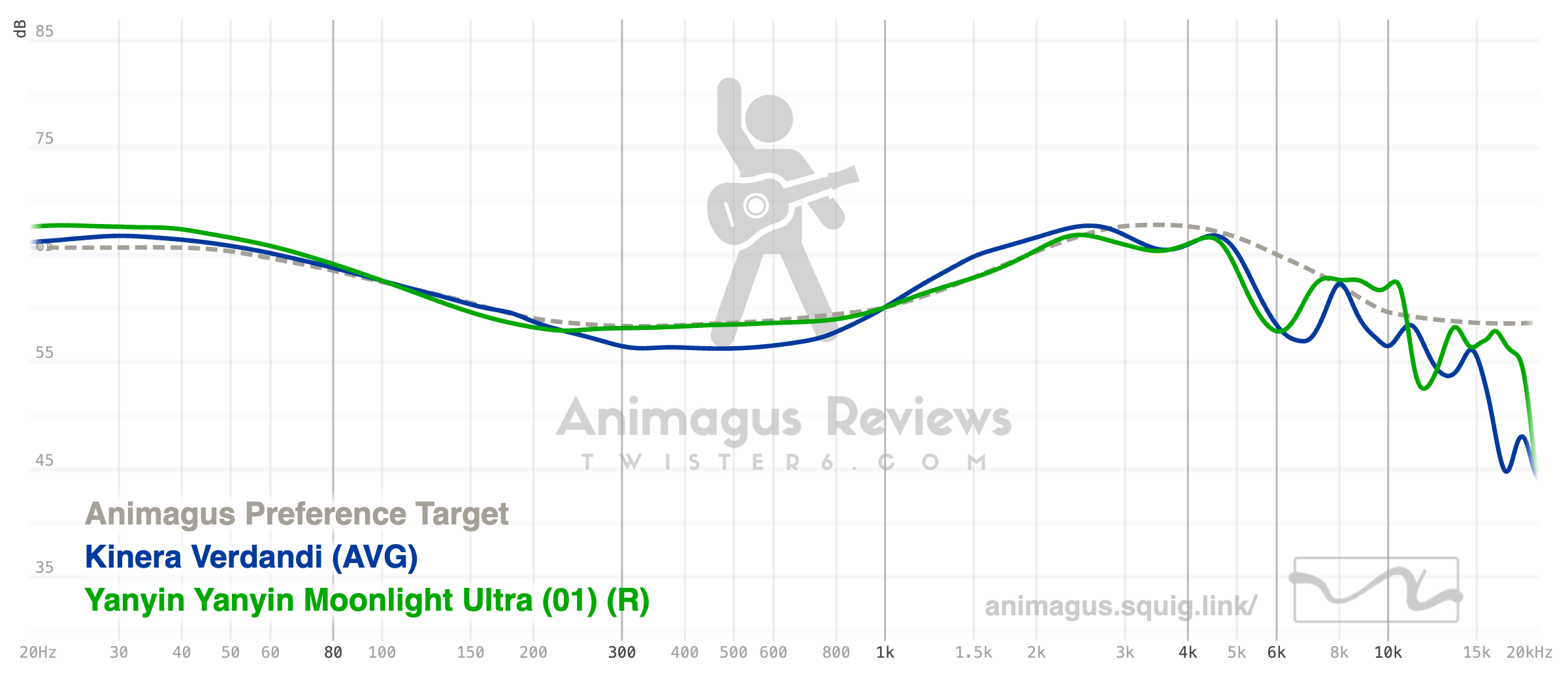
As you can see, Moonlight Ultra and Verdandi follow a ballpark style of tuning but Moonlight Ultra is more refined towards reference neutrality than Verdandi. It has a tiny bit more sub-bass, more neutral lower-midrange and even though has a similar lower-treble dip as Verdandi, is more even in treble with better extension up top. So Moonlight Ultra is more mature in tuning and has better attack and snappiness of instruments but that is where its superiority ends because Verdandi has a roomier sense of soundstage with wider width and deeper depth, more holographic imaging of instruments as well as better perception of layering and depth of the mix.
Symphonium Helios.
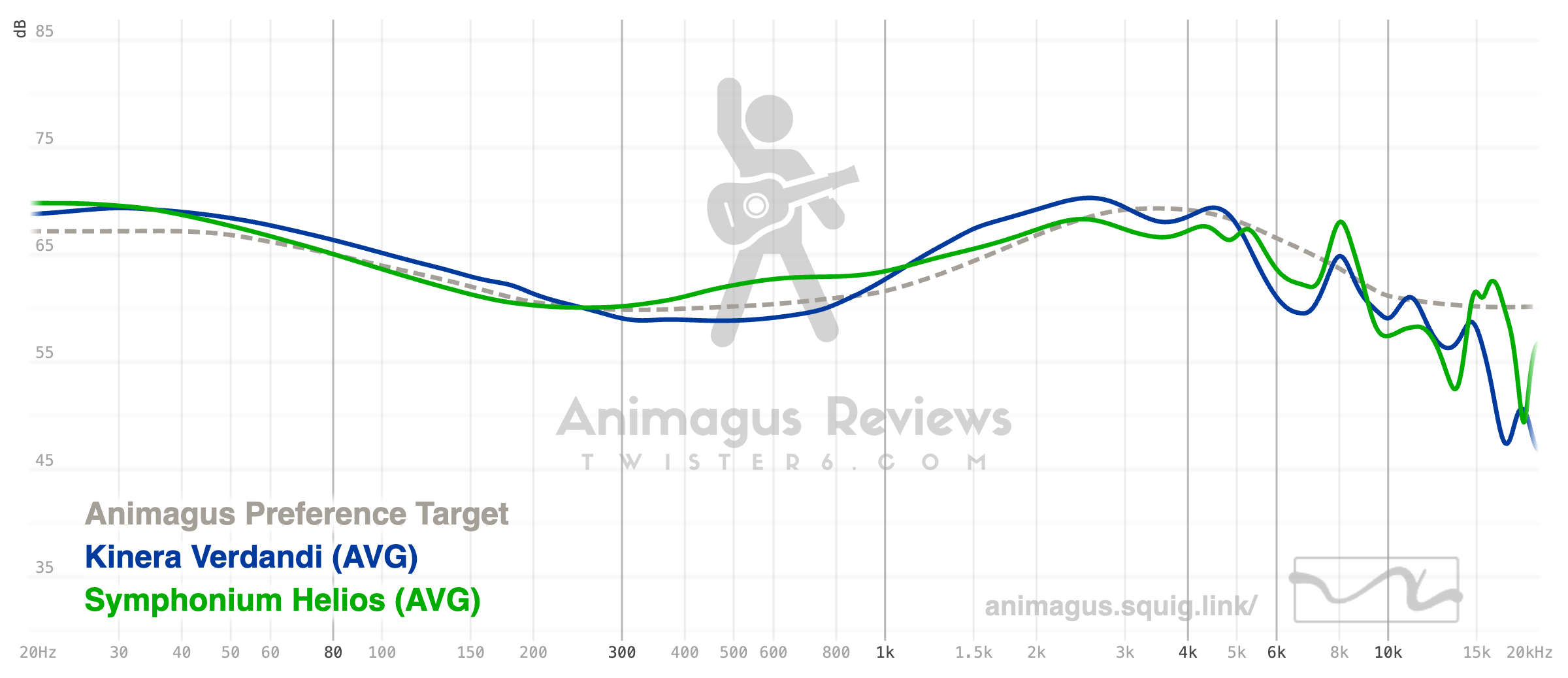
Normalised at 250Hz for a more accurate comparison.
Helios has 4BAs with a W-shaped signature that is leaner as well as brighter and airier compared to Verdandi. Because of that it has a cleaner sense of space with wider and deeper boundaries along with better micro-detail retrieval and instrument separation left to right. Because they are so differently tuned, you can have starkly different perception of each based on the one you try first, are more used to and your listening volumes. If you listen to Helios first, Verdandi will come across warm, fuller sounding and probably even muddy while if you’ve gotten accustomed to Verdandi first, then Helios will come across leaner and brighter. The thing is that they’re not really like that in isolation and with neutral – reference calibrated ears. Verdandi is tuned for a fun listen at higher volumes while the Helios is tuned for a more accurate, detailed listen at lower volumes and they’re both very good at what they do. When it comes to technical performance, both can enable a holographic listen but with very different flavours – Helios offering a cleaner, more open and airy soundstage with wider and deeper boundaries, instruments panned further apart and there being more space between the left to right panned instruments. Verdandi on the other hand enable a holographic listen but with a more intimate soundstage in comparison, stronger definition and imaging of instruments. Since they’re both good at what they do and so very differently, it’s tough to choose an outright winner.
Custom Art FIBAE 5.
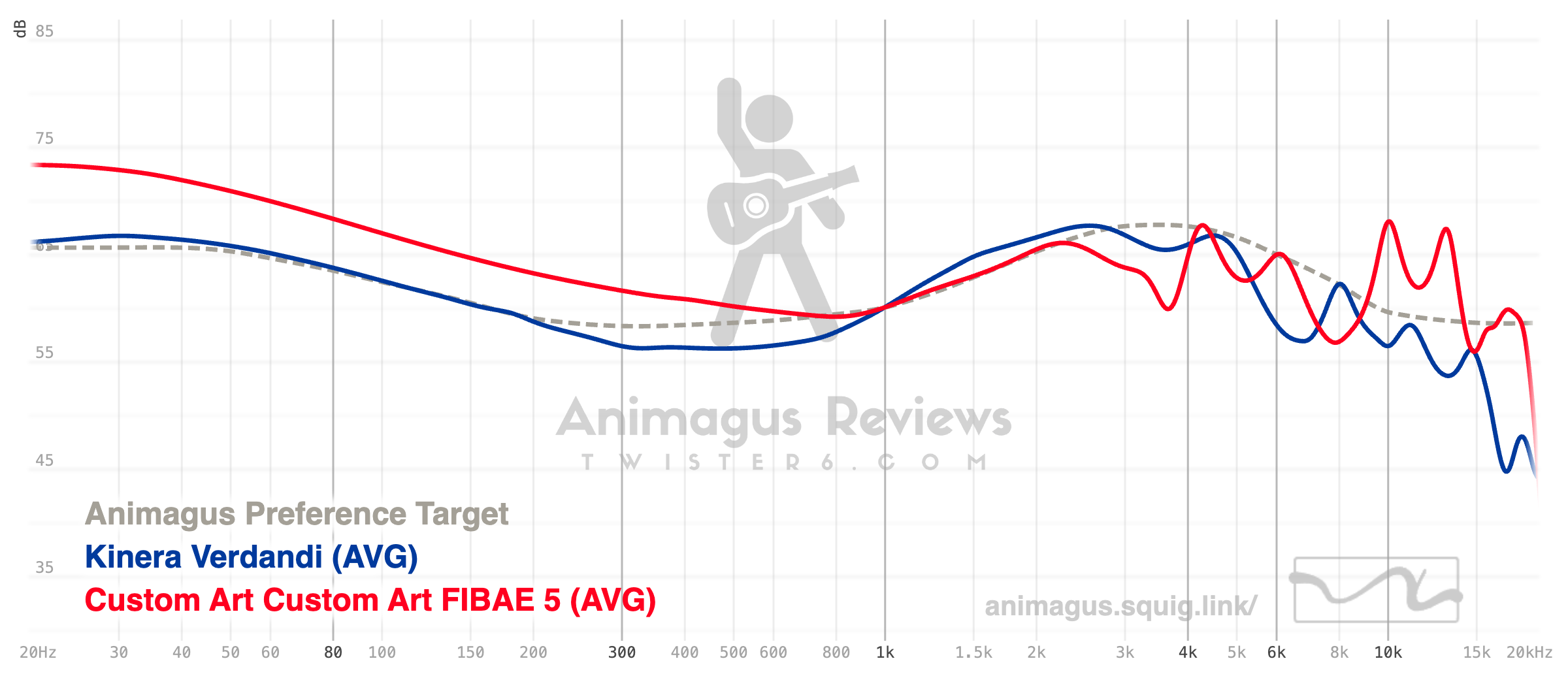
F5 has a much more V-shaped signature compared to Verdandi with a bigger bass boost, slightly recessed upper-midrange and much sizzlier top end. This results in F5 coming across much more coloured – energetic and vivid sounding while Verdandi sounds more organic and natural. F5 has stronger instrument detail retrieval because of the brighter signature, a much wider soundstage and more separation between left to right panned instruments while Verdandi has deeper depth, more holographic imaging as well as depth layering.
Conclusion.
Verdandi is a well done, slightly toned down, warmer take on Loki Emerald at a cheaper price point. It keeps most of the Bone Conduction performance intact while dialling down the technical performance in preference for a more easy going, laid back listen compared to Loki Emerald’s energetic and vivid presentation. I reckon Kinera wanted to make their proprietary BC + DD driver combo more accessible at a cheaper price point while offering a yin to the Loki Emerald’s yang and I think they’ve succeeded at that quite well. I personally would’ve preferred slightly more lower-treble while filling out the lower-midrange dip, but it’s mostly me nitpicking here for my own subjective preferences. Overall, Verdandi might not be the most technical (detail oriented) performer in its price segment but its BC driver performance is most audible compared to other BC IEMs and helps in more holographic staging, imaging and depth layering than other non-BC IEMs in its segment – which in return makes it quite special. On top of that, it’s an IEM that is very easy to get along with as it sounds natural right off the bat and needs no adaptation period, and comes with premium packaging and accessories that IEMs several times its price don’t. All of it combined makes it a fairly safe and easy recommendation at the $1200 price point for fans of BC driver hybrids and easy, natural sound signatures.
Gear used for testing and review.
- DAPs – iBasso DX300 | HiBy R6 Pro II
- Phone – OnePlus 7 Pro with iBasso DC03 Pro and Tanchjim Space.
Artists I like and listen to.
- Rock – Foo Fighters, Linkin Park, Switchfoot, Imagine Dragons, Daughtry, Green Day, MuteMath, X Ambassadors, Dave Matthews Band, Vertical Horizon, Our Lady Peace, Lifehouse, Fall Out Boy, Breaking Benjamin, Muse, ACDC, Audioslave, Rage Against the Machine, Biffy Clyro, I Am Giant, Normandie, Paramore, Slash & Guns N Roses, 3 Doors Down.
- Pop Rock – John Mayer, Coldplay, Paul McCartney, James Bay, Hunter Hayes, Niall Horan, Keith Urban, The Bros Landreth, Bryan Adams.
- Progressive Rock/Metal – Porcupine Tree/Steven Wilson, Karnivool, Tool, Dead Letter Circus, Periphery, Lamb of God.
- Pop/Soft Rock – Ed Sheeran, Adele, Taylor Swift, OneRepublic, The Script, Gavin James, Magic Man, Maroon 5, Bruno Mars, Charlie Puth, Dua Lipa, The Weeknd, Oasis, Panic! At the Disco, TwentyOne Pilots.
- EDM – Chainsmokers, Zedd.

 Twister6 Reviews