

Comparison.
In this test, I was using Jewel and IT07. Each of these DAPs, besides a difference in tonality and pair-up synergy, has its Pros/Cons when it comes to features, all of which should be taken into consideration depending on your priorities if you need streaming or not, which balanced termination you prefer, how much output power do you need, your battery requirements, etc.
DX180 vs DX170 – starting with my usual analysis of the soundstage and imaging, these two are quite similar in their spacious natural soundstage expansion and precise imaging, though 180 imaging has a bit more 3D placement. But with a tonality, I do hear more differences. While neither one has elevated bass, 180 has more sub-bass rumble and texture, while I didn’t hear the same with 170. Then, with mids, I hear 170 being denser, with a slightly fuller body in lower mids, and a bit more coloring in upper mids. On the opposite, 180 has more transparency with less coloring and noticeably better layering and separation of the sounds, less dense than 170. With treble, 170 added extra sparkle and slightly more brightness while 180 is airy and revealing but with more control in tonality to give the treble a bit more naturalness. Another noticeable difference was a blacker background in 180 which resulted in improvements in sound dynamics. 170 also has a good level of sound dynamics, but 180 was a step above it.
DX180 vs DX260 – unfortunately I didn’t have these two side by side because I sent 260 to another reviewer on Tw6. I hate doing sound analysis by memory, but I can say with certainty that 260 has a warmer and more organic tonality. 180 is closer in tuning to 260 than 170 to 260, especially when it comes to the treble which is more natural and better controlled, something 180 and 260 share together. Also, I recall the 260’s soundstage spreading wider left/right.
DX180 vs DX240 (w/amp8mk2) – both have a spherically shaped soundstage expansion with 3D-like imaging, but 240 with amp8mk2 stretches it a bit wider, with some of the sounds coming from behind you. Their tonality also has a bit of a variation. While both have a textured sub-bass rumble, I can hear 240 elevating the bass a bit higher in quantity, typical of amp8 architecture which iBasso implemented in their other DAPs. Mids tonality is very similar, being more neutral and natural, but toward the upper mids, it starts to sound more revealing in 240 due to its brighter, crisper treble. If you just focus on mids using the same pair of IEMs between these two daps, the tuning is very similar, but the perception changes up top due to a brighter treble in 240. I also hear the 180 noise floor to be lower, evident in some of the instrumental tracks with simpler single-instrument at-a-time arrangements. 260 is a warmer dap in comparison to the more revealing 240. Tonality-wise, 180 is somewhere in the “neutral” middle.
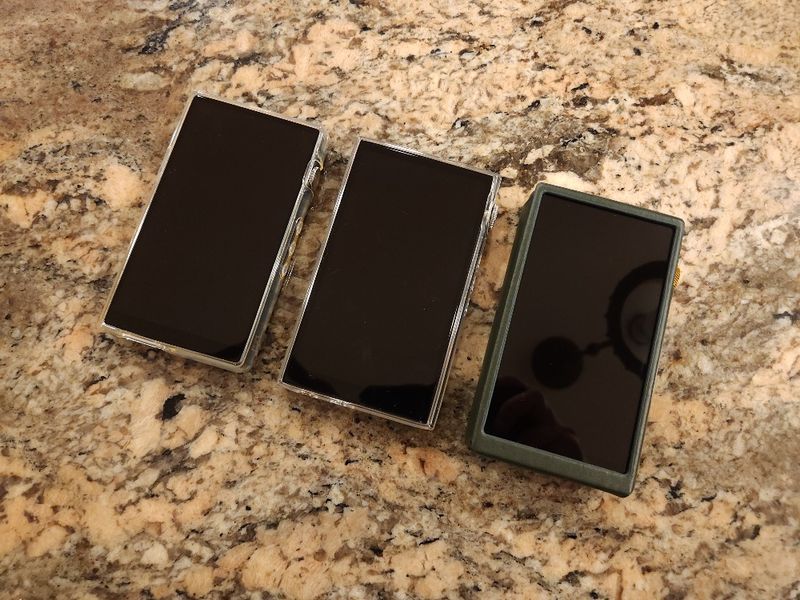
DX180 vs Hiby R6iii (Class A) – when it comes to the soundstage comparison, 180 is a bit wider while they both have a well-expanded 3D imaging, perhaps with R6iii just slightly scaled-down along with its soundstage width. Also, once I switched the R6iii amp to Class A which added more natural tonality to mids, the overall tonality between these DAPs became quite similar. I can’t even point a finger at any significant difference. But where I find the difference is in the technical performance between these DAPs. As expected, the noise floor of 180 is lower, creating a much blacker background in comparison to R6iii, especially when I switched R6iii to Class A. Also, the dynamics of vertical peaks are flatter in R6iii, making its sound a bit compressed in comparison to more expanded dynamics and variation in sound peaks in 180.
DX180 vs Cayin N3Ultra (Classic tube) – both have a decent soundstage expansion (though N3U is a bit wider) and nearly holographic imaging, though 180 brings you closer to the performer while N3U takes you a few steps back to create more space in front of you. The dual JAN6418 tubes of N3U also add more analog texture to the sound, as expected from vac tubes, but surprisingly the naturalness of the tonality between these DAPs is not too far off. In a relative comparison, N3U mids are warmer and pulled more back, while 180 mids are more neutral and more detailed and upfront. As a result of the mids presentation, N3U has slightly more elevated bass and a touch more forward treble in comparison to the perception of 180 bass being more neutral and treble being smoother. Also, I do hear a blacker background with 180, especially in my test tracks like “The Curse”.
DX180 vs Lotoo PAW6k – the soundstage and imaging here do vary a bit, with 180 being wider in staging and more holographic in imaging, while 6k has a touch narrower width and a bit more center-focused imaging. 6k is a warmer tuned DAP with a more elevated bass punch, noticeable in the mid-bass of IEMs I tested these with. In comparison, 180 bass is more balanced in quantity. 6k mids are smoother and warmer in comparison to the more neutral-revealing tonality of mids in 180. The treble sparkle and the overall presentation are nearly identical. Also, from a technical perspective, 180 does have a blacker background and improved layering and separation of the sounds. Doesn’t mean 6k is bad, just that technically 180 has an edge over it.
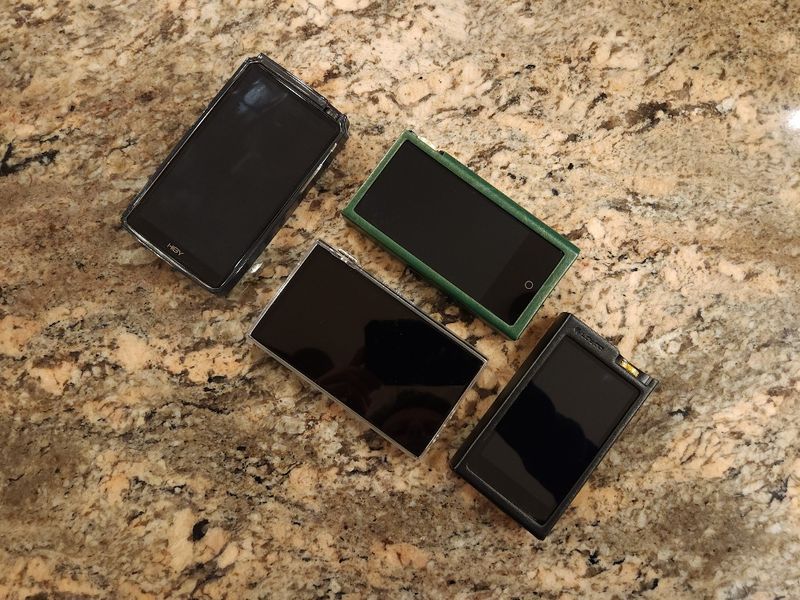
DX180 vs iBasso DC-Elite (w/Galaxy S22) – why am I comparing a DAP to a dongle? Because DC-Elite is not just another “dongle” and has a performance on par with other DAPs that cost 2-3x as much. But their price is similar, and I had a few people asking me about this comparison, so why not? They both do have a holographic level of imaging and how sounds are positioned in space, but the expansion of the soundstage itself is by far superior in DC Elite, placing you in the middle of big 3D space. The tonality varies as well, with DC Elite having a stronger bass impact, more revealing and micro-detailed mids, and more sparkle in treble. In comparison, 180 bass is more neutral, mids are more natural while still being quite detailed, and treble has a little more control when it comes to sparkle. But here is something I didn’t expect. When I compared DC Elite connected to my Galaxy S22 smartphone vs 180, the technical performance did scale up with 180/DC Elite, having a blacker background, improved dynamics, and overall better articulation of the sound with faster on/off note transient. I preferred DC Elite with 180 over the connection with my smartphone.
Other Wired/Wireless connections.
In this section of the review, I will go over various wired and wireless connections I tested and verified with DX180.
Streaming.
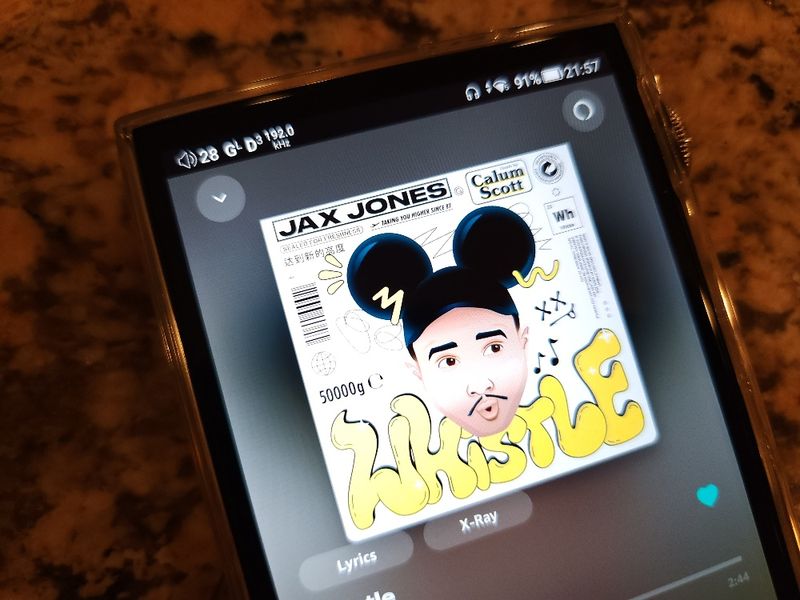
Not much to say here since DX180 has a solid WiFi connection, as fast as my Galaxy S22 phone. Using apps is a pleasure, again, no different than with my smartphone; it’s a smooth experience considering Snapdragon 665, Android 13, and 4GB of RAM for multitasking. I tested with different hi-res streaming services, and no compatibility issues were found. Also, I found accurate max sampling rate support, like below in Amazon Music HD.
Coax out.
Tested with iBasso D16 using its coax cable to get the connection going; worked without a problem but you do have to remember to enable SPDIF “on” from pull down or audio settings menu in DX180. As expected, I found the volume on DX180 to be fixed and, the output volume adjustable using D16. While remembering my testing of D16 with DX260 using Coax vs USB-C, I did the same comparison here.
Coax (w/DX180) vs USB-C (w/DX180) – using Coax there is a noticeable improvement in a blacker background with a faster and cleaner transient change of notes on/off. And I also hear some improvements in vertical dynamics. The tonality had a bit more transparency and less coloring, and I also hear the soundstage and imaging to be more holographic. I preferred Coax over USB-C in this connection since there is a noticeable improvement in sound quality and I can free up the USB-C port of DX180 to charge it during the playback.

Digital audio usb-c out.
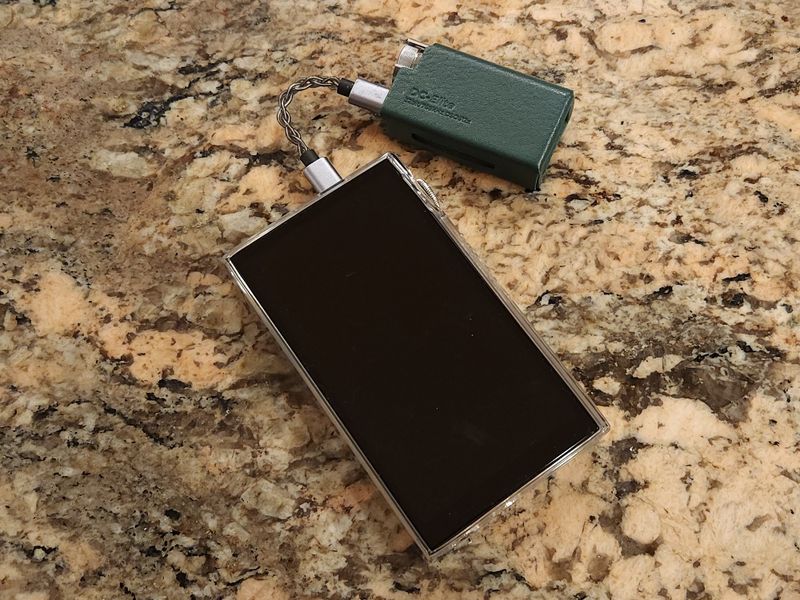
This test was performed with an iBasso DC-Elite usb-dac dongle. It works with DX180 without a problem, just connect usb-c cable and off you go. The volume control on the DAP does not influence a digital usb-c output so you will have to control the volume from the dongle. I already talked about the sound quality of DX180 w/DC-Elite in the Comparison section of the review. The sound quality of DC-Elite with DX180 was better than when connected to my Galaxy S22 smartphone. Also, you can install the DC-Elite app on DX180.
Line Out.
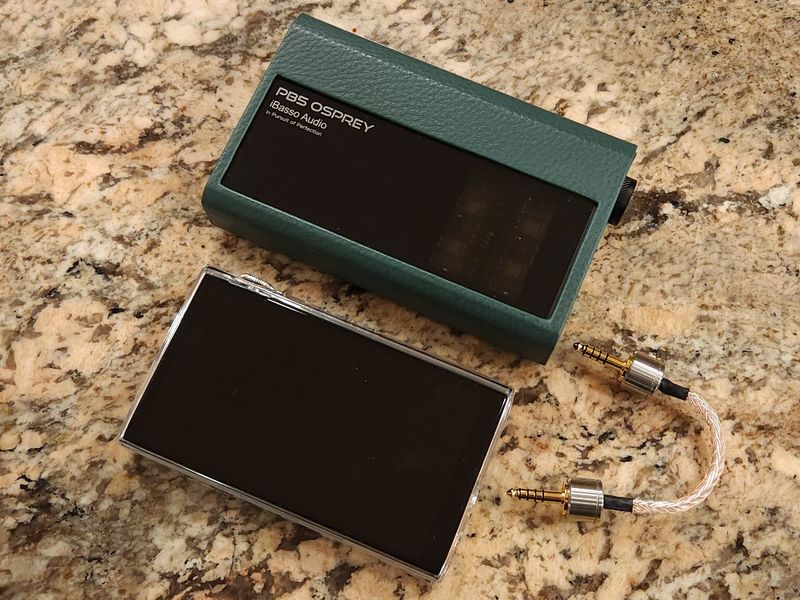
I tested the LO of DX180 with iBasso PB5 amp, using PB5’s balanced 4.4mm cable. LO has to be switched in the output from PO, and you can control the volume from both the DX180 and PB5. DX180 LO output is very clean and neutral, and pair-up with PB5 enhanced it with a warmer analog tonality without losing resolution. Plus, you get a healthy boost of power thanks to PB5 output.
USB DAC.
USB DAC mode needs to be activated in the Advanced setting of the Mango app. When activated, you have the option to change the digital filters and the gain. Win10 recognized it right away, no drivers were necessary. During the playback, the volume can be adjusted from both DX180 and laptop. Also, when enabled, you have the option to enable/disable charging mode, so you don’t have to drain your source battery charging DX180 during the connection. This is convenient when using a smartphone as a source to prevent DX180 from draining its battery.
It is worth mentioning that iBasso implemented a dedicated USB receiver for low-latency USB-DAC mode here.
Wireless Bluetooth Rx DAC.
This (Bluetooth DAC) mode gets activated from the Mango app in the Advanced setting, and the pair-up connection was fast and effortless with my Galaxy S22. Volume could be either adjusted from S22 or DX180. Also, I was able to confirm over 60ft of open-range operation. But to my surprise, no option to enable LDAC was available, thus I’m not sure if it is supported in this mode.
Wireless Bluetooth Tx.
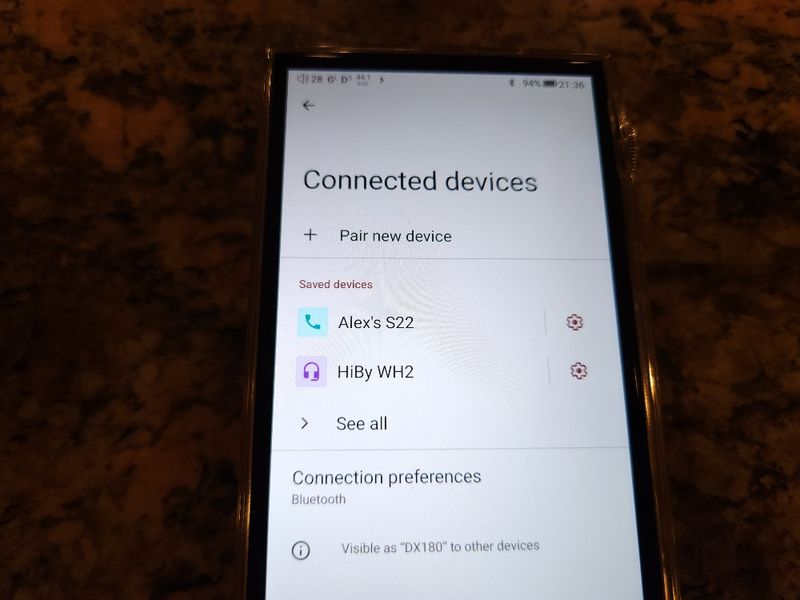
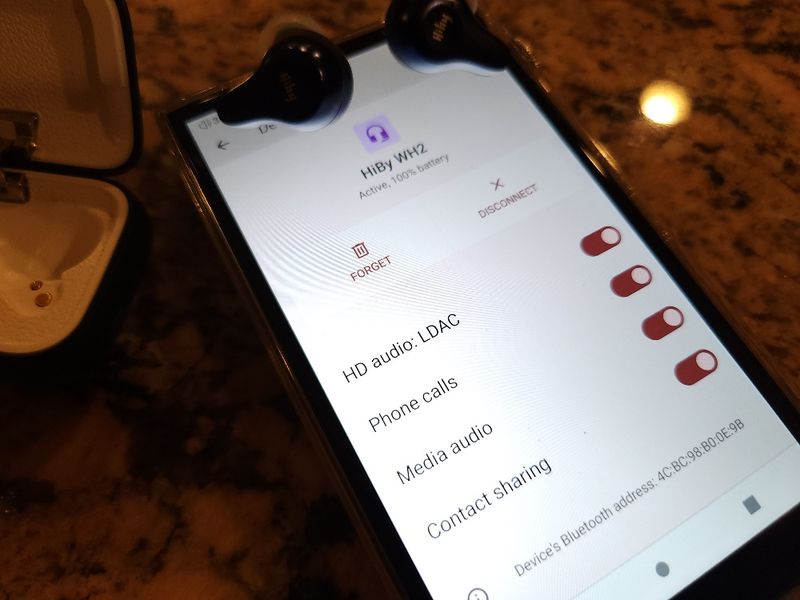
Tested it with Hiby WH2 tws. I found the pair up with these earphones to be fast and effortless, was able to select LDAC codec in Bluetooth setting of DX180, and it worked up to 50ft across the open area, allowing full remote control of playback with WH2. That is as good as a pair-up with my smartphone. Also, confirmed remote playback operation from WH2.
Conclusion.
When it comes to iBasso DAP releases, I usually get as excited about their entry-level models as I do about their money-no-object flagships. With these entry-level players, the expectations are usually lower, thus you get an even bigger wow factor surprise when you realize how much stuff was packed into their cheapest model without compromising the design or sound performance. Though the same was true for both DX160 and DX170, DX180 took it to the next level.
While featuring a large hi-res 5” display from Sharp, it is still a very compact pocket-friendly DAP with a snappy Android 13 performance thanks to Snapdragon 665. It has plenty of RAM and internal storage, fast WiFi connection, and offers both 4.4mm/3.5mm PO and LO, 3.5mm Coax, and other digital connections. A truly great battery life with fast charging and a user-replaceable battery is just the icing on the cake, in addition to a quite powerful output.
Its audio performance was probably what surprised me the most. Keeping it close to a neutral sound signature, iBasso still managed to tune it with plenty of detail retrieval, excellent dynamics, and realistic soundstage expansion without exaggeration. Plus, its black background with a very low noise floor is what makes DX180 stand out not only from other entry-level models but also from some mid-fi and maybe even higher-end DAPs. I’m impressed!

 Twister6 Reviews
Great review thank you. A lot of times you explain the differences you here between the D filters. Did you notice any? Was D3 your preferred D filter? Did you notice any difference between the FIR filter being normal and X2?
Thank you, Don
LikeLike
The changes are more subtle here. Also, it will depend on which IEMs you are using and how fast its drivers can respond to transient changes of the notes. I just went back and listened again and can summarize it as (though don’t expect that you might hear the same):
D1 (Fast Roll off) – the sound has a faster pace, sounds tighter
D2 (Short Delay, Slow Roll off) – the sound has a more laidback pace, sounds relaxed
D3 (Short Delay, Fast Roll off) – the sound has a more laidback pace, sounds tighter
D4 (Slow Roll off) – the sound is more laidback and has a slightly fuller body
D5 (NOS) – the sound is smoother, less articulate (not as tight), notes have longer attack and decay
FIR NOR vs 2x – 2x has notes tighter, snappier, with a faster transient response of notes on/off
LikeLike
About the EQ In this DAP – It’s not a part of the system / It’s a part of the Mango Player app! In my use case, it’s important!
LikeLike
yes, that is correct, it is not system wide EQ, but rather Mango app based. I have reviewed so many iBasso daps, and they are all the same, so I stopped mentioning it. But it is a good point, and I just added it back in the intro of my EQ section of the review 🙂
LikeLike
Hi, thanks for the review. I saw a review on Head-Fi yesterday of the DX260. It said that it was better in every sonic respect than the Lotoo GPT. I know that you have heard both. Is the DX260 really better than a player 3x its price? Grateful for your thoughts.
LikeLike
Not sure if I got out of that review that 260 is better than LGPT in every aspect. The reviewer was just describing pair up synergy of his favorite iems with a number of different DAPs, talking about his personal sound preference. Depending on how you reading into that, almost makes it sound like $400+ M11s is the same or better than $3.5k+ DX320Max Ti 😀 I only had 260 for a short period of time, and it is a nice warmer tuned analog quality DAP.
LikeLike
Thanks for the very good review. I use the IEM FiiO FA9 on a FiiO Q3 DAC with my iPhone and I am actually satisfied with this combination. Do you think that the FA9 on the iBasso DX180 plays out its potential much better than on the Q3? I’m only concerned with the sound, not the differences in operation.
LikeLike
It would be hard for me to answer this question since I don’t have FiiO products. But in general, FiiO products, especially the low end stuff like q3, are not considered to be of audiophile quality. DX180 performs on a high audiophile level where it can go up to the performance level of many DAPs up to $1k, so I have no doubt it will be an upgrade for you. Besides. it’s a standalone fast android DAP with unlimited access to apps, so you don’t even have to bother with your iphone and external dac/amp.
LikeLike
Great review. Do you consider the dx180 a huge upgrade coming from dx160 soundwise? I still love my dx160 but the ui is sluggish and battery life drains so fast even on standby mode.
LikeLike
I would upgrade it without blinking an eye.
LikeLike
What would be a viable upgrade to the dx180? Currently have the dx180 and n3 ultra.
LikeLike
What do you think of the DX300 in 2024/2025?
Some of them used are going for prices as low as DX180. Both use 4 cirrus dacs, different models though. I wonder if the update in FPGA and Android version makes a noticable sonic difference.
And the 300 having 2 separate batteries for analog and digital, how does that fare against the newer DAPs, in particular their latest DX180.
Is the DX180 just like the DX300 for less than half the price?
Thanks for all the reviews.
LikeLike
Haven’t touched dx300 in a long time, ibasso has new releases every year, multiple times a year. I might have to go through boxes to find it for this comparison. A few things to keep in mind, just because it uses similar dacs the amp design is still different and dx300 has modular design to switch between different amps. But the bigger problem here is aging battery, those won’t be easy to replace unlike in their upcoming dx340 or latest releases. I would be cautious about it. After 3+ yrs, these batteries are not in the best shape.
LikeLike
Thanks for a swift reply.
The 300 has a much higher power output versus 180. Therefore I kinda thought that the 300 should accompany fullsized planar headphones such as Aryas better.
The quality of the battery certainly is an important factor for a used Dx300. If I do find one that is not used much for 400-500 USD. I wonder how it would compare to Dx180.
Please let me know if you are able to run it back with the 300 🙂 There is not much to find about the Dx300 in 2024
LikeLike
and that brings us to another important point. They could sound similar while using easy to drive IEMs, but DX180 will fail to drive more demanding planar headphones (most likely it will) while DX300 won’t have a problem… Planar headphones need current, not just voltage. And some of these dap output power calculations are based on paper using voltage numbers without accounting for the need of a current source to drive planar cans to their full potential. So, yeah, if you find DX300 with “low mileage”, that could be a good deal. Plus, you will be able to upgrade with other amps, like their NuTube amp card.
LikeLike
Hello thanks for the review. If I was going to upgarde my dx180 to something in the below 2k price range. What is a dap you would recommend. Currently considering the se300.
LikeLike
why would you consider an old closed android slow SE300 when iBasso is about to release a new flagship DX340, open android (and dual boot OS switch to pure-audio Unix without android), high power output, fast performance, for around $1700 with a modular amp design and the same discrete DAC as in their D16 dac/amp. DX340 going to be a beast and probably the best upgrade path for you.
LikeLike
Hello;
I follow your articles closely as a music lover. I am torn between Fiio m11 plus or Fiio M23 and Ibasso DX180. I mostly think of integrating it into my own hi-fi system. Of course, it will be used outside as well. The device structure, sound quality and ease of use are also important of course. What is your opinion when compared to these devices in general and as a whole?
Thank you, I wish you good work.
LikeLike
sorry, not familiar with fiio products. Used to review them many years ago, but they only like to deal with reviewers who promote and praise their products, so… Plus, most of my readers never ask me about Fiio DAPs since they are usually not considered to be of a higher audiophile level. As far as DX180 goes, it’s a great little dap with a very impressive price/performance ratio.
LikeLike