
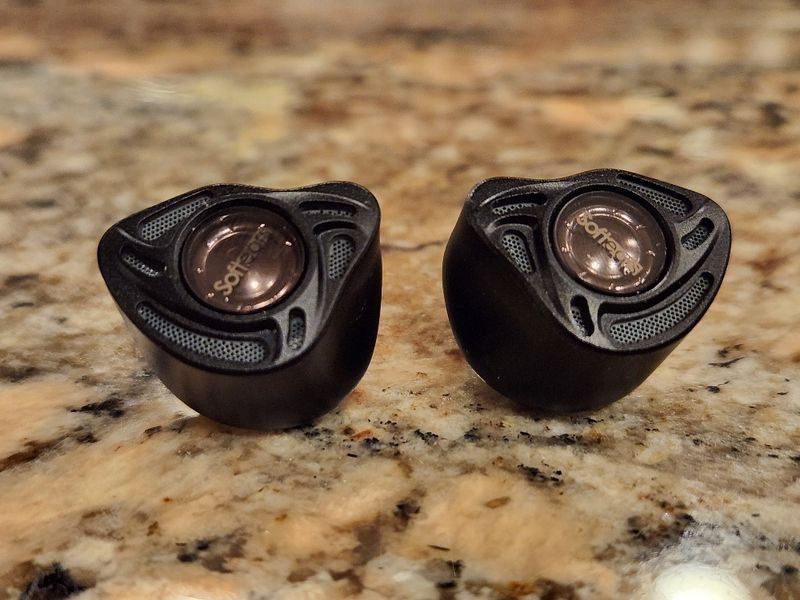
Sound Analysis.
I analyzed Enigma sound performance paired up with SP3000T and R8ii sound sources while playing a variety of test tracks, such as Agnes Obel’s “The Curse”, Sandro Cavazza’s “So much better” (Avicii remix), C-Bool “Never go away”, Ed Sheeran “Shape of you”, Alan Walker “Darkside”, Galantis “Hunter”, Iggy Azalea “Black widow”, Indila “Boite en argent”, Dua Lipa “Love Again”, Counting Crows “Big yellow taxi”, Bob Marley “Jamming”, David Elias “Vision of her”, and Michael Jackson “Dirty Diana”. By force of habit and considering its use of DD drivers, I had Enigma on burn-in for about 100 hours before I started to collect my impressions. I was using a stock EA Hybrid cable and stock grey/black silicone eartips.
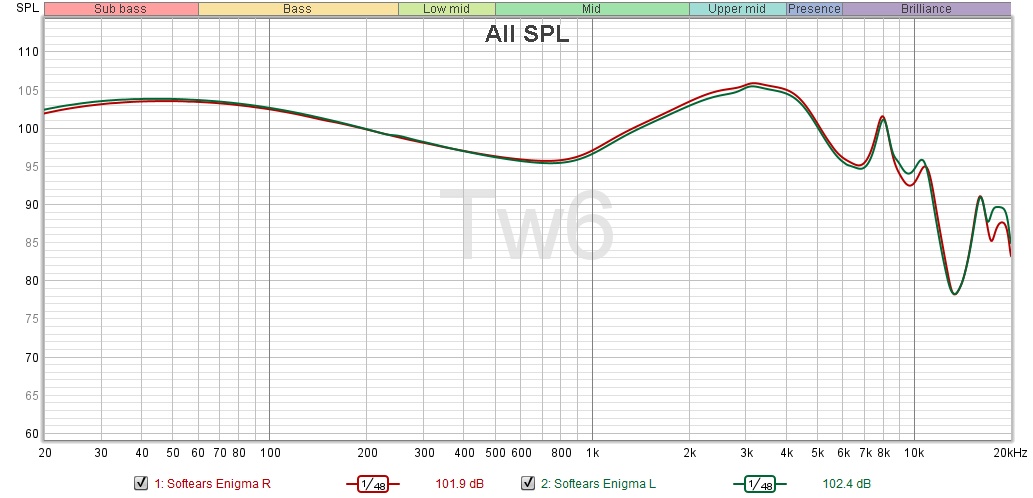
I found Enigma IEMs to have a balanced sound signature with a natural detailed tonality. Unlike some of their previous releases with either more neutral or natural or revealing tuning, Enigma has a relatively balanced tuning across the entire frequency range with a deep full bass, natural detailed mid-range, and well-controlled clear natural treble. I have noticed Enigma having a source pair-up dependency, affecting its treble and corresponding sound resolution. Also, despite its tribrid design, the overall tuning is quite coherent, with all drivers working effortlessly together in unison.
The bass goes deep with a textured rumble, not too elevated, but with a decent extension to give the low-end its fullness. Mid-bass has an average attack and decay speed, giving the bass notes more rounded characteristics with a less aggressive punch and more natural articulation. Mid-bass performance did vary across different pair-ups as well, thus has to be taken into consideration. What I find quite impressive here is that the low-end driver design is a hybrid combination of active DD, passive DD, and 2BA drivers, yet, combined, it sounds like a coherent bass tuning coming from one large full-size headphones driver. The bass is not over-emphasized or neutral/flat, so not for bassheads or audio purists who fancy fast/flat lower-end. It is perfectly balanced between sub- and mid-bass and has a tastefully elevated DD rumble and punch to give the bass a more realistic timbre you can feel.
Mids have natural tonality with a touch of analog warmth. Lower mids are above neutral, giving the vocals and instruments their analog warmth, but they are not too thick either, just perfectly blending in with a decay of bass notes. Upper mids have a proper pinna gain, which in conjunction with lower mids creates a natural detailed tonality and timbre accuracy. The balance between the bass and the mids, without bass being overemphasized, gives the upper mids its forward presentation without the actual sound signature being mid-forward. Again, Enigma’s mids are perfectly balanced and sound natural without being too thick or too bright.
Treble tuning here is a bit tricky because when I first started with my typical reference sources such as P6 Pro and LPGT, I was a bit concerned with high frequencies being tamed down. But once I went through a source rolling, trying other DAPs (check more details in the source Pair-up section), I got back the natural crunch and clarity which elevated the resolution of the sound. Typical of other quad-EST drivers, don’t expect a long extension or lots of airiness, both of these characteristics are on the moderate side of tuning. But the treble is quite natural, clear, and detailed, and gives mids their clarity to enhance the retrieval of details. In my opinion, here the treble plays a supporting role to the stars of the tuning, which is the bass and mids.
The soundstage expansion is definitely above average, being spherically shaped and evenly expanded in all 3 directions of width, depth, and height. It is not super wide or out of your head in the majority of pair-ups I tried, and the imaging itself is not exactly 3D holographic. I think Softears decided to keep the soundstage expansion and imaging more realistic and natural without any exaggeration, with everything layered and separated in space without being center-focused or feeling too intimate. Here, every instrument and vocals are easy to distinguish in space without any congestion.

Eartips Selection.
The selection of eartips is crucial to any universal in-ear monitor and will affect the sound, especially the bass impact depending on the seal. Due to a large opening of my ear canals, I usually go for the largest size eartips to get a better seal. Also, please keep in mind, that eartips impressions are subjective and will be based on the anatomy of your ears. My suggestion is to build up your eartips collection and try each one with every new IEM you get to find the pair which yields a perfect sound for your ears.
Stock clear silicone (grippy) – balanced sound signature with a natural detailed tonality; naturally expanded spherical soundstage.
Stock black foamies – balanced sound signature with a warmer detailed tonality, noticeably more low-end weight, especially sub-bass, fuller body mids, and softer treble. The soundstage is narrowed, more extended out of my head.
Stock grey cap/black core silicone – yields the most balanced sound sig among 3 stock pairs with a clear emphasis on lows, mids, and highs, natural detailed tonality with improved retrieval of details, punchier mid-bass, and a bit more air in treble. Still naturally expanded the soundstage, but extra air in treble shows some improvement in imaging.
SpinFit W1 – similar to stock clear tips, but with W1 I hear a bit more weight in bass, especially sub-bass, and a touch more body in lower mids.
Azla Crystal – very similar to stock silicone grey/black, just a bit narrower soundstage with the sound being slightly more out of your head.
Final Type-E – this one yields a different sound with more emphasis on sub-bass, flatter mid-bass, leaner lower mids, and more forward upper-mids. Wasn’t too crazy about this sound.
Eletech Baroque – very similar to stock silicone grey/black, with nearly identical tonality and soundstage expansion. The only difference is the improved fit and comfort of Baroque due to a softer silicone material.
Symbio F – similar to stock silicone clear eartips, and that was a surprise considering these are foam eartips. With these foamies, I didn’t have to deal with grippy silicone, and they stayed as secure in my ears.
Symbio W – very similar to Symbio F, but the soundstage got a bit narrower, so I preferred Symbio Foamies instead.
Relative to the anatomy of my ears, stock grey/black worked the best, though I preferred Baroque which gave me the same tonality and soundstage expansion and improved comfort. If you want slightly less bass emphasis and more focus on mids/vocals, stock clear silicone was the choice though Symbio F gave me the same sound characteristics with improved comfort.

Cable pair up.
I’m aware that some people don’t believe in cables and have a very strong opinion about them. It’s not my intent to change those minds. Instead, I’m just sharing what I hear during my testing. What makes sense to me is that a metal wire is a material with physical properties of resistivity, conductivity, purity, and unique geometry, all of which act as a filter between your source and headphones. Variations of these physical properties can affect the conductivity of analog signal, resulting in a sound change, from a subtle to a more noticeable level. If the talk about cables upsets you, please skip this section. Otherwise, enjoy these short impressions.

Stock EA Hybrid to PWA FT – a bit smoother upper mids and a slightly smoother treble.
Stock EA Hybrid to EA Chiron – more holographic imaging, more revealing and micro-detailed mids, and more air/crunch in treble. Makes the sound a bit brighter.
Stock EA Hybrid to EA Cleo 2 octa – the soundstage has more depth, extending further out of your head, mids are smooth and natural but sound a bit distant; treble is clear and detailed.
Stock EA Hybrid to LL Venom – excellent pair-up synergy with a noticeable expansion of the soundstage, making it wider, deeper, taller, and more holographic. I also hear some improvement in mids being more layered, with better separation and retrieval of details. Treble crunch remains the same, but the soundstage and mids improvement was noticeable.
Stock EA Hybrid to Eletech OTL – faster and stronger mid-bass punch and a little smoother, more analog-sounding mid-range, though it is still quite detailed.
Stock EA Hybrid to Eletech SOA – a noticeably bigger soundstage expansion in width, also resulting in more holographic imaging of sounds. Sub-bass rumble is similar but mid-bass punch is faster and stronger, more articulate. Mids are still natural, but I also hear an improvement in the retrieval of details. The treble has a little more crunch and some enhancement in sparkle.
Stock EA Hybrid to PlusSound PPH – here, the sound emphasis shifted more toward the mids and the treble. The bass is good, but a bit more neutral, while mids are more pronounced, more forward, more detailed, and the treble is snappier with extra crunch.
The pair-up synergy of Enigma with its stock EA Hybrid cable is quite good, to begin with, thus there is no absolute necessity for a cable upgrade. But I did enjoy Venom and SOA cables with the finetuning they brought to the sound.

Page 3 – Comparison, Source Pair up, and Conclusion.

 Twister6 Reviews