
Pair ups.
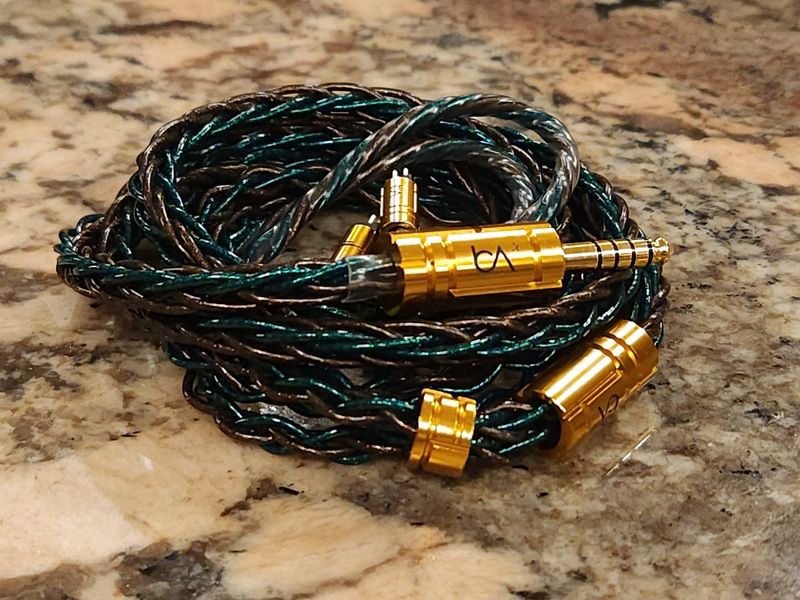
Here is how I hear Orbit Saga pair up with different IEMs. For this testing, I chose a handful of high-end premium monitors with different sound sigs, to compare the sound between Orbin Saga (OS) and either their stock or upgrade cables. Furthermore, I used L&P P6 Pro as a neutral reference source while playing the selection of my usual test tracks, such as Agnes Obel’s “The Curse”, Sandro Cavazza’s “So much Better” (Avicii remix), C-Bool’s “Never Go away”, Ed Sheeran “Shape of you”, Counting Crows “Big yellow taxi”, Galantis “Hunter”, Alan Walker “Darkside”, Iggy Azalea “Black widow”, Indila “Boite en argent”, Robin Schultz “Oh child”, Dua Lipa “Love Again”, David Elias “Vision of her”, and Michael Jackson “Dirty Diana”.

Also, please keep in mind that I’m describing the sound of an IEM paired with a specific cable, driven from a P6 Pro source, and how the sound of that IEM compares when I switch cables. I don’t want to imply that cable will have a drastic EQ-like night’n’day effect on the sound of IEMs. Based on what I’m hearing, the cable can finetune the sound, but if you find the original signature of IEM to be not your cup of tea, no cable alone will change that.
Aroma Jewel w/ PWA FT vs OS – I hear a noticeably wider soundstage expansion, very noticeable here. Going from FT to OS, the bass is tighter, faster, and even more articulate, but also a bit more neutral in quantity. Mids and Treble is where Jewel shines with OS. Without sounding stereotypical, it did feel like a veil was lifted of the sound, bringing out more details with an enhanced crystal-clear, sparkly, airy treble. What surprised me here was how the sound became more detailed, more expanded, and more natural at the same time. Also, I hear a super black background. The sound change is even more drastic when you are comparing OS to Jewel’s stock cable, where with OS the sub-bass rumble and mid-bass impact are scaled up, you can hear more presence/weight in the low end, mid-range is smoother and more detailed at the same time (my favorite improvement here), and treble has more sparkle and airiness.

UM Mason FS ST/NE w/PWA FT vs OS – I don’t have the original Mason FS ST/NE FirstTimes Shielding Pro cable, so I was using my regular FT cable instead. But I have done extensive testing of these iems when I had a chance to review them with their original stock cable vs FT, thus while in this comparison I hear a wider soundstage, more holographic imaging, and blacker background with OS, these were also technical changes I heard between FT and FTS Pro cables. Thus, from a technical perspective, going from stock to OS cable here is probably very similar. But the tonality has changed, again, lifting the veil of the mids and treble and making the bass tighter, faster, articulate, and a bit more neutral in its presentation; having less of the “dirty” rumble. I was surprised, once again, how OS improved the retrieval of details along with layering and separation of sounds in mids/vocals, yet still kept the original textured analog tonality. It’s a very interesting and consistent sound improvement effect. With treble, OS took an extra edge of the energy in mid-treble, keeping the clarity and airiness, but making it a bit more natural.
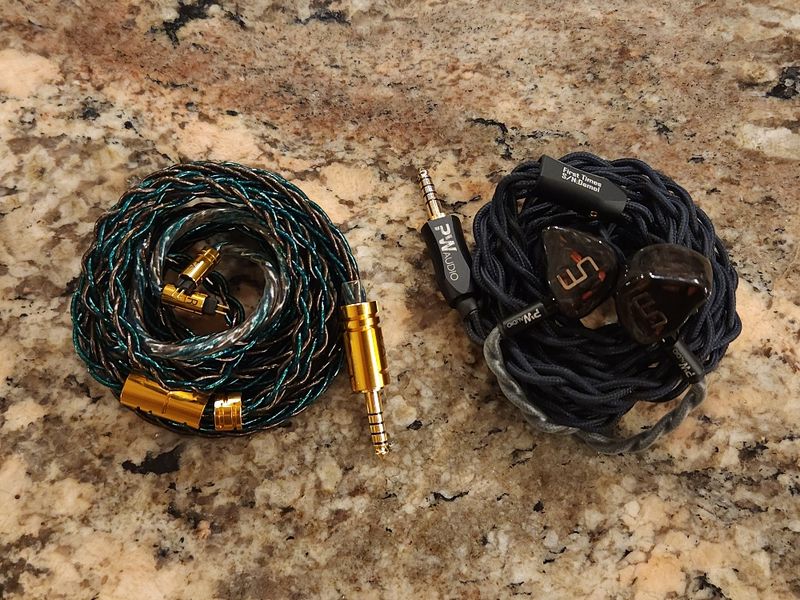
UM Amber Pearl w/stock PWA Copper Shielding vs OS – to my surprise, this cable switch didn’t yield as drastic change. The technical performance of the soundstage expansion and imaging was quite similar. I do hear bass notes to have a bit shorter decay which gives the bass more control as it transitions into lower mids. Also, the upper mids and treble of AP became a bit smoother and more natural. Not warmer, but just a bit smoother while remaining quite detailed. The same with treble, it is still airy and extended, but OS took the edge of it being slightly less intense, and a bit less energetic. One of the reasons I enjoy AP and find it to be an improvement over MM is a stronger bass impact, so I was happy to hear OS keeping that extra low-end weight and even giving the bass more control. Mids transformation was quite a surprise to me since I went from copper to silver/gold/copper wire, making the sound a bit smoother. Out of curiosity, I also tried UM MM with OS to compare these to their stock Deep of Universe copper cable but found just a minor refinement in sound. OS paired up better with AP.

Oriolus Traillii Ti w/stock PWA Silver/Gold-Silver/Copper vs OS – I was looking forward to this comparison. Traillii Ti’s stock cable, which in theory has similar materials as OS, was one of the key tuning factors of the Ti variant of the Bird. In my Traillii Ti review, I tried many other cables, but they made the sound warmer, smoother, and narrower in the soundstage. Centurion didn’t make Ti warmer but did attenuate the bass down. Here, OS finetuned Ti sound to its perfection. The bass is tight, articulate, and layered, and still has a decent rumble and strong healthy punch. Mids remain clear and micro-detailed while gaining analog organic body. The treble was the same, not many changes here, still extended, airy, detailed, and non-fatigue. I was very impressed with the finetuning of the bass, still being fast and articulate, yet gaining a nicely textured rumble. But mids refinement was probably my favorite transformation here where it gained some body, yet remained micro-detailed and layered.

Oriolus Traillii JP w/EA Chiron vs OS – after hearing how well OS paired up with Traillii Ti, I had to try it with the OG version as well. But I do use the OG version with EA Chiron as one of my favorite cable pair-ups with the original Bird, thus comparing it here to OS. And again, I was very impressed! The bass retains its analog textured rumble and gains a stronger and tighter mid-bass punch. And it wasn’t just the bass quantity that scaled up but also its quality, being more layered, articulate, and precise. Mids sounded very natural and detailed at the same time. Usually, it is either natural, smooth, and organic, or more revealing, micro-detailed, and bright. Here it was a blend of both qualities, being natural, musical, and clear and detailed on a micro-detailed level. The treble was crystal clear, extended, airy, and very natural as well. I think the OS cable was meant to work great with both Traillii versions, the best cable pair-up I heard with either of the Birds. For those who are curious about OS comparison with the original PWA 1960 4-wire cable, it (1960 4w) does bring up more bass punch while with OS I hear more sub-bass rumble. But with mids and treble, OS has the same effect of sounding very natural and highly detailed at the same time. I’m still trying to wrap my head around this change because OS takes the digital edge of the sound, making it more analog and natural, while also extracting more details, bringing out more micro-details to the surface of the Bird.

Comparisons.
Consistent with my cable testing philosophy, I used the same IEMs (Traillii Ti and Traillii OG) and the same source (P6 Pro) and only changed one variable at a time to note the sound difference I heard while keeping the volume matched. Remember that I’m describing how a particular IEM sound compares between OS and other cables. And yes, in this comparison I picked other well-known mega-kilobuck cables.
As a side comment, some might be curious about the comparison between the 4-wire and 8-wire versions of Orbit Saga, even though I noticed only inquiries about the 8-wire version of OS. I have observed with some other manufacturers that they double the price of the 8-wire cable version in comparison to a 4-wire, which is not the case here. And, this 8-wire version has a very ergonomic and supple design, being as comfortable as some other 4-wire cables. That is as far as I can’t comment on this comparison, even so, Beat Audio mentioned on their website about improvement in tuning and technicalities when going from the 4-wire to the 8-wire.
OS vs EA Centurion – While both have a similar holographic imaging of sound placements in space, the actual L/R width expansion spreads wider with OS, in some IEM pair-ups enhancing the soundstage by wrapping it around you. Also, I noticed OS adds more weight to the bass in comparison to Centurion. Both enhance the bass with more articulation and layering, but OS also adds more weight and a stronger punch to the bass of the IEMs I tested it with. The treble is quite similar, with the same crystal-clear airy extension and crisp non-fatigue sparkle. But when it comes to mids, especially upper mids, OS gives the sound a more natural organic tonality while both have a similar micro-detailed resolution. That was one of the things that impressed me the most about OS, giving mids a more natural analog tonality while keeping an excellent retrieval of details. I also noticed OS gives the sound a blacker background, especially apparent with instrumental and other less-busy arrangement tracks.
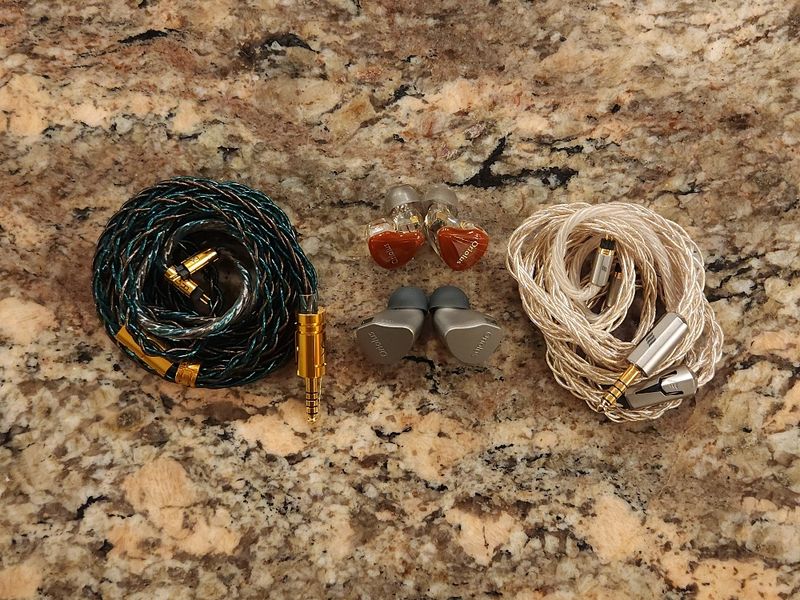
I do want to mention that the Centurion 8-wire cable is just a little thinner in comparison to the OS because Orbit Saga wires have additional shielding. But both cables feel soft and ergonomic, and very comfortable to wear. OS even has less memory effect while Centurion can get a bit tangled sometimes.
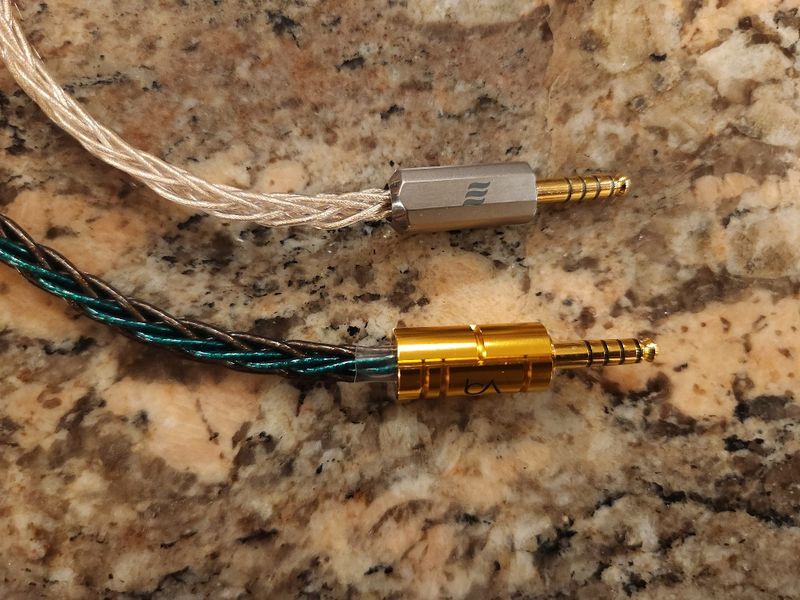
OS vs PWA Orpheus Shielding – I was looking forward to this comparison. Both cables are very unique in their sound presentation and pair-up synergy. Both have a very impressive soundstage expansion but when it comes to imaging, especially vocals, Orpheus keeps vocals closer to the center with more out-of-your-head expansion while OS brings vocals closer to you and also spreads them wider. With bass, there is a slight difference as well. Both offer a decent low-end weight enhancement, but I hear OS offers more mid-bass punch while Orpheus goes for deeper and more elevated sub-bass rumble which, as a result, makes the bass sounds faster with OS and a little more relaxed with Orpheus. Treble extension, airiness, and well-controlled crunch are quite similar here. The biggest difference is in mids. Orpheus gives mids more analog fuller body coloring, adding more texture to the sound. OS gives mids natural analog tonality but it is more revealing in a relative comparison to Orpheus. OS mids are not brighter, but you do hear a retrieval of details on a more revealing level, while Orpheus mids are smoother and richer in tonality. Also, both have a very deep-black background.

OS and Orpheus Shielding are among the most expensive cables I heard, and their sound performance is quite complementary as you analyze the finetuning of the IEMs you pair them with. Each of these cables brings its unique sound characteristics to any pair of IEMs regardless of their baseline sound sig (or the price). But you do need to keep in mind the ergonomics of the design where the twisted Orpheus shielding wires will be stiffer in comparison to the soft and supple 8-wire design of Orbit Saga.

Conclusion.
In today’s audiophile hobby, depending on your budget, you can find gems in any price bracket. That is the reason why many well-known audio manufacturers offer products at the entry, mid-fi, and summit-fi levels to target different audiences. I get puzzled when I hear people refer to cables as snake oil like these manufacturers are trying to force-sell it to you as something you “must have”. There is no such thing as a must-have for anything you buy, especially when you have a choice and can check and compare many of these products at audio shows or request demos from retailers like Musicteck. And, it is not only about the cost but also about understanding diminishing returns when paying a higher price for sound refinement rather than drastic EQ-like changes. Some people are OK with cost-no-object audio gear, and they will pay a premium even for a minimum improvement because they can afford it. But you always have a choice, though some fall victim to the hype, leading them down the ‘audiophile’ rabbit hole.
Being pricey doesn’t make Orbit Saga a hype, and it does offer unique sound characteristics where after hearing it with some of the IEMs, like Traillii Ti or OG, you can’t un-hear it, and it will drive you crazy how it finetuned the sound to perfection (per my preference). As an example, I went nuts cable-rolling the Ti-Bird, using many flagship cables, with some making the sound worse, and none being able to keep up with the soundstage expansion of its stock cable. Orbit Saga improved the articulation of Traillii Ti bass, finetuned mids to sound more organic while improving the retrieval of details, and still kept the soundstage wide open and holographic. Or take for instance UM Mason FS ST/NE latest flagship models which you can purchase without a stock cable, and then scale up their performance by switching to Orbit Saga which lifted the veil of the mids, still keeping them natural and musical, but with a noticeable improvement in retrieval of details while also giving more speed and articulation to the bass.
At the end of the day, I don’t want you to get a 2nd mortgage on the house to finance your audiophile hobby addiction. But if you can afford it or if you are buying multiple expensive cables that don’t exactly hit the sweet spot with your TOTL IEMs, consider Beat Audio Orbit Saga or at least give it a try at one of the CanJams or other audio shows. Just remember, you always have a choice, including many other fine Beat Audio cable releases that won’t break the bank.

 Twister6 Reviews
I wonder how this cable compares against the Beat Valhalla or the MURAKUMO 2 cable. I have Trailii JP, TI, and UM AP. I want a totl cable for these 3 iem.
Hope you get a chance to review the Valhalla or the MURAKUMO 2.
LikeLike
Murakumo 2 are build-to-order, thus I won’t be able to borrow it for review. Also, front the pictures, the shielding looks massive, so I assume it is not intended for a portable use. Valhalla looks interesting, will see if I can borrow it from Musicteck for a comparison, though I don’t know about the availability considering a limited worldwide production limit.
LikeLike
thanks in advance for your effort.
it’s crazy to read from you that the ti stock cable has very similar material to the OS yet the OS seems to be a much better cable.
LikeLike
Nothing is night and day change, it never is. You are changing a cable, not a source while applying EQ 😉 It is all about the finetuning and the pair-up synergy. If you are frequent to Head-fi, many Ti owners switched to Orpheus Shielding. Here, I found that Orbit Saga is more to my liking than Orpheus Shielding with Ti. Doesn’t make it a better cable. They are all great cables with different flavor of finetuning.
LikeLike