
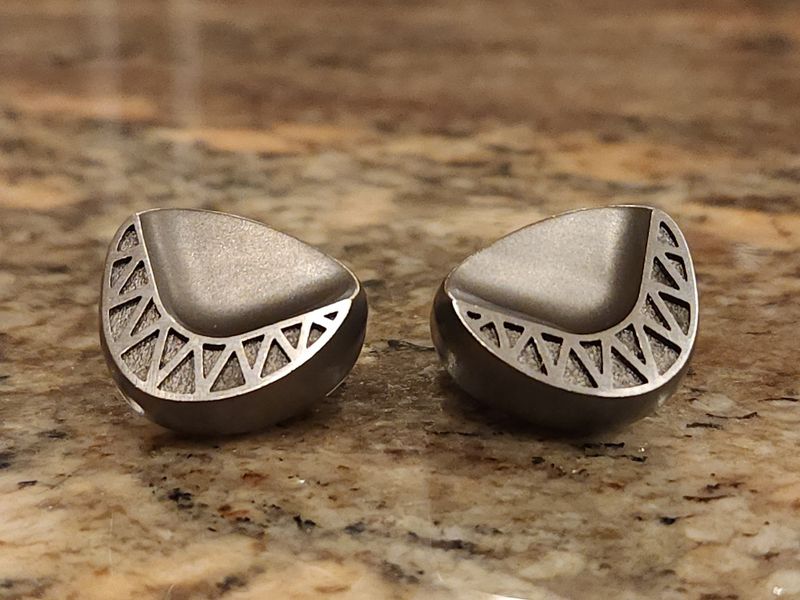
Sound Analysis.
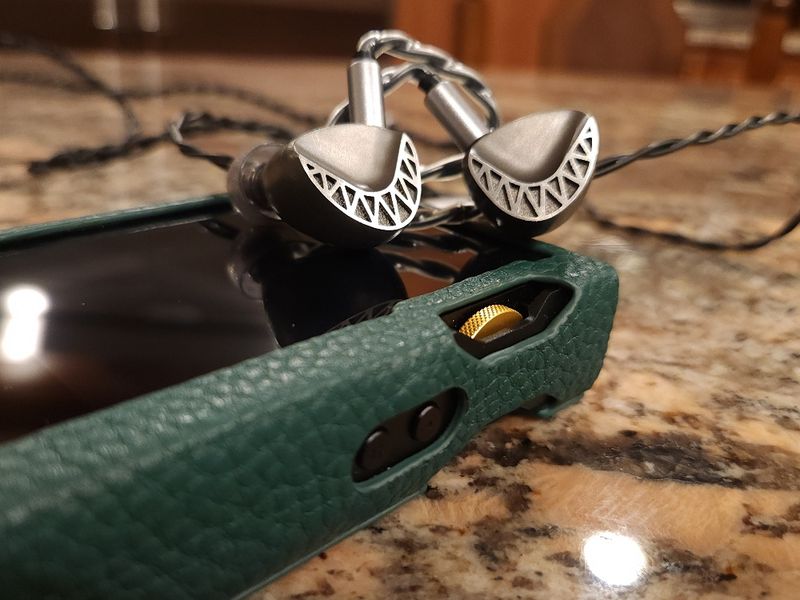
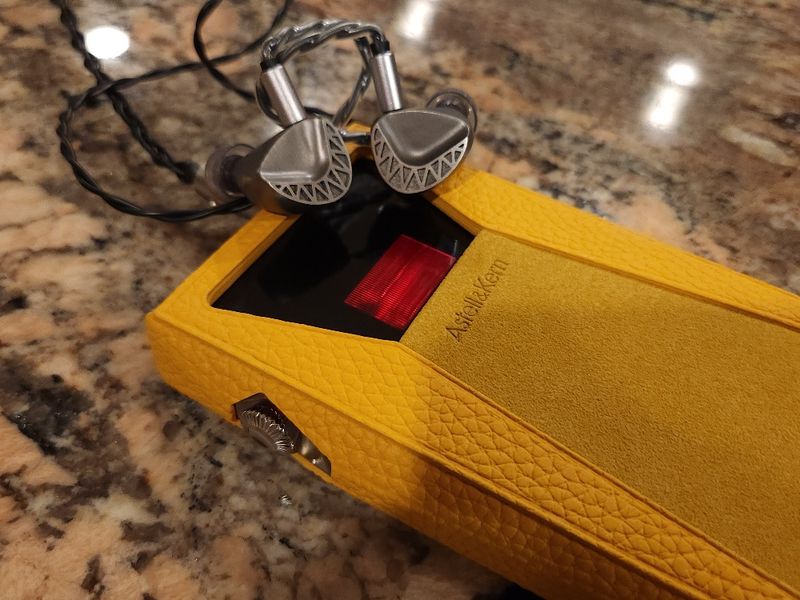
I analyzed Maven II sound performance paired up with L&P P6 Pro and A&K SP3000T sound sources while playing a variety of test tracks, such as Agnes Obel’s “The Curse”, Sandro Cavazza’s “So much better” (Avicii remix), C-Bool “Never go away”, Ed Sheeran “Shape of you”, Alan Walker “Darkside”, Galantis “Hunter”, Iggy Azalea “Black widow”, Indila “Boite en argent”, Dua Lipa “Love Again”, Counting Crows “Big yellow taxi”, Bob Marley “Jamming”, David Elias “Vision of her”, and Michael Jackson “Dirty Diana”. By force of habit and considering its use of DD drivers, I had Maven II on burn-in for about 100 hours before I started to collect my impressions. I was using a stock PWA copper cable and stock Azla Xelastec silicone eartips.
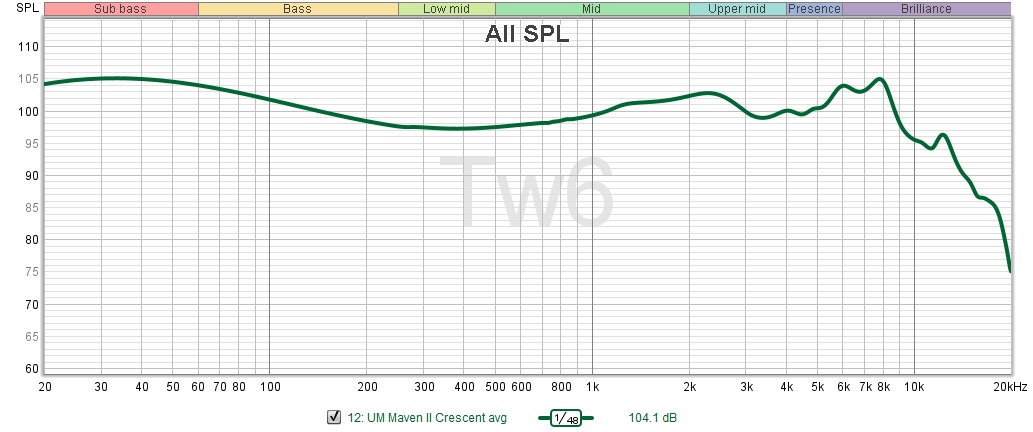
I hear Maven II having a clear, detailed, natural tonality with a bit more revealing characteristics, thanks to its well-defined treble. But even with an extra zing in mid-treble, the tuning is still quite natural without being cold or analytical. The sound signature is well-balanced, having a deeper sub-bass extension, precise, articulate, and slightly north of neutral mid-bass punch, neutral lower mids, clear, detailed, and more forward upper mids, and well-defined and naturally crisp mid-treble. The tri-brid tuning of Maven II sounds very coherent due to less emphasis in the mid-bass which creates a more seamless linear transition into lower mids. And the same at the other end of the spectrum, a transition of detailed upper mids into naturally crisp mid-treble. I also noticed a slight sound change with a variation in the listening volume where the tonality became a bit smoother and more natural with volume a few notches down vs being more energetic and crisper with volume a few notches higher. Perhaps, that was the effect of the infamous Fletcher-Munson loudness curve which affected the perception of the sound tuning.
In more detail, the sub-bass has a decent textured rumble; goes deep but is not too boosted. It is rather tastefully elevated to build a deeper foundation weight underneath the mid-bass. The mid-bass impact is more polite, north of neutral with a tactile precise punch, and great layering of the notes, but the overall presence of the bass is not as elevated and tilted more toward the sub-bass. The sub-bass rumble does come alive, in tracks like “Break up with Your Girlfriend” or “Black Window”. In other electronic tracks, mid-bass comes through tight and punchy, but the impact is slightly lower relative to sub-bass. Maven II bass tuning is a perfect example of quality over quantity while using 2xDD drivers.
Overall, the mids are clear, detailed, and natural. Lower mids are leaner, and very close to neutral, carving the space for a clear, detailed, natural upper mind. Don’t expect a warmer, smoother, organic tonality here due to the neutral nature of lower mids, definitely not the same as in their previous Maven Pro tuning. But at the same time, mids don’t sound cold either. They sound naturally revealing, with a more forward presentation, more noticeable as you raise the listening volume, helping you extract details from the sound without losing musicality and emotions, especially when you focus on vocals.
The treble has a decent extension, noticeable when focusing on crash tails which are extended rather than attenuated, with the sound being non-fatigue, crisp, and clear, and having more emphasis on mid-treble. The treble is crisp but in a natural way. The treble extension blends in well with upper mids, giving the sound its high resolution without any harshness or sibilance. Also, this well-controlled extension gives treble its airiness which contributes to improvement in layering and separation of the sounds.
From a technical perspective, Maven II has a huge, natural soundstage expansion, evenly in all 3 directions and without any artificial exaggeration. I was pleasantly surprised here because I usually expect this kind of soundstage expansion from UM IEMs with BCD drivers, while here it was achieved without it. Also, I hear very precise imaging with accurate positioning of the sounds in space. And as already mentioned, due to a precise articulation of the bass notes, the more revealing nature of the mids, and the airiness of the treble which prevents any type of congestion, I hear a very distinct layering and separation of the sounds.
Eartips Selection.
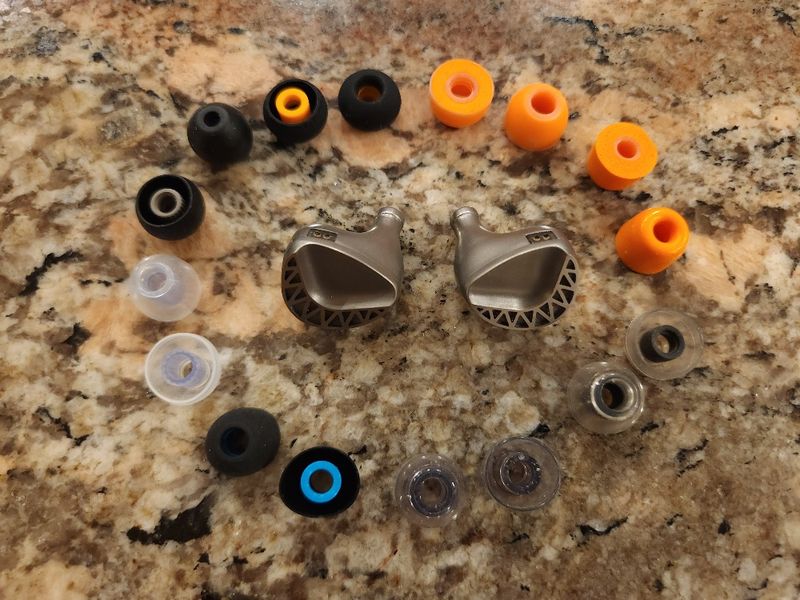
The selection of eartips is crucial to any universal in-ear monitor and will affect the sound, especially the bass impact depending on the seal. Due to a large opening of my ear canals, I usually go for the largest size eartips to get a better seal. Also, please keep in mind, that eartips impressions are subjective and will be based on the anatomy of your ears. My suggestion is to build up your eartips collection and try each one with every new IEM you get to find the pair which yields a perfect sound for your ears.
Stock Azla Xelastec – balanced sound tuning with a clear, natural, detailed tonality; big soundstage expansion. This is my baseline sound.
Stock silicone blue-core – softer silicone cap creates a bit more relaxed seal which results in upper mids and treble to gain some extra energy with crisper tonality. Doesn’t make it too bright, but if you don’t mind less weight in bass and want higher resolution in upper frequencies, these do the job.
Azla Crystal – these are somewhere in between Xelastec and Blue-core, with Maven II having a clear, natural, detailed tonality, nicely textured and extended bass, but slightly more sparkle in mid-treble.
SpinFit W1 – similar tonality as I hear it with Crystal, except with more zing in mid-treble. I wouldn’t call it distracting from the rest of the tuning, but it noticeably boosted the treble presence, bringing it more forward.
Eletech Baroque – here, a similar tonality as I hear it with Xelastec, having more bass texture and natural detailed mids, except also a little more sparkle and airiness in treble. Also, soft silicone makes it very comfortable for extended listening sessions.
Final Type-E – unfortunately, the narrow bore design of Type-E tips just doesn’t work well in pair-up with Maven II to my ears. The treble became rather harsh and even a bit plasticky. These were no-go for me.
Symbio F – very natural detailed tonality, a little softer bass impact. The only thing here, the soundstage width was slightly narrower.
Symbio W – this was a perfect W-shaped, no pun intended, tuning with deep punchy bass, natural detailed layered mids, and crisp and well-controlled treble.
I enjoyed Xelastec, Baroque, and Symbio W eartips with Maven II the most, though, it is relative to my ears’ anatomy.
Cable pair up.
I’m aware that some people are skeptical about cable contribution to the audio chain. It’s not my intent to start an argument here. Instead, I would like to share what I hear during my testing. What makes sense to me is that a metal wire is a material with physical properties of resistivity, conductivity, and purity, all of which act as a filter between your source and earphones. Variations of these physical properties can affect the conductivity of analog signal, resulting in a sound change, from a subtle to a more noticeable level. If the talk about cables upsets you, please skip this section. Otherwise, enjoy these short impressions.
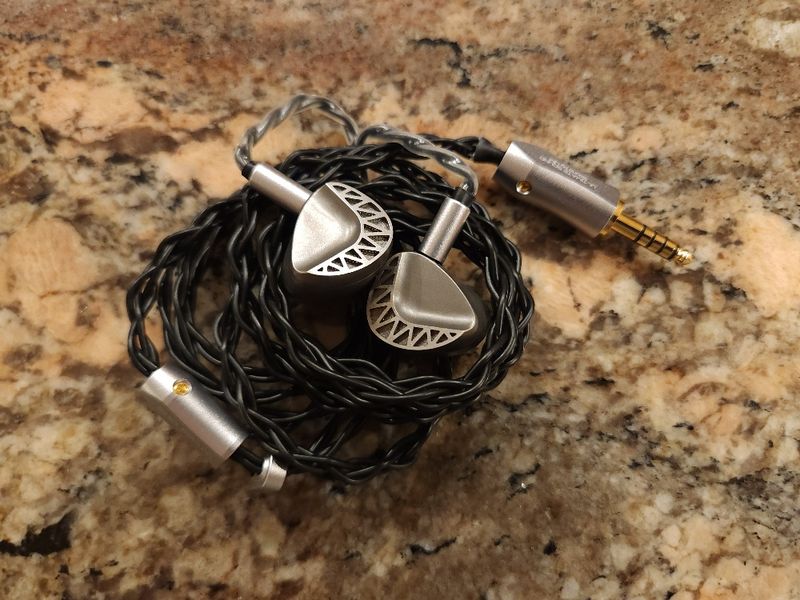
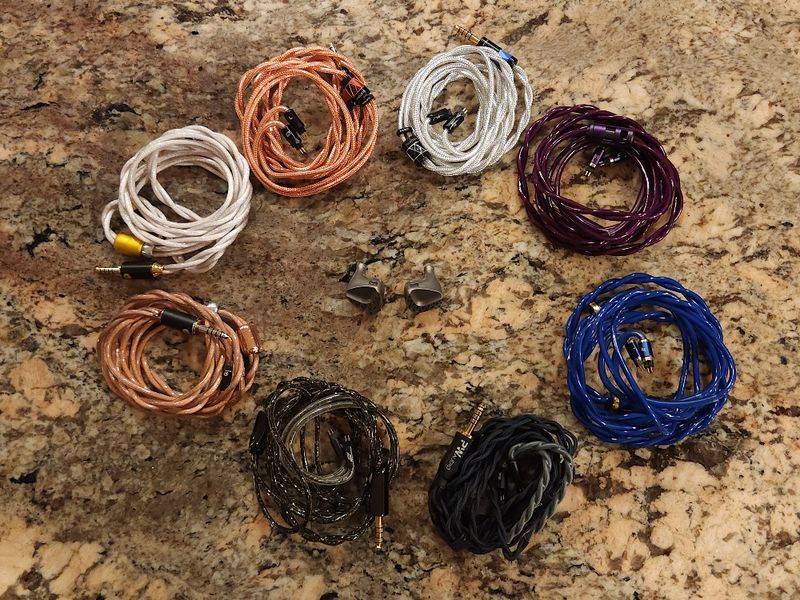
w/PWA FirstTimes – I hear a bit more rumble in the sub-bass, mids have a smoother organic tonality, also taking the edge of the treble while still keeping it detailed but not as crisp.
w/LL Venom – I hear a stronger mid-bass punch, more body in lower mids, and overall mids having smoother and more musical tonality, while treble is as crisp and detailed.
w/Eletech Euclid (silver/gold) – this pair-up gives mids more clarity, bringing them a bit more forward, and also adding more air to the treble.
w/Eletech Aristotle (copper) – this pair-up gives Maven II a closer to V-shaped sound tuning, adding more weight to the bass with deeper sub-bass rumble and stronger and meatier mid-bass punch, and more sparkle and airiness in treble.
w/EA Code 24C (copper) – I hear more weight in the bass with a deeper sub-bass rumble and stronger mid-bass punch, slightly more body in lower mids, and smoother natural upper mids; also, the treble is smoother in this pair-up. Great synergy in this pair-up, really enjoyed it.
w/EA Code 24 (SPC) – I also hear more weight in the bass, a similar change with a deeper sub-bass rumble and stronger mid-bass punch as with C24C, but in this pair-up, you will not hear more body in the lower mids or smoother tonality of upper mids. Instead, I hear more revealing mids and crisper treble. Personally, the C24C pair-up was better.
w/PlusSound Copper XL – in this pair-up, I hear more sub-bass rumble, similar mid-bass punch, more body in lower mids and smoother upper mids, and smoother treble. The tonality became smoother and more organic.
w/PlusSound SPC XL – very similar pair-up as with C24, where I hear more weight in the bass, having a deeper sub-bass rumble and stronger mid-bass punch, while mids are still clear, detailed, and even more revealing with extra sparkle in treble.
Overall, I think most of the audiophiles will be OK with the included stock PWA copper cable. But if you have other upgrade cables, it never hurts to experiment, to see if you can finetune the sound further to your liking.

 Twister6 Reviews
Looking for a “mature sounding” IEM for a mature music lover. Listen to lots of different music. Reading your Unique Melody UM Maven II Crescent review and considering ordering. Have been looking at the Thieaudio Prestige LTD. Do you have any thoughts? Thank you for your reviews. Always check your site out
LikeLike
Sorry, not familiar with Thieaudio iems.
LikeLike
what is better complement of maven ii tuning? Rn6 or Astrolith?
LikeLike