
Comparisons.
vs Bellos Audio X4 ($999).
Custom Art FIBAE 5 (available as a CIEM).
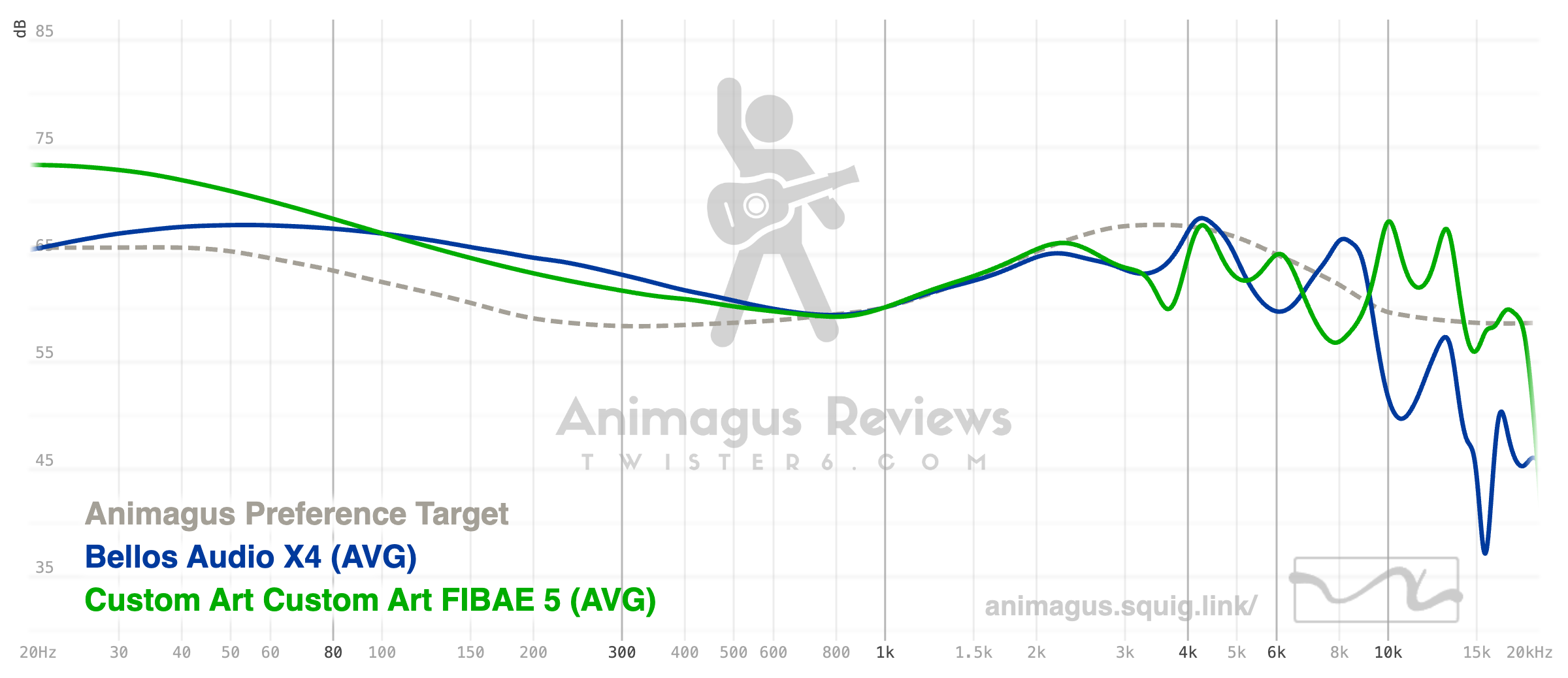
F5 is 1DD + 2BA +2 Planar Driver IEM with a more W-shaped signature to the X4. It has much more sub-bass rumble and even more upper-end sparkle resulting in a much brighter, more vibrant and vivid signature over X4’s comfortable warm take. Both IEM’s soundstage are quite holographic but F5’s is slightly more holographic and has slightly wider boundaries and deeper depth. X4 does detail retrieval quite well but since F5 is a much brighter sounding IEM, it comes across as having better micro-detail retrieval and also better imaging. I’ve always recommended F5 for drummers, bass players and people who like to listen to their music collection with quite a bit of vibrancy. X4 does the same for those people but with the opposite flavour of warmth making it an easier laid back listen.
Elysian Diva 2023 (available as a CIEM).
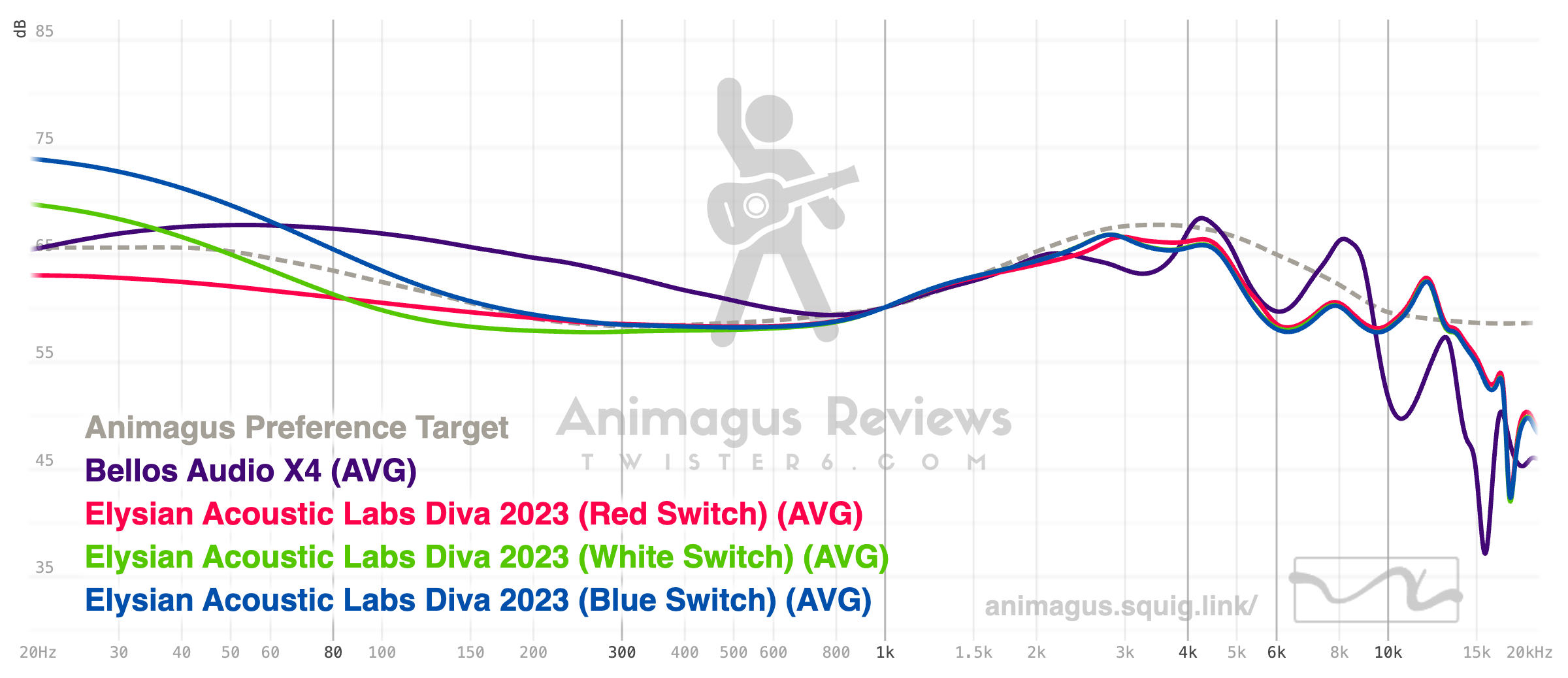
Diva 2023 (Diva for ease from hereon) too is a warm and laid back IEM but a warm take on studio reference style of tuning with focus on sub-bass gain tweakability whereas X4 is a coloured, fuller sounding V-shaped IEM. Diva goes from having 3dB lesser sub-bass in the in Red Switch mode to about 7dB more in the Blue Switch mode over the X4. Where X4 focuses on the mid-bass boosting, Diva is all about the sub-bass rumble while keeping a neutral reference approach to the rest of the bass region. As a result, Diva comes across cleaner and neutral and X4 punchier and more in your face. Diva too is slightly recessed with its ear gain tuning but more recessed in the lower-treble than upper-midrange, which keeps the natural-ness of tonality intact but takes away the bite and sparkle from vocals and guitars because of the 5-8kHz dip. X4 on the other hand does the opposite, dip the 3kHz region and boost around 8kHz which results in slightly muted upper-midrange and more focus on the sparkle and bite. Beyond that, Diva has significantly better upper-treble extension and is slightly airier but doesn’t really come across sparklier due to X4’s prominent 8kHz peak that adds in good brightness to the fullness. Both have competent technical performance where X4 has a more holographic soundstage, Diva has better imaging, layering and very slightly better detail retrieval.
Kinera Verdandi (not available as a CIEM).
Verdandi is 1DD + 6BA + 4EST + 1 Bone Conduction driver quad-brid IEM. It has tech for days going by the configuration but both IEMs bring different strengths to the table. For one, Verdandi isn’t available as a CIEM yet and X4 nails the hybrid CIEM meets UIEM form factor. Secondly the ease of repairability because of the modularity and quick CIEM manufacturing time of less than a week is unmatchable. In case of venting to remove pressure build-up for absolute comfort, both IEMs are almost equally good, X4 with the ATOM venting system and Verdandi with its triple venting system. But when it comes to driver and circuit tech, Verdandi just takes it to the next level with a quad-brid setup and a bone conduction driver to push the holography.
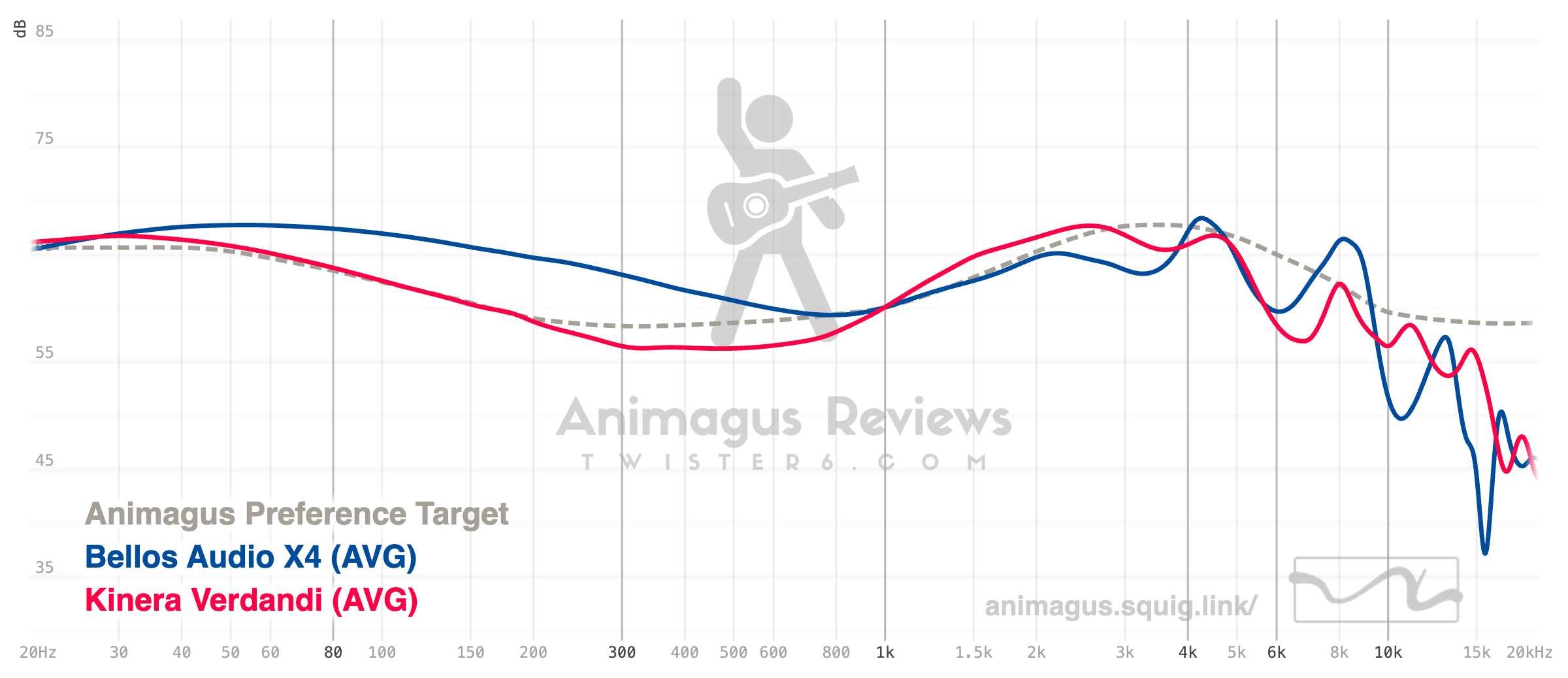
Verdandi has a warm, sub-bass boosted reference tuning which focuses on keeping the mid-bass and upper-midrange neutral while boosting the sub-bass, leaning the lower-midrange and slightly warming the treble to make for a warmer, cleaner and contrasting take on their more expensive flagship Loki. Because of the neutral mid-bass and slightly leaner lower-midrange, Verdandi comes across as cleaner and more tonally accurate compared to the X4 – making the X4 come across slightly muddy and bloomy. Verdandi’s more accurate ear gain further adds to its tonal accuracy. Post that, X4 and Verdandi do the opposite of ear other where Verdandi is warmer in lower-treble while X4 brighter, Verdandi is more even in mid-treble and X4 dips it and then Verdandi has better upper-treble extension while X4 is much warmer. This results in both IEMs being extremely different takes of warmer tuning – with Verdandi being more towards reference and X4 having tasteful colour. Coming to technical performance, Verdandi has a slightly more holographic soundstage and better micro-detail retrieval while being very similar to the X4 in the rest.
BGVP Phantom (not available as a CIEM).
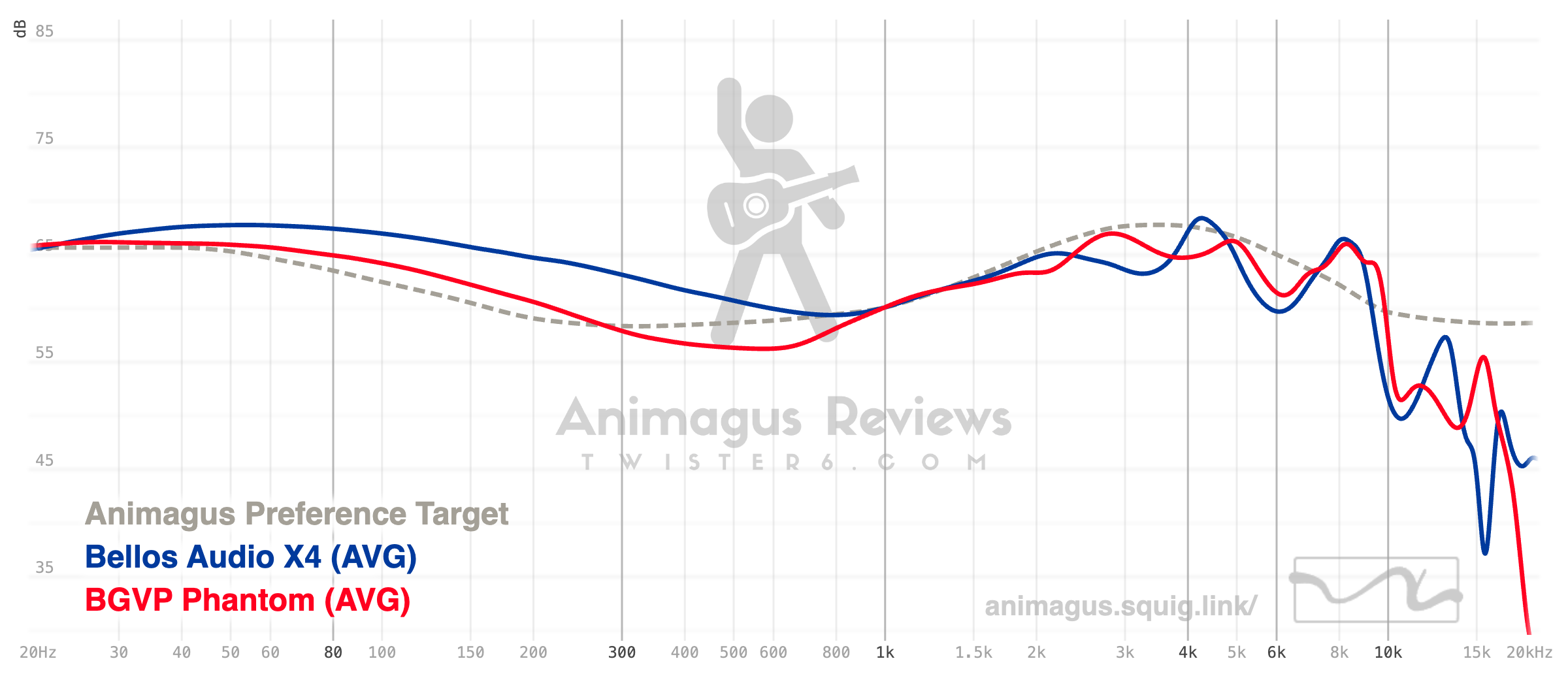
Phantom is 2DD + 2BA + 2EST + 2BCD quad-brid IEM. Phantom is a cleaner, leaner, slightly more neutral version of the X4. Where X4’s DD pushes mid-bass boosting for punch and warmth, Phantom focusses more on the transient presentation with the evenness of the sub-bass vs mid-bass relationship and leaves the holography and weight on its BC driver to push. As a result, you hear the punch and boom of the bass being more upfront in the X4 while you kinda perceive the presence of the boom and punch as a feeling from the BC driver than hear it upfront in the Phantom. X4 sounds slightly fuller because of boosted lower-midrange while the Phantom is slightly leaner than neutral. A simple example of what that entails is that snare drums sound fatter than neutral in X4 and slightly leaner than neutral in the Phantom. Post that both IEMs comes across very similar sounding but because Phantom is the cleaner sounding out of the two, its upper range sounds more forward and has more bite and sparkle in its presentation while X4 is a warmer, more laid back take on the same. Both are fairly competent in technical performance when compared to each other and both enable a fairly holographic soundstage experience by different means but Phantom pulls slightly in front in a couple of things, particularly better left to right separation due to a cleaner sounding soundstage as well as better width and depth layering.
vs Bellos Audio X3 ($799).
Custom Art H3 Pro (available as a CIEM).
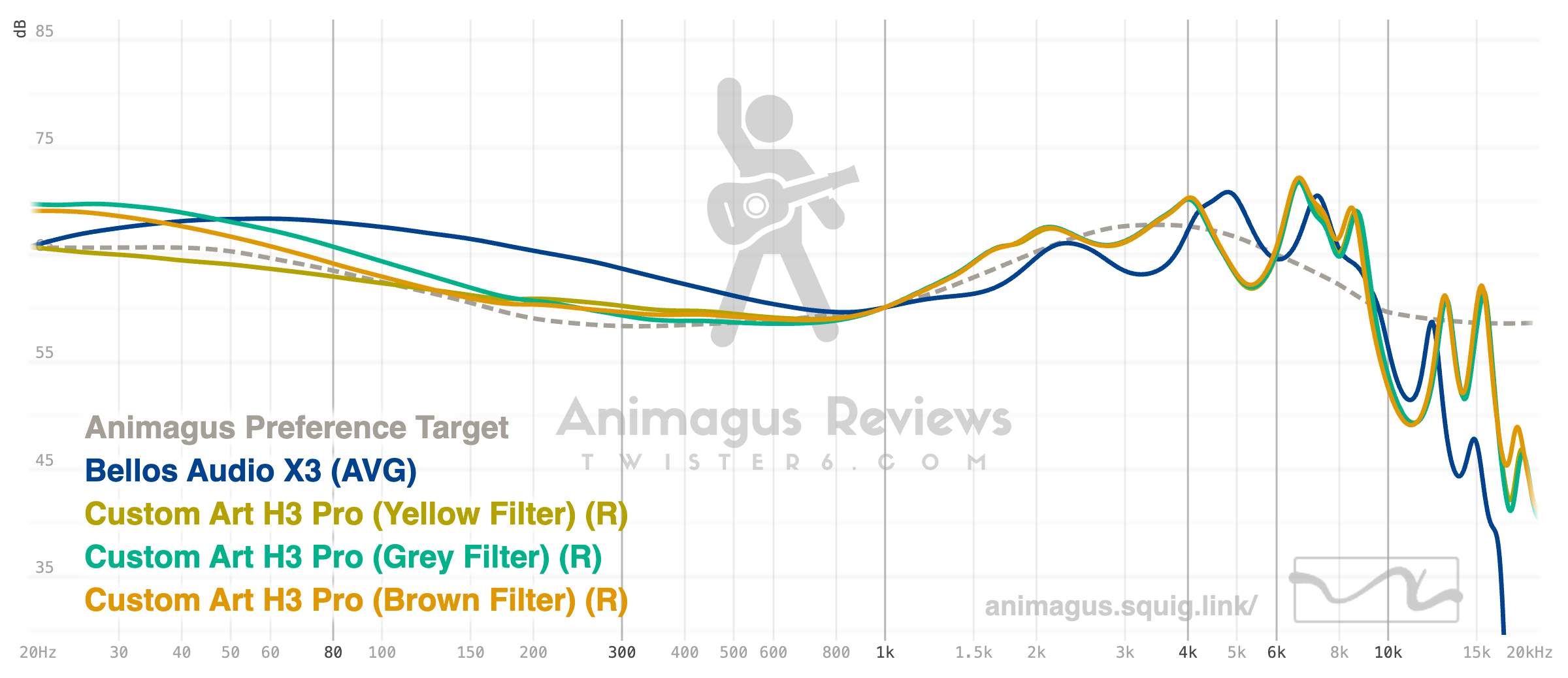
H3 Pro has 2DD + 1 Planar drivers, is a bright leaning sub-bass boosted reference style IEM and comes with three filters that provide the ability to tweak the sub-bass shelf to one’s preferences. H3 Pro comes across significantly leaner and brighter in comparison to X4 to the point you might end up disliking the IEM you listen to 2nd in a back to back A/B due to the drastic signature differences. H3 Pro has slightly better sub-bass extension with the Brown and Grey filters, is much more neutral in mid-bass and lower-midrange tuning, has a slightly more even ear gain peak with more gain, is equally bright in lower-treble tuning but has better upper-treble extension when compared to X4. As a result, it comes across brighter and more vivid sounding than the X4 and due to its brighter nature, also gives the listener the perception of better detail retrieval, definition, bite, sparkle and left to right separation. Even though H3 Pro has wider and deeper soundstage, X4 has the musicality on its side to provide an easier laid back listen which enables a more holographic listen at louder volumes, where the H3 Pro can come across slightly strident.
Softears RSV (available as a CIEM).

Softears RSV has 5BA and warm neutral reference signature. RSV like the H3 Pro, Verdandi and Diva focuses on the sub-bass boosted style of reference tuning. Tonal accuracy with a tinge of warmth is the name of the game when it comes to RSV. X3 has more sub-bass as well as mid-bass quantity in comparison but RSV presents bass more neutrally and cleanly which results in not only a more tonally accurate presentation but also one which is more competent technically. That along with the more neutral lower-midrange and the more accurate ear gain, RSV again comes across more tonally accurate with a better forward definition of instruments. X3 has slightly more lower treble presence which results in sparklier acoustic strings as well as drum cymbals but at the cost of coming across strident at times. RSV does it much more neutrally with a tinge of warmth that makes for easy listening. RSV also has better upper-treble extension even though it is no ace there itself. Coming to technical performance, both are similar performers where X3 does better in detail retrieval, imaging and stage width + depth separation while RSV comes across better at forwardness, definition and layering. When it comes to musicality, RSV is the definite winner.
vs Bellos Audio X2 ($499).
Softears Studio 4 (available as a CIEM).
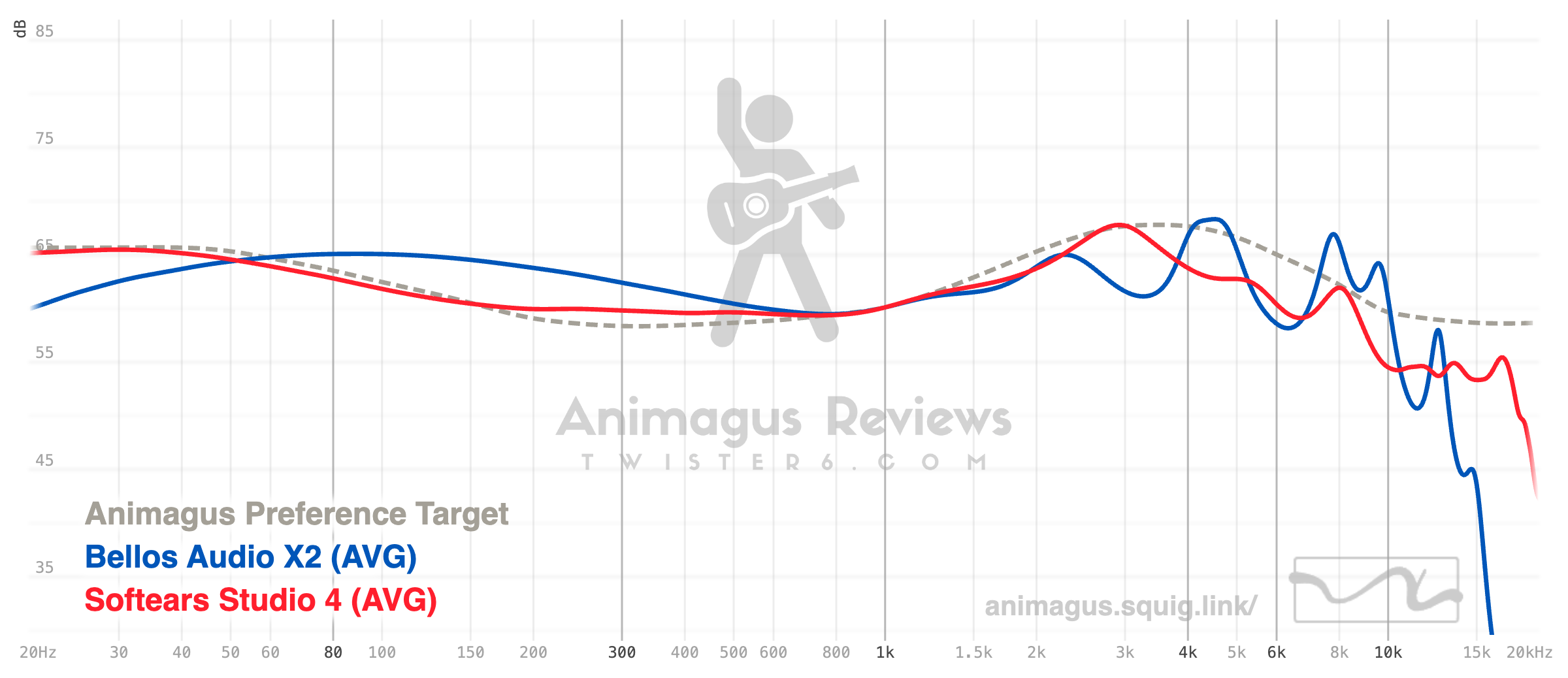
Studio 4 has 4 BA and a warm neutral reference signature. Studio 4 is much more evenly tuned from bass to upper-treble whereas X2 is much more coloured in its tuning. X4 has less sub-bass rumble because of the roll-off under 50Hz, more mid-bass punch, recessed upper-midrange, brighter lower-treble peak and then rolls of post 14kHz. Its actually the X2 that comes across brighter even though studio for has better upper treble extension because of the 4.5kHz and 8-10kHz peaks. X2 with its colour results in a more vibrant and vivid listening experience over the Studio 4, which is slightly duller because of its much warmer than neutral tuning post 3.5kHz. X2 has a wider soundstage deeper stage depth whereas studio 4 has better imaging, left to right separation and layering. These are two such drastically different sounding IEMs that the use-case will be extremely different depending on one’s tonal inclinations and preferences.
BGVP DMA (not available as a CIEM).

DMA is a 1DD+2BA+2BCD tri-brid IEM with a W-shaped signature. DMA has more sub-bass rumble as well as mid-bass punch compared to X2, a cleaner lower-midrange, better upper-midrange ear gain, more even lower-treble boosting and better upper-treble extension. It is a much more evenly tuned IEM and sounds much more tonally accurate as a result. The colour DMA has over a neutral reference signature is quite well done to the point there isn’t much to fault with it and along with the bone conduction driver’s contributions, makes it one of the most competent IEMs under $500. It also has better technical performance over the X2, with a more even and accurate sounding soundstage with better stage width and depth, better depth layering, better left to right separation as well as better imaging.
Appreciation, gripes, suggestions and conclusion.
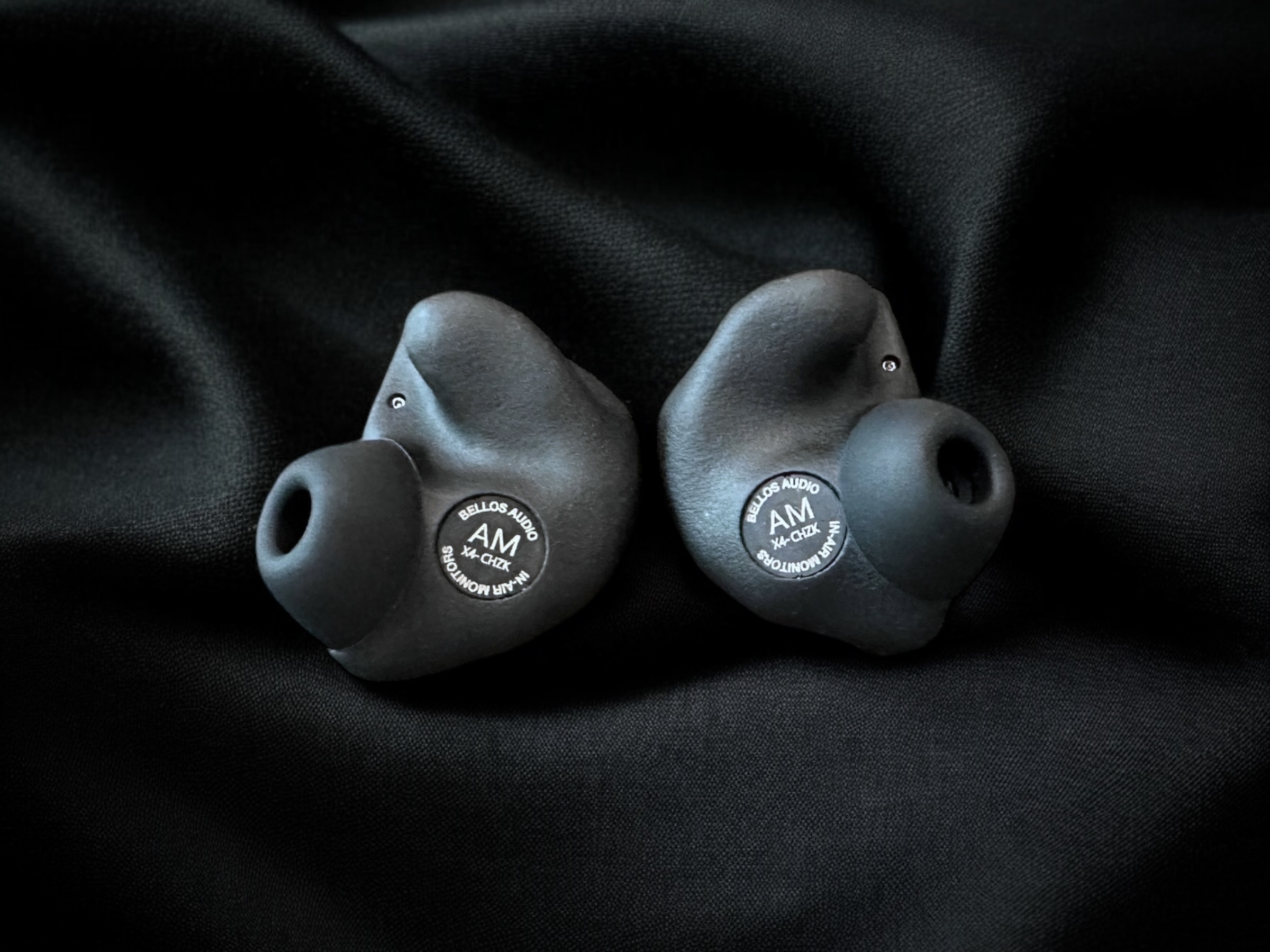
I had a good time taking the Bellos Audio IEMs through the paces. The technological innovations that they’ve come up with really solve a lot of the problems of the past.
Here’s why I think they stand out –
- Easy to like, comfortable, warm, laid back sound signatures.
- Their CIEM meets UIEM hybrid fit really solves the problem of getting a proper CIEM fit in the first try.
- The 5 day build time is a fraction of the long build times of other CIEM brands.
- The ear pressure relief system is very welcome because it’s very rarely seen in expensive products of other brands, let alone cheaper products. It’s mostly the different companies of the Belonozkho brothers – 64 Audio, FiR Audio and now Bellos Audio who’ve tried to inculcate the ADEL/APEX/ATOM venting design in almost all of their IEMs.
- Modularity for easy repairability makes everything fuss free and quick when things go wrong.
- 2 year warranty is a year more than what most brands offer.
These are highly utilitarian professional grade products which aren’t only advantageous for performing musicians but also for audiophiles who like robust build quality for every day rough and tough use. Where most brands are racing to the top with the pricing of their TOTL products, it’s such a welcome change to see Vlad and Bogdan wanting to create a lineup of cost affective, value for money CIEMs/UIEMs that have most of the technologies they’ve come up with in their Fir Audio lineup, while keeping all the production in house in the USA. A separate sub-brand with a cost effective lineup shows that they really wanted to make their top tier CIEM quality affordable for every level of musician, even more for musicians who wanted them quickly at the last minute.
Gripes + Suggestions for Bellos.
Even though I quite like whole concept of Bellos Audio and found all 3 IEMs to be very enjoyable and fairly competent for their respective price segments (some more than others), I do have a few gripes with the IEMs –
- Where they really have perfected the build, Bellos really need to up their game in tuning and offer more variety in sound signatures across the lineup. Even though the tastefully coloured tunings of all three, X4, X3 and X2 are musical and easy to listen to without any of them sounding wonky, they’re all coloured and too similarly tuned with differences between them being rather minimal in the larger scheme of things. It feels like the differences primarily comes from one less driver the cheaper ones don’t have.
- There are no reference grade tuning offerings in the lineup that can satisfy the demanding audio engineers, producers and audiophiles who are well read, aware and obsessive about tonal accuracy and reference tuning (myself included).
- In terms of manufacturing, maybe a custom logo option can be offered in place of the Bellos logo. Fairly easy to do without increasing build time.
Conclusion.
Perfectionistic expectations aside, when it comes to very well made value for money professional grade CIEMs with very easy to like sound signatures, there is little to fault in the Bellos IEMs, with the build and convenience of quick delivery being exceptional. If you can afford the $999 X4, that’s the one I’d recommend going with. It sure is their best one. You can also refer the different recommendations I have for different musicians and use cases in the previous page and see what will fit your bill the best. If you have a minimal budget, the X2 isn’t too far behind in sound performance and a $499 professional grade CIEM from the FiR Audio house with a new innovatory hybrid style fit is a quite an attractive bargain in my opinion.
Gear used for testing and review.
- DAPs – iBasso DX260 | DX180
- Dongle – iBasso DC06 Pro & Tanchjim Space
- Desktop setup – UAD Apollo + DROP THX AAA 789 Amp
Artists I like and listen to.
- Rock – Foo Fighters, Linkin Park, Switchfoot, Imagine Dragons, Daughtry, Green Day, MuteMath, X Ambassadors, Dave Matthews Band, Vertical Horizon, Our Lady Peace, Lifehouse, Fall Out Boy, Breaking Benjamin, Muse, ACDC, Audioslave, Rage Against the Machine, Biffy Clyro, I Am Giant, Normandie, Paramore, Slash & Guns N Roses, 3 Doors Down.
- Pop Rock – John Mayer, Coldplay, Paul McCartney, James Bay, Hunter Hayes, Niall Horan, Keith Urban, The Bros Landreth, Bryan Adams.
- Progressive Rock/Metal – Porcupine Tree/Steven Wilson, Karnivool, Tool, Dead Letter Circus, Periphery, Lamb of God.
- Pop/Soft Rock – Ed Sheeran, Adele, Taylor Swift, OneRepublic, The Script, Gavin James, Magic Man, Maroon 5, Bruno Mars, Charlie Puth, Dua Lipa, The Weeknd, Oasis, Panic! At the Disco, TwentyOne Pilots.
- EDM – Chainsmokers, Zedd.

 Twister6 Reviews