
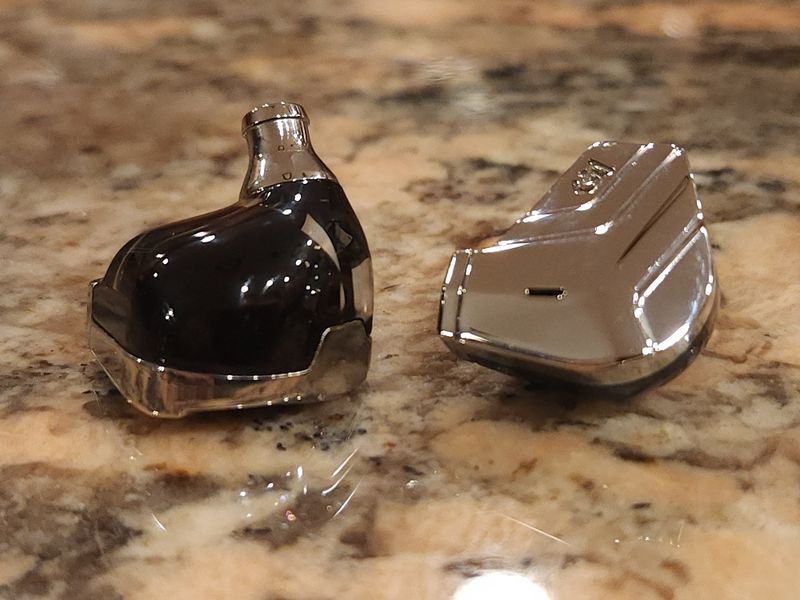
Comparison.
The comparison was done using Astro with a stock Time Stream cable, Symbio F eartips, and SP3000T and DX320/AMP14 sources, volume matched in every comparison.
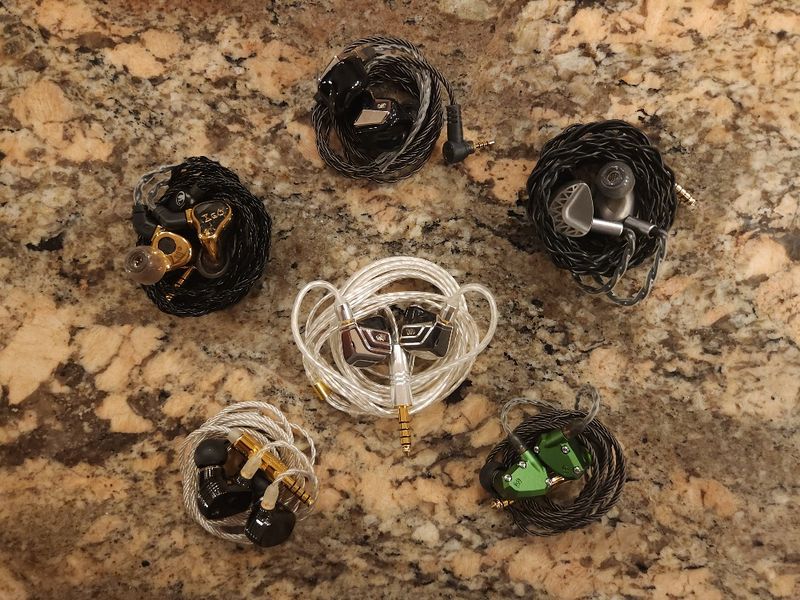
Astrolith vs CFA Supermoon – the tuning between these two is very different. Right away you will notice Astro’s V-shaped signature with a rich colored detailed tonality vs Supermoon’s balanced sound signature with more natural and less colored clear tonality. In comparison to a more polite quantity of Supermoon’s mid-bass punch and neutral lower mids, Astro scales up the weight of the bass and adds more body to the lower mids. Supermoon’s sub-bass does have a nice depth and analog-quality rumble, but it pales in comparison to the powerful full-bodied visceral bass of Astro. In mids, on one side you have Astro with fuller body lower mids and more natural tonality in upper mids versus Supermoon with neutral body lower mids and more forward upper mids, especially around the 2kHz region. Then, even when both are “wearing” foam eartips, the treble has an airier extension in Astro while sounds smoother in Supermoon. One is not better than the other, they are different and complementary in tuning. However, Astro does have a noticeably wider left/right spread of the soundstage and an overall more dynamic sound performance.
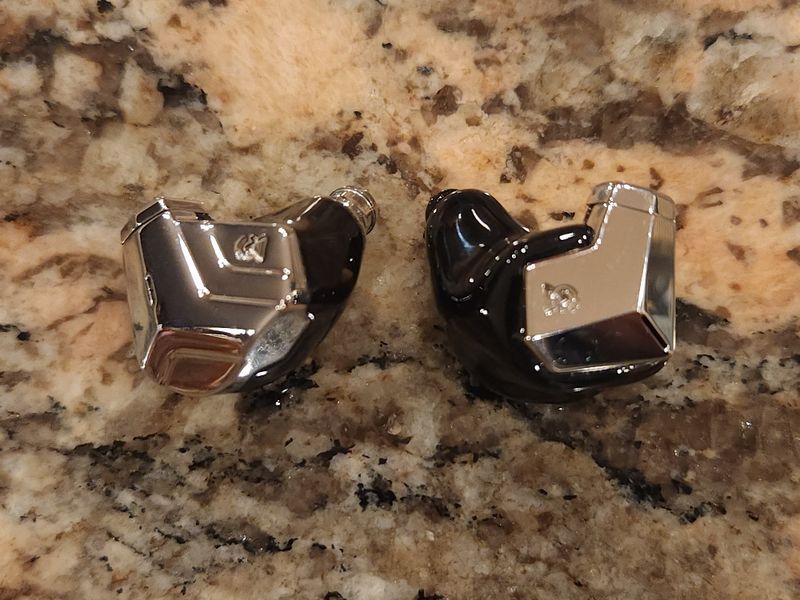
Astrolith vs FirAudio XE6 – As soon as I started listening to Astro, the XE6 comparison came to my mind because of the bass quantity. XE6 is an L-shaped tuned IEM with a powerful DD bass performance, but I dare to say that Astro scales up the bass quality of the XE6 DD driver by presenting its bass with faster speed and tighter control. XE6 lower mids have more body which pushes its vocals further back. Astro mids/vocals have more clarity and higher resolution and have a more forward perception. Also, Astro has more sparkle in the treble. I think many fans of XE6 will enjoy Astro due to its powerful fast bass, something that the DD driver won’t be able to keep up with. Plus, Astro adds more clarity in upper frequencies which some might enjoy better when shifting from L-shaped (XE6) to V-shaped (Astro).
Astrolith vs UM Maven II – I was very surprised when I heard a handful of requests asking me to compare Astro vs Maven II. Perhaps both were announced/released around the same time and maybe the talk about Astro’s powerful bass could have triggered others’ curiosity since Maven II comes with 2DD drivers. But these IEMs have a very different tuning. I have to say that both have a fast bass response, but Astro has a noticeably higher bass quantity in comparison to a more polite Maven II bass. Then, lower mids are close to neutral in Maven II while Astro is noticeably thicker and fuller in body. I find their upper mids to be similar, natural, and detailed, but the body of the lower mids gives Astro sound more coloring while Maven II has more transparency. With treble, their tuning flips again. You will hear more sparkle and air in Astro and more natural clarity and less spiciness in Maven II. Both have a wide soundstage, though Astro has more natural closer to center imaging while Maven II has more holographic imaging. If anything, these have a complementary tuning.
Astro vs CFA Solaris/Andro ‘20 – This comparison question also came up from several people. Of course, we are talking about different drivers with different technical performances and a big difference in sensitivity since I had to lower the volume by almost 20 clicks when switching from Astro to Solaris/Andro. You can still pick up some familiar tonality undertones in the upper mids of all three, and that’s about it. Solaris’ textured DD bass sounds a lot more neutral in comparison to Astro. Even fuller body Andro’s lower mids don’t have the same vibrant texture as Astro’s. Plus, Astro’s airier sparkle also stands out and extends further than either of these IEMs, giving the sound a higher resolution. If you already have Solaris and Andro, getting Astro will give you something new and unique without any overlapping in tuning.
When reviewing other IEMs, usually the purpose of the Comparison section is to help my readers in choosing between similar designs and tunings in similar price ranges. Here, I didn’t have too many choices for comparison because Astro by itself has a unique design and tuning.
Source Pair up.
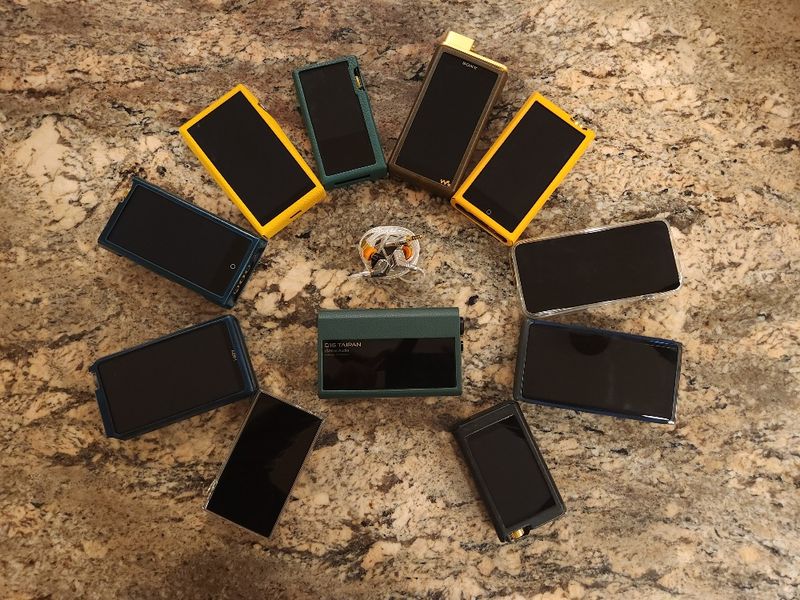
In each of these source pair-ups, I was using a stock Time Stream cable and Symbio F eartips. Despite its 94dB sensitivity and 7ohm impedance which looks low on paper, in general, Astro is very easy to drive and they are not as sensitive as other CFA iems such as Solaris and Andro. And, again, no hissing!
w/ Cayin N8ii (P+, Class AB, MG) – I hear more clarity in sound when switching to P+ and Class AB. The sound sig is also more balanced (well, very mildly V-shaped), still with plenty of weight in bass and sparkle in treble but, for example, bass is not as thick as with P6 Pro. The high gain made the treble sound a bit hotter, while dialing it down to the med gain finetuned the sound to perfection with mids being more forward. I do hear a bit softer mid-bass and deeper sub-bass. The soundstage here is pretty wide and the imaging has a decent expansion.
w/ Hiby R8ii (Turbo, Class AB, HG) – I hear a mildly V-shaped sound sig, with deep rounded bass that has tight mid-bass punch, warmer organic vocals, and crisp resolving treble. The soundstage here is evenly expanded in all 3 directions, being more rounded than oval, along with more holographic imaging.
w/A&K SP3000T (hybrid mode, high current setting) – I hear a fast warm sound with a mild V-shaped sound sig, big soundstage expansion, very deep sub-bass rumble, fast mid-bass punch, natural organic warmer mids/vocals, and crisp non-fatigue energetic treble.
w/iBasso DX320 w/AMP14 (HG) – big expanded soundstage, big, bold, balanced sound, more control in the bass with tighter mid-bass punch and slightly less weight in sub-bass, more balanced mids/vocals with higher retrieval of details, crisper non-fatigue treble.
w/Hiby RS8 (Turbo, Class AB, HG) – mids/vocals are more balanced, and more forward, but the bass here is softer and a bit slower.
w/iBasso DX180 or Galaxy S22 + iBasso D16 – big headphone-like sound with D16, balanced resolving fast sound, deep sub-bass rumble with a fast punchy mid-bass, organic detailed mids/vocals, crisp and very natural treble.
w/iBasso DX180 (HG) – bass is a bit too boomy. I even tried adding iBasso PB5 into the sound chain, but it was the same with a bit too much boom and recessed vocals.
w/L&P P6 Pro – warm elevated bass, naturally crisp treble, smooth organic vocals which are pushed slightly back. Unlike LPGT and a few other DAPs, here the bass has more control, especially in decay, but the upper mids are a bit distant.
w/Sony WM1ZM2 – deep bass, crisp treble, distant vocals, not the biggest soundstage with more depth than width. The narrower soundstage expansion was my biggest concern in this pair-up.
w/Lotoo LPGT – deeper v-shaped signature, big thick bass, and sparkly treble with recessed vocals. The sound was too dark for my liking.
w/Lotoo PAW6k – similar to LPGT but with muddier bass and vocals pushed too far back.
w/Cayin N3Ultra – the bass is loose, sparkly treble, distant, and not very detailed vocals. I do use Tubes output in Classic mode with N3U, but I think this DAP wasn’t driving Astro efficiently.
w/Cayin N7 – boosted bass, distant recessed vocals, crisp treble. Vocals were pushed too far back for my liking.
SP3kT, DX320 w/AMP14, R8ii, RS8, N8ii, and D16 were among my favorite pair-ups with Astro, all delivering a similar performance with a bigger expanded soundstage, deep sub-bass rumble, tighter and well-controlled mid-bass punch, organic detailed mids/vocals, and crisp non-fatigue treble. SP3kT produced the smoothest and still very detailed mids, DX320 had the most balanced sound sig, while D16 had the most natural treble. N8ii was great though the mid-bass felt a bit softer, great if you want more emphasis on the sub-bass with mids being more forward. The same with RS8 where I found mids/vocals to be more forward. R8ii added more weight to the bass and had more air and sparkle in treble. There is no right or wrong pair-up here, it all comes down to a personal preference.
Conclusion.
After reviewing many high-end IEMs with similar designs of multiple DD, BA, EST, and BCD drivers, it is not uncommon to start feeling a little jaded until you come across something new that stands out from the crowd of other fine releases. That is how I felt about the latest Campfire Audio Astrolith IEMs with their unique driver config and a chameleon-like tuning that raised my eyebrows in a pleasant surprise as I was pairing it up with different sources. The selection of eartips here was an easy decision, only foamies worked for my ears. But then, I spent a few days jumping from one source to another until I narrowed it down to a handful of my favorites. At that point, I thought to myself, now it is time to start analyzing the tuning, and… I spent the next few days being lost in just listening and enjoying my test tracks collection in addition to streaming other songs and albums I hadn’t heard in a while. After a decade of reviewing, I don’t want to sound noobish by saying that I was rediscovering new details in old tracks because that would be too cliched. I was just enjoying the music, something which hasn’t happened in a while because I typically analyze rather than enjoy what I’m listening to during the review.
So, what made Astro sound special? To me, it was the bass tuning with its mildly V-shaped sound signature and a full-bodied natural detailed textured tonality. I listen mostly to IEMs, thus not very familiar with planar magnetic full-size headphones, however well aware of discussions about the importance of choosing the right source to drive these to their full potential. Perhaps, that is exactly what happened here and the reason why I have read a mix of impressions with some saying how much they enjoyed Astro’s tuning and others complaining how bad it sounds with their iPhone 16 and Apple dongle. The bass felt “physical” like it was coming from a large DD driver but without a need to push the air, with the weight and presence you would expect from the dynamic driver, yet the speed and response of a planar magnetic driver. And it’s not just the bass, but the overall tuning of the deep powerful lows and detailed organic mids along with a crisp hi-res non-fatigued treble. Yes, you will need to spend some time going through different sources and eartips until you arrive at the best pair-up synergy. But I found it to be a very rewarding journey once you unlock the full potential of Astro’s addictive sound tuning.

 Twister6 Reviews
hi how you compare this with bonneville ? 🙂 it can be say one is better of the other or are just different tecnology.
LikeLike
Sorry, I’m not familiar with Bonneville.
LikeLike
Incredible review, so thorough!
Going for a demo today of Astro and R8ii vs Trifecta, with my ode to Laura I purchased following another of your reviews.
LikeLike