
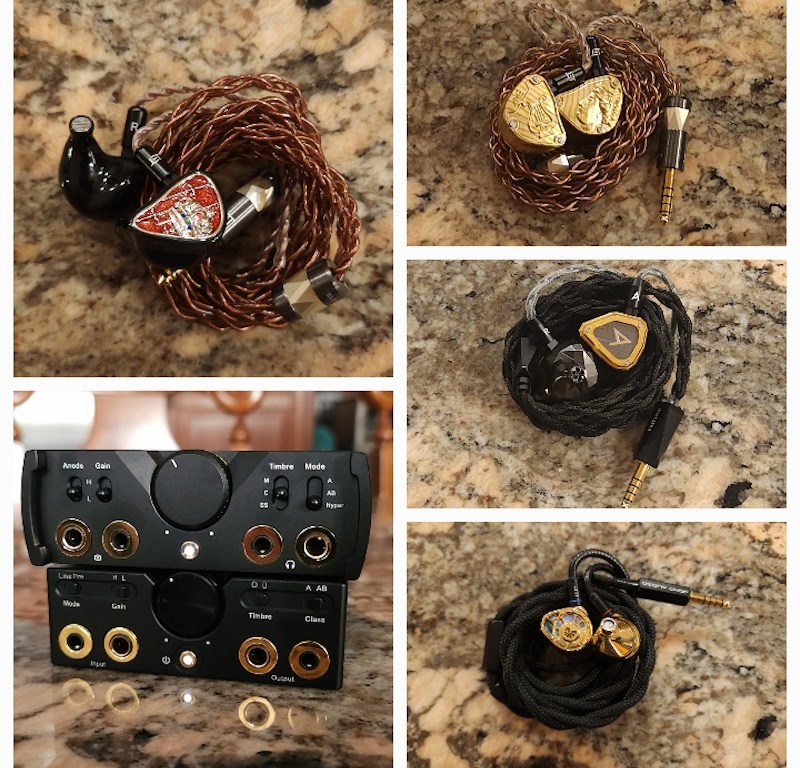
AMP/dongle.
Cayin C9ii
Introduced over 3.5 years ago, the original C9 was one of the first dual NuTube portable amps with quite a few sound-shaping options under its belt, later trickling down into the N8ii DAP design. After the feedback from the audiophile community that missed a warmer tonality of the original N8 DAP, the design was updated in the N30LE DAP anniversary release with new Tube timbre modes (Classic and Modern) and new Hyper amp mode. It even trickled down to their “entry” level N3Ultra, utilizing its miniature tubes with Classic and Modern timbre options. That is very typical of Cayin, constantly evolving and refining their designs with updated tech shared in new releases. Ironically, the title of my C9 review was a “portable amp with everything but the kitchen sink” which is no longer true after I saw the highlights of the new C9ii design which took it to the next level with even more sound-shaping options:
- Timbre: 3 options (Classic Tube, Modern Tube, Solid-state)
- Amplification Mode: 3 options (Class A, Class AB, Hyper)
- Anode: 2 options (High, Low)
- NFB (Negative Feedback): 2 options (On/Off)
- Input mode: 2 (Line, Pre)
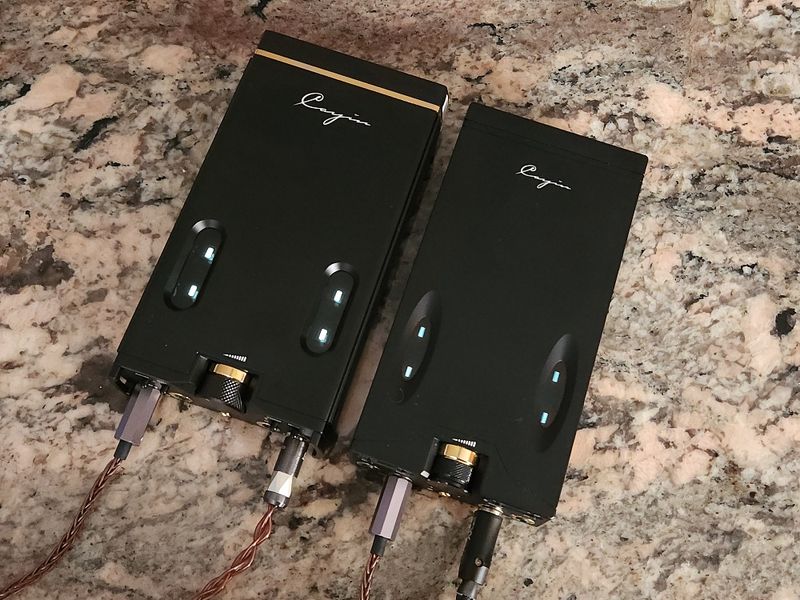
I was already familiar with Classic and Modern sound NuTube tuning from my brief time with N30LE. The Modern sound option utilizes a large-loop negative feedback system, similar to the original C9 where you only had one Tube timbre sound mode. The Classic sound option doesn’t have this large-loop negative feedback, with each stage operating independently through local feedback, similar to the N8 DAP design. The Hyper amp model also came from N30LE where I found it to sound like an optimized Class A that works amazing with the Classic timbre option.
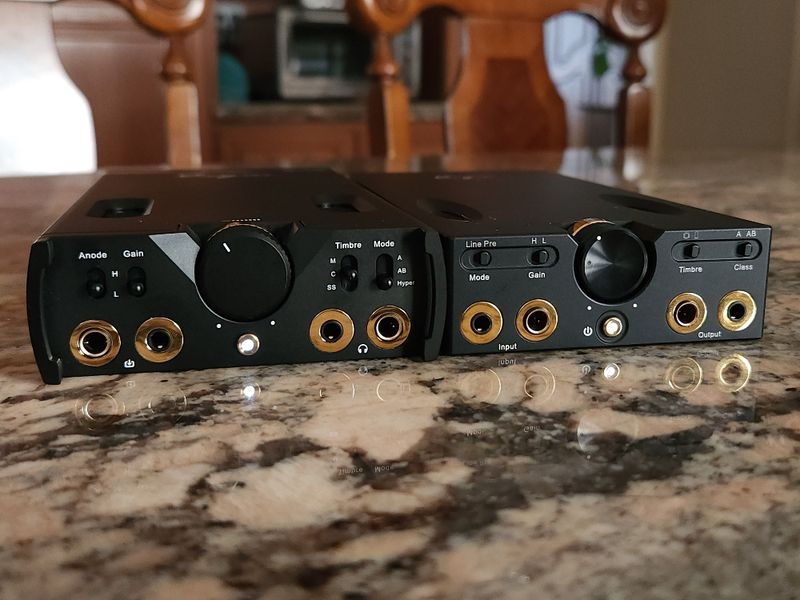
As you can see, C9ii inherited the best tech from N8, N8ii, N30LE, and C9. But on top of that, it adds more sound-shaping features. One of the big ones was the High/Low adjustable Anode (plate) voltage which affects the timbre of vacuum tubes by altering its operation state. I do need to spend more time experimenting with different combinations of Classic and Modern Tube timbre along with High/Low Anode settings, but in my brief testing, I was able to hear sound refinement. Oh, and I thought it was very clever how the intensity of the NuTube light changes when you switch between High/Low Anode (plate) voltage.
Furthermore, C9ii also has a separate Negative FeedBack (NFB) operation mode, as part of the discrete headphone amp circuit, which you can independently enable/disable to change the sound characteristics from more neutral and detailed hi-res (w/NFB on) to more full-bodied and textured analog tonality (w/NFB off). In addition to all these new features, the topology of the original C9 amplifier design has been updated as well, now featuring a fully symmetric differential headphone amplifier design in C9ii while still being fully discrete like in C9.
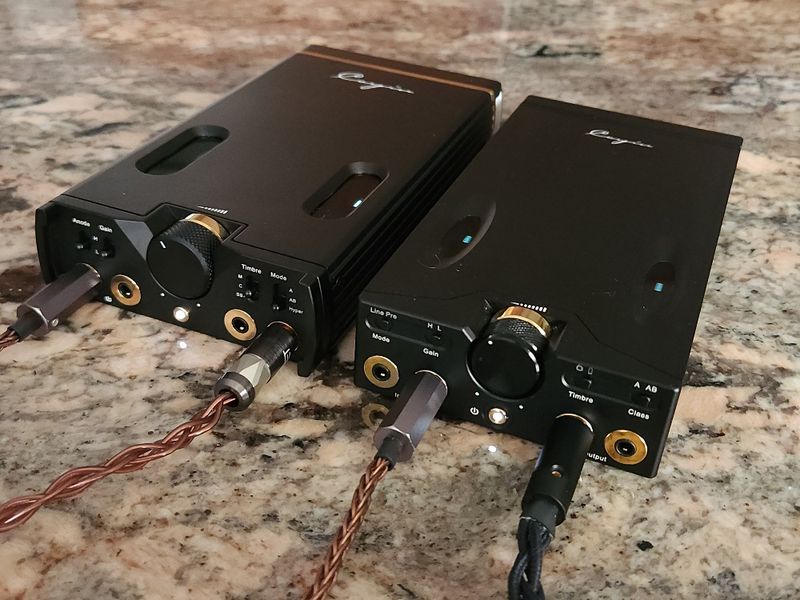
In my testing, while using N8ii LO as my source and Jewel IEMs, I compared C9 (Tube timbre, Class A amp mode) vs C9ii (Classic Tube timbre, Anode High, Hyper amp mode, NFB off) and found the sound in C9ii to have a richer tube texture, warmer resolving tonality with improved micro-details, and noticeably bigger soundstage expansion. As mentioned above, there are plenty of options to reduce the warmth, add more transparency and less coloration, and make the sound more neutral and resolving. But when I’m comparing 2nd gen C9 to its original model, the “max” tube coloration was my main focus in this analysis. Also, when dealing with sensitive IEMs, C9 has a lot more hissing, while C9ii with NFB on and either in Class A or AB has noticeably less hissing. C9ii certainly has the bigger advantage of offering more sound-shaping options.
Also, aesthetically, C9ii has a more amplifier-like design with rounded heat-sink side ridges and front-side guards. The updated battery tray is easier to access using release latches instead of screws. Also, considering many people use 4.4mm BAL connections, I found it to be more convenient to have BAL outputs moved to the outer ports rather than the inner ones, reducing the cluttering around the volume wheel.
Aroma Xuan Wu
With so many USB-DAC dongles out there, is there room for another one? Sure, as long as a manufacturer offers something different and unique. Aroma’s A100TB portable amplifier was designed to deliver the sound quality and performance equivalent of desktop amps. Their Air, a portable Bluetooth wireless DAC/amp, was designed to perform on the level of the lossless portable wired equipment. Both had in common the ability to replace op-amps as part of DIY sound finetuning. Xuan Wu dongle carries the same trend with a replaceable op-amp design in addition to 3.5mm/4.4mm output ports and dual CS43198 DACs with support of up to PCM 32bit/768kHz and DSD256.


It’s a very powerful compact dongle (49.5×28.5x21mm), being able to drive 16-600ohm loads and deliver up to 560mW (BAL @16ohm). Made from the casing material of 6061-T6 aerospace aluminum alloy, it has a bit of heft at 45g and offers a unique T-shaped design with a fixed perpendicular USB-C connector that attaches Xuan Wu to the base of your smartphone (or DAP) like an audio card extension. When I first saw the picture of this dongle, I was a bit skeptical if it going to stay securely attached since the design is not your traditional dongle with a detachable cable. To confirm, there were no issues attaching and keeping it securely connected to my aging Galaxy S22 dressed in a thicker UAG phone case.
I only got a chance to test Xuan Wu with its default set of HD op-amps and found it to have very clean, clear, transparent, fast, detailed, dynamic sound with a big expanded soundstage and punchy extended bass. In a brief comparison, L&P W4 sounded smoother, iBasso DC Elite was a bit smoother and not as expanded in the soundstage, and Cayin RU7 sounded warmer/smoother. According to Aroma, the included 2nd set of op-amps is designed to enhance Vocal performance with more revealing tonality and treble extension.


Cables.
Eletech The Fifth Ode
To commemorate Eletech’s 5th Anniversary, Eric and his team came up with an exclusive limited (150 pieces worldwide) release of The Fifth Ode cable. At first, I thought that maybe it would be a limited edition of Ode to Laura, but in this case, the “Ode” referred to The Fifth anniversary with an all-new original design. While Laura used 3 different premium OCC copper materials, the TFO release uses a triple bespoke premium blend of OCC Copper, Gold-Plated Copper, and Graphene OCC. With four 22 AWG gauge wires, Kevlar infused, cryogenically treated, and EMF shielded, the cable also features their FlexiMax insulation, keeping wires relatively supple and microphonic free. As expected, The Fifth Ode stands out with a new customized Y-Split and Plug housing eye-candy design!


In the limited time I spent with this cable, I jumped right into the comparison of Ode to Laura vs The Fifth Ode using Jewel. Between these cables, I hear a similar bass enhancement with more speed and articulation, while everything else has been scaled up. Starting with the soundstage and imaging, both have a very wide soundstage expansion, but while OTL has an improvement of 3D imaging depth, TFO also improves the imaging width. It is a very noticeable change in imaging of the sound that becomes holographic in width/depth relative to the placement of the sounds in space. The mids of TFO still have a natural analog texture similar to OTL, but the tonality of TFO mids is more revealing, being a bit less warm in comparison to OTL. The treble of OTL also has a touch more sparkle and airiness. Another thing that I noticed was a blacker background which could be the result of EMF shielding introduced in TFO.

Effect Audio Beyond
To commemorate their 15th Anniversary, SY and his team released a new limited-edition Beyond cable. This is a flagship-level release, but considering its pricing being below Centurion, I assume the latter one is still at the top of the Effect Audio product line. I guess EA went above and beyond, no pun intended, with this release, an 8-wire design with two 4-wire blends of exotic materials. Blend A features selected Premium UP-OCC Copper-Gold, Alloy & Pure Silver, and Gold-Plated Silver. Blend B features selected Premium UP-OCC Gold-Plated Silver-Gold Alloy, Palladium-Plated Silver, and Gold-Plated Silver & Pure Silver. These 24.5 AWB gauge wires have EA UltraFlexi insulation, keeping this 8-wire cable relatively soft and flexible. Also, features EA’s signature ConX full interchangeable connector set and fixed Pentaconn OFC 4.4mm plug instead of TermX for the best sound quality. You will also find a very elegant all-new custom Y-Split to give this cable an exclusive look.


To analyze the fine-tuning sound quality of Beyond, I put it against their Centurion flagship, tested with Jewel. While comparing Beyond vs Centurion, relative to its stock cable I hear the same improvement in the perception of the soundstage width and 3D imaging. But the tonality is different. Centurion has a more revealing brighter tonality which enhances the retrieval of details without making the sound harsher or fatiguing. Beyond finetunes the sound with a natural tonality by adding more analog texture to the mids and making the treble a touch smoother. It doesn’t make the sound warmer but rather makes it more analog and textured while still enhancing the retrieval of details without making the overall sound too revealing. I also noticed that relative to Centurion, the Beyond makes the bass sound tighter and more layered. Overall, based on their tonality difference, I would recommend Centurion for neutral and warmer-tuned IEMs while using Beyond for neutral and brighter-tuned IEMs.

Beat Audio Valhalla
It looks like all the new cable releases I had a chance to test here were associated with the Anniversary of each company behind it. Valhalla’s limited release celebrates Beat Audio’s 15th Anniversary, taking their previous Orbit Saga release to another level of performance and eye-watering price. But like I said in my OS review, Beat Audio offers cables in every price category, starting at $199 and going all the way up to the Orbit Saga and Valhalla price levels. Some people can afford and are willing to pay a high price even for a small percentage of sound refinement, and manufacturers respond with a supply when there is a demand. Valhalla features a structure with 49 thin threads in each wire, starting with 7 thin threads of copper alloy to form a bigger one, combining 6 bigger threads with 7 thin threads of a silver alloy, wrapping it in a translucent sheath to provide a base for double-helix layers of graphene and pure silver ribbon threads. Beat Audio also mentioned that apart from graphene, silver, and copper, they included other rare minerals in the alloy such as Zinc and Bismuth.


Unfortunately, I didn’t have as much time to test and compare cables in different pair-ups since I received so many products from Musicteck and only had a very short time to quickly go over everything. To understand better the difference between Orbit Saga and Valhalla tuning, I did a brief comparison using Jewel, and relative to that IEM found the same 3D holographic soundstage expansion which is night’n’day when comparing Jewel to its stock cable. Also, I hear the same super black background, and the same technical performance enhancement with the improvement in bass notes with more articulation, and improvement of mids with better layering and separation. However, the sound tuning of Valhalla had its unique characteristics relative to OS. To my ears using Jewel and P6 Pro source, the OS finetunes the sound with a natural organic tonality while still maintaining an excellent retrieval of details. With Jewel, I found Valhalla to have a very transparent neutral tonality without any coloring. Instead of coloring the sound, it extracts more micro-details without making the sound brighter or more revealing. Also, Valhalla made Jewel’s mids and treble cleaner, clearer, and more detailed. What impressed me the most was how it was done in such an effortless and natural way. And, considering the 8-wire design of both cables used in this comparison, they are very supple and comfortable to wear.

Conclusion.
There is not too much to write in the conclusion except to be grateful for the opportunity to hear all these new IEMs, cables, and amps, and to look forward to spending more time with some of them soon for a more detailed analysis and a separate review if I get a chance. And of course, Big Thanks to Andrew/Musicteck for this golden opportunity where instead of me going to CanJam, the CanJam came to me! The next CanJam I’m looking forward to attending in person should be NYC ’25!
Page 1 – IEMs (Forte Ears, Jomo, AME, Empire Ears, Alpha& Omega, Lime Ears)
Page 2 – AMP/dongle (Cayin, Aroma), Cables (Eletech, EA, Beat Audio)

 Twister6 Reviews
is the alpha omega omega worth getting? I already own RN6, canpur 622B, camelot, and trailli.
I am thinking either alpha omega omega or trifecta. Please advise me.
LikeLike
Good question. I think Omega can nicely complement your other IEMs. For example, RN6 has a powerful bass, 622B has great natural mids, Omega will have both, and 3 switches to finetune the sound. With Trifecta, honestly, I’m not the biggest fan, though it is only because it doesn’t work with my library of songs.
LikeLike
thank you for the input. I will grab the omega
LikeLike