
Preamble / Intro.
As I mentioned in my SoCal 2024 Show Report where I went over new stuff featured at Musicteck tables which I borrowed after the show, there were still a few more new audio toys I didn’t get a chance to hear. This year, the SoCal and Dallas shows were back-to-back, and I had to wait until after the Dallas show to borrow other goodies from Andrew/MT. The SoCal show generated quite a hype about Brise Audio Fugaku, a $16k portable audio system many Watercoolers and other visitors raved about, so I had to hear it! As previously mentioned, these CanJam shows feature not only popular distributors but also retailers, like Musicteck, often stealing the spotlight with multiple tables and dozens of products they carry in the store, including some from manufacturers who can’t attend the CanJam. Such tables are very popular because you can test and compare at the same time in one spot many IEMs, DAPs, DAC/amps, and cables.
So, once again, enjoy my brief impressions, specs, pictures, and FR measurements of new products Musicteck showcased at their tables during the Dallas show. And just to be clear, again, while I titled this review CanJam Dallas 2024 Impressions, I didn’t attend the show, but rather had a chance to borrow for a week (Fugaku was borrowed for only a few days) some of the products showcased at Musicteck tables during the show. I do realize, this would never substitute the experience of attending the actual show, meeting like-minded audiophiles, catching up with friends, and talking to manufacturers and retailers. But even a very brief audition in a quiet environment with the ability to capture FR measurements is still a dream-come-true experience I would like to share with my readers today.
IEMs and Cables.
Brise Audio Fugaku
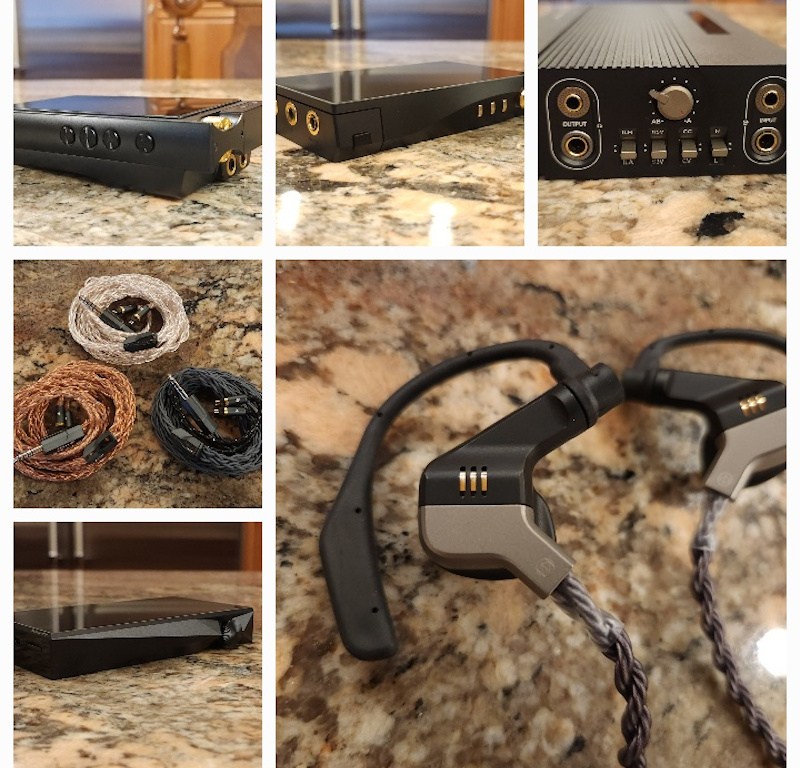
Design: 8-driver tribrid with 2DD, 5BA, MEMs, dedicated portable amp, and 16-core pure silver cable.
When first announced, Fugaku’s eye-watering price generated a bit of confusion because audiophiles thought they were getting a pair of IEMs for $16k. Instead, this is an all-in-one transportable compact audio system, a finetuned custom-designed audio chain with an amp, cable, and earphones that you can’t separate to use with another amp or another cable, and you need to add a source to drive it. Brise Audio decided to do their own finalized mixing and matching of components, though the sound will still be affected depending on which DAC is going to drive these. The PVD black-coated pure titanium housing earpieces don’t look like your traditional IEM shells, being very compact because inside they only host drivers, with no crossover or filters or sockets, and with adjustable ear hooks to make sure they stay secure in your ears under the weight of the cable.


The multichannel active crossover and power amplification are done inside the external compact amp module where BA and MEMs are driven single-ended while DDs are driven balanced. Also, L/R earpieces are attached separately to the amp module, using 7-pin connectors. The pure silver cable has 16 conductors, which are surprisingly soft and pliable. I believe the cable is serviceable, and the attachment to the earpiece itself looks and feels very secure. You can use any eartips with it, it’s not proprietary, and I found the sound isolation to be pretty good.


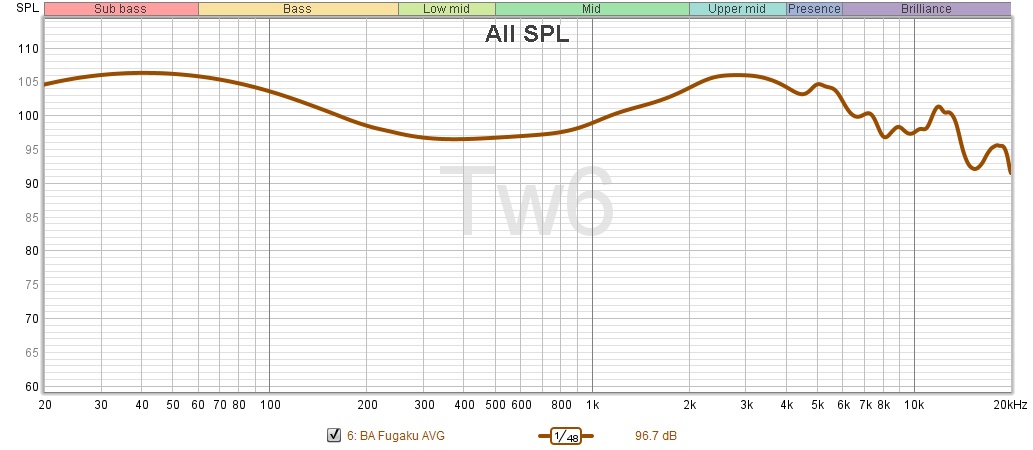
I did spend a short time analyzing these and found Fugaku to have a balanced sound signature emphasizing the deep visceral bass, a natural detailed upper mids, and a resolving clear lower treble. The tuning stands out with a very natural retrieval of details and a very realistic and accurate timbre of instruments, regardless of whether it is acoustic or synthesized. It just sounds so realistic, making you feel like you are not listening through earphones that interpret the sound based on the response of their transducers, but instead, sitting in the room with an artist playing live in front of you. What is even crazier, is that some of the EDM tracks with synthesized instruments where in theory it is hard to judge the accuracy of the timbre, also sound more “realistic” to my ears. Also, the background is super black, making the details pop out of the darkness with a clean transition of notes from the on/off state.
In more detail, the bass has a powerful presence with a deep elevated sub-bass rumble you can feel and the hard-hitting visceral mid-bass impact which has plenty of fullness and bloom without being overwhelming or pushing the sound sig into L-shaped direction. The bass is not too fast, even a bit relaxed to give it a more natural realistic articulation. Lower mids are rather neutral, maybe just a touch north of it to give the vocals their natural texture, but still staying very neutral in quantity to provide a clean separation between the bass and the upper mids without adding too much extra body to the sound. Upper mids are very clean, natural, and detailed. Vocals are forward, with plenty of pinna gain to give them clarity and balanced presence, and at the same time without being shouty or analytical. Mids sound very natural, clear, and detailed without being warm, smooth, or organic.
The treble has more emphasis on the lower treble to give mids their clarity and natural retrieval of details, but the lower treble also varies in brightness depending on pair-up synergy with different DACs as I tried various sources. Lower treble has a little extra energy, but no harshness or overwhelming crunch exists. The treble is not exactly crisp, but it has a high level of natural clarity, making mids more resolving and better defined. What I found interesting, treble has a rather good extension which you hear in the tails of the crashes and corresponding sound decay without being chopped off. But to my ears, the treble itself doesn’t have too much airiness which typically resides between the layers of the sounds. Usually, treble extension implies airiness and improved layering, yet I don’t hear this air between the layers, even though the separation is still pretty good with every sound being easy to distinguish and with absolute zero congestion or veil.
The soundstage is round, expanding evenly in all 3 directions. With some sound sources I tried, you can hear extra wide expansion, but the overall soundstage expansion is not exaggerated. The imaging stays holographic with a very distinct placement of instruments and vocals spreading in space. The soundstage is big and open, but in a natural way, putting you closer to the performer instead of making you feel like you are in the stadium with a performer many rows in front of you.

Due to a limited time before sending these back, I only did a quick source pair-up testing, and to my ears found Fugaku to pair up well with P6 Pro, LPGT, LPGT2 (GT2), N7, R8ii, and RS6, while not so much with N30LE, SP3000M, SP3000T, and N8ii where it enhanced lower treble with a bit of extra energy. Just like with anything else, at the end of the day, it will come down to your personal sound preference and the pair-up synergy with the external DAC/source. And, of course, the price going to be a big factor. But if you think about how much money high-end audiophiles spend on flagship IEMs, upgrade cables, and dedicated DAPs/DACs, the price tag of Fugaku is probably on average, if not even below it. The only difference here is that a manufacturer already did the homework for you by putting together all the pieces of this fine-tuned audio system. For me personally, it checked every box!

Vision Ears VE EXT MKII
Design: 6-driver tribrid with DD (9.2mm), DD (6mm), 4EST.
You never know what to expect from the next-gen IEM releases because some manufacturers do more drastic sound and design changes while others focus on fine retuning. Here, VE approached their next-gen EXT with a little bit of everything, finetuning both the sound and the shell design. Available in purple like the original, they also added a grey shell variation along with a limited edition 200 units of gold shell design that comes with a premium EA Copper/Silver/Gold cable as a bonus (for limited edition only). While the overall shell design is very similar, including hosting 4EST drivers in the nozzle, the tip of the nozzle is noticeably smaller in diameter, improving the comfort of the fit. Of course, this is subjective and relative to the anatomy of your inner/outer ear, but for me personally, I had to rotate EXT OG inside my ear to find a more comfortable position to relieve pressure from the nozzle, while with EXT MKII, I hardly even needed to rotate the shell and the fit was more comfortable during extended listening sessions.


According to VE, the 9.2mm bass DD driver was redesigned as well, along with an overall finetuning of the sound. I found EXT MKII to have a balanced sound sig with a detailed natural musically-rich tonality. Here you will find a deep extended bass with plenty of fullness and bloom, extending down to a textured analog-quality rumble and rounded mid-bass punch with longer decay of notes. Also, I hear a fuller body with natural detailed mids enhanced with smooth rich coloring and clear detailed treble with plenty of natural clarity. EXT MKII stands out with a smooth natural tuning without being veiled or congested. Some manufacturers choose to have more bass impact or enhanced detail retrieval in their next-get releases. Instead, VE approached their next-gen EXT MKII with more musicality and richer tonality while still maintaining a pretty good level of natural detail retrieval.


In comparison to EXT OG, MKII has a bit less sub-bass rumble and a little smoother mids and treble which gives it a more balanced sound tuning and more organic musical tonality. OG has more elevated rumble and more clarity in upper mids, while MKII has a more linear sub-/mid-bass tuning and sweeter mids/vocals tuning while still maintaining a decent level of detail retrieval. Another difference I noticed here is while both have a similar soundstage width, the imaging of MKII is a bit more center-focused while OG imaging has a bit more spread.

Nostalgia Durandal
Design: 7-driver tribrid design with DD (9.2mm), 2BCD, 4BA.
Nostalgia Audio made quite a splash a few years ago with their Camelot IEMs release and Lancelot upgrade cable. Then, they upped their game with Tesseract IEMs last year, also a fine release, though it didn’t capture as much attention as their Camelot debut. This year it looks like they are back with a new release, going back to DD bass with a custom 9.2mm driver, adding popular Sonion dual Bone Conduction drivers, featuring eye-candy faceplate design, and including a brand-name Vortex cable. In this release, they collaborated with Vortex, including a custom-made Hruodland single-crystal Silver conductor cable with a unique multi-color artificial silk yarn wrapping and custom hardware design. Other highlights of the design are a stainless-steel sound chamber to enhance DD driver performance and a customized titanium sound nozzle, though I did notice some driver flex.


I found Nostalgia Durandal to have a balanced sound tuning with a smooth natural organic tonality. The bass has a deep sub-bass rumble with a laidback rounded mid-bass bloom. The bass is not too exaggerated but still has extra emphasis with some added weight. The lower mids have a fuller body while the upper mids have a smoother organic musical tonality with plenty of sweet natural details. The treble has some extra emphasis in mid-treble, sounding clear, natural, and detailed. It’s a well-done balanced tuning with an organic detailed tonality. The smoother organic tonality does affect the perception of the soundstage expansion, being more natural rather than exaggerated, with above-average width and height and more out-of-your-head depth.

BGVP Phantom SE
Design: 8-driver design with 2DD, 2BA, 2BCD, 2EST.
I’m not familiar with the original BGVP Phantom, thus not sure about sound tuning changes in this Special Edition release. But I was quite impressed with the tuning of this pair of IEMs since it is not always easy to get the “neutral” tonality tuning done right. But what impressed me even more was the size and ergonomic design of their shells considering packing 8 drivers under the hood including 2DDs, 2 Knowles BAs, dual Sonion Bone Conduction, and dual Sonion EST drivers. Also, the included silver-plated OCC cable was rather nice and supple.


I hear Phantom SE to have a huge soundstage with an evenly round expansion in all 3 directions, though imaging/placement of sounds has more out-of-your-head projection. The tuning is relatively balanced, though has a bit more mid-forward emphasis with a rather neutral tonality. The bass has a good extension with more punch than rumble, and I can still hear a decent sub-bass texture. Bass does have some presence, but it is less aggressive and not as elevated. Mids have neutral lower mids and detailed natural upper mids. There is not as much warmth or coloring in mids, they are neutral, natural, and detailed. Treble is also natural, and detailed, has some bite with a zing, but no harshness or sibilance. Overall, this IEM has a more neutral, natural, and detailed tonality.

Effect Audio Signature Series II
If you are on a budget and looking for higher quality cables, the original Signature Series cables from Effect Audio were among the top choices, including the bonus of ConX connectors to use with 2pin, mmcx, and other IEMs. Hard to imagine how you can improve it, yet EA still managed to by doubling the wires of Ares S II and Cadmus II while offering each at a lower price than corresponding 8-wire versions of Ares S and Cadmus from the OG series and also offering Eros S II at the same price with other common improvements. The cable hardware was updated with a more elegant premium-looking Y-Split and new wire structure including a Central Solid Core like in their more expensive Code series, using a Solid Copper core in Ares S II and Cadmus II and a Solid Silver core in Eros S II.

I will be working on a more detailed review of all three cables including many different pair-ups, but in this report, I decided to write a comparison using P6 Pro and Odin IEMs, focusing on Sig Series OG vs gen II and the sound changes I hear relative to EE Odin IEMs.
Ares S II vs Ares S 8w and Ares S – between S II and original S 8w I hear a few very clear differences, such as an improvement in imaging while the soundstage width remains the same but the imaging of sound placement has a more holographic perception. I also hear more sub-bass rumble and fuller body mids. The fuller body mids were probably the most noticeable change going from S 8w to S II. Relative to the original 4w Ares S, the S II soundstage is noticeably wider, mids gain a bit more texture/coloring, and the treble is more natural, making the original Ares S brighter in treble and with a narrower soundstage/imaging. Ares S II, despite being 8 wires, is also less bulky than Ares S 8w, being somewhere in between Ares S and Ares S 8w.


Cadmus II vs Cadmus 8w and Cadmus – between II and the original Cadmus 8w, I hear nearly the same soundstage expansion and imaging, but the tonality does vary. OG 8w makes Odin have a rather mid-forward brighter sound which pushes the bass to the back and makes treble brighter and crisper. II version brings mids forward as well but gives the vocals and instruments a more natural textured tonality, also making treble more natural and less brittle. As a result of these changes, I can hear more rumble in the bass using II. II doesn’t make the sound smoother or warmer but makes it more musical and more natural while keeping the same retrieval of details. The sound transformation here is more typical of a pure silver cable rather than SPC. Relative to the OG 4w version, II imaging is a lot more holographic. Another thing I noticed OG 4w was smoother than OG 8w, but going to II from OG 4w improves the retrieval of details while still keeping the sound natural. Similar to Ares S II, Cadmus II, despite being 8 wires, is less bulky than Cadmus 8w, being somewhere in between Cadmus and Cadmus 8w.


Eros S II vs Eros S – between II and OG, the soundstage expansion and imaging are nearly the same. The sound changes I hear are more on a refinement level, with some additional sub-bass rumble and a bit more mid-bass punch. Also, I hear a bit smoother treble in II. In terms of ergonomics, they are very similar, maybe with II being just a hair thicker and having tighter braiding. Furthermore, I also like the darker shade of Eros S II grey shielding better than the brighter color of Eros S.


In my opinion, if you are looking for high-quality budget cables, Signature Series II is a no-brainer. But if you already have the original Ares S, Cadmus, and Eros S, Ares S II and Cadmus II make more sense to upgrade. Both are now 8wire versions while priced less than the 8wire version of the corresponding original Sig Series cables, and they have a more noticeable sound improvement over the OG 4w and OG 8w versions, especially the Cadmus II which now has sound performance I usually find in pure silver cables. The new hardware of Sig Series II also looks great.

Page 1 – Brise Audio, VE, Nostalgia, BGVP, Effect Audio
Page 2 – Lotoo, Cayin, Astell & Kern, Luxury & Precision

 Twister6 Reviews