
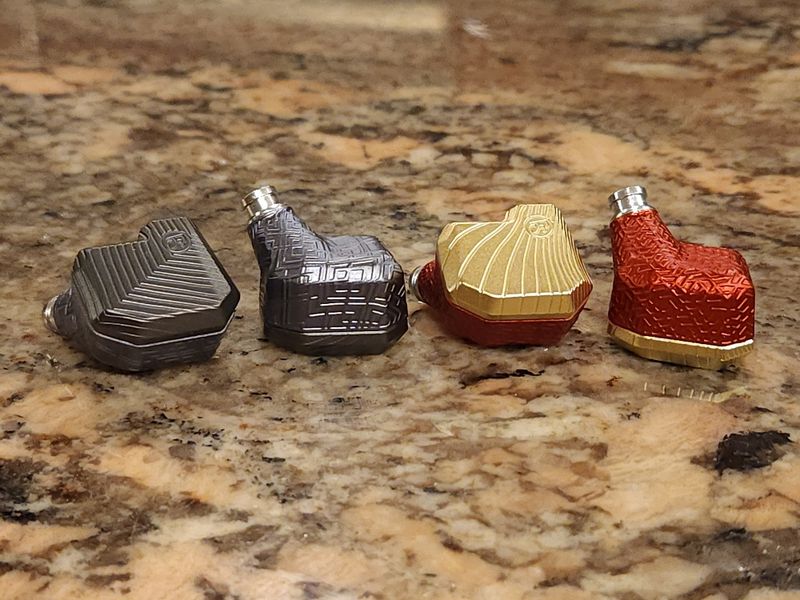
Sound Analysis.
I analyzed Volta and Sonora’s sound performance paired up with L&P P6 Pro while playing a variety of test tracks, such as Agnes Obel’s “The Curse”, Sandro Cavazza’s “So much Better” (Avicii remix), C-Bool’s “Never Go away”, Ed Sheeran “Shape of you”, Alan Walker “Darkside”, Galantis “Hunter”, Iggy Azalea “Black widow”, Indila “Boite en argent”, Dua Lipa “Love Again”, Counting Crows “Big yellow taxi”, Bob Marley “Jamming”, David Elias “Vision of her”, and Michael Jackson “Dirty Diana”. Both IEMs were on burn-in for 150 hours before I started to collect my impressions. I was using a stock Copper XL cable and stock silicone eartips.
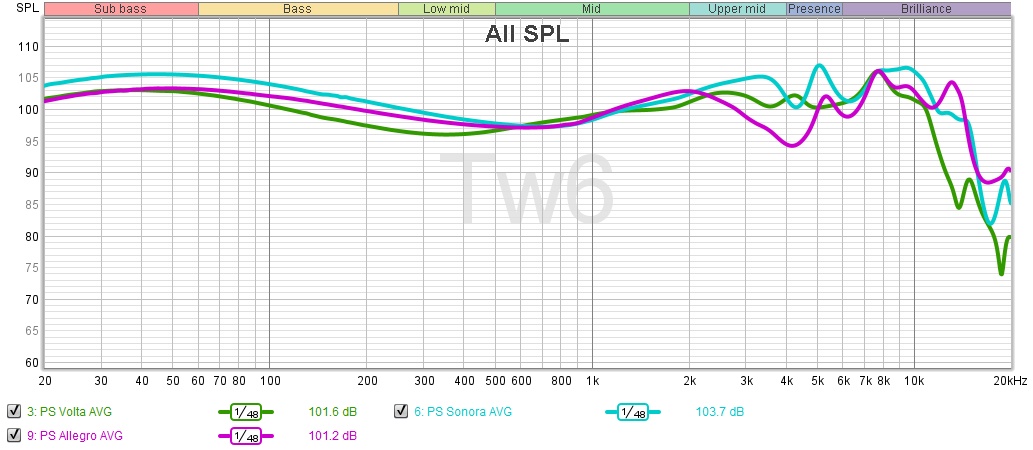
Volta has a balanced sound tuning with a neutral tonality. The sound is very natural, laidback, and still quite detailed but in a naturally resolving way. You can hear the extra weight in sub-bass which enhances the bass presence, smooth detailed mids to give vocals the natural tonality, and relaxed high frequencies with the emphasis on mid-treble to enhance the resolution of mids. Despite its tribrid design, the tuning of Volta is quite coherent, with all 6 drivers working in perfect unison of one big-driver harmony.
In more detail, the bass has an emphasis on the sub-bass, extending deep with a textured rumble and rounded slightly laidback mid-bass punch. The bass has a more relaxed presentation, a slower attack, and pretty good control with a shorter decay of mid-bass to prevent it from spilling into lower mids. While the bass fullness comes from the sub-bass presence, it still has enough impact to avoid sounding hollow.
Mids have neutral lower mids with a little extra body to give the sound its musicality without being too full or veiled. Upper mids have a moderate pinna gain to bring the vocals more forward, keeping them smooth and still naturally resolving. Mids are neutrally colored in tonality with plenty of presence and musicality.
The treble is more relaxed as well, with plenty of natural clarity, not as much crunch or airiness, but still relatively detailed. Here, the emphasis is more on the mid-treble which enhances the resolution of the mids/vocals.
The soundstage is wide open but in a more natural way. It is not exaggerated or holographic, but it is also not intimate in its presentation. It is naturally expanded with more focus on mid-centric imaging. Also, I hear an average layering and separation of the sounds due to a lack of extra airiness, though everything is still very easy to distinguish in the mix with nothing being congested or muddy. Don’t expect a lot of air between the layers, but everything is still quite detailed and easy to differentiate.
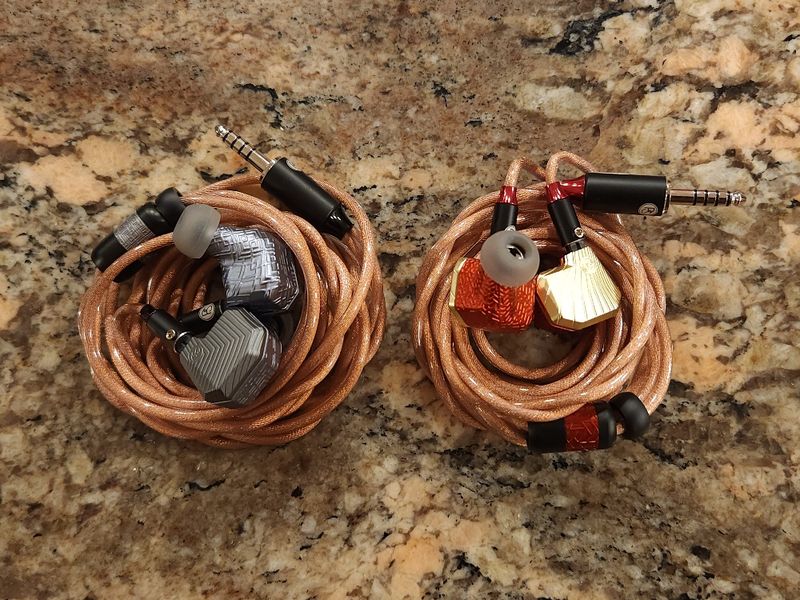
Sonora tuning has a balanced W-shaped signature with a more energetic presentation of the sound, having a faster punchier bass, more forward mids, and the treble with more crunch and air in comparison to Volta. The sound of Sonora is more revealing, more resolving, and with better extraction of details. Its tuning is complementary to Volta, having a scaled-up bass, more neutral lower mids, stronger pinna gain with more forward upper mids, and more emphasis in the lower and mid-treble. While Volta has a more coherent smoother laidback natural tuning, Sonora has more separation between bass, mids, and treble.
In more detail, the bass has a deep sub-bass rumble and a stronger and faster mid-bass punch. The bass here has a perception with more speed, more articulation, faster attack, and shorter decay which creates a cleaner separation with the mids. As a result of this separation, the bass stands out more on its own without blending in with the rest of the sound.
With mids, I would still consider lower mids to be neutral, but due to an elevated sub/mid-bass and pinna gain of upper mids, the lower mids perception is south of neutral, carving a more precise separation between the bass and the upper mids as I mentioned above. But at the same time, it gives mids less body, which takes away the smoothness and warmth found in Volta, making Sonora’s vocals more revealing and a bit colder.
The treble has a very fine presence in the lower treble region to give the mids its higher resolution with a clear and precise definition. And it also has an emphasis on mid-treble to give the sound more crunch and airiness. The treble extension is well done here, and I didn’t find any sibilance peaks.
When it comes to the soundstage expansion, it is closer to the 3D level with holographic imaging. The sound spreads wider, taller, and deeper. Due to its treble extension and airiness, there is a very precise layering and separation of the sounds with air between the instruments and vocals. Everything is separated and well distinguished with precise holographic imaging of sounds positioned in space.
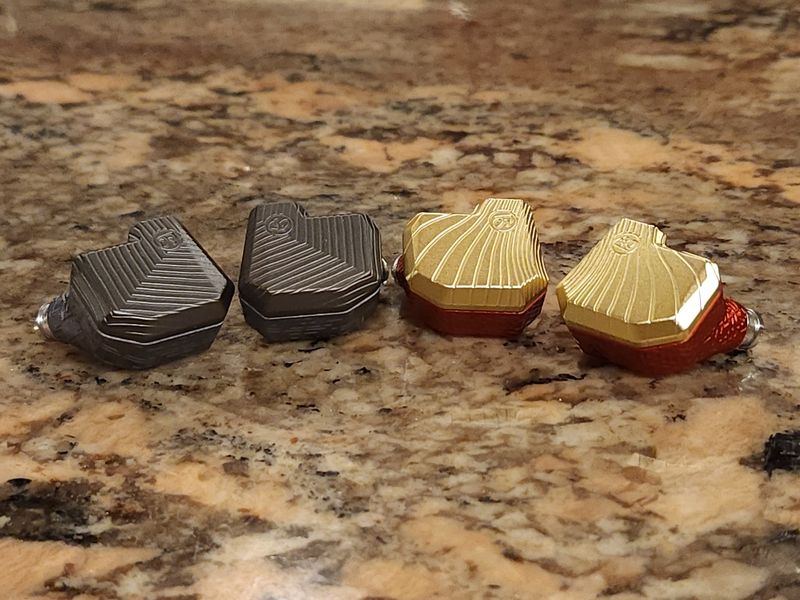
Eartips Selection.
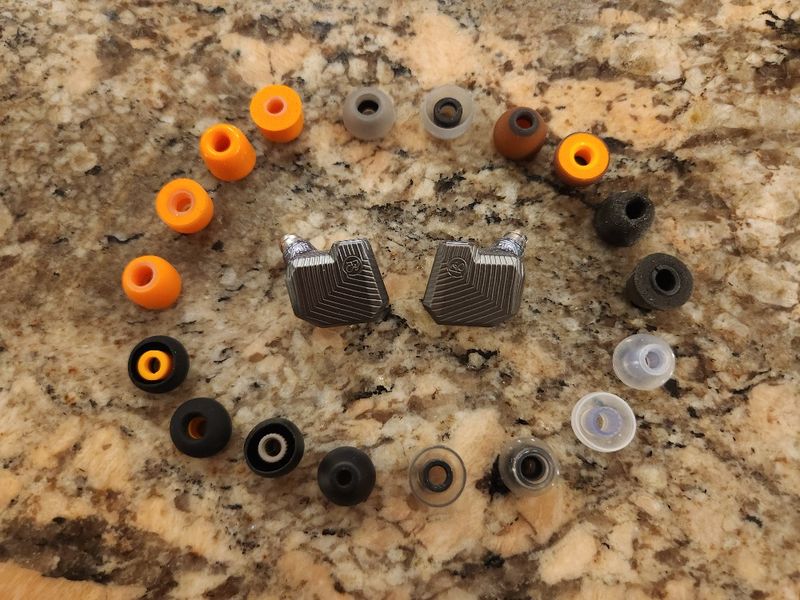
The selection of eartips is crucial to any universal in-ear monitor and will affect the sound, especially the bass impact depending on the seal. Due to a large opening of my ear canals, I usually go for the largest size eartips to get a better seal. Also, please keep in mind, that eartips impressions are subjective and will be based on the anatomy of your ears. My suggestion is to build up your eartips collection and try each one with every new IEM you get to find the pair which yields a perfect sound for your ears.
Volta
- w/stock silicon – Volta has a balanced sound tuning with a neutral tonality. The sound is very natural, and laidback, with extra weight in the sub-bass, smooth detailed mids, and relaxed natural treble.
- w/stock Comply – they don’t fit well the nozzle and keep coming off.
- w/stock Symbio W (old version) – very similar sound as with stock silicone, just with a little more soundstage expansion out of your head, putting you a few rows behind while stock silicone brings you a bit closer.
- w/Symbio W (new version) – here, the sound tuning is similar but I hear it is wider and more holographic. Very interesting how the new version of Symbio W changes the sound perception
- w/Symbio F – here, I hear the sub-bass being slightly reduced while improving the clarity of the mids by reducing the lower-end warmth.
- w/Eletech Baroque – had to fiddle with the fit here, trying to get a better seal which I was losing under the weight of the shells and the thicker cable. Once I was able to establish a good seal, it improved the mid-bass punch of the sound with a lot stronger impact and gave mids a bit more transparency, reducing the coloring.
- w/Final Type-E – here, the soundstage was reduced, making the sound more center-focused, and the mid-treble peak was a bit harsh to my ears.
- w/SpinFit W1 – I hear a little stronger and more articulate mid-bass punch and a little more crunch in the treble.
- w/Azla Crystal – nearly the same sound as stock silicone eartips, just a touch more revealing in upper mids while the stock eartips are a bit warmer.
Sonora
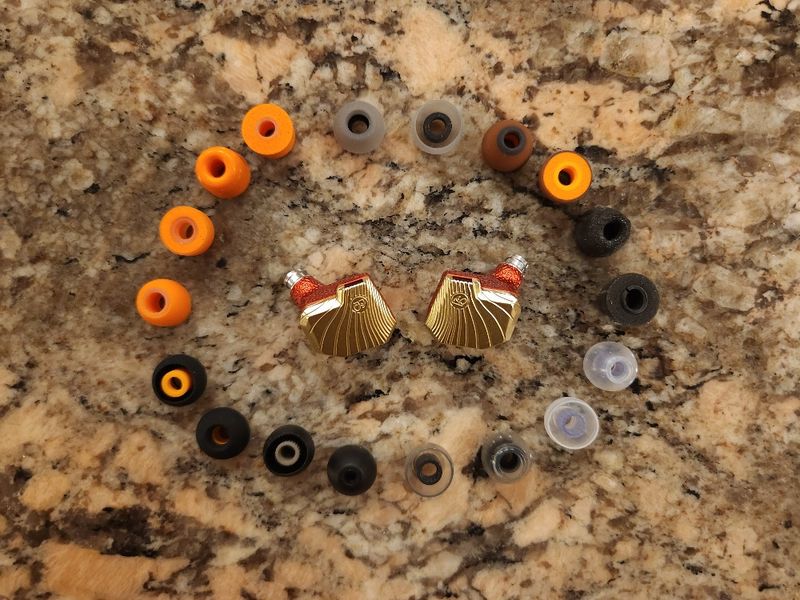
- w/stock silicon – Sonora has a balanced W-shaped signature with a more energetic presentation of the sound, having a faster punchier bass, a more forward and revealing mids, and a treble with more crunch and air.
- w/stock Comply – they don’t fit well the nozzle and keep coming off.
- w/stock Symbio W (old version) – very similar sound as with stock silicone, just with a touch narrower soundstage width.
- w/Symbio W (new version) – here, the sound tuning is similar to stock silicone tips, just with the upper mids being a touch smoother.
- w/Symbio F – here, I hear some reduction in lower-end warmth and upper-end sparkle, making the sound less W-shaped and more linearly balanced, maybe even closer to neutral, but with more transparency and less coloring in comparison to Volta.
- w/Eletech Baroque – I also had to fiddle with the fit here, but once I was able to establish a good seal, it improved the mid-bass punch and the overall weight of the bass and also slightly reduced the brightness in upper mids while keeping the same treble crunch.
- w/Final Type-E – here, the soundstage was reduced, making the sound more center-focused, and the mid-treble peak was a bit harsh to my ears.
- w/SpinFit W1 – very similar sound to the stock silicone tips, just with a touch of less crunch in the treble.
- w/Azla Crystal – nearly the same sound as stock silicone eartips, just a touch more revealing in upper mids while the stock eartips are a bit warmer.
To my ears, while using Volta and Sonora I’m probably going to stick here with stock silicone eartips.
Cable pair up.
I’m aware that some people are skeptical about cable contribution to the audio chain. It’s not my intent to start an argument here. Instead, I would like to share what I hear during my testing. What makes sense to me is that a metal wire is a material with physical properties of resistivity, conductivity, and purity, all of which act as a filter between your source and earphones. Variations of these physical properties can affect the conductivity of analog signal, resulting in a sound change, from a subtle to a more noticeable level. If the talk about cables upsets you, please skip this section. Otherwise, enjoy these short impressions.
Volta
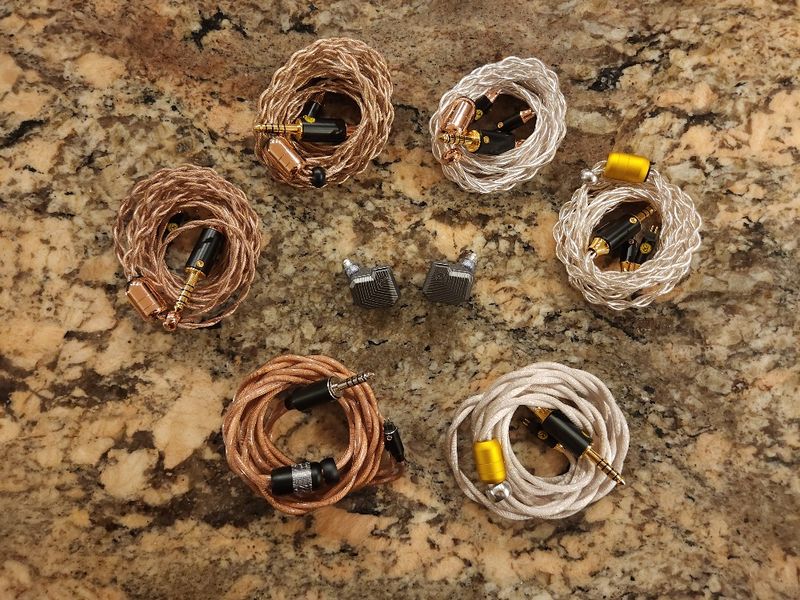
- w/PS SPC XL – switching Copper XL to SPC XL has a noticeable effect on the sub-bass rumble which digs in deeper and with a little more weight/presence. Also, treble has more air and enhanced crunch. It shifts the Volta’s tuning more toward the Sonora’s direction if you would like to improve the retrieval of micro-details of Volta relative to its stock cable but at the expense of losing a bit of that organic warmth from the original cable pair-up.
- w/PS SPC Tri-Layer – the main change I’m hearing in this pair-up is less body which takes away some warmth from the mids, giving them more clarity, though taking away some of the musicality. Also, unlike SPC XL where I heard more air and crunch, relative to going from Copper XL to this SPC tri-layer, the treble remained relatively close, still relaxed.
- w/PS Silver+Gold Tri-Layer – this sound finetuning was closer to SPC XL, though not exactly. I noticed that relative to the stock Copper XL cable the bass was enhanced, the sub-bass rumble remained the same, but the mid-bass punch became a bit stronger and faster. The natural smooth tonality of the mids remained very close, maybe gaining a bit of transparency reducing coloring just a bit, and the treble gained a bit more air and crunch. Not exactly on the same level as SPC XL, but somewhere in between Copper XL and SPC XL. I like this finetuning since it made the sound a little tighter and faster, gave more punch to the bass, kept the magic of Volta’s natural mids, and enhanced the treble just enough to give the sound more clarity and improved layering/separation. I enjoyed this pair-up with Volta a lot.
- w/PS Dual-Copper – with this cable the sound was not too far off the stock Copper XL cable, though I did notice the soundstage being a touch more intimate (very small reduction in width) and the tonality in mids was a bit thicker.
- w/PS Quad-Copper – this was an interesting transformation, supercharging Volta with extra energy, mostly in mids that were more forward, and the lift in treble to give the sound more crunch. Going from Copper XL to Quad-copper transformed the presentation of the sound from being more neutral, smoother, and laidback, to being more energetic, faster, and punchier. The overall tonality didn’t change as much, but that new jolt of energy did change the perception of the sound being a bit more revealing.
Sonora
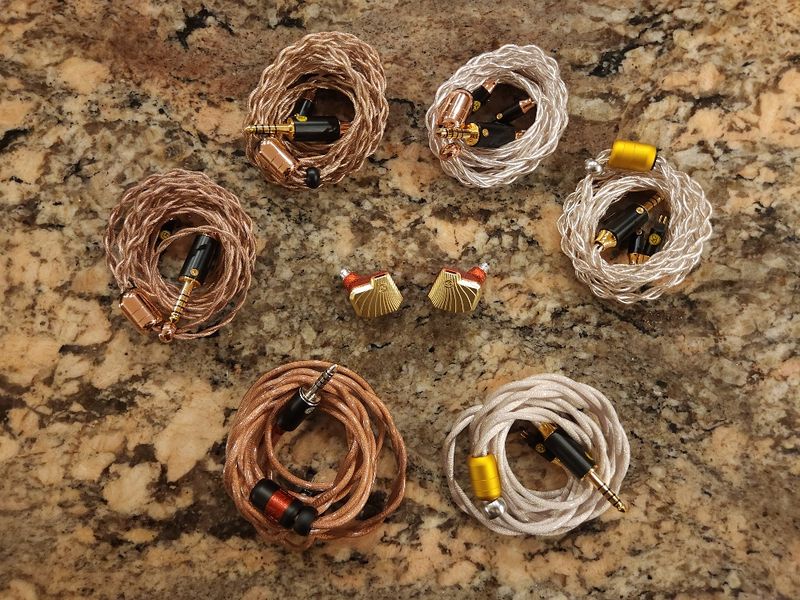
- w/PS SPC XL – love the transformation of the sound here. The sub-bass gains more rumble, being deeper and with more weight/presence. As a result of that, mids gain a bit of a body, giving them more natural tonality. Plus, I also noticed the treble scaling down just a bit. It still has plenty of air and crunch, but with a bit less energy which goes along with the overall transformation of the sound being a bit more natural and musical. Hmm, almost makes me wonder if this should have been the original stock cable for Sonora.
- w/PS SPC Tri-Layer – here the main difference I hear is in treble where going to SPC tri-layer relaxed the treble a bit, still keeping it resolving and energetic, but not with less air and crunch which gave the sound a bit more relaxed presentation.
- w/PS Silver+Gold Tri-Layer – this cable switch gives Sonora more punch in the mid-bass while the sub-bass rumble remains the same. The mids remained the same, but their presentation changed, with vocals being pushed slightly to the back. I think this was a result of both the bass and the treble scaling up in quantity a bit which shifted the sound signature of Sonora from more W-shaped to more U-shaped. It’s a very unique finetuning, well done without making the treble harsher or fatigued.
- w/PS Dual-Copper – another unique sound finetuning. Here, I hear the sub-bass being a bit more lifted, giving more rumble to the sound, and the lower mids gaining a bit more body which gives mids/vocals more musicality. Plus, treble intensity is slightly reduced/relaxed, making it a bit smoother. Dual-copper shifted the sound of Sonora more toward the Volta direction which works quite well by giving the sound more natural musicality without reducing the resolution. I enjoyed this pair-up with Sonora a lot.
- w/PS Quad-Copper – wow, here the sound transformation is on par with dual-copper except the bass has more presence, and more weight, scaling it up from sub-bass to mid-bass. This also added more body and thickness to the mids, pushing it more toward the Volta direction. While I did enjoy this transformation, it felt like the bass was a bit too much in here.

 Twister6 Reviews