
Comparison.
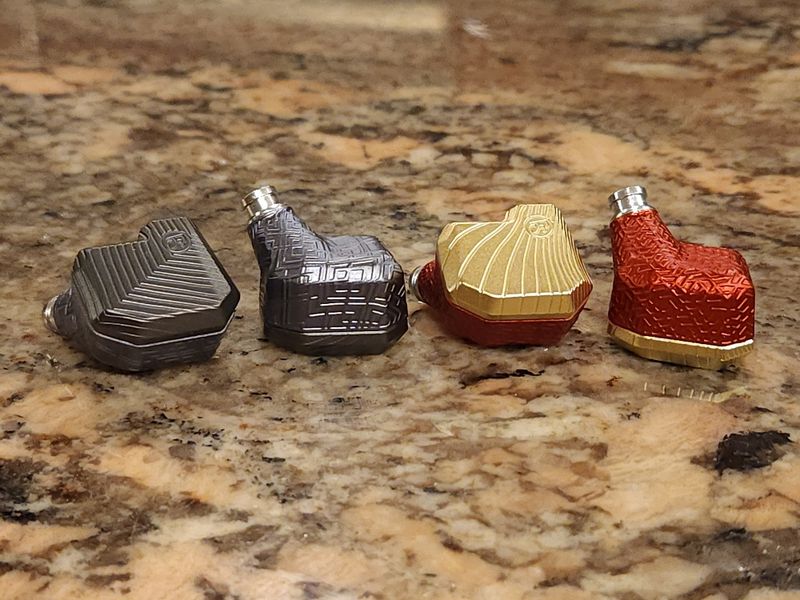
The comparison was done using Volta and Sonora with a stock Copper XL cable, stock silicone eartips, and P6 Pro source, volume matched in every comparison. I will start the comparison with the PlusSound family trio of Volta, Sonora, and Allegro, and then continue with other IEMs.
As I already mentioned, Volta and Sonora tuning is rather complimentary and in no way, one is better than the other. With one having a more neutral natural laidback tuning while the other having a more energetic balanced W-shaped signature, I was going back and forth with the same song, trying to figure out my preference, and was left on the fence. This has never happened to me before because I can find smoother tuning to lack the retrieval of details, but it wasn’t the case with Volta which had a great natural resolution and smooth retrieval of details. The same with more revealing tuned IEMs where upper-frequency energy could get fatigued after the extended listening session, yet Sonora avoided sibilance peaks and enhanced the sound with lots of energy and speed. It does take 10-15sec to adjust your ears when switching from one pair to another due to their complimentary tuning, but it didn’t make one sound better or worse than the other.
In comparison to Allegro, Sonora has more bass quantity, while Allegro bass is closer to Volta. Actually, upon closer listening, Allegro and Volta have a similar deep sub-bass extension, but Allegro mid-bass has a little more punch, closer to Sonora’s quantity. All three have similar neutrally tuned lower mids, but their perception does change because the more elevated bass of Sonora gives its lower mids less body while Allegro with its similar sub-bass extension and more punch than Volta, has a thicker lower mids that give more body to upper mids (in Allegro). Playing with the quantity of the bass and the treble changes the relative perception of the sound. Treble is where all three are completely different with a smoother and more relaxed Volta treble versus a more balanced resolving Sonora treble, and going into Allegro treble which is a bit peaky. Another very interesting observation is the soundstage expansion and imaging. Allegro has a wider soundstage than Volta, on par with Sonora, but its imaging is more center-focused like in Volta.

Vs other IEMs.
Volta vs VE VE10 – starting with a soundstage, while both have a bit more center-focused imaging, Volta expands its soundstage wider while VE10 is taller (and more out of your head). Both have a great sub-bass extension and rumble, VE10 scales up mid-bass with stronger impact and adds more weight to the lower mids. Volta keeps its lower mids more neutral and linear with upper mids, making it sound more natural and musical. VE10 has a stronger pinna gain which extends into the lower treble, making its mids brighter and more forward in presentation. When it comes to treble, Volta mid-treble has more emphasis which compliments its mids with a natural detailed resolution. To me, the biggest difference here is in the upper mids and lower treble, making VE10 more revealing while Volta stays more musical. Also, VE10 is a lot more sensitive and requires half of the volume.
Volta vs Elysian Annihilator 23 – here, I hear a very similar soundstage expansion, but the imaging and positioning of the sounds are different. Volta brings the sounds closer to the center while Anni spreads them more apart. Next, I hear Anni scaling up the quantity of the sub-bass rumble. Both have a very similar sub-bass extension and less aggressive mid-bass punch. But Anni scales up the sub-bass rumble with more weight. They both have similar neutral lower mids, but things do vary in upper mids and treble. Anni has more pinna gain, scaling up the quantity of its upper mids which makes them more forward and more revealing. Also, Anni has a stronger mid-treble peak to give the sound more crunch. On the contrary, Volta has smoother and more musical upper mids plus a bit less fatigue and smoother mid-treble. Contrary to VE10, Anni is a lot less sensitive, requiring nearly double the volume.
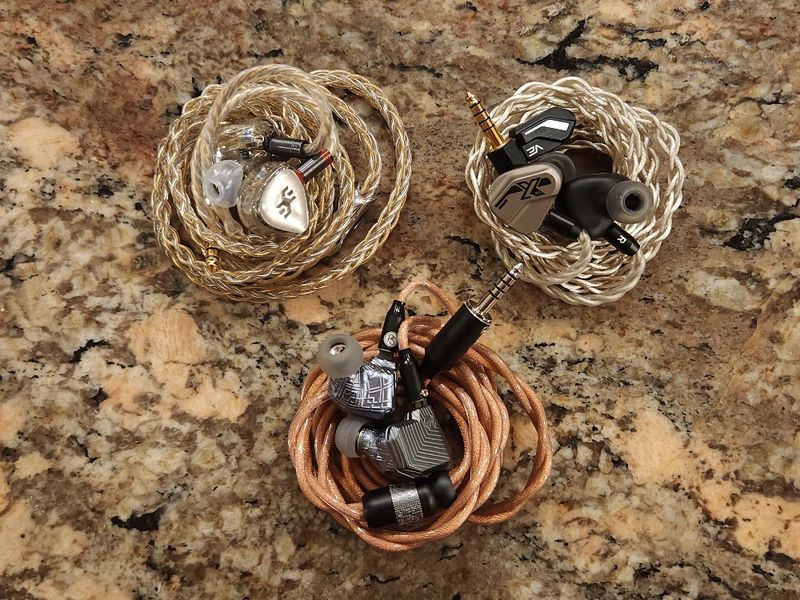
Sonora vs UM Maven II – both of these IEMs have a very similar big wide open soundstage expansion and close to holographic imaging. Their bass also has a similar sub-bass rumble, both the extension and the quantity. But with a mid-bass, Sonora has more punch, scaling up the impact of its bass while Maven II bass is less elevated, having a more polite punch. Their lower mids have a very similar tuning, being neutral, and contributing just a little bit to the body of the sound. Upper mids is where you will hear more difference. Sonora’s upper mids are more forward which together with its lower treble presence gives the vocals a more revealing tonality. Maven II’s upper mids are smoother and more musical, reminding me more of Volta’s tuning, but Maven’s mid-treble boost creates a bigger contrast with its upper mids, bringing more treble energy to the sound.
Sonora vs Oriolus Monachaa – starting with a soundstage expansion, both have a very expanded nearly holographic imaging, and both have a very wide soundstage expansion, but Monachaa’s soundstage width spreads even wider, wrapping around and behind. When it comes to the bass Monachaa has a more elevated sub-bass rumble while Sonora has more impact in the mid-bass punch which is also more articulate in comparison to Monachaa. Sonora’s lower mids are neutral while Monachaa’s lower mids are more “south” in tuning, being thinner to create a bigger contrast with more forward upper mids (Monachaa). Sonora’s mids in comparison are smoother and more musical. The same goes for treble, with Monachaa having more pronounced mid-treble peaks while Sonora has less fatigue treble tonality. Sonora has revealing upper mids and quite resolving treble, but in comparison, Monachaa’s upper mids are brighter and even more revealing.

Source Pair up.
In each of these source pair-ups, I was using a stock Copper XL cable and stock silicone eartips. With a 10ohm impedance and 109-110dB sensitivity, these IEMs are easy to drive from either DAPs or dongles.
Volta
- w/L&P P6 Pro – a balanced sound tuning with a neutral tonality. The sound is very natural, and laidback, with extra weight in the sub-bass, smooth detailed mids, and relaxed natural treble.
- w/iBasso DX320/amp14 – the bass has a stronger and faster mid-bass punch, mids are still natural, and organic, yet a bit more resolving.
- w/Lotoo LPGT – a slight reduction in the soundstage expansion and a touch more sparkle in the treble.
- w/A&K SP3000M – a little more punch in mid-bass, still the same natural detailed organic mids, and a little more sparkle and air in the treble which improves the sound resolution.
- w/A&K SP3000T (Hybrid/High Current) – a bit more holographic imaging, a touch smoother and more musical upper mids, and a bit more sparkle in treble.
- w/Cayin N8ii (P+, Class AB, Tubes) – a tighter bass with a bit more punch and more crunch in treble. Switching to P/Class A made it a bit too warm, so I kept it at P+/AB.
- w/Hiby R8ii (Class A) – a bit more punch in mids and slightly more revealing treble, giving the sound a more W-shaped signature.
- w/Cayin R6iii – deeper sub-bass and stronger mid-bass impact. Still, smooth natural mids but the treble has a bit more sparkle.
- w/iBasso DC Elite – the bass is a bit tighter, same natural detailed mids with just a touch more clarity due to a bit more sparkle in treble. Very good pair-up synergy.
- w/Cayin RU7 – very similar pair-up synergy as with P6 Pro.
- w/L&P W4 – very similar pair-up synergy as with P6 Pro.
Here, I can’t think of one bad pair-up, loved most of them.


Sonora
- w/L&P P6 Pro – a balanced W-shaped signature with a more energetic presentation of the sound, having a faster punchier bass, a more forward revealing mids, and the treble with more crunch and air.
- w/iBasso DX320/amp14 – the sound gains more body with a warmer smoother tonality in mids, thanks to NuTubes.
- w/Lotoo LPGT – a slight reduction in the soundstage expansion and a bit more sparkle in the treble.
- w/A&K SP3000M – nearly the same as P6 Pro, just with a bit more sparkle and air in the treble which makes the sound slightly more revealing.
- w/A&K SP3000T (Hybrid/High Current) – a bit more holographic imaging, a touch smoother upper mids, and a bit more sparkle in treble.
- w/Cayin N8ii (P, Class A, Tubes) – more warmth in mids and more crunch in treble. Switching to P+/AB made it a bit too bright, so I switched it to P/A.
- w/Hiby R8ii (Class A) – a bit more revealing up to, more treble crunch and air.
- w/Cayin R6iii – deeper sub-bass and stronger mid-bass impact. Natural mids but the treble has a bit more sparkle.
- w/iBasso DC Elite – deep bass impact, naturally detailed mids, resolving airy treble. Very good pair-up synergy.
- w/Cayin RU7 – very similar pair-up synergy as with P6 Pro.
- w/L&P W4 – smother warmer tonality with more relaxed treble energy.
With Sonora, I enjoyed all 3 dongles as well as P6 Pro, DX320/amp14, and R6iii daps.


Conclusion.
When I received PlusSound Allegro for review two years ago, I was a bit skeptical. After all, PS is well-known for its cables, not IEMs, and you don’t know what to expect regardless of how impressive the product looks on paper or in pictures, and considering its price tag. To my pleasant surprise, I was quite impressed with Allegro’s design and mature level of sound tuning and was very curious to check out its follow-up. While Allegro is no longer available, I found its tuning to evolve and split into two separate directions. Or you can think of it as Volta and Sonora sharing the same baseline DNA of Allegro, but following their separate tuning path, one with punchier and more energetic sound (Sonora) and another one with smoother and more natural sound (Volta). It’s almost like PlusSound was trying to decide on Allegro MKII tuning and instead of following one path they split in two directions, delivering two complimentary IEM sound signatures.
So, yes, Volta and Sonora tuning is rather complimentary, and in no way, one is better than the other. With one having a more neutral natural laidback tuning while the other having a more energetic balanced W-shaped signature, I was going back and forth, trying to figure out which one I liked better, but was left on the fence. This doesn’t usually happen to me because, as I already mentioned, I find smoother tuning to lack the retrieval of details, but it wasn’t the case with Volta which had a great natural resolution and smooth retrieval of details. The same with more revealing tuned IEMs where upper-frequency energy could get fatigued after the extended listening session, yet Sonora carefully avoided sibilance peaks and enhanced the sound with energy and speed. I found Volta and Sonora to be quite impressive for a sophomore release with improvements in both, the tuning and the design. Can’t wait for what else Christian and his PlusSound team going to come up with in the future!

 Twister6 Reviews