

Sound Analysis.
The sound analysis of Pro Max was done using various IEMs and headphones (covered in the Pair up section) while playing a selection of test tracks, such as Agnes Obel’s “The Curse”, Sandro Cavazza’s “So much Better” (Avicii remix), C-Bool “Never go Away”, Ed Sheeran “Shape of you”, Alan Walker “Darkside”, Galantis “Hunter”, Iggy Azalea “Black widow”, Indila “Boite en argent”, Dua Lipa “Love Again”, Counting Crows “Big yellow taxi”, David Elias “Vision of her”, and Michael Jackson “Dirty Diana”. I had at least 150 hours of burn-in time before I began my analysis; Elna SILMIC II Electrolytic Caps do need a burn-in, regardless if some will or will not hear the difference.
I prefer to describe the DAP sound based on the comparison to other DAPs and pair-ups with different IEMs/headphones since the DAP by itself doesn’t have a “sound”. What we hear is how it sounds through connected IEMs/headphones or the difference in sound relative to source comparison using the same pair of IEMs/headphones. This is my subjective opinion, describing how I hear it while analyzing the sound of Pro Max, and you will get a bigger picture of this DAP’s sound in the follow-up sections of Comparison and Pair-ups with specific headphones and IEMs.

Before starting to analyze Pro Max, I decided to spend some time with Pro II which helped me to appreciate Pro Max even more. While Pro II had a more “traditional” neutral tuning with punchier sound, Pro Max tuning went in a different direction with a smoother fuller-body musical tonality, almost reminding me a bit of a tube sound quality. When listening to Pro Max, I hear a more laidback analog sound quality which captures the emotions of the sound while Pro II has a faster, more revealing, and a bit more digital tonality which helps you analyze the sound.
Another thing I noticed in quite a few IEM pair-ups was the enhancement of the bass punch and texture, coming through with more weight and authority. At the other end of the spectrum, the pair-up with Pro Max helped to relax the treble, taking an edge off any brighter frequency peaks. Pro Max also added more body to the sound, making it smoother. I didn’t find it to be a revealing or micro-detailed source, but rather being smooth and musical, pairing up better with neutrally tuned or more revealing earphones and headphones rather than warmer-tuned ones. But despite a smoother tuning, I do hear a relatively dark background which helps with retrieval of details, popping out of the blackness with a cleaner on/off transition of the notes. Also, surprising to its almost tube-like tuning, the sound didn’t feel compressed, instead, the vertical dynamics were quite expanded.
The soundstage expansion is wide and spacious, while the imaging and sound placement varies depending on the pair-up, in some cases being a bit more center-focused while others being more holographic. I hear Pro Max as not trying to exaggerate the width of the sound or making the sound placement too holographic. Instead, it stayed true to the original technical performance of each IEM and the headphones I tested it with. Also, I found Pro Max to have a better synergy with IEMs rather than full-size headphones which could be related to its max Vrms BAL output and my use of harder-to-drive cans. For more demanding headphones, you will need R8ii and RS8 with its Turbo boosted out.
Pure Audio mode
The Pure Audio mode was inherited from Pro II, added later in that DAP, and from what I see it turns HibyMusic into the main DAP’s interface so you can’t get to the Android screen and can’t access its streaming or other apps. You can still access the notification bar and Android settings to switch back to Android Mode or exit this mode by exiting HibyMusic. Also, you can still toggle BT and WiFi on/off, perhaps for the HibyMusic built-in functionality, but you can’t access full streaming apps.
Of course, once you mention “pure audio”, the question will arise if this will affect the sound since I’m sure this mode disables many Android background processes. I went back and forth many times between Android and Pure Audio modes, and the only thing I can hear is a bit more depth added to the sound, more out-of-your-head expansion, and slightly more punch/speed in mid-bass of IEMs I used for testing. Do I hear a big change in sound? Not really. Thus, I have no plans to switch to this mode since I need access to streaming apps.
4.4mm vs 3.5mm
Switching between BAL and SE outputs didn’t yield changes in tonality or technical performance except for the 4.4mm BAL output having a bit wider soundstage expansion. Also, since BAL output has a higher power, when I switched to SE, I had to raise the volume higher to match it.
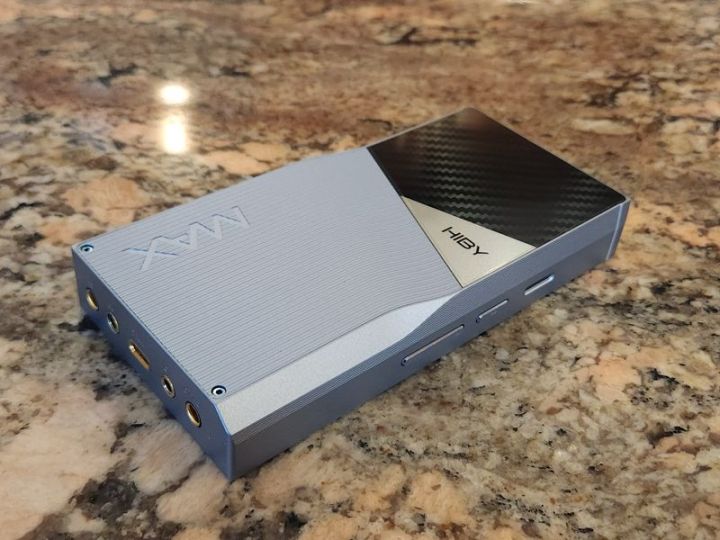
Comparison.
In every comparison, I used Aroma Jewel, FirAudio RN6, and Audio-Technica ATH-R70x, volume matched while listening to the same test tracks between DAPs. Also, here, I’m mostly focusing on the difference in sound as I hear it. These are just quick analysis notes.
R6 Pro Max vs Hiby R6 Pro II – Max has a smoother fuller-body musical tonality, almost reminding me a bit of a tube sound quality, while Pro II is more neutrally-revealing, punchier, with less body and less coloring in comparison even when switched to Class A (Pro II). Max also has a bigger, wider soundstage expansion with more holographic 3D depth in sound. Both have a relatively black background. The main difference here, aside from the soundstage expansion, is in tonality with Pro Max having a more laidback analog sound while Pro II has a faster, more revealing, and a bit more digital tonality.
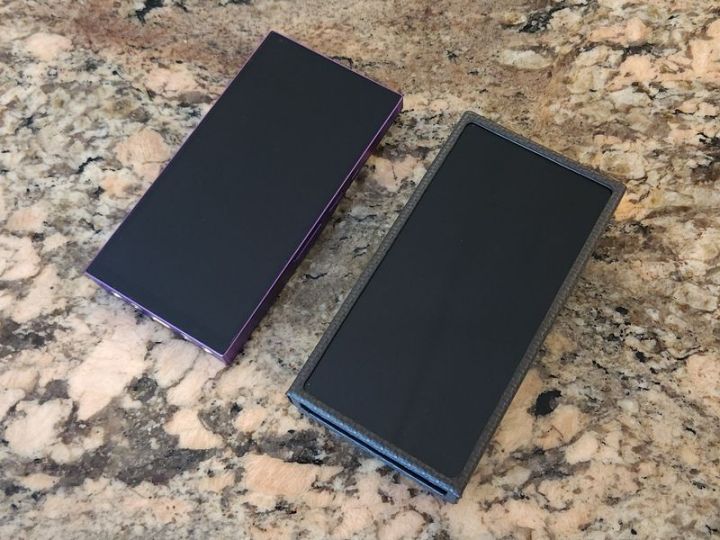
R6 Pro Max vs Hiby R8ii – I usually don’t go into the comparison of mid-fi and summit-fi models, but as soon as I started listening to Pro Max, it reminded me of R8ii analog tonality. There are some similarities and differences between these DAPs. Both have a rather expanded holographic soundstage, but I found Pro Max to have a smoother tonality. I had to switch R8ii to Class A for a closer match, and I hear Pro Max being smoother around the note edges with a slightly more laidback presentation of the sound. In comparison, R8ii also has analog musical sound tonality, but its sound has more punch, more speed, and more sparkle in treble, while Pro Max has a smoother tuning and more weight in sub-bass rumble.

R6 Pro Max vs Hiby RS6 – I had to go back and forth with this comparison. It was hard to believe how close ES9039MS could sound to a discrete R2R dac, but I did spot a few differences. Starting with a soundstage expansion, RS6 brings the sound a little closer to you, having a bit less depth/height while Pro Max has a more holographic 3D expansion. Then, Pro Max has more sparkle/air in the treble while the RS6 treble is smoother and more relaxed. As a result of the sound difference in treble, the RS6 sound is smoother and a bit denser in comparison to the more resolving and more layered sound of Pro Max.

R6 Pro Max vs Cayin N7 – I thought this would be another interesting comparison with Pro Max. Both have a very similar holographic level of soundstage expansion. The tonality of N7 is a little more revealing, especially in mids, the reason I switched N7 to Class A to give it a smoother tonality. But even with N7/Class A, I still hear its mids to be a little more revealing, bringing vocals more forward and making them more revealing in comparison to smoother Pro Max mids when paired up with Jewel. N7’s technical performance is on par with R8ii, so there is a bit of an upper hand in dynamics and layering, especially due to the brighter upper frequencies of N7 that add more air between the layers, but Pro Max is not too far off. The smoother tonality of Pro Max gives its sound a more analog musical tonality.
R6 Pro Max vs Lotoo PAW6k – I had a few people ask about this comparison since PAW6k is known as a smoother-turned audio player and in the same price range as Pro Max. Starting with a soundstage expansion, both have a similar depth/height, but PAW6k has a noticeably narrower width, creating a more intimate sound presentation while Pro Max soundstage expansion is more holographic. Their tonality is very close, both having smoother fuller-body sound. The difference here is in technical performance. While both have smoother tuning, Pro Max has better layering and separation between the sounds, improved vertical dynamics, and an overall higher resolution of the sound.

Page 3 – Pair up, Wired/wireless connections, and Conclusion.

 Twister6 Reviews