

Sound Analysis.
The sound analysis of N6iii was done using various IEMs and headphones listed in the pair-up section of the review while playing a selection of test tracks, such as Agnes Obel’s “The Curse”, Sandro Cavazza’s “So much Better” (Avicii remix), C-Bool’s “Never go Away”, Ed Sheeran “Shape of you”, Alan Walker “Darkside”, Ariana Grande “Break up with your girlfriend”, Galantis “Hunter”, Iggy Azalea “Black widow”, Indila “Boite en argent”, Dua Lipa “Love Again”, Counting Crows “Big yellow taxi”, David Elias “Vision of her”, and Michael Jackson “Dirty Diana”. I had at least 100 hours of burn-in time on each card (C201 and E203) before I began my analysis.
I prefer to describe the DAP sound based on the comparison to other DAPs and pair-ups with different IEMs/headphones since the DAP by itself doesn’t have a “sound”. What we hear is how it sounds through connected IEMs/headphones or the difference in sound relative to source comparison using the same pair of IEMs/headphones. This is my subjective opinion, describing how I hear it while analyzing the sound of N6iii, and you will get a bigger picture of this DAP’s sound in the follow-up sections of Comparison and Pair-ups with specific headphones and IEMs.
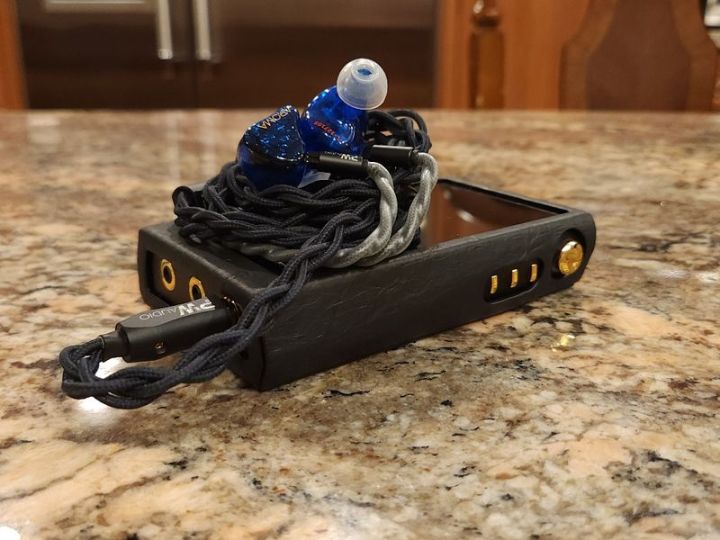
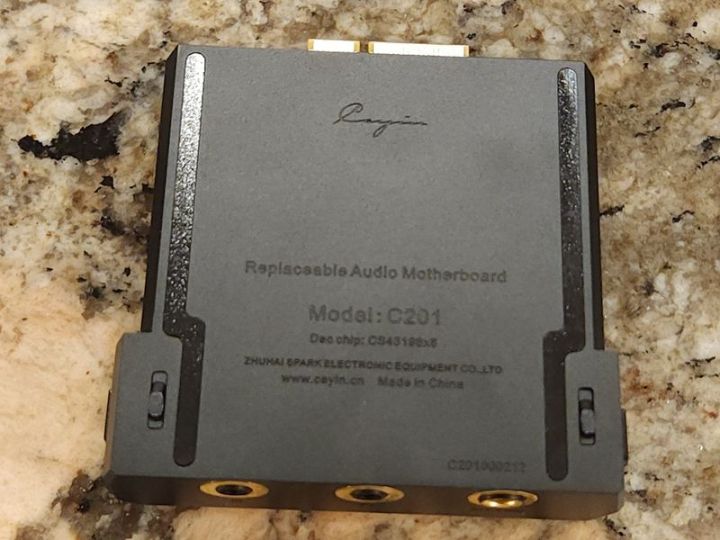
w/C201 – I hear a big, expanded soundstage and holographic imaging. This card has a dynamic layered sound with punchy bass and resolving tonality with slightly more revealing upper mids and a bit more crunch in treble. The tuning is not necessarily bright, but more on a neutrally revealing side to extract more micro-details from the sound. Very black background, with no hint of hissing or background waterfall even with very sensitive IEMs.
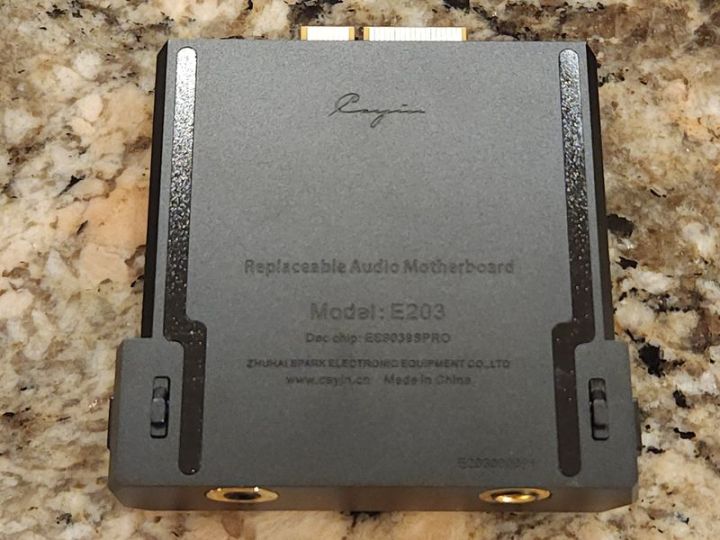
w/E203 – I hear a wide soundstage, though there is more depth than width in comparison to C201 while still maintaining holographic imaging. The sound is still dynamic and layered, but compared to C201, I hear more rumble in the sub-bass and body in lower mids with a more analog, textured, smoother tonality, and slightly more relaxed treble. The sound is not warm or colored, but instead, has a noticeably fuller body and smoother tonality while maintaining a good level of layering and separation, punchy low end, and expanded vertical dynamics. With E203, I hear just a little bit of waterfall hissing with sensitive IEMs, like VE10.
Switching between Class AB and Class A in E203 has distinct characteristics of w/AB sound being faster, punchier, and a little more transparent while w/A you get more rumble in sub-bass which gives a little more weight to the bass and a bit more coloring to the lower mids, also making the sound a little more laidback in its presentation. Hyper mode which is also my favorite in N30LE and C9ii is like a crossover of AB and A. The Hyper mode is based on Class A, so you get more rumble in the bass and more texture in the sound, but unlike the laidback presentation of pure Class A, in Hyper mode the sound is still fast and punchy.
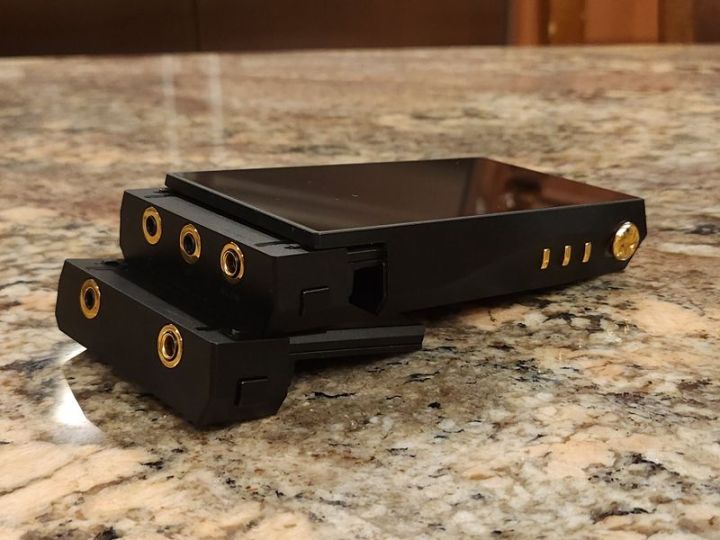
It was not easy for me to decide between C201 and E203 because each one offers a unique sound characteristic and design functionality with various fine-tuning options for better pair-up synergy with different IEMs and headphones, similar to what you get with N8ii/N30LE/C9ii, except here you have to switch between the modules to select different DAC/amp combo. The difference will not be night and day, but still enough to hear it and to select one module over the other depending on which one offers a better pair-up synergy.
3.5mm vs 4.4mm
With either C201 or E203, switching between BAL and SE outputs didn’t yield changes in tonality or technical performance except for the 4.4mm BAL output’s slightly wider soundstage expansion. Also, since the BAL output has a higher power, when I switched to SE, I had to raise the volume higher to match it.
Comparison.
In every comparison, I used Aroma Jewel, volume matched while listening to the same test tracks between DAPs. Also, here, I’m mostly focusing on the difference in sound as I hear it. These are just quick analysis notes.
N6iii w/E203 (Hyper) vs Hiby R6 Pro Max – This was a comparison many asked me about since both use the same ESS DAC and op-amps. I spent more time going back and forth between these two DAPs, and indeed there are some similarities, but also differences in sound. They both have a similar natural fuller body tonality, though I find Pro Max to be a little warmer in mids while E203 is a bit less colored. I had E203 in a Hyper mode which is the best sound you can get out of this card, and both of these DAPs have a textured analog tonality, but E203 has more holographic imaging, not exactly night and day, but the placement of sounds in space is a little more expanded. I also do hear a bit more rumble in bass and slightly more air in treble, helping E203 with improved layering and separation of the sound. Also, in Hyper mode the vertical dynamics of the sound peaks are more expanded. I keep bringing up “Hyper” mode because it gives N6iii/E203 a boost in performance to give it an edge. Nothing in this comparison is night and day, and if you want a warmer sound, a dedicated LO, and to save some money, Pro Max is a great contender. With N6iii you have a more advanced modular design and a smaller compact footprint, and with the E203 card, you also get Class A/AB and Hyper mode options to finetune the sound.
N6iii w/C201 vs iBasso DX260 – I got many requests for this comparison due to a similar 8x CS43198 DAC architecture. These DAPs have a different presentation of the soundstage, with N6iii being more rounded while DX260 has a bit less width which extends its depth. Another difference I noticed was in the bass where you can hear more sub-bass texture with N6iii while DX260 has a faster snappier mid-bass punch. As a result, N6iii bass sounds deeper and more laidback while DX260 bass has a faster attack and shorter decay to deliver snappier bass notes. This brings me to the biggest difference between these two DAPs, their mids. From the tonality perspective, they are not too far off, but N6iii adds more smoothness to the sound, not the warmth but the smoothness to give the sound a more laidback presentation with analog texture. DX260 sounds faster, more precise, and perhaps slightly less analog (more digital?) when compared to N6iii. Another difference is that the DX260 is no longer modular like its DX240 predecessor. Thus, I was glad that Cayin continued with a modular design going from N6ii to N6iii.
N6iii w/E203 (Hyper) vs Cayin N7 (Class A) – They both have a big soundstage expansion, though once I switched E203 to a Hyper mode, I felt like N6iii width expanded a bit more with some of the sounds wrapping around me. They both have a natural textured sound, though I found N6iii to be a bit smoother and with slightly fuller body in mids, while N7 is a little more revealing, especially in upper mids and lower treble, and with less overall coloring. What I found interesting is the difference in the bass rendition and articulation between these two. Again, in a Hyper mode, the N6iii sub-bass was digging in deeper, with slightly more rumble that gave more weight to the bass. Usually, more sub-bass can affect the mid-bass speed, but it didn’t with E203. And while I don’t consider N7 bass to be soft, in comparison to E203 it did sound softer. Also, the E203 bass was more articulate, more layered, and more precise. As already mentioned, besides the difference in bass, I found N7 to have slightly more revealing mids and treble, while N6iii w/E203 has a bit smoother tonality.
N6iii w/E203 (Hyper) vs iBasso DX340 w/amp15 – of course, this comparison received a lot of requests as well, especially since both DAPs have a modular design, though iBasso offers a modular amp card while Cayin has DAC/amp modules. I always start with a soundstage comparison, and both have a big holographic soundstage expansion and imaging, though in some of the tracks I found DX340 to stretch even wider, creating a more 3D space. But in general, both have a rather big, expanded soundstage expansion. Their tonality does vary, with DX340 being more neutral and slightly more revealing while N6iii is smoother and has a bit fuller body mids. Also, in this comparison I found the bass to be a bit softer in pair-up with DX340 while having a slightly more elevated rumble and stronger punch with N6iii. Once you connect DX340 amp15 to DC input, it gains more punch in the bass, though this would imply a desktop use or the need for a portable external battery. The modular nature of each of these DAPs gives you an opportunity for future sound upgrades without the need to get a new DAP. I’m glad both manufacturers still offer a modular design in these particular models.
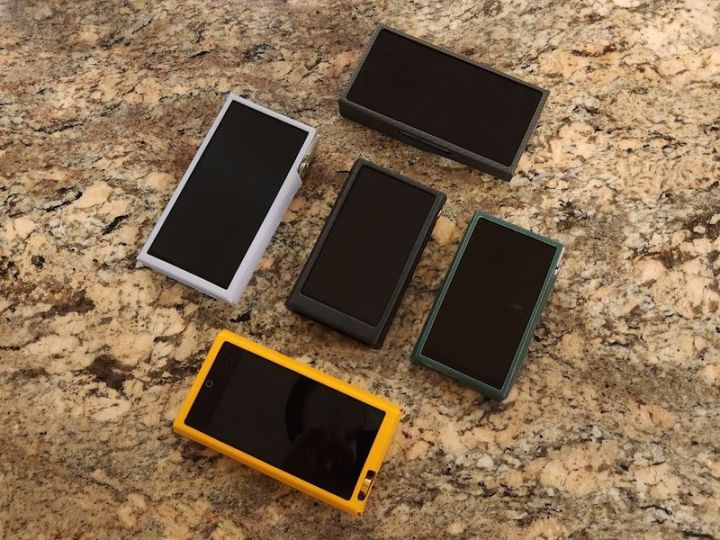
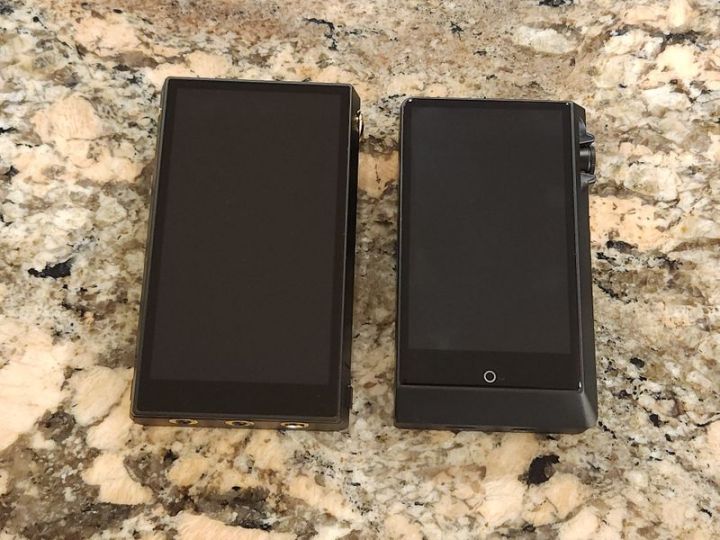
N6iii w/E203 (Hyper) vs N6ii w/R01 (R2R) – As expected, I had to compare the new N6iii with the original N6ii. To my ears, R01 was the best audio motherboard available for N6ii, one of the reasons it was also a part of the special titanium edition of N6ii. Thus, I decided to compare N6ii vs N6iii using their corresponding “best” modules. Starting with soundstage, you can hear N6iii to have a more rounded holographic soundstage expansion while N6ii has more depth/height in comparison to how wide the sound spreads, giving the sound more intimacy. They both have a smooth natural tonality, and I hear N6ii to be warmer and have a more laidback presentation of the sound. In comparison, N6iii has improved retrieval of details in mids and more sparkle in treble, still natural but noticeably more resolving. I’m still amazed at how natural and smooth ES9039Pro sounds. Another thing I noticed, while both have a deep sub-bass rumble when tested with my IEMs, N6iii also brings a faster and more precise punch to the sound, one other reason I found N6ii to be more laidback while N6iii has a more toe-tapping energy. Hopefully, if Cayin decides to make an R2R module for N6iii, I will revisit this comparison.
Page 3 – Pair up, Wired/wireless connections, and Conclusion.

 Twister6 Reviews
Thank ypu for the nice review. I have one question. How does n6iii with c201 to n7. I am Looking for a more revealing Player and cpnsider n6iii or ibasso dx340
LikeLike
if you are looking for a more revealing tuning, C201 should do the job!
LikeLike
Hi Twister, first i wanted to thank you all your wonderful work here, you don’t know it but through these years you’ve help me a lot with different decisions!
That said, i’ll go direct with my doubt. I know that you have a deep experience with some of the gear i want to ask you about, so i hope it will make it easier, a short answer is enough:
Just in terms of sound quality, which dap would you recommend between Cayin N7, N6iii or a second hand Lotoo Paw Gold Touch?
It’s the Lotoo still a king or the 2025’s mid-hi gear has reduced the gap with 2018’s top gear?
I’ll use it with Meze Empyrean and Audeze lcd i4 at home and Campfire Atlas and probably Legend X on the go (you can infer the sound i like, i’d like a source not too warm to compensate the warmth of my planars and raise a little bit the details in them, not so worried about the iems)
Thanks in advance for your answer!!!
Daniel
LikeLike
N6iii with stock c201 audio board probably will work better for you per your sound requirements. LPGT is fine, but GT2 next gen has a cleaner performance, though the design is not as compact as the original LPGT. Also, N7 will be warmer than N6iii/C201.
LikeLike
Thank you very much, i ordered one, let’s see what happens!
LikeLike
Hi
Please revisit with r202 board, also vs SE300
Cheers
LikeLike
I just got R202, but had SE300 on loan many years ago. So, can’t revisit that one.
LikeLike