

Pair up.
Here is how N6iii pairs up with some IEMs and headphones. All were connected to 4.4mm BAL output and tested in high gain while comparing the sound performance between C201 and E203 modules.
Headphones.
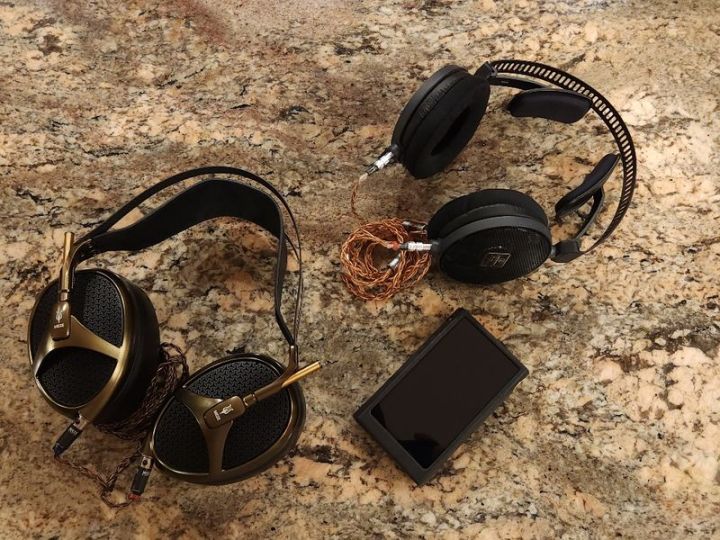
Audio-Technica ATH-R70x – These 470ohm open-back cans are usually not easy to drive, but I had no issue even at 53/100 (E203) and 54/100 (C201) with plenty of overhead volume margin. The soundstage opening here has an average width w/E203 while being more expanded with C201. With either card, the sound signature is balanced, and tonality is very natural, organic, and resolving at the same time. The bass performance is pretty good with more emphasis on a textured sub-bass rumble along with a softer mid-bass punch. Mids are natural, detailed, and musical. With C201, I hear less coloring in mids/vocals while E203 added more analog texture to the sound. The treble is also clear and detailed, with plenty of natural sparkle and airiness which I found to be more enhanced with C201 and a bit smoother with E203. Between these cards, I couldn’t decide which one I liked better with R70x, but I’m leaning more toward C201 which added more clarity to the mids, airiness in treble, and made the soundstage bigger.
MEZE Audio Empyrean – I hear a wide soundstage with a close to the holographic level of imaging, with the sound extending further out, more out of my head using either C201 or E203 cards. The soundstage has more depth/height than width with either card. The sound signature is closer to balanced, and the tonality is natural, smooth, and detailed. Bass has a deeper sub-bass rumble and rounded mid-bass punch. The weight of the bass notes comes mostly from sub-bass, mid-bass is there, and packs an OK punch, but with a slower attack. I do hear more variation in tonality between the cards when it comes to the mids and the treble. With C201, the mids are pushed a bit back which makes them lose some clarity, bringing more focus to the bass and the treble. With E203, I hear extra body and texture in mids, and the presentation of mids is more forward, bringing more clarity and focus to the vocals, while also making the treble sound more natural and less peaky. With Empyrean, the choice was clear, I preferred the E203 card.
IEMs.
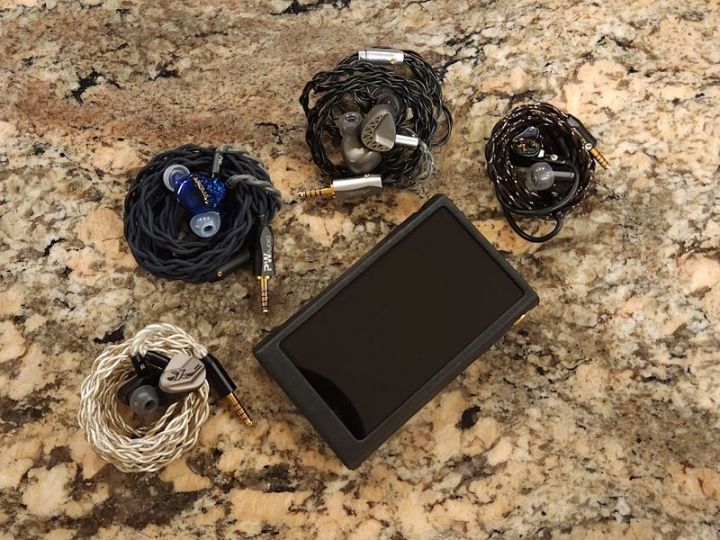
Aroma Jewel w/FT – With C201, the soundstage has a round proportionally expanded shape with holographic imaging. The sound signature is well-balanced, with a smooth natural resolving tonality, punchy bass, clear detailed mids, and extra sparkle in treble. The tuning is more neutral, but still quite revealing. Switching to E203/hyper, the soundstage has even more depth in comparison to width. The bass gains more rumble and sub-bass texture, and mids gain more body and texture as well, being smoother and more organic in comparison to C201. The treble is detailed, and natural, with similar sparkle and a bit more air. I preferred the extra coloring of E203 in pair up with Jewel.
FirAudio RN6 – With either of the cards, I hear a big holographic soundstage expansion and imaging. The sound signature of RN6 w/E203 is more L-shaped, bringing out more weight in the RN6 kinetic driver with a powerful speaker-like analog bass. The bass is powerful here, the mids smoother and a bit thicker, while the treble is also smoother in its presentation. When you switch to the C201 card, the weight of the bass scales down a bit, just the quantity but not the quality. As a result, mids come more forward and gain a bit more clarity, and treble also has a bit more sparkle. In comparison to a more L-shaped sound signature of RN6 with E203, switching to C201 made the sound signature more balanced. Per my preference, I enjoyed RN6 more with C201 in comparison to E203.
UM Maven II Cresent – With either card, the imaging (sound position) remains holographic while with C201 the width stretches a bit wider while with E203 I hear a bit more depth than width. Also, with both cards, I hear a deep textured sub-bass rumble and a fast mid-bass punch. But mids and treble vary between these two. With C201, the mids/vocals have more clarity, less coloring, and improved layering and separation, and the treble has a bit more air and extra zing/sparkle. When you switch to E203, mids become more textured and smoother, gaining more body and musicality. My favorite transformation was with the treble, still being well-defined, and clear, but also more natural and with better control when paired up with E203. Perhaps, with E203 the mids were a bit less layered, but with more texture, more musicality, and more natural treble tonality, I preferred E203 over C201 with Maven II.
Vision Ears VE10 – With VE10 being one of my more sensitive IEMs, I do have to mention there is no hissing with C201, but a little bit of waterfall hissing with E203. The soundstage expansion with both cards was more focused, having more depth than width, but the imaging remained holographic, typical of VE10 with other pair-ups. With either of the cards, the sound signature is balanced with a fuller body and natural detailed tonality. The sub-bass rumble here has a little more weight next to a rounded mid-bass punch, mids sound natural, organic, and still quite detailed, and the treble is also clear and detailed. But the degree of that natural tonality does change between the cards. With C201 there is a bit less coloring in mids, giving vocals more clarity and better definition, which also includes extra sparkle in treble. With E203, the mids sound more liquid and more organic, still a beautifully textured tonality with a laidback presentation of the sound. But while going back and forth with VE10 between C201 and E203, I end up preferring the pair-up synergy of VE10 with C201.
Wired and wireless connections.
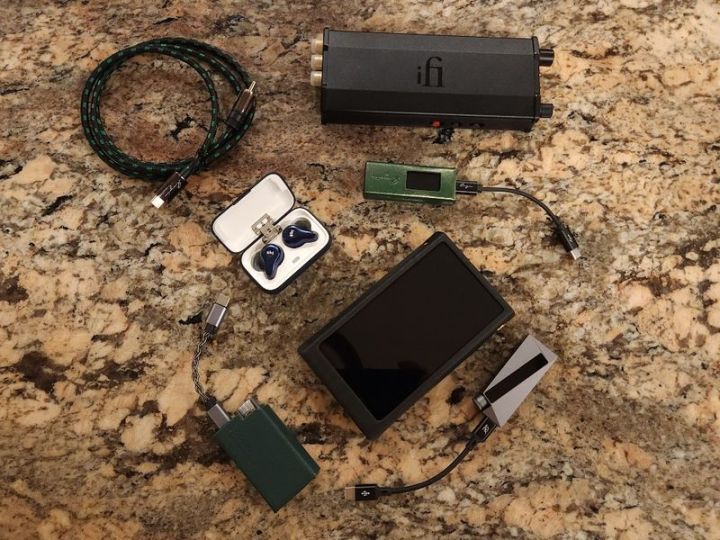
Besides being a portable DAP, you can expand N6iii functionality as a transport to drive an external DAC/amp, to use external AMP (depending on the module since C201 has LO while E203 doesn’t), or to turn the DAP into a wired/wireless usb DAC. And of course, you don’t have to be limited to wired headphones and can take advantage of a Wireless Bluetooth connection.
Wireless/Bluetooth
I tested N6iii BT Tx with Hiby WH2 TWS and confirmed the operation within 45 feet. UAT codec support was recognized, and I was able to pair up using it as the default hi-res codec. Also, I confirmed full remote control of the playback from WH2. The stability of the connection and the sound quality were no different than using my Galaxy S22 phone and it was even better than my S22 where I get closer to 40 feet of open space coverage.
N6iii also has BT Receiver mode which turns this DAP into a wireless DAC/amp. You need to go into BT Settings, select Bluetooth Audio Input, and then search for N6iii from your smartphone. When paired up, click the gear setting icon next to N6iii on your smartphone in the Bluetooth menu and select LDAC protocol. This connection worked up to 50ft away from my phone in open space, which is very impressive.
USB Audio Out
I tested and verified this one with various popular USB DAC dongles, such as RU7, W4, and DC Elite, and found it to work without a problem. Similar to how I have it configured in HibyMusic with my Galaxy S22, I had Exclusive HQ USB audio access enabled and selected USB Audio Performance mode. The sound quality was no different than when connecting these dongles to my Galaxy S22 phone.

USB DAC
I verified this functionality using my ThinkPad T480s laptop running Win10 Pro. Once connected, swipe down the Notification bar on N6iii and tap on USB Preferences, then select either USB DAC (enable usb charging) or USB DAC (disable usb charging) to enter USB DAC mode. From the USB DAC screen, you have access to change audio settings and enable Bluetooth. No drivers required, Win10 recognized the DAP without a problem, and N6iii was selectable in Windows Audio Settings. Volume could be adjusted from the Laptop and N6iii. Sound is the same either playing directly from N6iii or playing the same song from a laptop with N6iii connected as USB DAC.
COAX Out
With an optional custom usb-c to COAX cable, you can turn N6iii into an audio source/transport. Just plug it in, connect it to an external DAC/amp, and it works. I was using iFi micro iDSD BL and everything was recognized without a problem or the need to enable anything in Settings. Volume was only adjustable from micro iDSD, not N6iii. And, with micro iDSD BL, the sound was even more resolving using Coax rather than digital out.
Line Out
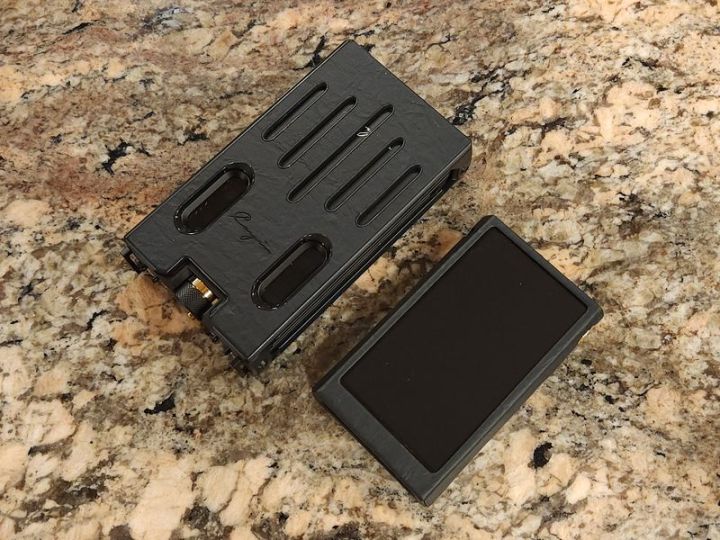
With modules that support LO, like C201, N6iii automatically detects when Line Out is connected (icon in the notification bar), and I was able to adjust the N6iii output level with High/Mid/Low settings in Audio Settings (adjusting the output voltage). I did my testing with a Cayin C9ii amp. Also, with C201 you don’t need to select anything when using 3.5mm LO but have to switch BAL output to LO since that port is shared. Pairing N6iii/C201 with C9ii is a great way to give N6iii users more power and access to DAO-H (Class A/AB and Hyper) modes implemented in headphone output only E203. Depending on the C9ii setting, the sound remains natural and organic, and you can select NuTube to add more analog texture.
Conclusion.
As I already mentioned in the intro of my review, the N6iii update was overdue. In today’s DAP market modular design is still rare, and keeping it compact and relatively lightweight is a welcomed bonus. Not to mention that I was pleased to see Cayin keeping the price at a very reasonable mid-fi level while offering many improvements (over the previous N6ii release) to stay competitive with other latest higher-end DAP releases using popular SoC, ample RAM/ROM storage, optimized fast Android OS, and higher capacity battery.
This DAP stands out not just based on its modular design and compact footprint but also on the design and performance of its modules. Each audio motherboard offers a unique DAC/amp combo, allowing Cayin to be more creative with sound tuning while implementing audio technology drawn from their previous flagship releases, like the E203 design with a discrete dual amplification operation (DAO) with Class A and Class AB and super-charged Hyper mode or full differential Matrix DAC architecture using 8x CS43192 DACs to achieve great battery performance.
C201 and E203 are the first modules in the series of Gen2 audio motherboards released for N6iii, and the audio performance of this DAP will be unique depending on which module is in use. When a new module becomes available, it will be like getting a new DAP with all-new sound performance based on the different DAC/amp combo which you can switch on the go, literally, thanks to its quick release mechanism that was a pleasure to use. Another thing that I found to be great is the ability to order N6iii with either of the modules instead of buying with a default C201 and then buying an extra E203. I even noticed Musicteck offering a special bundle with both modules.
Cayin will have more audio motherboards to come, which brings a question of which one to get now if you are considering N6iii DAP. The C201 offers sound performance with a more resolving tonality and a neutrally revealing signature to extract more micro-details from the sound. You also get Line Out for both outputs. With E203, you get a deeper sub-bass rumble, fuller body textured mids, and a more relaxed treble. There is no Line Out since the focus is on pure phone audio output with Class A and AB, and my favorite Hyper mode. Also, you need to consider the excellent battery life of the C201 thanks to its low-power DACs, while having less playback time due to the more power-hungry ESS DAC and advanced DAO amp architecture of the E203. To me, it makes more sense to get an N6iii bundle with both amps since each one offers a unique sound characteristic and design functionality with various fine-tuning options for better pair-up synergy with different IEMs and headphones. Now, I hope Cayin is reading this and hurrying up with the R2R DAC/amp audio motherboard (my wishful thinking!!!).

 Twister6 Reviews
Thank ypu for the nice review. I have one question. How does n6iii with c201 to n7. I am Looking for a more revealing Player and cpnsider n6iii or ibasso dx340
LikeLike
if you are looking for a more revealing tuning, C201 should do the job!
LikeLike
Hi Twister, first i wanted to thank you all your wonderful work here, you don’t know it but through these years you’ve help me a lot with different decisions!
That said, i’ll go direct with my doubt. I know that you have a deep experience with some of the gear i want to ask you about, so i hope it will make it easier, a short answer is enough:
Just in terms of sound quality, which dap would you recommend between Cayin N7, N6iii or a second hand Lotoo Paw Gold Touch?
It’s the Lotoo still a king or the 2025’s mid-hi gear has reduced the gap with 2018’s top gear?
I’ll use it with Meze Empyrean and Audeze lcd i4 at home and Campfire Atlas and probably Legend X on the go (you can infer the sound i like, i’d like a source not too warm to compensate the warmth of my planars and raise a little bit the details in them, not so worried about the iems)
Thanks in advance for your answer!!!
Daniel
LikeLike
N6iii with stock c201 audio board probably will work better for you per your sound requirements. LPGT is fine, but GT2 next gen has a cleaner performance, though the design is not as compact as the original LPGT. Also, N7 will be warmer than N6iii/C201.
LikeLike
Thank you very much, i ordered one, let’s see what happens!
LikeLike
Hi
Please revisit with r202 board, also vs SE300
Cheers
LikeLike
I just got R202, but had SE300 on loan many years ago. So, can’t revisit that one.
LikeLike