
Noble
It’s always great to see familiar faces at the Noble table, Jim and Fumie Moulton, and I don’t think the Wizard himself, John Moulton, will ever make it to NYC. I’m acquainted with many Noble IEMs and was curious to see and hear if they brought anything new to the show.

The one catching my attention was Noble Chronicle, which is part of their 10th-anniversary release announced toward the end of last year. This limited edition in-ear monitor, with only 118 sets built worldwide, is configured with dual bone conduction drivers (2xBCD), dual electrostatics (2x Sonion ESTs), four balanced armature drivers (4 Knowles BAs), and coaxial dynamic drivers (10mm DD + 7mm DD). The earphone shells are made of all-titanium metal, which then goes through a firing process, creating a colorful faceplate panel.
I found Noble Chronicle to have a big round soundstage with holographic imaging, the soundstage expansion was huge. The bass was deep (great sub-bass rumble) and punchy (articulate mid-bass punch), with neutral lower mids, clear detailed upper mids, proper pinna gain to bring up details in vocals and instruments, and a crisp, airy non-fatiguing treble. The tuning is balanced and W-shaped. It is on a brighter side due to its crisp treble, but surprisingly it was not harsh at all.

Another IEM that I heard about but wasn’t as familiar with the tuning was Noble Spartacus. These IEMs have a complete Sonion tribrid driver design with bass and mids covered by 3x Sonion BAs, highs and mid-highs covered by 2x Sonion Bone Conductors, and ultra-highs covered by another 1x Sonion BA driver. Spartacus is a smoother-tuned iems with more emphasis on the bass. Its big, elevated bass sounds physical and dynamic, despite being BA. The mids are smooth and natural, even slightly pulled back, and the treble is crisp and detailed with all that creating a U-shaped tuning wrapped in a big, expanded soundstage.


Shanling
Debuting at CanJam NYC for the first time was a dedicated Shanling booth. This was also the first time I had a chance to meet face to face with Frankie, their dedicated rep many are familiar with on Head-fi since he is the one who answers questions in every Shanling thread and handles their social media announcements. I have known Frankie for almost a decade, and it was great to finally meet him in person and to test their products at a table during the show.
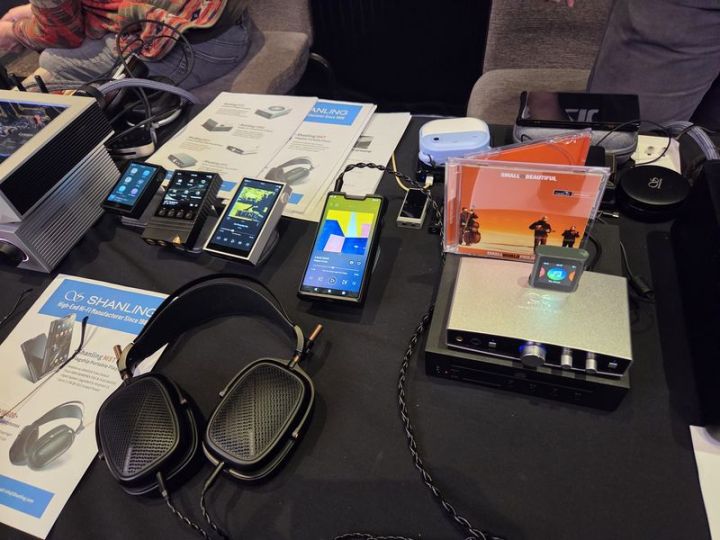
To me, the highlight of their recent releases is Shanling M8T DAP, a dual tonality audio player with an output that can switch between Solid State (pure Transistor) and dual Raytheon miniature Tubes (including two tube modes, either Triode or Ultra Linear). The DAP by itself has a newly upgraded Android 13, open OS with access to the Google Play store and all the apps, 665 SoC, 6GB RAM, and 128GB ROM along with microSD card expansion. It features a DAC setup with flagship AKM 2x4499EX and 2x4191EQ chips, and a powerful amp setup delivering up to 1,125mW. The DAP also features a 6” beautiful display, a large 8,350mAh battery with a long playback time, and a very reasonable 383g weight.
But what impressed me the most was its audio performance in addition to the price being only $1.5k. First of all, regardless of using Tube output or streaming, it delivered a deep black background and no hiss even with sensitive IEMs. Then, it offered a very distinct tonality between tubes and transistor outputs. The solid-state transistor mode has a powerful, dynamic, punchier sound, and still offers a natural neutral balanced tonality with a great level of resolution and less coloring in mids. Then, when switching to tubes, you can hear more warmth in the sound, noticeable going from transistor to tube-triode which adds not just warmth but also more texture to the mids, and then the sound becomes even more relaxed and laidback going into tube-ultra-linear mode.


Another portable DAP I noticed at the table was by Shanling’s sub-brand Onix, Overture XM5 model, which I found to have a natural tonality with a very organic sound. This is non-Android DAP, offering mostly local playback of your files, but it will also support a TIDAL native streaming app, which is limited but can still stream your playlists. This DAP had an old-school design with solid construction and hardware playback buttons on the front, along with a big volume control wheel. Despite its compact design, it packs a very impressive spec with a flagship ES9039S Pro DAC, dual Ti TPA6120 headphone amps, and over 1W of output power, though you do need to keep in mind 5-6ohm output impedance when dealing with low impedance high sensitivity IEMs which could be affected by that.

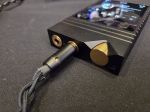
And just like some other DAP manufacturers who dipped their feet into IEMs and headphones, Shanling also had a few of their own to showcase at the show. The one that caught my attention was their new HW600 planar magnetic headphones with a large 110mm x 86mm diaphragm, single-unit driver structure, silver-plated aluminum coil, and high-performance dual-side magnets. These $1k headphones had high durability, full aluminum construction, dual 3.5mm cable connectors, quad-core single-crystal copper cable with 4.4mm termination, and smooth lambskin earpads. I found HW600 to have a big open soundstage with a balanced natural tuning. The bass was deep, more sub-bass rumble than punch, the mids were natural and detailed, and the treble was crisp and snappy. The pair-up with the M8T tube output was exceptionally good, especially tube-triode mode, yielding a crisp layered sound.

Audio-Technica
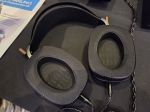
While I usually focus on portable audio gear when visiting CanJam, such as IEMs and DAPs, there is still plenty of desktop equipment presented at the show, including many full-size headphones. As many are aware, I don’t have as much desktop equipment at home, and a few pairs of headphones I have access to, are used to determine if my portable sources under test have enough juice to drive them. One such pair is ATH-R70X which has been near and dear to my heart for the last 10 years, featured in multiple dozens of my reviews due to their low sensitivity (<100dB) and high impedance (470ohm) design.
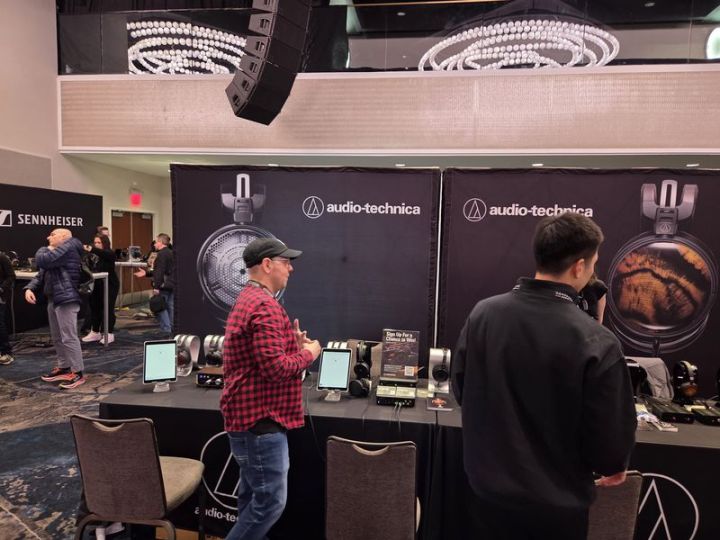
I was excited to hear that AT finally released a new updated version of it, ATH-R70XA, and in my inner-geek way assumed that “A” here stands for 0xA (10) due to their 10th anniversary. It wasn’t and turns out “A” was just an updated suffix letter. There were quite a few changes, including a new redesigned headband (no more 3D wing support system which I got used to), and making them even lighter than the original 210g R70X, with R70XA being just 199g. The price remained the same, $349, and so did the 45mm dynamic driver. So, how about the tuning?
Using P6 Pro, which usually can drive even some of the demanding cans, I can still hear R70XA to have a big open sound. But the sound now is faster, punchier, and more revealing. The bass still extends deep in the sub-bass region, but the mid-bass is faster and tighter. The lower mids are a bit thinner while the upper mids are brighter and more revealing. And the same goes for the treble, being peakier and even a bit sibilant with a few of my test tracks. Overall, the tuning has been shifted more toward the revealing-reference side, and I was informed that trying different earpads might bring more natural tonality to the sound of R70XA. Personally, I will stick with the original R70X tuning and my Double-Helix upgrade balanced copper cable.


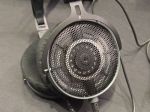
While at the table, and out of curiosity, I also decided to listen to their ATH-ADX3000 headphones others were trying next to me. These large 58mm DD open-back headphones were also featherlight at 257g and featured an A2DC coaxial connectors cable (at the earcups) which I have seen before on ATH IEMs. The sensitivity is still low, around 98dB, but the impedance is 50ohm, making it easier to drive from a DAP. I found the sound to have a punchy fast bass, thinner, brighter mids, and crystal-clear sparkly treble. These were also a bit too revealing and detail-oriented for my taste. Perhaps, they are suited better for use with desktop tube amps rather than a portable DAP.


DITA
After taking a long break from CanJam NYC shows, DITA was finally back at the Big Apple show. One of the highlights at their table was a new Dita MECHA IEM, a single 10mm Lithium-Magnesium DD sporting a dual magnet setup and outfitted in a beautifully crafted titanium shell. The MECHA comes with a new Churro cable, featuring a tangle-free soft-touch TPE sleeve surrounding high purity silver-plated copper conductors, and also their new Awesome Plug v2 interchangeable system which comes with 3.5mm, 4.4mm, and USB Type-C plug (with a built-in DAC chip).

I thought this was going to be their next multi-kilobuck flagship, so I was quite surprised to learn MECHA’s price tag is $899. Quite a few manufacturers have been pushing the price envelope down to $800-$900 range, with MECHA being one of the examples here, using a premium material titanium shell, quality cable, and a very impressive tuning. These IEMs have a huge, expanded soundstage, oval-shaped with a very large width. The bass is fast and punchy and has a deep textured rumble, however, the mid-bass punch stands out here. Mids are natural and organic, and so does the treble, being natural and relaxed. The overall tuning has more emphasis on strong punchy bass.


Another IEM at the table was Dita Project M, a dual-driver hybrid featuring 9.8mm DD and BA. This one generated a lot of talk around the Watercooler thread last year due to its $325 budget-friendly price tag and its premium looks, quality cable, and even a unique storage case. The tuning was geared more toward treble-heads with a neutral textured DD bass performance, neutral lower mids and clear detailed upper mids, and crunchy treble with an elevated mid-treble to give the sound higher resolution and extra-crisp details.

Kotori Audio
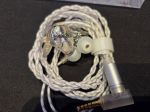
Right next to the DITA table was the Kotori Audio stand, with Kenneth Koh of DITA covering for them. I never heard of this brand so decided to give it a listen. While being more budget-priced, I think they were not bad at all for the chi-fi IEMs. I didn’t spend too much time with these but collected a few impressions.


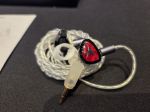
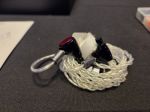
Kotori Audio Zephyr, a $150 hybrid DD/BA model had a big soundstage with a warmer, smoother tuning and a very natural and still detailed tonality. The other pair of their IEMs, Vampire, a $100 single BA model with a “bloody” faceplate, also had a very smooth warm laidback tonality and a more intimate soundstage/imaging. Vampire IEMs were not as resolving as Zephyr, just being smooth and bloody relaxed in tuning.
Page 1 – Intro and Overview of the Showroom.
Page 2 – Effect Audio/Elysian Acoustics, Empire Ears, Azla.
Page 3 – Bloom Audio, Campfire Audio, 64audio, ddHiFi, Lunch Break.
Page 4 – Eletech, Forte Ears, Dunu, Moondrop, Tanchjim.
Page 5 – Noble, Shanling, Audio-Technica, DITA, Kotori Audio.
Page 6 – Musicteck (UM, Softears, qdc, FlipEars, Alpha Omega, Epic Audio, and more).
Page 7 – Final thoughts.

 Twister6 Reviews