
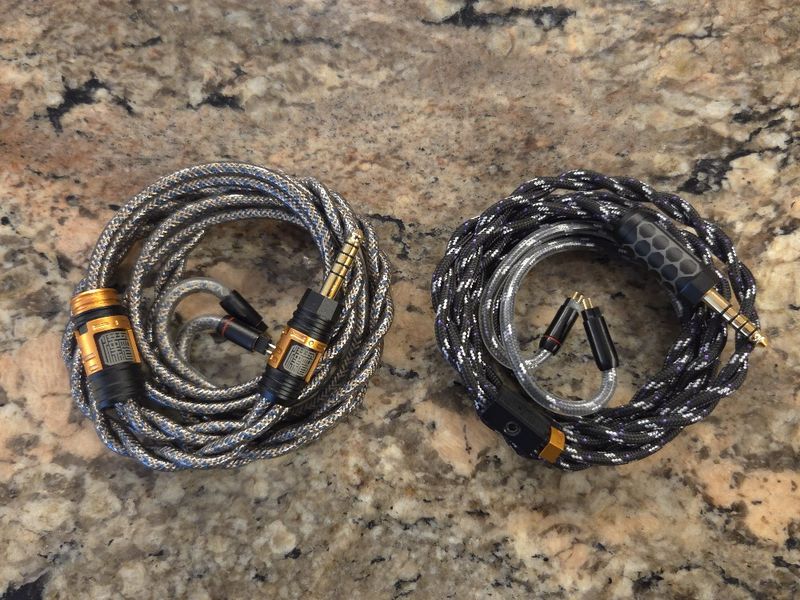
Pair ups.
Here is how I hear Kunpeng pair up with different IEMs. For this testing, I chose a few premium monitors with different sound sigs, to compare the sound between Kunpeng and either their stock or upgrade cables. Furthermore, I used L&P P6 Pro as a neutral reference source while playing the selection of my usual test tracks, such as Agnes Obel’s “The Curse”, Sandro Cavazza’s “So much Better” (Avicii remix), C-Bool’s “Never Go away”, Ed Sheeran “Shape of you”, Counting Crows “Big yellow taxi”, Galantis “Hunter”, Alan Walker “Darkside”, Iggy Azalea “Black widow”, Indila “Boite en argent”, Robin Schultz “Oh child”, Dua Lipa “Love Again”, David Elias “Vision of her”, and Michael Jackson “Dirty Diana”.
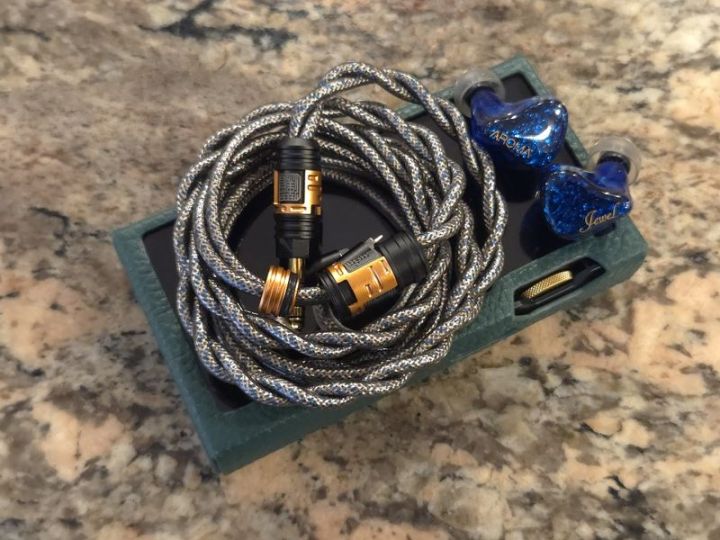
Also, please keep in mind that I’m describing the sound of an IEM paired with a specific cable, driven from a P6 Pro source, and how the sound of that IEM compares when I switch cables. I don’t want to imply that cable will have a drastic EQ-like night’n’day effect on the sound of IEMs. Based on what I’m hearing, the cable can fine-tune the sound, but if you find the original signature of the IEM to be not your cup of tea, no cable alone will change that.
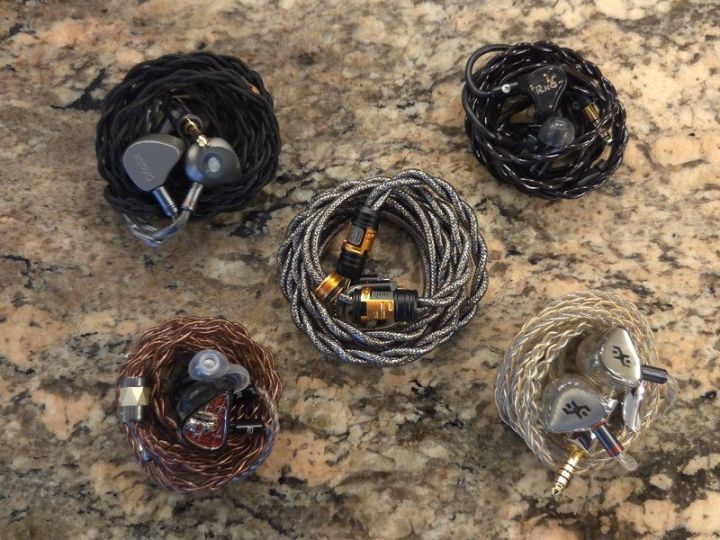
FirAudio RN6 w/stock Copper-Plated Silver vs Kunpeng – These FirAudio iems are highly regarded basshead level L-shaped tuned monitors, and from my experience of their cable rolling, you can either boost the bass even more or make the tuning more balanced by bringing mids more forward, though the latter change usually affects the bass slam. Here, for the first time, I heard RN6 with the same powerful bass slam as you would get with its stock cable, but the bass was tighter, more articulate, better controlled, and with a better separation from lower mids. And at the same time, mids came more forward, with the improvement in pinna gain perception, bringing higher resolution and more focus to vocals and instruments, along with extra bite in treble. But what made this cable pair-up unique was that bass remained as powerful while mids also came forward, creating not only a more balanced tuning, but a perfect W-shaped tuning.
Oriolus Traillii Ti w/stock PWA Silver/Gold-Silver/Copper vs Kunpeng – While I still enjoy the OG Bird, I reach out more often for the Ti version since I prefer its faster, tighter, clear tonality with a faster and more tactile punch. Switching to Kunpeng adds a new refinement to the Ti bird. I don’t hear as many changes in bass, maybe with mid-bass punch being a bit stronger. Mids are even less colored now, more detailed, with better separation of sounds and instruments, like a layer of faint veil was lifted off. The treble remains crisp, airy, and very extended. I listened to Traillii Ti/Kunpeng combo in a few extended sessions, and found the sound to be non-fatiguing. The focused improvement in clarity of the mids is what made this pair-up stand out.
Forte Ears Macbeth w/stock Eletech Copper Litz vs Kunpeng – The biggest change I hear in Macbeth when switching from their stock cable to Kunpeng is in the bass, adding a stronger mid-bass punch to the low end, making the bass tighter and faster. It still amazes me how Macbeth bass is covered by a BA driver, not DD. Next, you will notice mids being a bit more forward, more resolving. With a stock cable, mids are a bit smoother and less forward, and as a result of that, there is more contrast between mids and treble, making treble crisper and more energetic. With Kunpeng, mids are more forward and more resolving, and as a result of that, the treble sounds more natural and blends in better with mids.
Elysian Acoustic Annihilator 23 w/stock Liquid Links Martini Silver Palladium & Copper God vs Kunpeng – Using Kunpeng with Anni gave me a perfect opportunity to switch the cable to P-ear connectors from its default 2pin, so I can use it with these Elysian monitors. The tuning of Anni is also highly regarded for its U-shaped sound signature with a crystal-clear non-fatigue treble and deep sub-bass extension. The pair-up with Kunpeng changes that to a W-shaped sound signature, bringing mids/vocals more forward, giving them a clear, detailed, layered treatment to match the treble, and even making the bass a little tighter and more precise. The transformation of mids in here stood out with improved resolution, transparency, retrieval of details, and even layering and separation of the sounds.
Comparisons.
Consistent with my cable testing philosophy, I used the same IEM (Aroma Jewel) and source (P6 Pro) and only changed one variable at a time to note the sound difference I heard while keeping the volume matched. Remember that I’m describing how a particular IEM sound compares between Kunpeng and other cables.
Kunpeng vs PWA FT – As many are aware, Jewel/FT is my reference set I use in sound analysis of most of my latest reviews because it offers a neutral, natural, uncolored tonality, which helps me analyze the sound. I wouldn’t even touch Jewel’s stock cable because it simply doesn’t do it justice. Switching to Kunpeng from FT has a very noticeable effect in improving the clarity and resolution of Jewel. Kunpeng doesn’t color the sound of Jewel to make it brighter or warmer relative to the FT cable. It enhances the technical performance with the next level of transparency, making the sound more resolving, finetuning it to extract more details without making it more revealing. Relative to FT, the soundstage remains naturally expanded, spherically shaped in every direction, with more holographic depth. Also, the background sounds deeper and blacker. Keep in mind, I don’t have the Shielding version of FT, which I have tested before and found it to deliver an improvement over the regular FT, with a similar level of deeper and blacker background as I hear it with Kunpeng. And with this level of black background and more transparency, the overall sound becomes tighter, faster, and more dynamic.
Kunpeng vs Eletech Sonnet of Adam – The perception of the soundstage expansion and imaging between these cables is very similar; I didn’t notice too much difference. In terms of other aspects of technical performance, the blacker background of Kunpeng is quite noticeable here, making Jewel sound faster, tighter, and more precise. With SoA, I hear the sound to be a bit more relaxed, maybe even a little more laid back. Also, another difference I hear is in mids, with Kunpeng being more transparent, less colored, while SoA being a little warmer, smoother, with slightly more body in mids.
Kunpeng vs EA Cleo II Octa – I thought this might be another interesting comparison, considering Cleo being a pure silver cable while Kunpeng utilizes 3 types of silver-based wires. The difference in sound tuning between these two cables is quite noticeable. Starting with a soundstage, Cleo extends the sound a bit more out of your head while you feel closer to a performer with Kunpeng. The tonality is very different as well. Cleo II is more colored, finetuning Jewel with a deeper sub-bass rumble and more relaxed mid-bass, warmer, smoother, fuller body mids, warmer than SoA, and with more relaxed treble too. In comparison, Kunpeng makes the sound less colored, more resolving, faster, tighter, more dynamic, and with a blacker background.
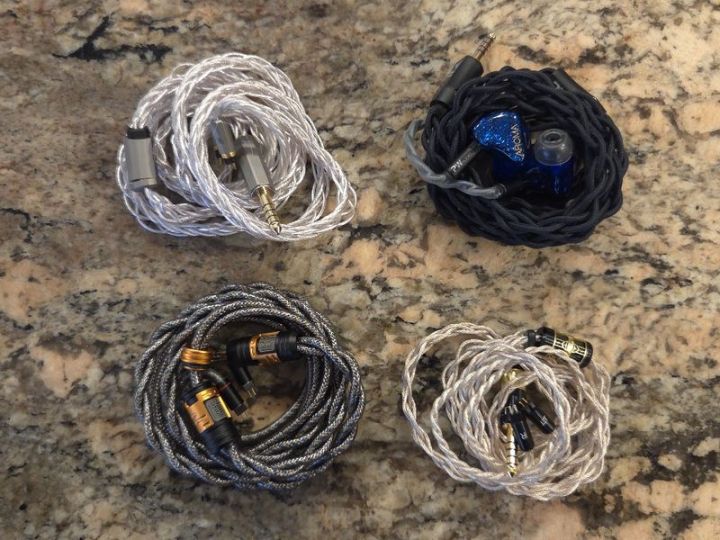
Page 3 – Quentin Comparisons and Conclusion w/Sound Analysis.

 Twister6 Reviews
Hi, II was thinking in get the Quentin, but I was all in because I thought that ads colour and warmth. Would you recommend for those characteristics better the Aristotle or Raphael?
Thank you. Big fan of your reviews, btw!
LikeLike
Quentin is great, but not exactly a “warm” cable, so if you want more coloring and warmth, Ari or Raphael would be the way to go. Ari will add more sparkle in treble while Raphael will be smoother up top. Sounds like you want more warmth, so go with Raphael
LikeLiked by 1 person