
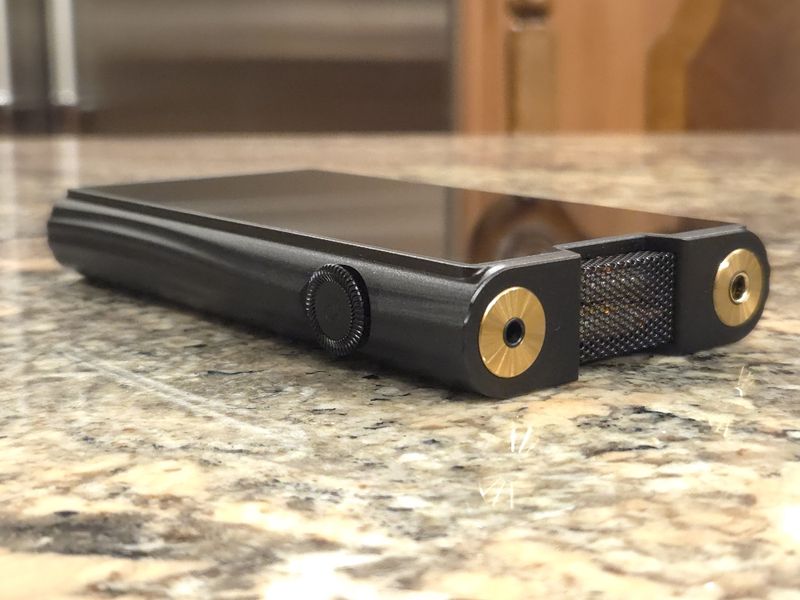
Sound Analysis.
The sound analysis of the M8T was conducted using various IEMs and headphones listed in the pair-up section of the review, while playing a selection of test tracks such as Agnes Obel’s “The Curse,” Sandro Cavazza’s “So Much Better” (Avicii remix), C-Bool’s “Never Go Away,” Ed Sheeran’s “Shape of You,” Alan Walker’s “Darkside,” Ariana Grande’s “Break Up With Your Girlfriend,” Galantis’s “Hunter,” Iggy Azalea’s “Black Widow,” Indila’s “Boite en Argent,” Dua Lipa’s “Love Again,” Counting Crows’ “Big Yellow Taxi,” David Elias’s “Vision of Her,” and Michael Jackson’s “Dirty Diana.” I had at least 100 hours of burn-in time before I began my analysis.
I prefer to describe the DAP sound by comparing it to other DAPs and its pairing with different IEMs/headphones since the DAP itself doesn’t have a distinct sound. What we perceive is how it sounds through connected IEMs/headphones or the differences in sound relative to source comparisons using the same pair of IEMs/headphones. This is my subjective opinion, detailing how I hear it while analyzing the sound of the M8T, and you will gain a broader understanding of this DAP’s sound in the following sections on Comparison and Pair-ups with specific headphones and IEMs.
The most noticeable sound analysis observation I found with the M8T is its distinctive tonal difference between Transistor (solid-state) and Tube (dual-Raytheon) modes. I have extensive experience with NuTube DAPs, many of which provide a tonal enhancement between the modes, where the sound change is not as drastic. In some other DAPs with Raytheon tubes, I felt that more effort was invested in the Tube mode to make it stand out. Here, both modes shine with impressive sound performance.
The non-tube Transistor mode delivers a powerful, dynamic, punchier sound while still offering a natural, neutral, and balanced tonality with a high level of resolution and less coloration in the mids. The bass in Transistor mode features a stronger and faster mid-bass punch in certain pair-ups, along with greater transparency in the mids. When switching to Tubes, you can hear more warmth in the sound, particularly when moving from Transistor to Triode tube mode, which adds not only warmth but also additional texture to the mids. The sound becomes even more relaxed and laid-back in Ultra-linear tube mode, characterized by a more rounded and slower mid-bass punch, along with a more organic texture in the mids. Interestingly, despite these changes, the treble sparkle and overall energy remained consistent across both modes. This was part of the secret sauce that enhanced resolution and maintained detail retrieval in either mode.
I was also impressed by the rich black background and the absence of hissing, even with sensitive IEMs, whether using Tube mode or while streaming. Of course, it’s important to remember that with sensitive IEMs, you need to lower the gain to allow for more headroom in volume adjustment. However, if the source has issues with sensitive IEMs, lowering the gain won’t completely resolve them. The M8T handled everything like a champ. The soundstage expansion was wide and spacious, while the imaging and sound placement varied based on the earphone or headphone pairing, sometimes being more center-focused and at other times more holographic. The M8T as a source does not attempt to exaggerate the width of the sound or overly enhance the sound placement. Instead, I found it to remain true to the original technical performance of each IEM and the headphones I tested it with.
It is very convenient to switch between Transistor and Tube modes and then decide whether you want Triode or Ultra-linear tube settings. There is no need to switch between the modules; you just need to wait 3 seconds for the tubes to warm up. With three sound modes available, you have plenty of sound-tuning options to fine-tune the synergy with your earphones and headphones.
3.5mm vs 4.4mm
Aside from the SE 3.5mm having a slightly narrower soundstage and less power, I found the tonality to be identical. The soundstage of the BAL 4.4mm output was noticeably wider, which is my preferred option. However, I had to lower the gain from High to either Mid or Low when using more sensitive IEMs to achieve a more dynamic range for volume adjustment.
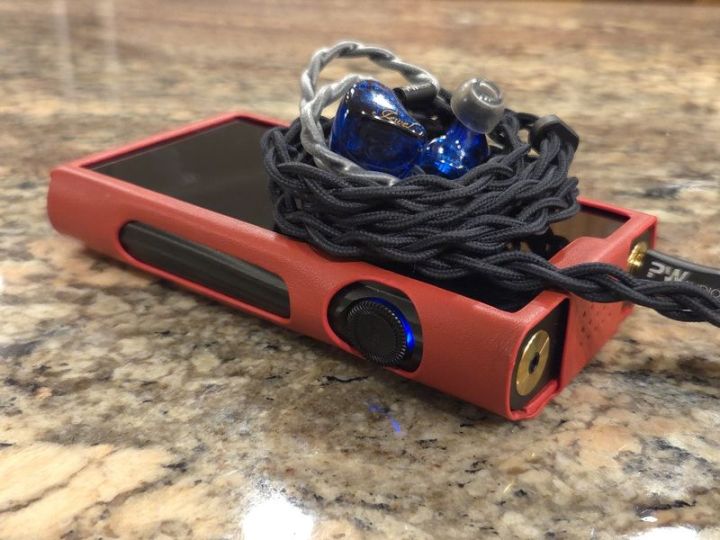
Comparison.
In every comparison, I used Aroma Jewel, ensuring volume matched while listening to the same test tracks across DAPs. Additionally, I’m primarily focusing on the differences in sound as I perceive them. These are merely quick analysis notes.
M8T vs A&K SP3000T – I spent considerable time listening to and comparing these two DAPs: the M8T in ultra-linear tube mode and the SP3kT in high-current tube mode. I even conducted several blind tests, during which I missed a few guesses. Both provide a large, expanded holographic soundstage and offer natural, textured tonality with a relaxed, laid-back presentation. They feature punchy bass, warmer mids, and good treble extension. We are discussing the pairing synergy with the sound tuning of your IEMs, but you can expect natural, textured fine-tuning when pairing with either of these DAPs. After several comparisons (I used the Oriolus 4.4mm RaoSound switch), I began to notice a few subtle differences. With the SP3kT, the sound stretches and wraps wider and appears behind you, while the M8T delivers a stronger and more tactile bass punch. When I switch the M8T to triode-tube mode, the sound becomes slightly faster, but that can also be matched with the SP3kT’s hybrid mode (OP/tube mix). Taking it a step further, I switch the M8T to transistor mode and the SP3kT to OP mode, turning off tube mode in both DAPs. Here things become more interesting because the SP3kT’s sound changes, though not drastically, while the M8T transforms into a more powerful, dynamic, punchier, and faster performance with a less colored tonality. The significant revelation came when switching both to tube mode and using sensitive IEMs like the VE10, where it was easy to differentiate between these two DAPs since the M8T’s background was black, while the SP3kT exhibited a slight waterfall hissing sound.
M8T vs iBasso DX340/amp16 – I recently received amp16 and was looking forward to this comparison as well. I started with the M8T in ultra-linear tube mode and the 340 in tube mode. Again, it took me several switches back and forth to begin noticing the differences. Both DAPs offer a large, expanded holographic soundstage. Here, the width, depth, and height are nearly matched, as is the imaging, with how sounds are positioned in space. Both provide a natural texture, smoother tonality, punchy bass, warmer mids, and detailed natural treble. The bass was very similar, exhibiting a textured sub-bass rumble and a more articulate mid-bass punch. The mids had a similar tonality and presentation as well. The treble is where I noticed some differences. With the M8T in ultra-linear tube mode, its treble is a bit smoother, while the 340’s treble has a bit more sparkle and air, lending the overall sound presentation of the 340 a little more speed. Then, when I switched the M8T to triode-tube mode, it also gained some speed, becoming less laid-back than its ultra-linear mode, possibly even a bit faster than the 340. Overall, I found the 340’s tube mode to be somewhat in between the M8T’s triode and ultra-linear modes regarding speed (from faster to more laid-back) and the amount of treble sparkle (from more forward to slightly more relaxed). Finally, switching the M8T to transistor and the 340 to AB (solid-state class AB) modes with the tubes off also provided a very close performance with faster, punchier, and less colored tonality. Both DAPs demonstrated a clear difference in sound between having the tubes on and off, with the M8T being just a touch smoother but not too far off. With sensitive IEMs, during my VE10 test in tube mode, I had to set the 340’s amp gain low to reduce the background hissing, similar to the M8T.
M8T vs Cayin N3 Ultra – another comparison I can’t miss, as both use Raytheon miniature tubes and implement two different tube modes. Once again, I notice many similarities, starting with the expanded soundstage and holographic imaging. Both sources add extra weight to the bass, enhancing the texture of the sub-bass rumble and increasing the power of the mid-bass punch. With the M8T in ultra-linear mode and the N3U in classic mode, both introduce analog smoothness and a fuller body to the mids of IEMs while keeping the treble natural and clear. The only distinction between these modes and DAPs is that the N3U sound is slightly more laid back. When you switch the M8T to triode-tube mode and the N3U to modern-tube mode, both DAPs increase the speed of the sound, though the M8T adds a touch more clarity to the mids. Once you switch the N3U to solid-state and the M8T to triode, the gap in sound performance widens due to the more contrasting, faster, punchier, and more resolving sound from the M8T compared to the smoother, laid-back, and slightly more intimate presentation of sound from the N3U. Both perform very well with sensitive IEMs without any hissing. You also need to remember that M8T is a fully open Android DAP while N3U only has local playback and no wireless connection.

M8T vs M9 – as anticipated, the sound difference here is quite noticeable. For some, this comparison may not make sense, but it’s the only flagship Shanling DAP I have access to. With my test IEMs, the soundstage was spacious and open, with many similarities in how the sound expands. I can only use M9 in one mode, and this DAP offers more revealing upper frequencies with a crisper presentation of the treble. Even when compared to M8T in transistor/solid-state mode, M9 still enhances the treble of IEMs, making it brighter and crisper, while both exhibit less coloration in the mids. Switching M8T into tube mode adds more texture, body, and the expected “tube” coloration to the mids. I don’t have access to M9 Plus, but I recall reading that it is somewhat more natural at the top compared to the original M9. Both performed exceptionally well with sensitive IEMs without any hissing.

Page 3 – Pair up, Wired/wireless connections, and Conclusion.

 Twister6 Reviews
In the end, which do you think is more complete, Dx340 or M8T? Since you two are in the same price range?
LikeLike
Well, they are not exactly in the same price range. To match their sound performance, you need to purchase DX340 with default amp15 and then buy a separate amp16, so it will be closer to $2k. While M8T is under $1.5k. Regarding being complete, this is also subjective. If you don’t care about modular design and want the dap as it, M8T is a better value. But if you want to invest into more amp modules or use external power supply to boost the amp output, DX340 has more flexibility due to its modular design. You just have to figure out your budget and what features you do or don’t need to decide which DAP will suit you better.
LikeLike
The DX340 def seems to be more scalable whist the M8T seems to be WYSIWYG (or more precisely WYHIWYG). But the M8T’s weight is def more pocket friendly than the DX340.
LikeLike
Very true, Sean. If you want a modular design to scale up the sound of your DAP, DX340 is the way to go. Just like if you want a solid ROON connection, people choose A&K DAPs 😉
LikeLike
Does it also play MP4 videos?
LikeLike
it’s an Android DAP, just like your phone without a “phone” part. You can access the Google Play store and download whatever app you need to play any format of files you want.
LikeLike