
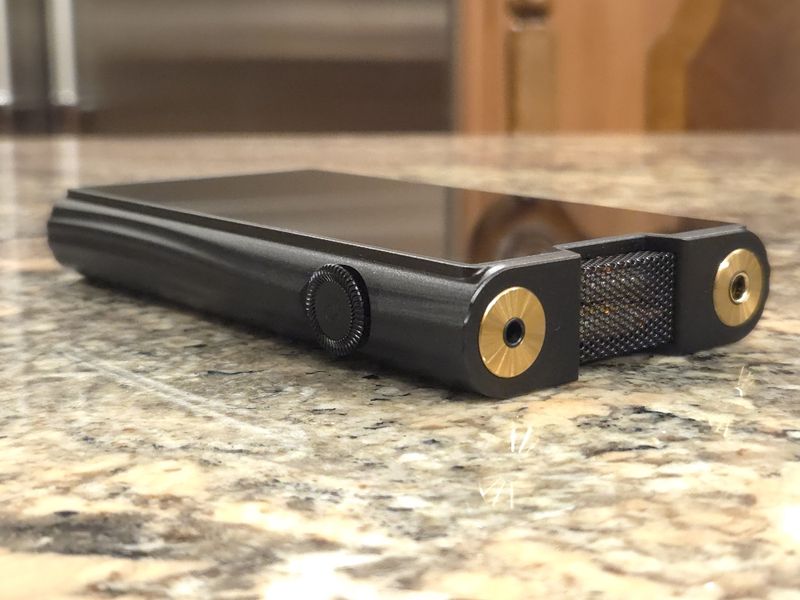
Pair up.
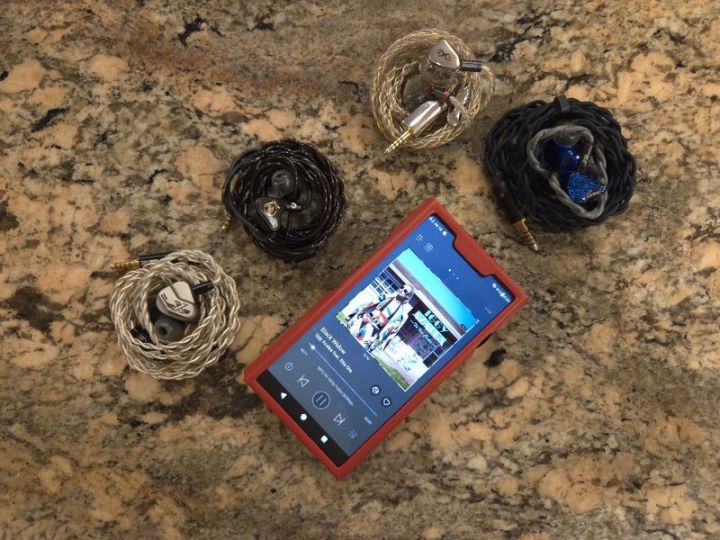
Here is how the M8T pairs with various IEMs and headphones. All were connected to the 4.4mm BAL output and tested in high gain unless otherwise noted, while comparing sound performance between Transistor (solid-state) and Tube (either Ultra-linear or Triode) modes.
Headphones.
Audio-Technica ATH-R70x – These 470-ohm open-back headphones are generally not easy to drive, but I had no issues even at 55/100 (Transistor) and 58/100 (Tube) modes with plenty of overhead volume margin. The soundstage here presents an average width in Transistor mode while expanding a bit more with Tubes. With either mode, the sound signature is balanced, and the tonality is very natural, organic, and simultaneously resolving. The bass performance is quite good, featuring more emphasis on a textured sub-bass rumble and an overall softer mid-bass punch, though Transistor mode provides a stronger punch (softer in attack yet scaled up in quantity). The mids are natural, detailed, and musical. The difference between the DAP modes lies in the speed and presentation of the sound, with Transistor mode delivering a faster, punchier sound with more revealing upper mids. In Tube/Ultra-linear mode, the sound has a noticeably more laidback presentation, and the mids exhibit more texture and smoother analog tonality, especially for vocals, which sound more natural and relaxed. When I switched to Tube/Triode, the sound gained just a bit more speed, but I reverted to Ultra-linear due to its more relaxed mid-bass.
MEZE Audio Empyrean – I experience a wide, spherically expanded soundstage that approaches holographic levels of imaging. In either mode, the sound signature leans towards a balanced profile, featuring natural, smooth, and detailed tonality. The bass exhibits a deep sub-bass rumble and rounded mid-bass punch. In Transistor mode, the punch feels slightly stronger and enhanced, whereas in Tube mode, it appears toned down, resulting in a more laid-back presentation. Overall, the weight of the bass notes predominantly comes from the sub-bass; the mid-bass contributes an acceptable punch, albeit with a slower attack. I notice greater variation in tonality between the modes in the mids, but the treble remains clear, detailed, and exhibits a touch of added sparkle. The mids shift from being slightly colder and more prominent in Transistor mode to smoother, more organic, and textured with a subtly laid-back presentation in Tube mode. I favored the Tube mode when using the Empyrean in this pairing.

IEMs.
Aroma Jewel w/FT – In either mode, the soundstage here has a proportionally expanded round shape with holographic imaging. In transistor mode, the sound signature is well-balanced, featuring a smooth, naturally resolving tonality, faster, punchier bass, clear, detailed mids, and added sparkle in the treble. The tuning is more neutral but still quite resolving and energetic. Switching to Tube/Ultra-linear is akin to flipping a sound switch. The bass gains a bit more weight, enhancing the rumble slightly to emphasize the sub-bass while making the mid-bass punch a bit rounder and slower. It relaxes the sound, offering a more laid-back, analog presentation, smoother mids with added body and texture, while maintaining the same clear sparkle in the treble. The sound remains resolving, but in a more natural, organic manner, preserving that resolution thanks to the treble sparkle.
FirAudio RN6 – In both modes, I experience a vast holographic soundstage expansion and imaging that remains unchanged. The sound signature of the RN6 in either mode is L-shaped, emphasizing more power and weight in the RN6 kinetic driver, producing a bass reminiscent of powerful floor-standing speakers. In transistor mode, the bass is hard-hitting and fast, elevated above the mids and treble, featuring a quick, punchy mid-bass; the mids are clear and detailed, while the treble is crisp and snappy. When switching to Tube/Ultra-linear, the mid-bass becomes slower and more rounded, losing some of its punch. The lower mids gain added body, causing the bass and mids to blend without the clear separation present in transistor mode. The treble remains crisp and snappy, assisting the upper mids in retrieving details. However, the slower mid-bass and thicker lower mids render the mid-range somewhat muddy in Tube/Ultra-linear mode. I switched from Ultra-linear to Triode mode, which slightly improved the clarity of the mids and enhanced the mid-bass punch, but I ultimately preferred the RN6 paired with M8T in transistor mode.
Elysian Acoustic Annihilator 23 – I notice an expanded soundstage that is spherically spaced and spreads in all three directions, although the imaging doesn’t quite achieve a 3D holographic level. All the sounds have fine separation, and the imaging is off-center. However, after being spoiled by too many dual BCD driver IEMs that set a higher bar for holographic imaging, the Anni doesn’t reach that level, which is acceptable to me. With some sources, the Anni can sound more U-shaped due to greater emphasis on sub-bass and upper mids/treble. Here, with the M8T in transistor output, the sound is quite balanced, quick, punchy, and dynamic. The bass features not only deeper sub-bass but also more punch in the mid-bass. The upper mids are clear and detailed, while the treble is crystal clear, extended, and non-fatiguing. Switching to Tube/Ultra-linear provides a more laid-back presentation; the depth and texture of the sub-bass are accentuated, while the mid-bass punch is slightly reduced. The mids are smoother, warmer, and more textured. Miraculously, the treble remains airy and extended. Due to Anni’s sensitivity, I had to raise the volume a bit higher.
Vision Ears VE10 – With the VE10 being one of my more sensitive IEMs, I had to lower the gain to low because in high gain, I couldn’t raise the volume above 3, and in mid gain, it was around 5, while low gain provided me with more dynamic range for volume adjustment up to 11. Of course, the question always remains about the hissing. There is a very faint waterfall hiss in high gain, but when you max out the volume at 3, that is probably expected. In low gain, it was dead quiet, and it was fine in mid gain as well. The soundstage expansion here is more focused, having more depth than width, but the imaging remained holographic, typical of the VE10 with other pair-ups. With the transistor setting, the sound signature is balanced, offering a fuller body and a natural, detailed tonality. The sub-bass rumble here has a bit more weight alongside a punchy mid-bass; the mids sound natural and detailed, and the treble is also clear and refined. In Tube/Ultra-linear mode, the mid-bass is more rounded, not as fast or punchy, and the mids become more organic, smoother, and analog-like, resembling additional analog-type distortion without any sound distortion, as they remain natural and detailed. I enjoyed the VE10 in both modes. It likely depends on the type of music I’m listening to, whether I want a faster, punchier sound or a more laid-back, smoother tonality.
Wired and wireless connections.
In addition to being a portable DAP, you can enhance the M8T’s functionality by using it as a transport to drive an external DAC/amp, employ an external amp, or convert the DAP into a wired/wireless USB DAC. Furthermore, you are not limited to wired headphones and can take advantage of a wireless Bluetooth connection.
Wireless/Bluetooth
I tested the M8T BT Transmit with Hiby WH2 TWS and confirmed its operation within 40 feet. LDAC HD Audio support was recognized, and I was able to pair it as the default hi-res codec. Additionally, I confirmed full remote control of M8T playback from the WH2. The stability of the connection and sound quality were consistent with using my new Galaxy S25 phone; though in the same pairing with my S25, I achieved over 50 feet of coverage in open space.
M8T also features BT Receiver mode, which transforms this DAP into a wireless DAC/amp. To activate it, swipe down from the Notification bar to access Work Mode, select Bluetooth AMP, and then search for M8T on your smartphone. Once paired, tap the gear icon next to M8T in your phone’s Bluetooth menu and choose LDAC. Now you can stream from your phone using M8T as a Wireless BT DAC, while still being able to control your source, in my case the S25, remotely from the DAP. This connection was stable up to 50 feet away from my phone in open space, which is quite impressive.

USB Audio Out
I tested and verified this with various popular USB DAC dongles, such as the RU7 and W4, and found it to work without any issues. However, for some reason, none of the iBasso dongles worked, including the DC Elite and DC07Pro, even after I installed the latest iBasso UAC app. Other than that, nothing needs to be configured; simply connect a dongle and start playback from any of your favorite apps. In the Shanling audio app, I went into Settings, selected USB Output, and enabled USB Exclusive Mode, Adaptive Volume Control, and Automatic Bit Depth. The sound quality was no different from connecting these dongles to my Galaxy S25 smartphone.
USB DAC
I verified this functionality using my aging ThinkPad T480s laptop running Windows 10 Pro. Once connected, swipe down the notification bar, go to Work Mode, and select USB DAC. There, you can tap the USB icon at the top to switch between “charge” and “no charge” modes if you don’t want to drain the battery of your source. From the USB DAC screen, you can change audio settings. No extra drivers are required on my laptop; Windows 10 recognized the DAP without any problems, and M8T was selectable in Windows Audio Settings as the “Shanling Audio device.” Volume can be adjusted from both the laptop and M8T. The sound is the same whether playing directly from M8T or the laptop with M8T connected as a USB DAC.
Line Out
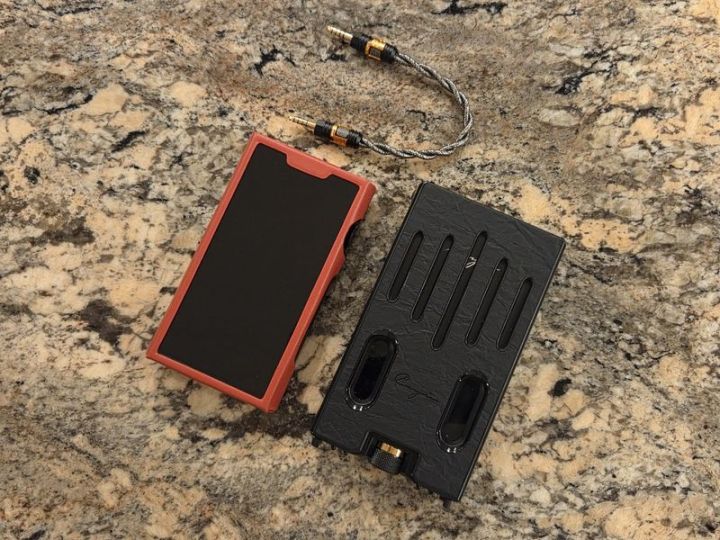
I conducted my LO testing with a Cayin C9ii amp, switching from PO to LO in the notification shortcuts or Audio settings. Once LO is selected, the output is locked at 100, and adjustments can only be made from the external amp. Shanling typically claims they don’t have a true LO output, but I noticed that the sound is fuller and more expansive when selecting LO compared to when I have PO set at 100 going into the external amp. Therefore, choosing Line Out is not as simple as raising the volume to the max; something else is being adjusted internally to optimize the output, possibly the voltage buffer output being set to maximum. Depending on the C9ii setting, the sound remains natural and organic, and you can select NuTube (in C9ii) to introduce a different analog texture to the sound, as an alternative to the Raytheon tube texture.
Conclusion.
I often say that modular DAPs offer different audio player tunings in one, while DAPs with NuTube and solid-state provide various fine-tuning options. The Shanling M8T combines all these features into a single device. The difference between transistor (solid-state) and tube (dual Raytheon) sound tuning is not a gimmick; it’s a real deal that provides two distinct complementary sound tunings. It is like having two different DAPs: a solid-state one with its powerful, dynamic, fast, and natural tonality, and a tube-based one with its smooth, musical, and warmer tuning. When you select the tube output, you have two distinct fine-tuning options that enhance the organic texture and laid-back presentation of the sound as you switch between triode and ultra-linear modes. Moreover, switching to tubes does not require compromising resolution, as the treble energy remains quite similar whether using tubes or not.
In addition to a distinct audio performance, Shanling incorporated a popular, fast SoC, sufficient RAM and ROM storage, an optimized Android OS, access to the Google Play Store for app downloads, a decent capacity battery with fast charging, a large, high-resolution display, high power output, and a solid build. The M8T is an impressive find, particularly due to its excellent price-performance ratio. Based on its design, features, and performance, Shanling has positioned this DAP at the top of its flagship line. However, the price tag may raise some questions, as the M8T’s cost is half that of the previous M9 Plus flagship. Yet, skepticism quickly fades as soon as you hit play and begin switching between the various sound modes this DAP offers. Maybe Shanling can add to their “… play more” slogan to also include “but don’t pay more.” Either way, color me impressed!

 Twister6 Reviews
In the end, which do you think is more complete, Dx340 or M8T? Since you two are in the same price range?
LikeLike
Well, they are not exactly in the same price range. To match their sound performance, you need to purchase DX340 with default amp15 and then buy a separate amp16, so it will be closer to $2k. While M8T is under $1.5k. Regarding being complete, this is also subjective. If you don’t care about modular design and want the dap as it, M8T is a better value. But if you want to invest into more amp modules or use external power supply to boost the amp output, DX340 has more flexibility due to its modular design. You just have to figure out your budget and what features you do or don’t need to decide which DAP will suit you better.
LikeLike
The DX340 def seems to be more scalable whist the M8T seems to be WYSIWYG (or more precisely WYHIWYG). But the M8T’s weight is def more pocket friendly than the DX340.
LikeLike
Very true, Sean. If you want a modular design to scale up the sound of your DAP, DX340 is the way to go. Just like if you want a solid ROON connection, people choose A&K DAPs 😉
LikeLike
Does it also play MP4 videos?
LikeLike
it’s an Android DAP, just like your phone without a “phone” part. You can access the Google Play store and download whatever app you need to play any format of files you want.
LikeLike