
The Dynasty Continues!
PROS: solid build with a beautiful faceplate design, coherent tuning of 15 drivers in a tribrid config, balanced sound sig with a clear natural tonality, finetuned variation of the Emperor, modular plug cable, and premium packaging.
CONS: larger shells with a short nozzle.
Per my request, I was loaned the product for review purposes in exchange for my honest opinion.
Manufacturer website: qdc. Available for sale from Musicteck as part of their Special Edition collab release, the King.
Intro.
I started my Emperor/Empress review by gushing about the art of neutral tuning, which qdc perfected with their various IEMs. Emperor and Empress were a prime example, offering a neutral, resolving tuning and clear, natural tonality with clean, transparent sound and neutral bass quantity. But there was some variation in tuning between these two IEMs, and per my preference, I picked Emperor over the Empress due to its punchier mid-bass and more energetic treble. The Emperor differed from many of my other colored IEMs, offering a complementary tuning with natural, resolving details without exaggeration or extra coloring.
Right before the CanJam NYC, I heard from Leo of Musicteck, who mentioned working with qdc on a Special Edition of Emperor as part of qdc x Musicteck collab release called the King. I was informed it would be based on the Emperor tuning, bringing it closer to a balanced sound signature with less dry tonality. With an indication of minimal coloring, I was very curious to hear how the tuning would turn out, and enjoyed these a lot during my show audition. The only “coloring” was me being impressed, no pun intended, thus I asked Leo and Andrew if I could borrow the King for a few weeks to analyze it more. Here is what I found.
Unboxing and Accessories.
I received the King without packaging, only IEMs with a stock modular cable and eartips, and was told that the packaging would be identical to Emperor/Empress. Thus, I will copy and paste the description from my Emperor/Empress review.
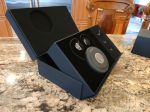
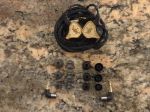
The packaging box, inside the exterior sleeve, is relatively large, about the size of a shoebox. As you lift the cover of the box, it first extends and then elevates the inside tray with IEMs and accessories, propping it up at an angle to create a clever display presentation. The top cover is lined inside with soft, spongy material, while the tray has velour-covered foam with cutouts to keep the IEMs, storage case, and other accessories securely inside.
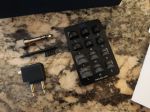
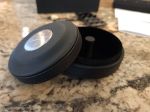
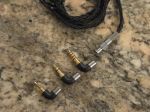
Besides the IEMs with an attached cable, you will find a custom round-puck leather case with a clever spool design inside, allowing you to wrap the cable around it. The top cover of the storage case attaches magnetically to the spool’s core, which is removable (you can unscrew it). You will also find a small display setting with three modular L-shaped cable plugs, 4.4mm, 3.5mm, and 2.5mm. Underneath there is a small box with the remaining accessories, such as a 6.35mm adapter (for a 3.5mm connection), a cleaning brush, an airplane adapter (for a 3.5mm connection), two sets of silicone (S/M/L) and double-flange (S/M/L) eartips, users guide, and a warranty card.
It was odd to see 6.35mm and airplane adapters included with high-end flagship IEMs, considering most users will probably use them with a 4.4mm BAL plug. But the overall unboxing experience was impressive, clearly showing that you are dealing with a flagship-level product.
Cable.
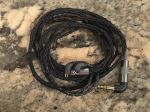
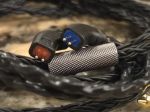
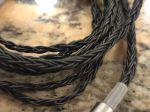
The stock cable has 12 conductors, 6 per side, and is very soft, pliable, and non-microphonic. Each wire features a smooth, rubbery black coating, arranged in a tight, rounded braid. The wires use pure sterling silver and pure copper conductors and include a modular 3-in-1 multi-plug connector, allowing for an easy switch between the included L-shaped plugs. A compact Y-split showcases a diamond-cut design that matches the plug, while the chin slider is a simple transparent plastic piece. The molded IEM connectors are angled, featuring a non-recessed design with a colored blue/red filling (to indicate left/right sides), and a standard universal 2pin connector. I’m aware that some previous qdc IEMs used a different connector with reversed polarity 0.75mm pins, but I believe they also offered an option for standard 0.78mm pins. My review unit (King) and previous ones (Emperor and Empress) utilized universal 2pin connectors, so perhaps this is now standard, making it convenient for cable rolling.
Design.
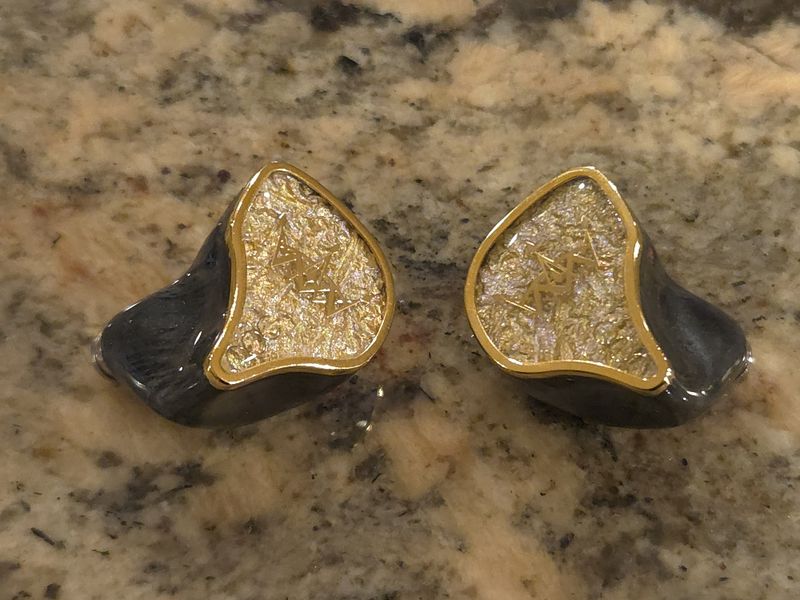
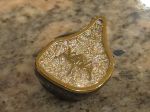
According to qdc, the design of the original Emperor/Empress was developed in collaboration with Aiuto Japan, trying to capture the elements and colors of Oriental traditional culture. The faceplate of the Emperor/Empress uses a unique gold-plated corner-coating process with beautiful swirling colors inspired by scenic spots in China. In contrast, the King’s faceplate has a 3D multi-layered design with various gold and pearl swirling elements. Compared to the Emperor/Empress with a golden metal frame and a new sun and moon golden logo, the King had an exotic crown design on its faceplate.
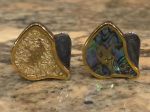
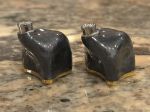
Similar to the Emperor, the King shell features a dark pearl-gray finish. The shell is large enough to accommodate all 15 drivers and protrudes slightly from my ears. The metal nozzle with a mesh cover is relatively short, so you must choose the right type of eartips to ensure these shells stay secure in your ears. I experienced no issues with the fit, but YMMV if you have smaller ears or need deeper IEM insertion. Additionally, each shell includes a quad vent next to the flush-mounted 2-pin socket, with the vent color-coded red and blue to distinguish between the right and left sides and to match corresponding cable sides.

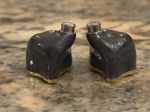


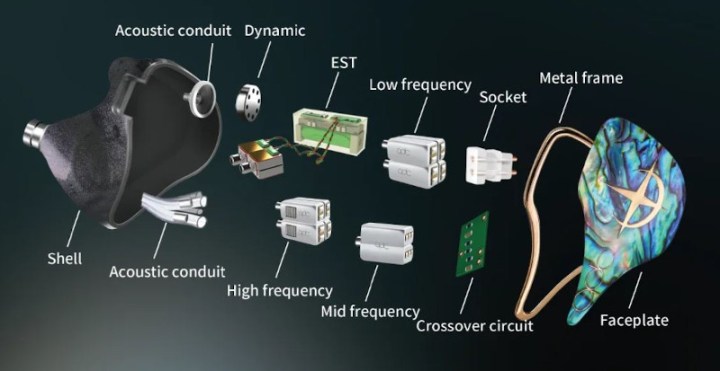
The King’s driver configuration and counts are identical to the Empress/Emperor’s, but the DD driver was updated. Furthermore, the bass crossover was rearranged to let the DD cover a wider frequency range, which impacted its low end performance.
Inside, qdc utilized 15 drivers with a single DD (10mm) for ultra-lows, 4BA lows, 2BA mids, 4BA highs, and 4EST for ultra-highs. This tribrid design features five sound channels, a 5-way crossover, and multi-tube filtering with a multi-channel divider. The 4EST drivers and 10BA employ multi-tube filtering, which qdc first introduced in their V14, allowing adjacent frequency bands to be finely tuned without interference and crosstalk suppression. An independent acoustic chamber enclosure with a custom conduit, akin to the one in their Dmagic 3D IEMs, was also used for 10mm DD, keeping it isolated from other drivers.
The fit.

Page 2 – Sound Analysis, Eartips selection.
Page 3 – Cable pair up, Source pair up, and Conclusion.

 Twister6 Reviews
Great review!
Do you know how the King would compare to the Multiverse Mentor?
LikeLike
these are two completely different IEMs. Different bass with King having more powerful, layered, dynamic driver bass you can feel the rumble of. MM bass is OK, but it’s your typical BA driver bass. Also, MM treble is brighter and peakier while King is more natural. King’s treble is great, good presence and extension. Some might find MM treble to be a bit too aggressive, while King is more natural in that respect.
LikeLike
Do you know how the soundstage compares? And how is the isolation on the King?
Thanks for answering
LikeLike
these are sealed iems, not open back headphones, you get good isolation, just need to pick the right size of eartips… Don’t have the King with me anymore, only Emperor. While MM soundstage is more expanded than Emperor, the King’s soundstage is wider and more holographic than Emperor, so the King should be on par with MM.
LikeLike
Okey thanks for the help.
I will probably go for the King
LikeLike